Chicago FAA Ground Stop Due to Staffing Shortage: The Air Traffic Control Crisis Emerges

Chicago airspace ground stop due to FAA staffing shortage exposes structural ATC staffing weaknesses.
According to Hacker News discussions, a Ground Stop was implemented for Chicago airspace due to FAA staffing shortages, prohibiting flights bound for Chicago from taking off. A Ground Stop is an FAA flow management measure when ATC capacity is insufficient or safety is threatened, with recovery time depending on urgently reassigning qualified controllers. The ATC system relies heavily on real-time staffing; when key facilities fall below minimum staffing, the FAA reduces flight acceptance rates. This event highlights the long-standing U.S. ATC staffing shortage: long training cycles, a continuing retirement wave, and facilities below authorized levels. The original information comes from a single community source without official FAA corroboration. Passengers facing a Ground Stop should confirm flight status via airline apps.
Event Overview: An Unusual "Ground Stop"
According to discussions in the Hacker News community, a "Ground Stop" was implemented for Chicago airspace due to a staffing shortage at the FAA (Federal Aviation Administration). This order means that flights bound for Chicago are temporarily prohibited from taking off, rather than simply being delayed. A Ground Stop is one of the more severe measures the FAA takes when air traffic control capacity is insufficient or safety is threatened, typically affecting a wide area with an uncertain recovery time.
The original information consisted only of a title and a brief description, without disclosing the specific duration of the ground stop, the affected airports, or the air traffic control facilities involved. However, "staffing" was directly cited as the cause, once again drawing public attention to the long-standing staffing shortage in the U.S. air traffic control system.
Ground Stop is an order within the FAA's Air Traffic Flow Management (ATFM) system, typically issued through an Air Traffic Control System Command (ATCSC). Its core meaning is: flights destined for a specified destination or transiting specified airspace are prohibited from departing their origin airports until the order is lifted. It is fundamentally different from a common "delay"—a delay is a time adjustment for an individual flight, whereas a Ground Stop is a departure prohibition for an entire origin airport or airline. Triggers for a Ground Stop include: a sudden drop in destination airport capacity (e.g., weather, runway closure), insufficient staffing at air traffic control facilities, or safety incidents. The lifting time is usually uncertain and depends on whether the triggering factors are eliminated. The FAA publishes the start and end times, scope of applicability, and exemption conditions of a Ground Stop to airlines and pilots through official channels.
Why Does an ATC Staffing Shortage Trigger a Ground Stop?
Air traffic control is a system that relies heavily on real-time human staffing. Every sector and every shift requires certified controllers on duty to maintain the established flight flow. When the number of personnel on duty at a key facility (such as a Terminal Radar Approach Control or a tower) falls below the minimum required for safe operations, the FAA will proactively reduce the flight acceptance rate for that airspace, and a Ground Stop is one of the options.
This measure differs from weather-related ground stops: weather events usually have a clear passage time, whereas the recovery time for a staffing shortage depends on whether qualified personnel can be urgently reassigned. This also explains why this event attracted attention in the tech community—it exposes a structural weakness rather than a one-time disruption.
Terminal Radar Approach Control (TRACON) is a key facility type in the FAA's air traffic control system, responsible for sequencing and separation control of arrival and departure flights within approximately 40 miles of an airport. Unlike towers (responsible for runways and airport ground) and en-route centers (responsible for high-altitude cruising), TRACONs require a large number of certified controllers simultaneously manning multiple sectors during peak hours. Once the number of personnel on duty at a TRACON falls below the minimum staffing level, the FAA will proactively reduce the flight acceptance rate for that airspace, because approach control is the bottleneck in flight flow. The Chicago area has one of the busiest TRACONs in the United States, and its staffing shortage directly affects arrival and departure flights at both O'Hare and Midway airports.
Community Reaction and Information Gaps
On Hacker News, the post received 10 points and 1 comment. Discussion activity was low, but the topic itself is extensible. Since the original material did not provide a link to an official FAA statement, the scale of affected flights, or a specific time window, this article cannot make a quantitative judgment on the severity of the event.
From the perspective of multi-source cross-verification, currently only a single community source mentions this matter, lacking corroboration of details from other independent sources. Readers who wish to follow up should monitor the real-time ground stop notices issued through the FAA's official Air Traffic Control System Command (ATCSC).
The Deeper Background of the ATC Staffing Shortage
The staffing problem in the U.S. air traffic control system is not a new topic. Long controller training cycles, a continuing retirement wave, and some facilities being persistently below authorized staffing levels—these factors combine to make the system particularly fragile during peak hours or unexpected absences. As a flow management tool, a Ground Stop essentially trades ground waiting for airborne safety margins.
For the aviation industry, the cost of such events is not limited to flight delays; it also includes disrupted crew scheduling, interrupted passenger itineraries, and cascading effects on subsequent flights. For the tech community, it also highlights the value of "human redundancy" in critical infrastructure operations—automation can assist, but in the short term it cannot replace the real-time decision-making of certified controllers.
Certified Professional Controllers (CPCs) typically require a training period of 2-4 years, including theoretical study, simulator training, and on-the-job mentoring. The FAA's controller recruitment and training are constrained by factors such as budget, academy capacity, and background checks, making rapid expansion difficult. Meanwhile, the U.S. air traffic control system faces a continuing retirement wave—a large number of controllers who joined in the early 2000s are now approaching the mandatory retirement age (56). Some facilities are persistently below authorized staffing levels, forcing existing personnel to work overtime, further exacerbating fatigue and absence risks. This structural shortage means that Ground Stops are not occasional events but a cyclical manifestation of insufficient system resilience.
Implications for Passengers and the Industry
At the passenger level, when encountering a Ground Stop, you should prioritize confirming flight status through the airline's app rather than relying solely on airport display screens; after a Ground Stop is lifted, the flight recovery sequence is usually determined by FAA flow management procedures, and the first to take off may not be the originally earliest scheduled flight.
At the industry level, this Chicago event once again demonstrates that air traffic control staffing is a key variable in the resilience of the aviation system. While technologies such as automation and remote towers advance, maintaining a sufficient number of qualified controllers remains the foundation for ensuring operational continuity.
(Note: This article is based on public discussions on Hacker News. For the specific scope and duration of the ground stop, please refer to official FAA notices.)
One-line Summary
Chicago airspace implemented a ground stop due to FAA staffing shortages, exposing structural weaknesses in air traffic control staffing.
Paragraph Summary
According to discussions in the Hacker News community, a "Ground Stop" was implemented for Chicago airspace due to FAA staffing shortages, prohibiting flights bound for Chicago from taking off. A Ground Stop is a flow management measure the FAA takes when air traffic control capacity is insufficient or safety is threatened, and the recovery time depends on whether qualified controllers can be urgently reassigned. The air traffic control system relies heavily on real-time human staffing; when the number of personnel on duty at key facilities falls below minimum staffing levels, the FAA proactively reduces the flight acceptance rate. This event once again highlights the long-standing staffing shortage in U.S. air traffic control: long training cycles, a continuing retirement wave, and some facilities below authorized staffing. The original information comes from a single community source, lacking corroboration of official FAA details. Passengers encountering a Ground Stop should prioritize confirming flight status through the airline's app.
Related articles

Zero-Code Replication of a $10,000 3D Website with Claude Code: A Six-Tool Breakdown
Bilibili creator Yomi used Claude Code plus five free tools to build a 3D product landing page quoted at $10,000 overseas—zero code. Breakdown of the six-tool division of labor, image-to-3D workflow, and the core collaboration method: "give AI a reference, not 'make it look better.'"
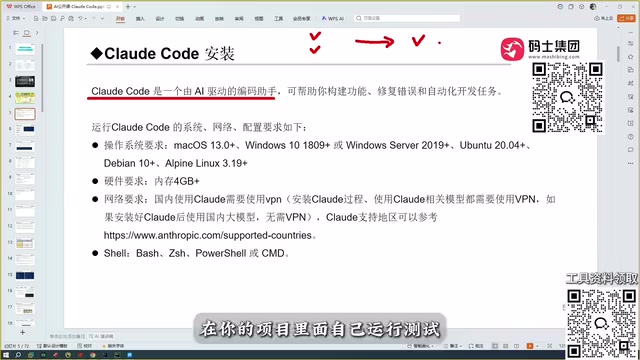
Claude Code in Practice: Install, Connect Models, Calculate Tokens, and Ship a Full-Stack Project with a Single Document
Based on a Bilibili public course demo, this covers Claude Code installation, model connection, token cost calculation, and the practical path of shipping a full-stack project with a single document, plus comparisons with Copilot, Cursor, Trae, and other coding assistants.
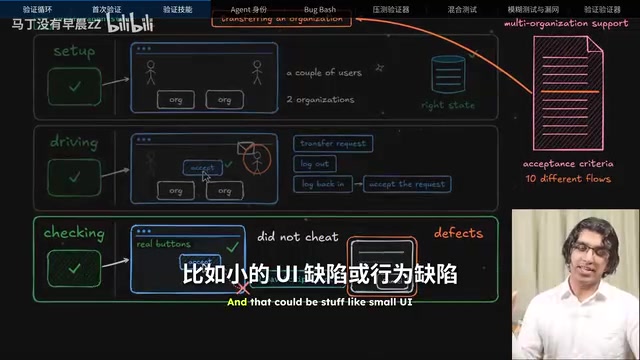
Who Accepts AI-Written Code? A 25-Minute Deep Dive into Verification Loops and the New Code Review Paradigm
After AI writes lots of code, how should Code Review verify it? This article breaks down the Claude Code team's verification loop framework: surface-level end-to-end verification, setup/drive/check three-stage skills, hybrid end-to-end testing and reliability checklists, and how to tighten the loop when issues slip through.