Chinese Full-Stack Agent Skills: A Skill Library Tailored for Domestic AI-Assisted Development
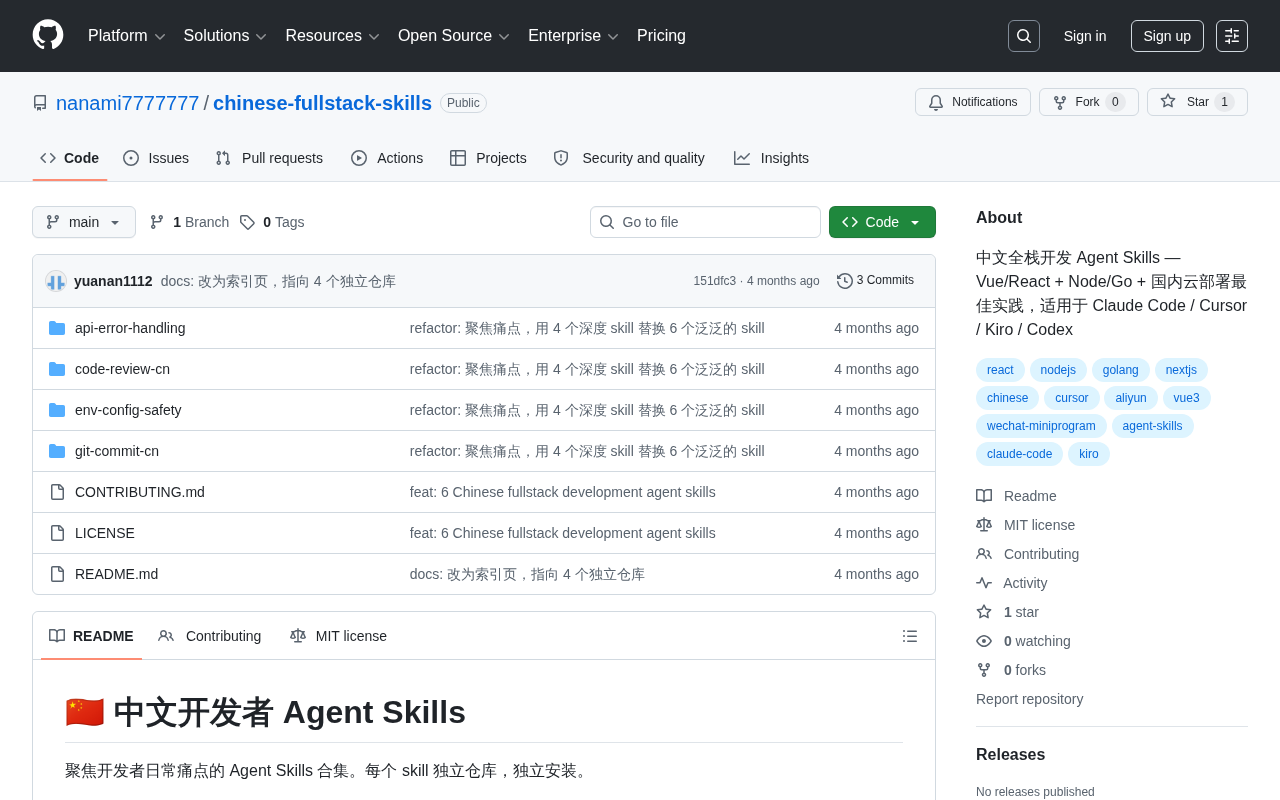
An AI coding skill library tailored for Chinese full-stack developers and domestic cloud deployment.
The open-source project `chinese-fullstack-skills` addresses a real pain point for Chinese developers: existing AI coding tools default to English tech stacks and overseas cloud services, creating a mismatch with domestic realities like ICP filing, Alibaba/Tencent Cloud ecosystems, and local package mirrors. It provides a structured Agent Skills collection covering Vue/React, Node.js/Go, and domestic cloud deployment, compatible with Claude Code, Cursor, Kiro, and Codex — enabling one shared standard across multiple tools. The project is in its very early stages with minimal community traction, but it targets a genuine gap in China's AI-assisted development ecosystem.
Filling a Gap in China's AI Programming Ecosystem
As AI coding tools like Claude Code, Cursor, Kiro, and Codex become increasingly mainstream, developers are relying more heavily on AI Agents to handle the full lifecycle — from requirements analysis to code delivery. Yet one long-overlooked problem persists: the best practices built into these tools largely assume an English-language tech stack and overseas cloud services (AWS, GCP, Vercel) as the default environment, leaving a significant disconnect from the realities Chinese developers actually work in.
The open-source project nanami7777777/chinese-fullstack-skills on GitHub was created precisely to address this pain point. It's a collection of Agent Skills designed for Chinese full-stack development, covering frontend Vue/React, backend Node.js/Go, and best practices for domestic cloud deployment — compatible out of the box with Claude Code, Cursor, Kiro, Codex, and other major AI coding tools.
What Are Agent Skills, and Why Do We Need a Chinese Version?
Agent Skills can be thought of as "structured knowledge packages" or "behavioral guidelines" provided to an AI coding assistant. When an AI Agent takes on a development task, these skill files tell it which coding conventions to follow, what architectural patterns to adopt, and how to handle deployment. Compared to writing lengthy prompts from scratch every time, pre-configured Skills enable the AI to produce more consistent results that better align with team standards.
The Chinese development environment has a distinct set of characteristics: ICP filing (备案) requirements, the product ecosystems of domestic cloud providers (Alibaba Cloud, Tencent Cloud, Huawei Cloud, etc.), CDN and compliance configurations, domestic package mirrors, and more. Generic overseas skill libraries rarely cover these details, meaning AI-generated deployment solutions often require developers to manually rework large portions. The value of this project lies in making the "tacit knowledge" of Chinese full-stack development explicit and structured — so that AI Agents can genuinely understand the domestic technology ecosystem.
Tech Stack Coverage
The project's technology choices are quite representative of the domestic landscape:
- Frontend: Dual support for Vue and React, covering the two most widely adopted frontend frameworks in China
- Backend: Node.js and Go, targeting rapid-iteration business applications and high-performance service scenarios respectively
- Deployment: Focused on domestic cloud deployment best practices — the core differentiator from similar overseas projects
The Practical Value of Multi-Tool Compatibility
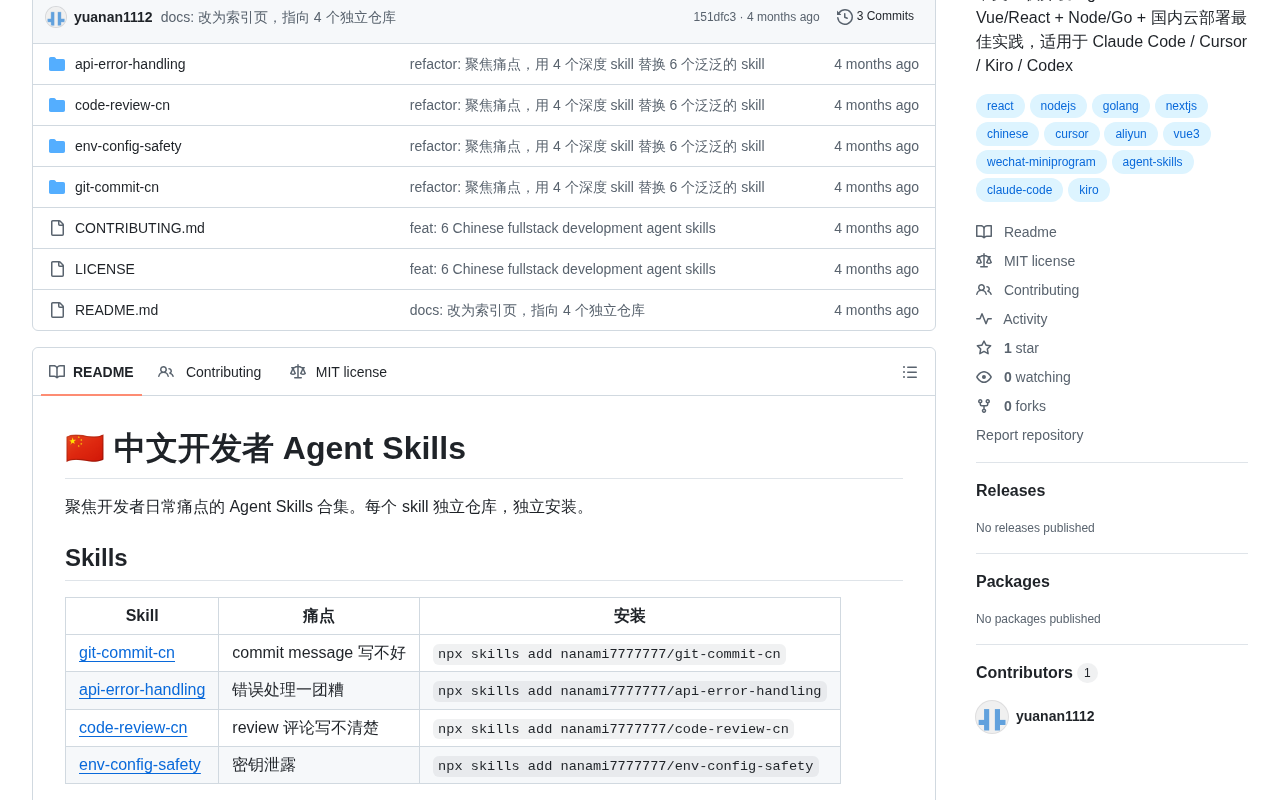
The project explicitly supports four tools: Claude Code, Cursor, Kiro, and Codex. This cross-tool compatibility approach is worth noting — it means developers don't have to rebuild an entire set of standards every time they switch AI coding assistants. The same Skills can be reused across different tools.
For teams, this lowers the migration cost of AI-assisted development. For individual developers, it makes it possible to maintain consistent workflows across multiple tools. As competition among AI coding tools intensifies and update cycles accelerate, this "tool-agnostic" approach to codifying best practices is more resilient in the long run than locking into any single tool.
Current Limitations and What to Watch For
It's worth being candid: the project is still in a very early stage — with just 1 Star and 0 Forks, it hasn't yet built a community or gathered third-party usage feedback to validate the quality of its skills. The project page doesn't yet list a primary programming language, suggesting the content may consist mainly of Markdown specification files. The breadth and depth of actual skill coverage remains to be seen.
That said, the direction it's targeting addresses a genuine need. In China's AI coding ecosystem, localized best practices have long been absent. The vast majority of open-source Skills projects default to English and overseas cloud infrastructure. Whoever can first build a solid, complete pipeline covering Chinese full-stack development and domestic cloud deployment has a real chance to become the default starting point for Chinese developers adopting AI-assisted coding.
For developers who want to explore AI-powered full-stack development but find overseas skill libraries ill-suited to their environment, this project is worth adding to your watchlist. Interested readers can search for chinese-fullstack-skills on GitHub to follow the latest updates — or contribute directly to help shape this localized Agent Skills standard.
Related articles
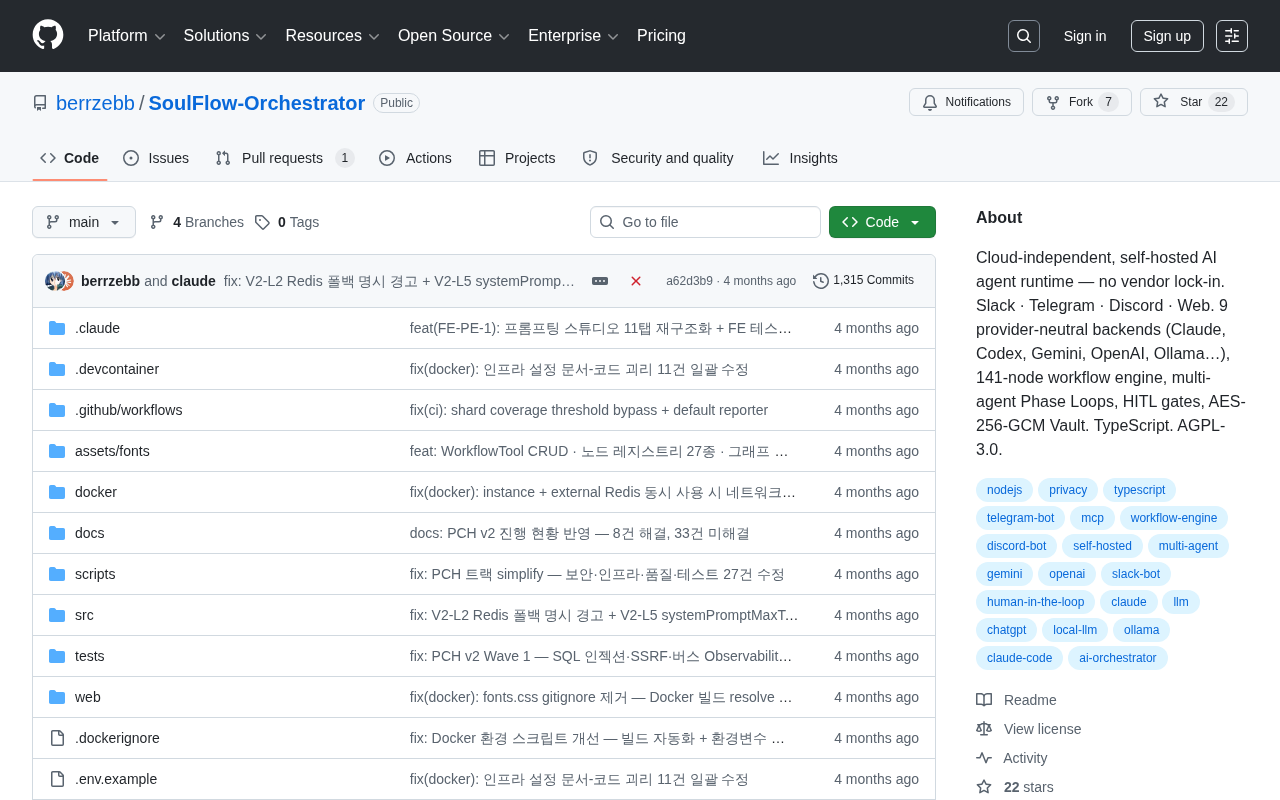
SoulFlow-Orchestrator: A Self-Hosted, Vendor-Lock-In-Free AI Agent Runtime
SoulFlow-Orchestrator is an open-source, self-hosted AI agent runtime with no vendor lock-in. Supports 9 neutral backends (Claude, OpenAI, Ollama), 141-node workflow engine, multi-agent loops, and HITL gates.
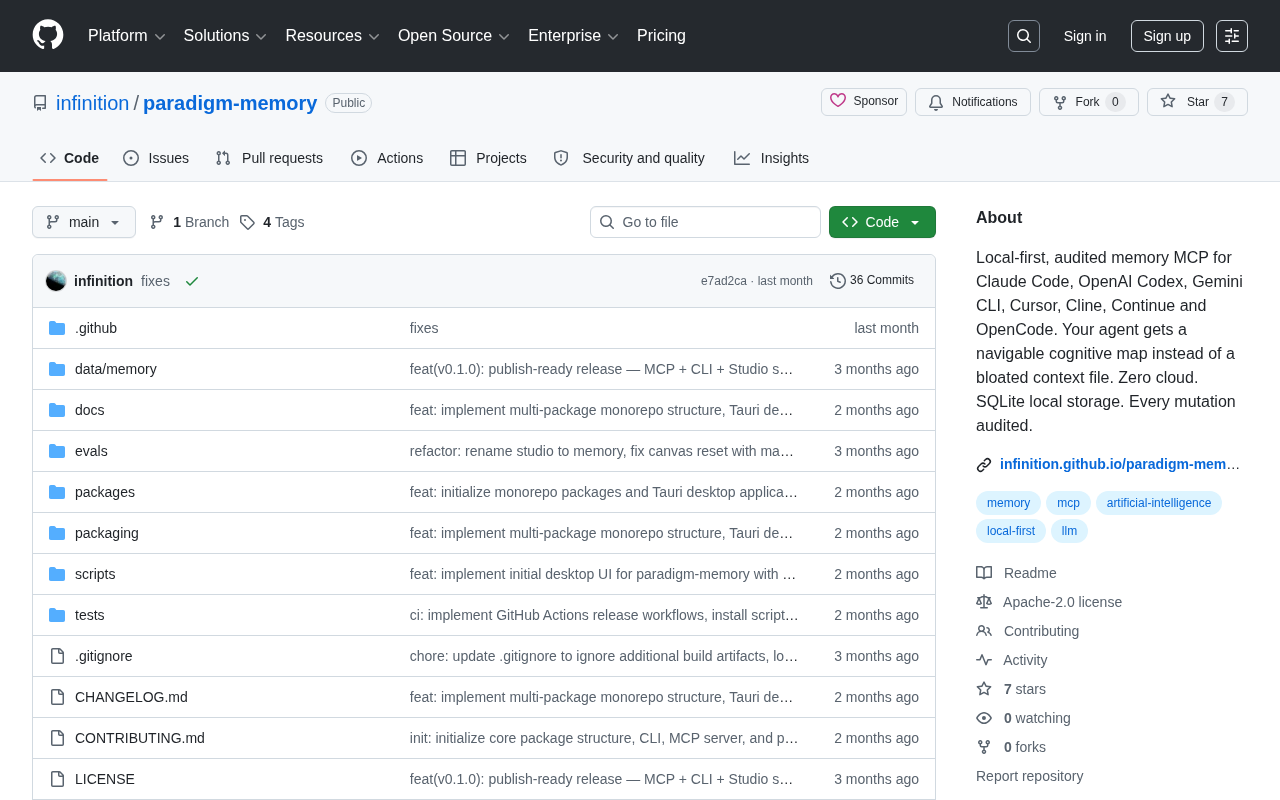
Paradigm Memory: A Local-First Memory System for AI Coding Assistants
paradigm-memory is a local MCP memory tool for Claude Code, Cursor, and Cline. It uses SQLite local storage, zero cloud, full audit trails, and a navigable cognitive map instead of bloated context files.
Monolito-V2: An AI Agent Project Aiming to Become a "Digital Symbiote in the Cloud"
Monolito-V2 is an open-source TypeScript AI Agent project aiming to become a 'digital symbiote' and 'cloud cerebral cortex.' We examine its concept, tech stack, and the real challenges ahead.