Chinese Open-Source AI Cuts Costs to a Quarter: How Models Like Kimi Are Rewriting the Rules

Chinese AI models have rapidly closed the gap with US frontier models through technical breakthroughs and aggressive pricing strategies.
This article traces the rise of China's AI industry, highlighting how tech giants like ByteDance, Alibaba, and Tencent, alongside startups like DeepSeek, Moonshot AI, and MiniMax, have built a vast and rapidly evolving AI ecosystem. Using ChatGPT's late-2022 launch as a baseline, it shows how Chinese models — once far behind US frontier performance — have significantly closed the gap by 2026, even achieving parity in some areas. Chinese companies are pursuing aggressive strategies not just in technology but also in open-source releases and pricing, making their models increasingly attractive to global users and fundamentally reshaping the international AI competitive landscape.
China's AI Rise: From Playing Catch-Up to Running Neck-and-Neck
China's AI landscape is expanding at a breathtaking pace. Nearly every major Chinese tech company you can name either has its own AI model or is actively training one. Where the US has Google and Meta, China has ByteDance, Alibaba, and Tencent. Where the US has AI-native startups like OpenAI and Anthropic, China has ambitious challengers like Moonshot AI, DeepSeekAd, and MiniMax.
These companies aren't just bringing technical breakthroughs — they're also playing an extremely aggressive game on market strategy. Chinese companies have been developing AI for years without attracting much attention, but the tide has turned: Chinese models are becoming increasingly hard to ignore.
ChatGPT launched at the end of 2022, and US frontier AI model performance has climbed steadily ever since. Chinese AI models trailed behind for years, but as of 2026, the gap between the two is narrowing significantly.
How the "Frontier Model" Gap Is Measured
In AI, a "frontier model" refers to the most advanced large language models or multimodal models currently pushing the boundaries of scale, capability, and performance. Measuring the gap between countries typically relies on standardized benchmarks such as MMLU (Massive Multitask Language Understanding), HumanEval (code generation), MATH (mathematical reasoning), and aggregate leaderboards like LMSYS Chatbot Arena. Before 2023, Chinese models generally trailed top US models by six to twelve months on these benchmarks. But from 2024 onward, models like DeepSeek-V2 and Qwen2 began matching or even surpassing Western competitors on certain benchmarks, making the "gap" narrative considerably more complicated. It's worth noting that benchmarks have their limits — a high score doesn't necessarily translate to real-world capability, and there are structural differences between Chinese and American models in terms of training data, alignment approaches, and commercial positioning. Pure score comparisons should be interpreted with care.
Background
The Context Behind DeepSeek's "Efficiency Breakthrough"
DeepSeek was founded in 2023 by High-Flyer, a quantitative hedge fund, and its defining characteristic is achieving competitive performance at a fraction of the training cost of comparable Western models. DeepSeek-V2 uses a Mixture of Experts (MoE) architecture, which activates only a subset of parameters during each inference pass, dramatically reducing computational overhead. DeepSeek-R1 introduces reinforcement learning-driven chain-of-thought reasoning, demonstrating near-OpenAI o1-level capability on math and coding tasks.
The deeper reason these results generated such widespread attention is that they challenge the prevailing assumption that "compute equals capability." Even under US export controls restricting the flow of high-end GPUs (such as NVIDIA H100s) into China, Chinese teams found engineering pathways to maximize model performance under constrained compute conditions — delivering a significant blow to the cost logic underpinning the global AI arms race.
Related articles

Identifying Characters from 'Time Difference 5 Hours 3' Posters: A Fun Observation Experiment
A content creator fails to recognize even himself in Time Difference 5 Hours 3 posters, revealing how humans navigate image recognition when art styles are unified.
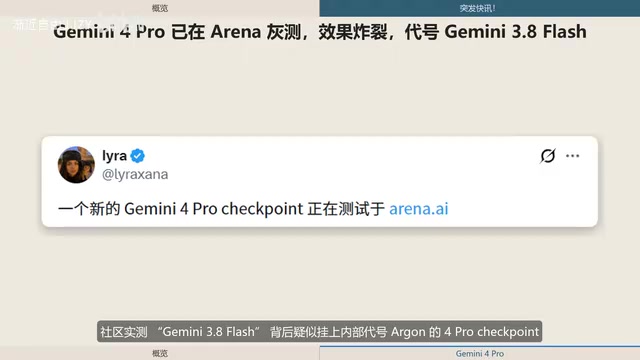
Gemini 4 Pro Spotted in Arena Ghost Testing: Major Upgrades in 3D and Physics Capabilities
Google's Gemini 4 Pro, codenamed Argon, may be ghost-testing in Arena as Gemini 3.8 Flash. Community tests show major 3D, physics, and interactive content gains, 256K output, and rumored 2M context.
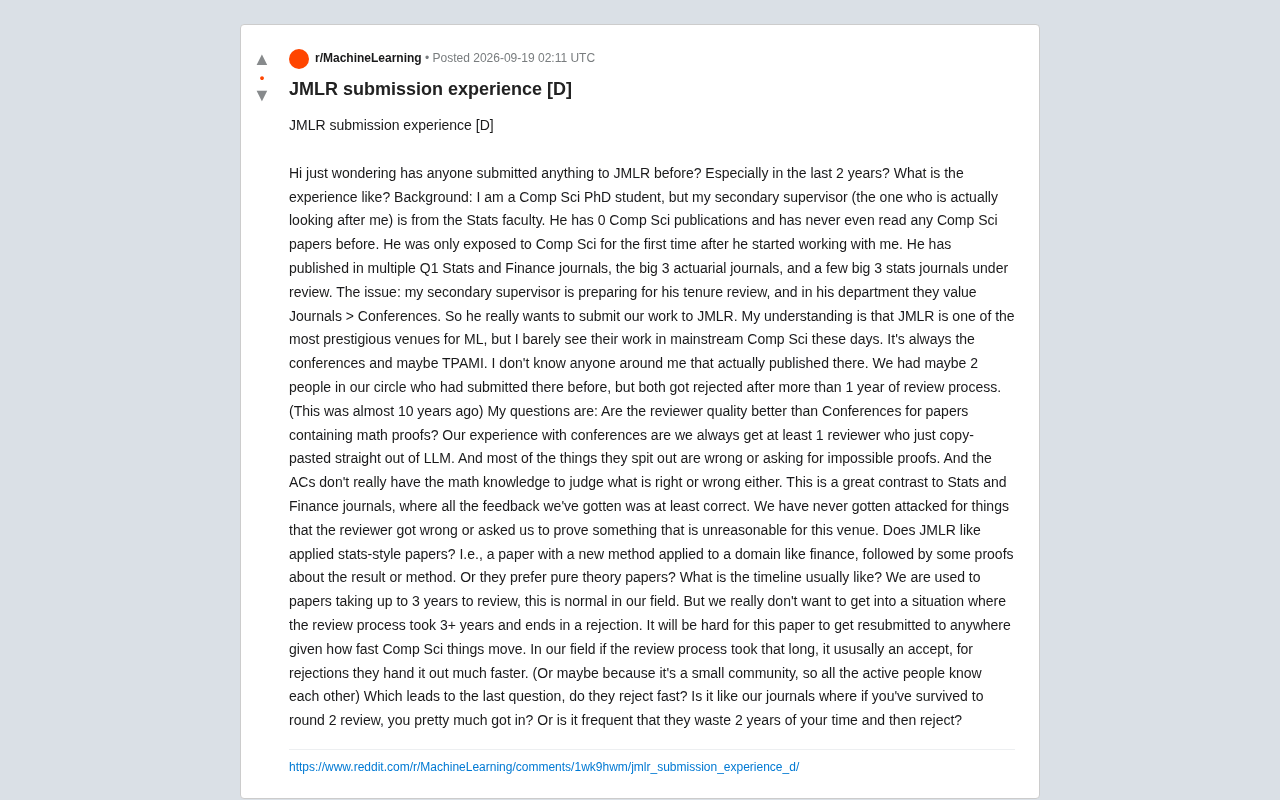
What's It Like to Submit to JMLR? The Real Dilemmas of an Interdisciplinary PhD
A CS PhD student on Reddit asks about submitting to JMLR amid a clash between two academic cultures — exploring review quality, paper style, and timeline risks.