Claude Code Hands-On Review: Is the $20 Subscription Worth It? Account Ban Risks and Real-World Performance

A developer tests Claude Code's $20 subscription, sharing model tips, ban risks, and real productivity gains.
A Chinese developer shares their hands-on experience with Claude Code after switching from Codex, revealing that model selection (Opus 4 vs default) dramatically impacts performance. The review covers account ban risks for users in restricted regions, the hidden costs of switching between domestic and foreign AI tools, and why the $20 subscription can still deliver strong value even with potential account instability.
The Real Experience of Switching from Codex to Claude Code
A Bilibili content creator, after exhausting his Codex quota, decisively subscribed to Claude Code, spending $20 to embark on a new AI programming tool experience. However, his first reaction was — "the overall experience wasn't as good as Codex." What exactly happened? Let's follow his actual usage journey to see Claude Code's real performance.

First Impressions Gone Wrong: Choosing the Wrong Claude Code Model Was Key
After opening Claude Code through WSL (Windows Subsystem for Linux), this creator found the initial experience underwhelming — even worse than Codex. But he quickly identified the problem — he was using the wrong model.
WSL (Windows Subsystem for Linux) is a compatibility layer technology from Microsoft that allows users to natively run Linux binary executables on Windows. Claude Code, Anthropic's command-line AI programming tool, currently only supports macOS and Linux environments, so Windows users must run it through WSL. WSL2 is based on a real Linux kernel, providing full system call compatibility that allows Claude Code to properly access the file system and execute terminal commands.
In its initial state, Claude Code didn't show the Opus 4 option, meaning he was likely using a lower-tier model for his tasks. It wasn't until he opened a new directory that the Opus 4 option appeared. This detail is crucial: the same tool with different model versions can deliver vastly different experiences.
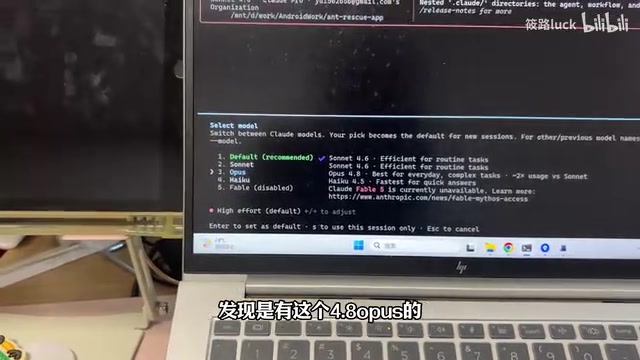
To understand this difference, you need to know that Anthropic's Claude model family currently includes multiple tiers: Haiku (lightweight and fast), Sonnet (balanced), and Opus (most capable). Claude Code may default to calling a Sonnet-level model, while Opus 4 represents Anthropic's current top-tier reasoning capability, performing significantly better than lower-tier models on complex code generation, multi-file refactoring, and architecture design tasks. The difference between model versions isn't just about output quality — it also affects context understanding depth, instruction-following precision, and multi-step reasoning ability. This is why the same tool can feel "worlds apart" under different models — the underlying model's capability directly determines the tool's ceiling.
After switching to Opus 4, his assessment of Claude Code improved noticeably, noting it "should be smarter, and it's faster too." This reminds us that when using AI programming tools, always confirm which model version is being called — otherwise you might form an incorrect judgment about the tool.
Claude Code Account Ban Risk: The Sword of Damocles for Chinese Users
For users in China, the biggest concern about subscribing to Claude Code isn't the price — it's the risk of account bans. The creator admitted that his colleague had already had two accounts banned, yet he still chose to subscribe.

Anthropic's Terms of Service explicitly restrict access from certain regions, and users in mainland China face the risk of violating the ToS (Terms of Service) when using Claude services. Account bans are typically triggered by multiple factors: IP address anomalies (frequent node switching), payment information mismatching the registered region, unusual usage patterns, etc. Once banned, appeals are usually unsuccessful, and the linked credit card may also be flagged. This risk has led Chinese developers to form unique usage strategies — short-term intensive use, avoiding long-term dependency, and maintaining local backups.
His coping strategy was quite pragmatic:
- Use it intensively: Plan to start heavy usage the next day, maximizing the tool's value before any potential ban
- Push progress forward: Advance current tasks, "so it won't matter if the account gets banned later"
- Document and observe: Promised to keep updating on account status, providing reference for other users on the fence
He offered an interesting benchmark: "If I don't get banned tomorrow, then there's a chance I won't get banned at all, or if it lasts 10 days to half a month, that would be great." This mindset represents the real situation many Chinese AI tool users face — finding balance between tool benefits and policy risks.
Domestic AI Models vs. Claude Code: How to Choose?
In the video, the creator raised a thought-provoking point: many people suggest using domestic models for simple tasks and foreign models for complex ones, but frequently switching between tools is itself a time cost.

In software engineering, "Context Switching Cost" is a widely studied productivity killer. For AI programming tools, this cost manifests across multiple dimensions: differences in prompt styles between tools (the same requirement needs different phrasing for different models), reloading project context (each tool needs to rebuild its understanding of the codebase), inconsistency in output formats and code styles, and frequent adjustments to the developer's mental model. Research shows that programmers need an average of 23 minutes to return to their previous focus state after being interrupted. Frequently switching between domestic and overseas models is essentially a form of continuous cognitive interruption.
His core viewpoint:
"It's not that domestic models are bad — for some very complex tasks, foreign models are still better."
But more importantly, he believes that rather than switching back and forth between different tools, it's better to pick one tool with the strongest overall capability and use it exclusively — this actually improves overall efficiency.
This viewpoint has merit. For professional developers, the hidden costs of tool switching — context loss, differences in operational habits, repeated project configuration — are often underestimated. A sufficiently powerful primary tool, even if it's "using a sledgehammer to crack a nut" for simple tasks, can deliver efficiency gains through a unified workflow that far exceed the differences between models themselves.
The True Value of AI Programming Tools: A Dual Boost in Confidence and Efficiency
The most compelling statement in the video was: "With a good tool like this, you have much greater confidence. It's not that you're particularly dependent on the tool, but with its support, your overall work efficiency is excellent."
This reveals the true value of AI programming tools — not replacing developers, but empowering them. The "confidence boost" the creator mentioned actually corresponds to an important concept in human-AI collaboration research — "capability boundary expansion." In traditional development, developers facing tasks beyond their skill range often choose to avoid them or simplify requirements. The introduction of AI programming tools changes this decision pattern: developers become willing to attempt more complex architecture designs, explore unfamiliar tech stacks, and implement features they previously thought "impossible to write by hand."
This psychological shift produces compound effects — more attempts lead to more learning, and more learning further improves the efficiency of AI collaboration. This is why the value of AI tools cannot be measured solely by "code generation speed" — the confidence boost itself is part of productivity.
Claude Code Subscription Advice for Those on the Fence
Based on this creator's actual experience, if you're also considering subscribing to Claude Code, here are some points worth noting:
- Confirm the model version: Make sure to use Opus 4, otherwise the experience will be significantly diminished. You can confirm the current model tier in Claude Code's settings or conversation interface — if you don't see the Opus option, try reopening the project directory or checking your subscription permissions
- Prepare for potential bans: Users in China face account ban risks, so avoid storing critical, irreplaceable project configurations on the platform. Keep all important code and configurations under local Git version control to ensure no work is lost even if the account gets banned
- Efficiently utilize the time window: If you decide to subscribe, focus your energy and prioritize completing core tasks first. It's recommended to prepare a prioritized task list in advance, putting the most complex tasks that best leverage AI value at the top
- $20 value proposition: For developers with complex programming needs, even if you only use it for 10 days, the daily cost is just $2 — well worth it compared to the efficiency gains. For reference, GitHub Copilot costs $10/month, while Claude Code's capability ceiling for complex tasks is notably higher
As for how long this account will ultimately last, we can continue following this creator's updates. His willingness to "test the waters" provides valuable reference for the entire community.
Key Takeaways
Related articles
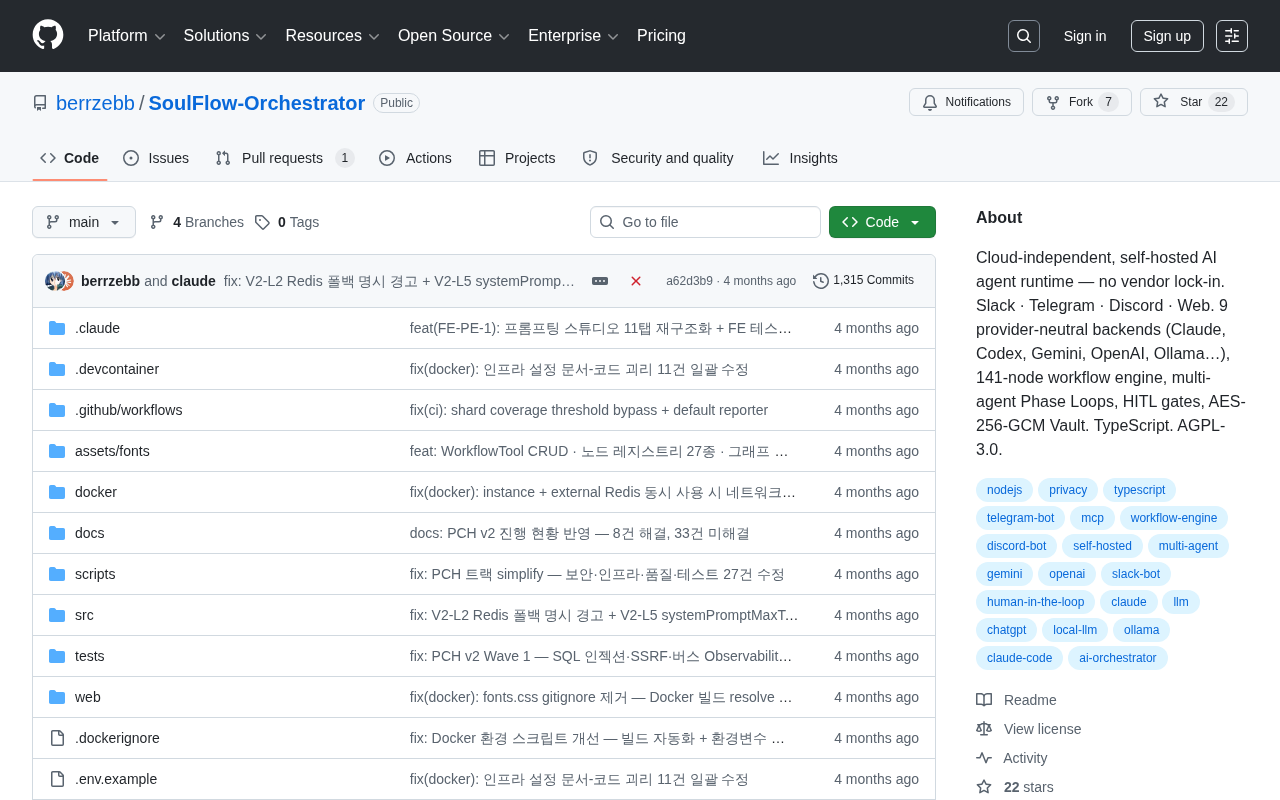
SoulFlow-Orchestrator: A Self-Hosted, Vendor-Lock-In-Free AI Agent Runtime
SoulFlow-Orchestrator is an open-source, self-hosted AI agent runtime with no vendor lock-in. Supports 9 neutral backends (Claude, OpenAI, Ollama), 141-node workflow engine, multi-agent loops, and HITL gates.
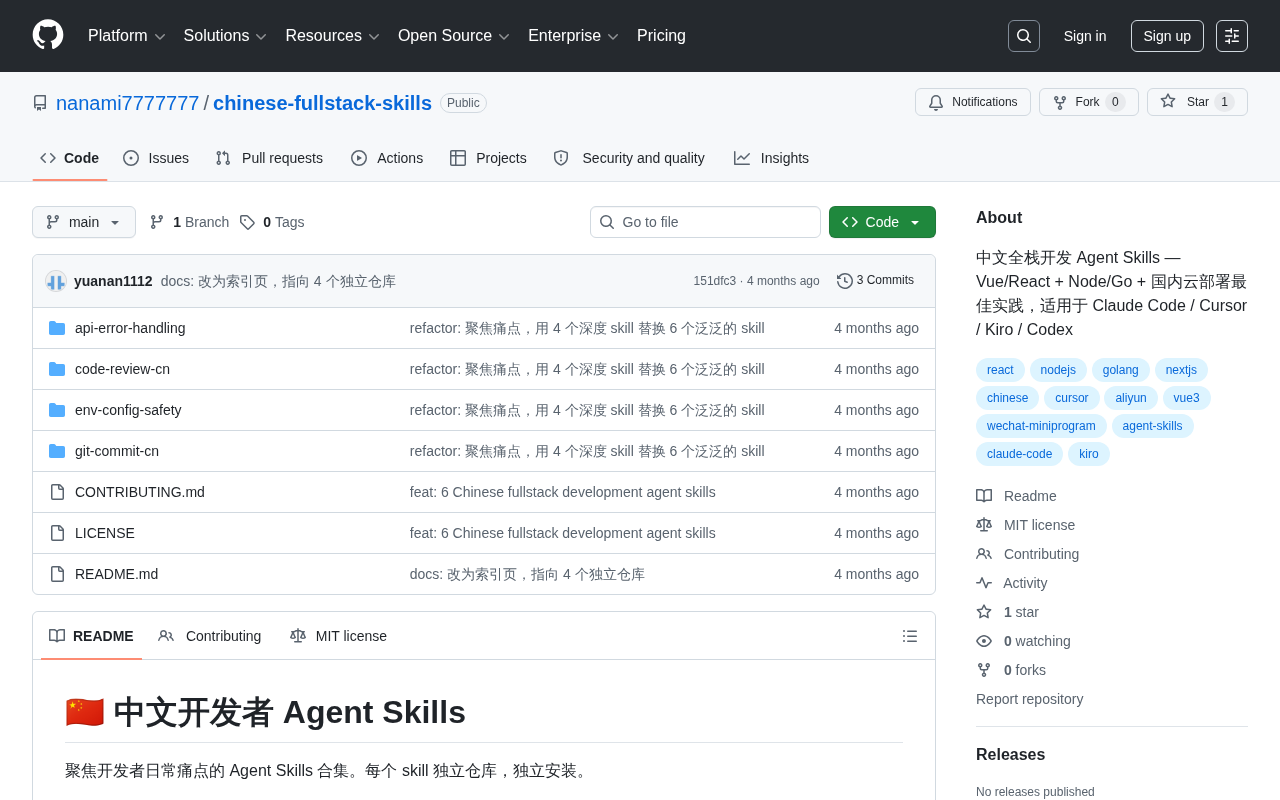
Chinese Full-Stack Agent Skills: A Skill Library Tailored for Domestic AI-Assisted Development
chinese-fullstack-skills is an Agent Skills library for Chinese full-stack development, covering Vue/React, Node/Go, and domestic cloud deployment best practices. Compatible with Claude Code, Cursor, Kiro, and Codex.
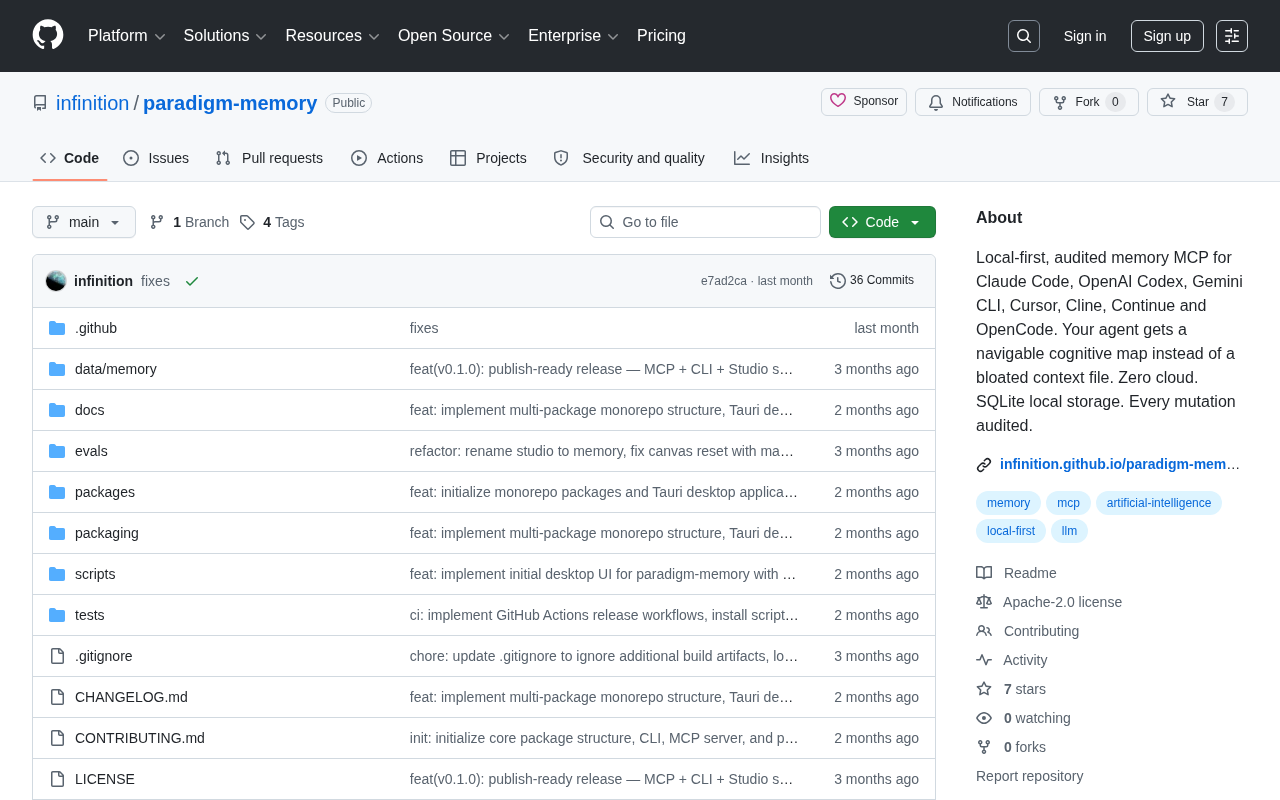
Paradigm Memory: A Local-First Memory System for AI Coding Assistants
paradigm-memory is a local MCP memory tool for Claude Code, Cursor, and Cline. It uses SQLite local storage, zero cloud, full audit trails, and a navigable cognitive map instead of bloated context files.