Claude Cowork Merges into Claude: Anthropic Bets on General-Purpose AI Agents
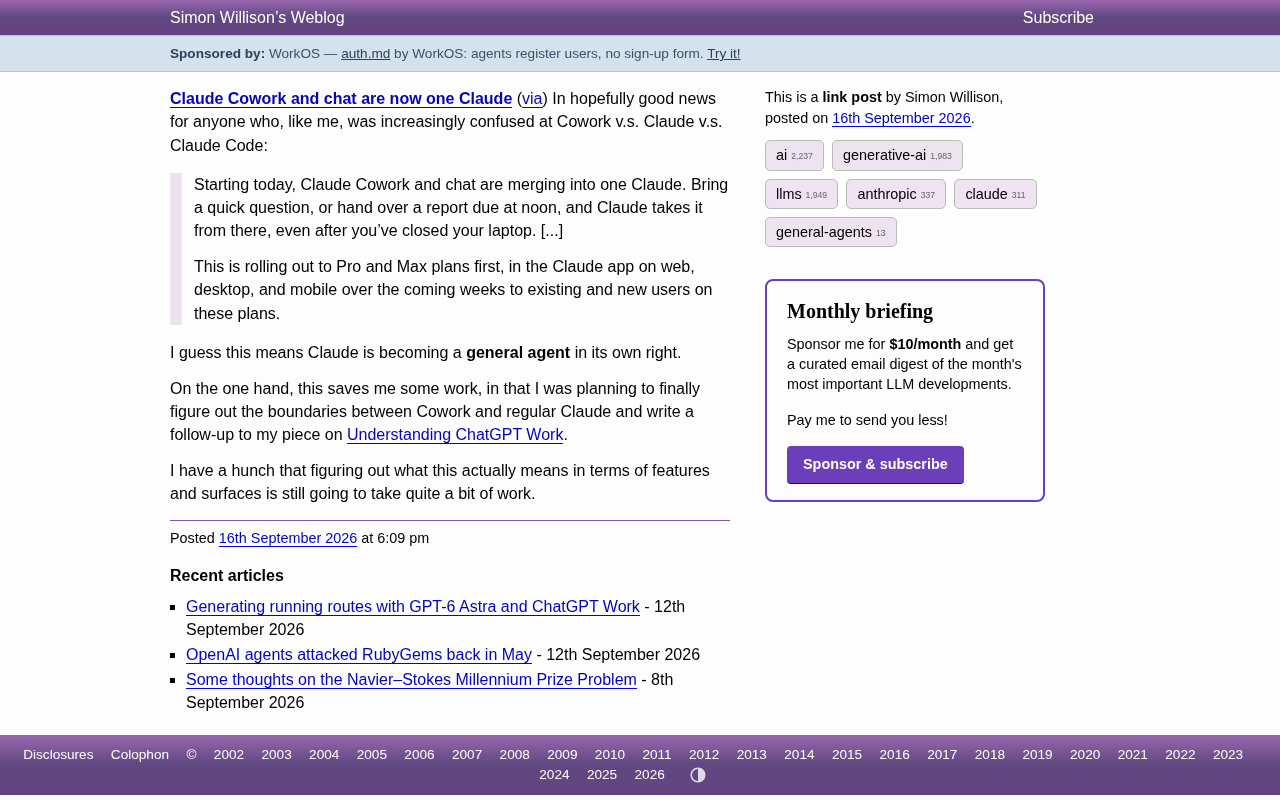
Anthropic merges Claude Cowork into Claude, repositioning it as a general-purpose agent with async background task execution.
Anthropic has merged Claude Cowork and its chat interface into a single product, marking Claude's transition from an on-demand conversational tool to a general agent capable of asynchronous task execution. Users can now hand off tasks and go offline while Claude continues working in the background. The new features roll out first to Pro and Max subscribers across web, desktop, and mobile. Commentator Simon Willison notes the merger is more than a rename, with functional boundaries still to be explored. Industry-wide, this reflects a broader shift toward agentic AI — raising the bar for model autonomy, reliability, and safety.
A Strategic Shift Behind a Product Line Consolidation
Anthropic recently announced that Claude Cowork and the chat interface will be merged into a unified Claude experience. While this might look like a simple product rename, it actually signals a fundamental repositioning of how Anthropic thinks about AI applications — Claude is becoming a standalone general agent.
For users who have long been puzzled by the boundaries between Cowork, Claude, and Claude Code, this consolidation is welcome news. Developer and tech commentator Simon Willison admitted he had been planning to write a dedicated piece untangling the functional differences between Cowork and standard Claude — a follow-up to his article on understanding ChatGPT Work. In a sense, Anthropic's official merger saved him the trouble.
What the Merged Claude Can Do
According to Anthropic's official blog, the merged Claude is designed to handle both lightweight conversations and heavy-duty tasks. Users can throw it a quick question, or hand over a report due at noon and close their laptop — Claude will keep working in the background, even after you've gone offline.
"Bring a quick question, or hand over a report due at noon, and Claude takes it from there, even after you've closed your laptop."
This line is the key to understanding the entire change. It signals that Claude is no longer just an on-demand conversational assistant, but an agent capable of asynchronous task execution and continuous operation. This "hand it off and walk away" work model represents the defining frontier separating today's AI products from autonomous agents.
Asynchronous task execution is the core technical distinction between agents and traditional conversational assistants. Classical LLM interactions rely on a synchronous request-response model: user input → model inference → immediate output, typically completing within seconds with the session context ending there. Asynchronous execution, by contrast, means the model can maintain persistent task state, invoke external tools (such as browsers, code execution environments, and file systems), complete multi-step operations without real-time user involvement, and proactively notify users upon completion. This requires underlying architecture with persistent task queues, interruptible and resumable execution states, and fault tolerance for failed tool calls. Current technical approaches vary across the industry: OpenAI's Assistants API manages async state through Run objects, Google's Vertex AI Agent Builder relies on workflow engines, and Anthropic's own Computer Use feature has already validated some of the foundational capabilities. Whether the merged Claude can reliably deliver on its promise of "still working after you close your laptop" at the consumer product level will largely depend on the engineering maturity of this asynchronous execution layer.
Rolling Out to Pro and Max Users First
In terms of rollout, Anthropic is taking a staged approach. The new features will be available first to Pro and Max subscribers across Claude's web, desktop, and mobile apps — for both existing and new subscribers — with a gradual rollout over the coming weeks.
Prioritizing high-value subscribers has become standard practice in the industry. Tying the most ambitious agentic capabilities to higher-tier paid plans serves both as a test of willingness to pay and as a way to preserve room for broader accessibility down the line.
What "General Agent" Actually Means
Positioning Claude as a general agent is the most telling signal from this consolidation. Over the past year, debate has swirled around whether AI will evolve from assistant to agent — and Anthropic's move effectively answers that question. The company is no longer treating conversation (chat) and collaborative work (Cowork) as two separate products; instead, it's converging them into a single entity capable of autonomous planning, execution, and delivery.
This reflects a product philosophy similar to that of OpenAI and other competitors — de-emphasizing the concept of "feature modules" and reinforcing the image of "one AI that gets things done." When users no longer need to choose between multiple entry points and can hand everything to the same Claude, the product's mindshare grows substantially stronger.
That said, Simon Willison also cautioned that the significance of this merger goes far beyond a name change. He was candid: figuring out what this consolidation actually means at the functional level and across different surfaces will require considerable exploration. In other words, the official announcement sketches a direction, but the specifics — capability boundaries, task-handling depth, the reliability of background execution — still need to be validated through real-world use.
General agent carries specific meaning in the AI field, distinct from "special-purpose agent." Special-purpose agents are designed for a single domain (e.g., code review, customer support), relying on fixed tool sets and predefined execution workflows. General agents, by contrast, emphasize cross-domain goal understanding, dynamic tool selection, and multi-step planning — given a high-level objective, the agent can decompose subtasks, decide which tools to invoke, and adjust its path based on feedback during execution. Academically, this concept traces back to the BDI (Belief-Desire-Intention) model and the ReAct (Reasoning + Acting) framework; over the past year, as LLM capabilities have advanced, engineering frameworks like AutoGPT, LangGraph, and CrewAI have moved these ideas from theory into practice. By naming Claude a general agent, Anthropic is conveying a product philosophy: users don't need to understand the underlying tools or processes — they simply describe the outcome they want, and Claude handles the planning and execution end-to-end. Delivering on this positioning ultimately depends on the model's planning reliability in real-world tasks, not merely on interface-level unification.
Impact on Users and the Industry
For everyday users, the most immediate benefit is reduced cognitive overhead. The coexistence of Cowork, Claude, and Claude Code had imposed a meaningful conceptual burden even on technically savvy users. With unification, users face just one Claude and can submit tasks of any complexity without needing to choose the right entry point.
From a broader industry perspective, this is yet another example of mainstream AI vendors collectively migrating toward an agentic model. When "the AI keeps working after you close your laptop" becomes a product's default promise, AI's role shifts from a passively responsive tool to a trusted collaborator. That shift demands greater user trust — and places far more rigorous demands on the underlying model's autonomy, reliability, and safety.
This consolidation is Anthropic's clearest statement yet about its position in the agent race. How much of that promise translates into real-world experience will become clear as Pro and Max users gradually get their hands on it.
Related articles
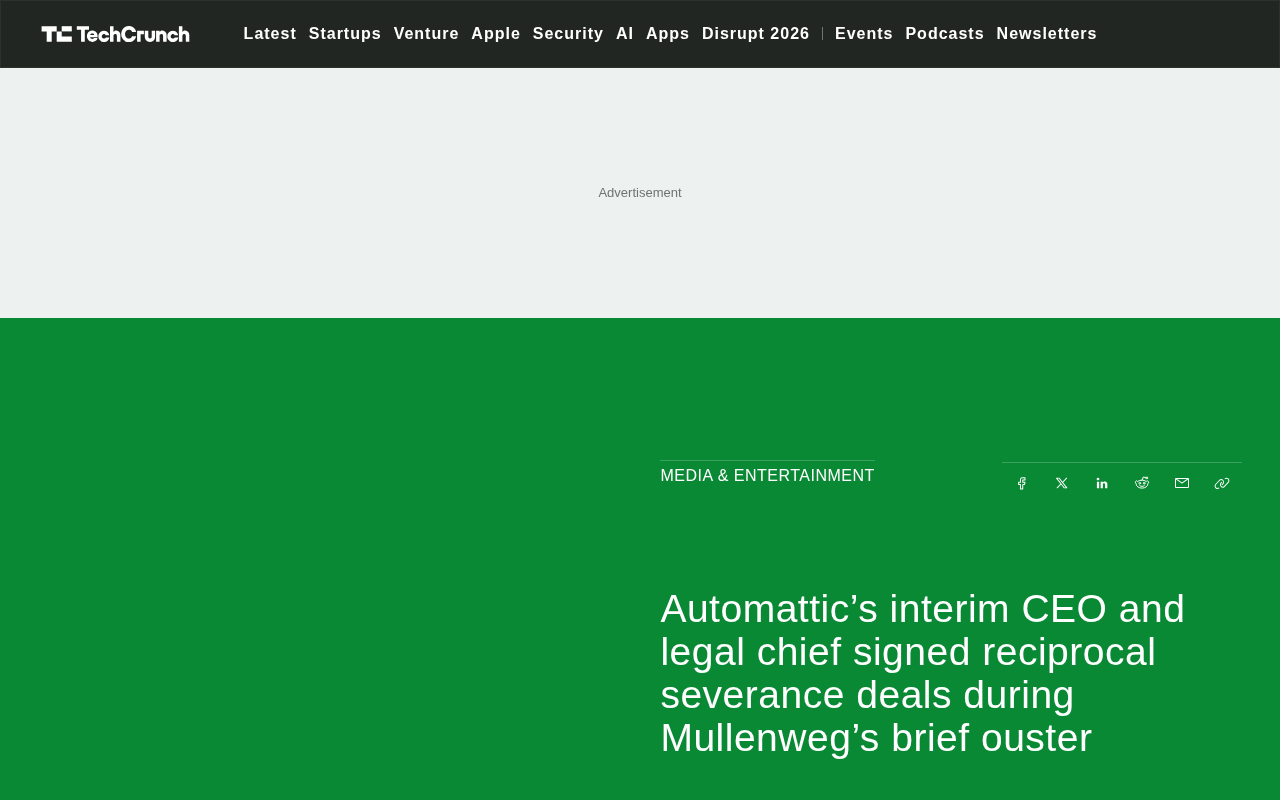
Automattic Executives Signed Reciprocal Severance Agreements During Mullenweg's Brief Ouster
Automattic's CFO and General Counsel signed reciprocal severance agreements during Matt Mullenweg's brief ouster, covering one year's salary and accelerated equity vesting, raising corporate governance concerns.
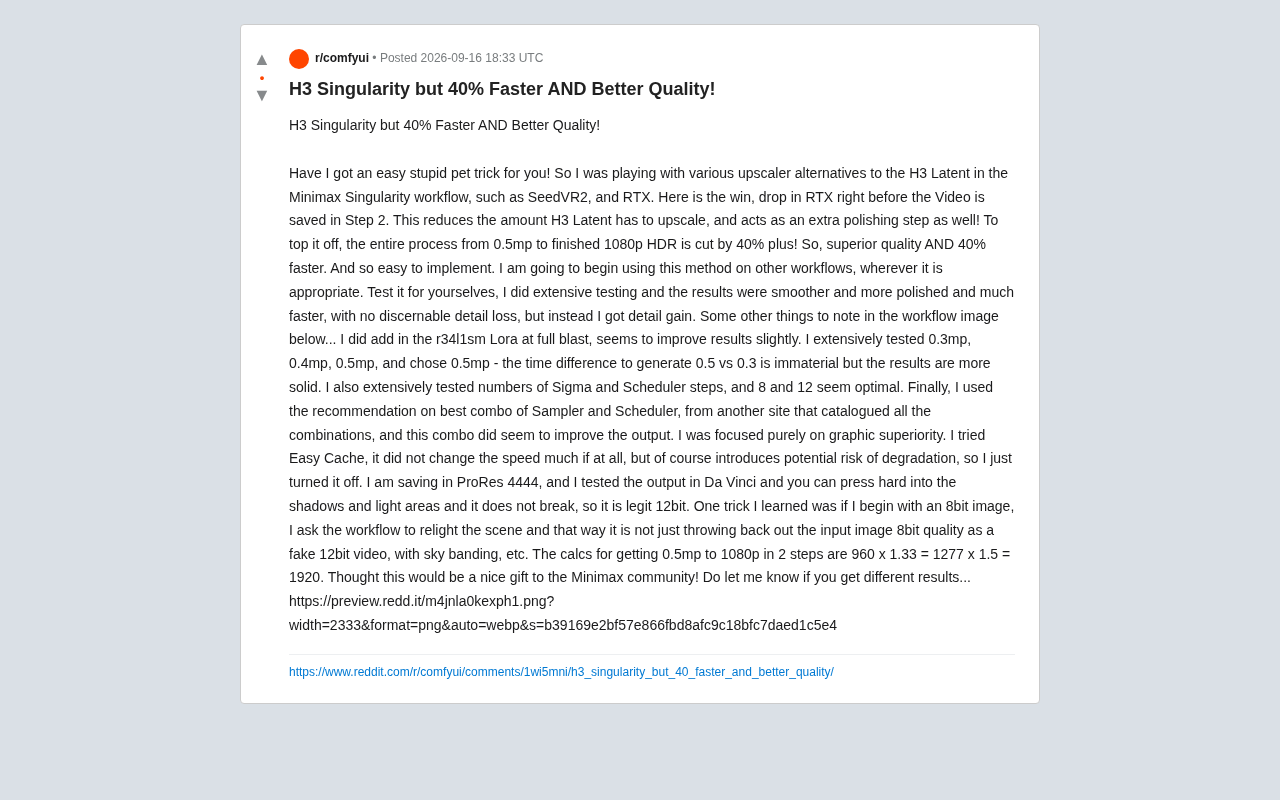
H3 Singularity Optimization: 40% Speed Boost With Better Image Quality
A Reddit user's Minimax Singularity workflow tip: insert an RTX upsampler before H3 Latent for 40%+ speed gains and better quality. Covers parameters, 12-bit output, and more.
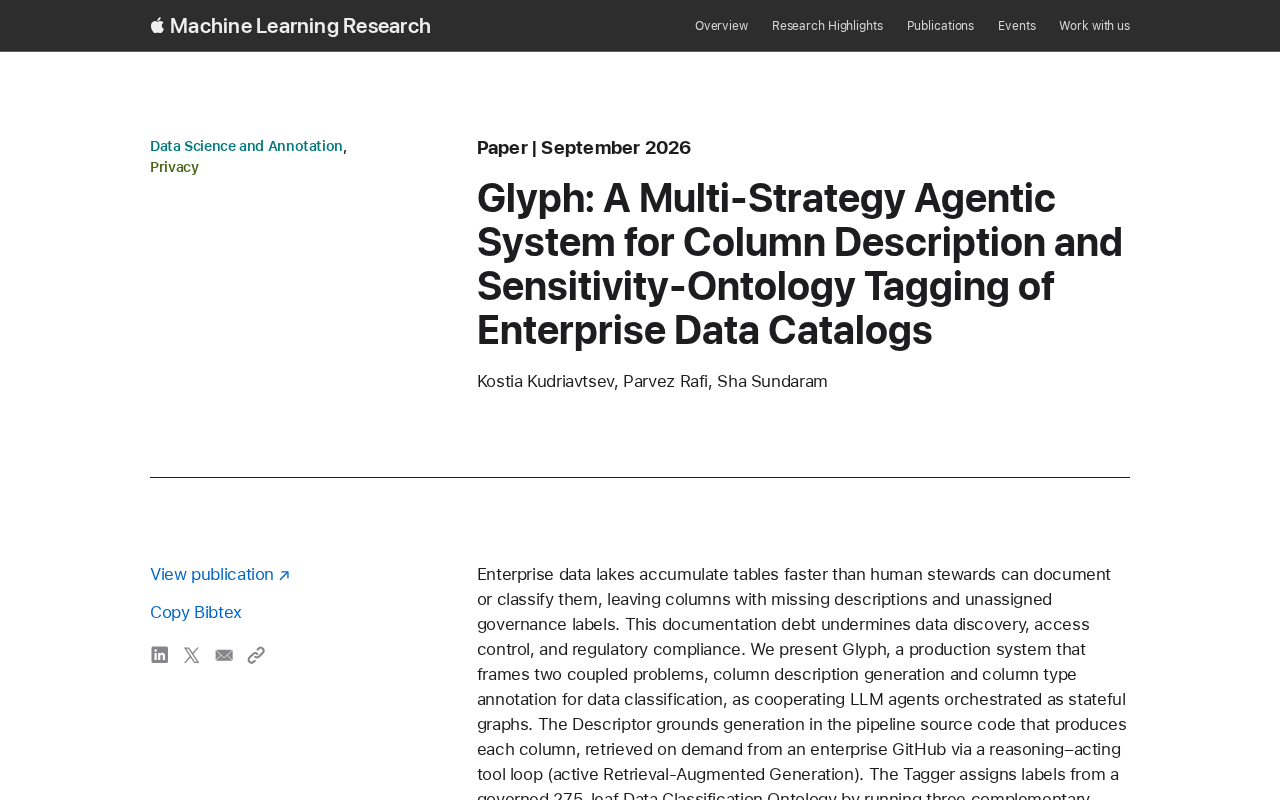
Glyph: A Multi-Strategy Agent System for Automated Enterprise Data Catalog Annotation
Glyph is a multi-strategy LLM agent system for enterprise data catalogs that automates column description generation and sensitivity ontology tagging, grounding outputs in pipeline source code to improve accuracy.