Claude Fable 5.2 Claims to Crack Two Open Problems in Black Hole Physics

Claude Fable 5.2 claims to solve open problems in black hole physics, prompting cautious discussion of AI research capabilities.
The article discusses a Hacker News post claiming Claude Fable 5.2 solved two open problems in black hole physics. It notes that issues like the black hole information paradox remain unresolved due to cracks between general relativity and quantum mechanics, requiring new mathematical tools and physical intuition rather than computation alone. The author stresses distinguishing complete verifiable derivations from directional ideas, as public information lacks derivation details and verification paths. Polarized community reactions reflect the tech community's emerging reproducibility-centered criteria for AI scientific results, concluding that AI conclusions must undergo peer review and independent reproduction without lowered standards.
From Language Model to Physics Research: A Cross-Disciplinary Capability Display
According to discussions in the Hacker News community, a model called Claude Fable 5.2 claims to have solved two open problems in black hole physics. The news drew attention in the tech community; while the discussion heat (37 points, 6 comments) wasn't exactly explosive, the question it points to is sharp enough: when AI begins to intervene in the most daunting frontiers of theoretical physics, is it a genuine research assistant, or yet another over-interpreted demo?
Black hole physics has long been regarded as a "stress-testing ground" for theoretical physics. Issues such as the information paradox, the nature of singularities, and quantum effects at the event horizon have attracted a large number of top minds for decades, yet no consensus answer has ever formed. Any claim of "solving open problems" deserves to be dissected with a more cautious eye, rather than concluding based on a single headline.
What the Two Open Problems in Black Hole Physics Mean
Why These Problems Are Hard
The open problems in black hole physics remain "open" often not because of insufficient computational power, but because the existing theoretical frameworks themselves have cracks. General relativity breaks down at singularities, quantum field theory struggles to be self-consistent in strong gravitational backgrounds, and the seam between the two is exactly where problems cluster. Such problems typically require new mathematical tools or new physical intuition, rather than simply plugging existing equations in and computing.
For this reason, if an AI model truly made progress on such problems, its significance would go beyond "improved tool efficiency" and touch on the more fundamental proposition of "whether machines can produce theoretical insight."
The black hole information paradox is the most typical example for understanding the aforementioned "cracks in theoretical frameworks." According to general relativity, information from matter falling into a black hole disappears with the singularity; but quantum mechanics requires physical evolution to be unitary, and information must be conserved. Hawking pointed out in 1974 that black holes radiate due to quantum effects and eventually evaporate, which makes it appear that information is truly destroyed, directly conflicting with the fundamental axioms of quantum mechanics. For decades, string theory, the holographic principle, the firewall hypothesis, and other proposals have each argued their case, yet none has formed a universally accepted conclusion. This also explains why such problems cannot be solved by increasing computational power—they touch on how the two major theoretical systems can be unified, not on the solution of some equation.
The Need to Distinguish Between "Solving" and "Proposing New Ideas"
When evaluating such claims, a key distinction is: did the model provide a complete, verifiable derivation, or did it propose a directional idea worth further research? The word "solve" has a strict meaning in physics—conclusions need to withstand peer review and subsequent verification. Currently, public information only presents claims at the headline level, lacking derivation details, assumptions, and verification paths, which is itself a reason to remain cautious.
In the context of physics, "solving an open problem" usually means providing a self-consistent mathematical framework that reproduces classical results in known limits and makes new predictions that can be tested by observation or further derivation. Peer review focuses on exactly these three things: whether the derivation has no logical gaps, whether the assumptions are explicit and reasonable, and whether the conclusions are compatible with existing experimental and theoretical constraints. Merely giving a formal expression or a heuristic argument is usually regarded only as "proposing an idea," still a considerable distance from "solving." Therefore, when seeing claims that "AI solved an open problem," the most effective criterion is whether it comes with a complete, independently checkable chain of derivation.
Signals Revealed by Community Reaction
The discussion on Hacker News shows a typical polarization. Some commenters expressed surprise at the model's capabilities, considering it another milestone in AI-assisted scientific research; others questioned the reproducibility of the claim, asking what the specific form of the "solution" is and whether it has been independently verified.
This divergence is itself valuable. It shows that the tech community's criteria for evaluating AI scientific results are taking shape: not looking at promotional rhetoric, but at verifiability. For readers interested in AI for Science, rather than rushing to take sides, it's better to treat this as a sample for observing how "AI participation in basic science" is being accepted.
Practical Implications for AI Research Assistance
Where the Boundaries of Model Capabilities Lie
From an engineering perspective, language models have indeed shown increasingly strong capabilities in symbolic reasoning, literature synthesis, and mathematical derivation assistance. But breakthroughs in theoretical physics often depend on a deep understanding of the physical picture, not just symbolic manipulation. Whether a model can distinguish between "formally self-consistent" and "physically correct" is the core test for such applications.
There are already several reference cases in the AI for Science field, such as AlphaFold's breakthrough in protein structure prediction and attempts by some models to assist in proving mathematical conjectures. The common feature of these success stories is: the tasks have clearly formalized goals and automatically determinable correctness criteria, and the model outputs can be immediately checked by machines or experiments. In contrast, open problems in theoretical physics often lack even agreement on "what counts as a correct answer," and correctness assessment relies heavily on the physical intuition of human experts. This difference determines that the application of language models in fields like black hole physics, in the short term, is more likely to remain at the stage of proposing candidate ideas, retrieving relevant literature, and organizing arguments, rather than directly giving a universally recognized final solution.
Verification Mechanisms Matter More Than Claims
Regardless of Claude Fable 5.2's actual contribution, this incident once again reminds us: scientific conclusions produced by AI must enter the existing verification system. Peer review, independent reproduction, and consistency checks with known physical constraints—these steps will not have their standards lowered just because the producer is AI. Conversely, if a model can truly and consistently produce verifiable new results, the collaborative approach of scientific research workflows may be reshaped.
Conclusion: Stay Curious, Stay Skeptical
AI's intervention in frontier fields like black hole physics is itself worthy of attention. But a single Hacker News post is not enough to constitute a definitive conclusion. For tech professionals, a more pragmatic attitude is to continuously track subsequent derivation details and verification results, rather than rushing to label it a "breakthrough" or "gimmick" when information is incomplete. The real answer will gradually emerge in the verifiable details.
One-line Summary
Claude Fable 5.2 claims to solve open problems in black hole physics, sparking cautious discussion about AI's scientific research capabilities.
Paragraph Summary
The article revolves around a Hacker News discussion that "Claude Fable 5.2 solved two open problems in black hole physics," pointing out that problems like the black hole information paradox have long remained unsolved due to cracks in the frameworks of general relativity and quantum mechanics, requiring new mathematical tools and physical intuition rather than mere computation. The author emphasizes the need to strictly distinguish between "complete verifiable derivation" and "directional ideas"; current public information only contains headline-level claims and lacks derivation details and verification paths. Community reactions are polarized, reflecting that the tech community is forming evaluation criteria centered on reproducibility for AI scientific results. The conclusion is: AI scientific conclusions must enter the peer review and independent reproduction system, standards should not be lowered based on the producer's identity, and we should stay curious while remaining skeptical.
Related articles
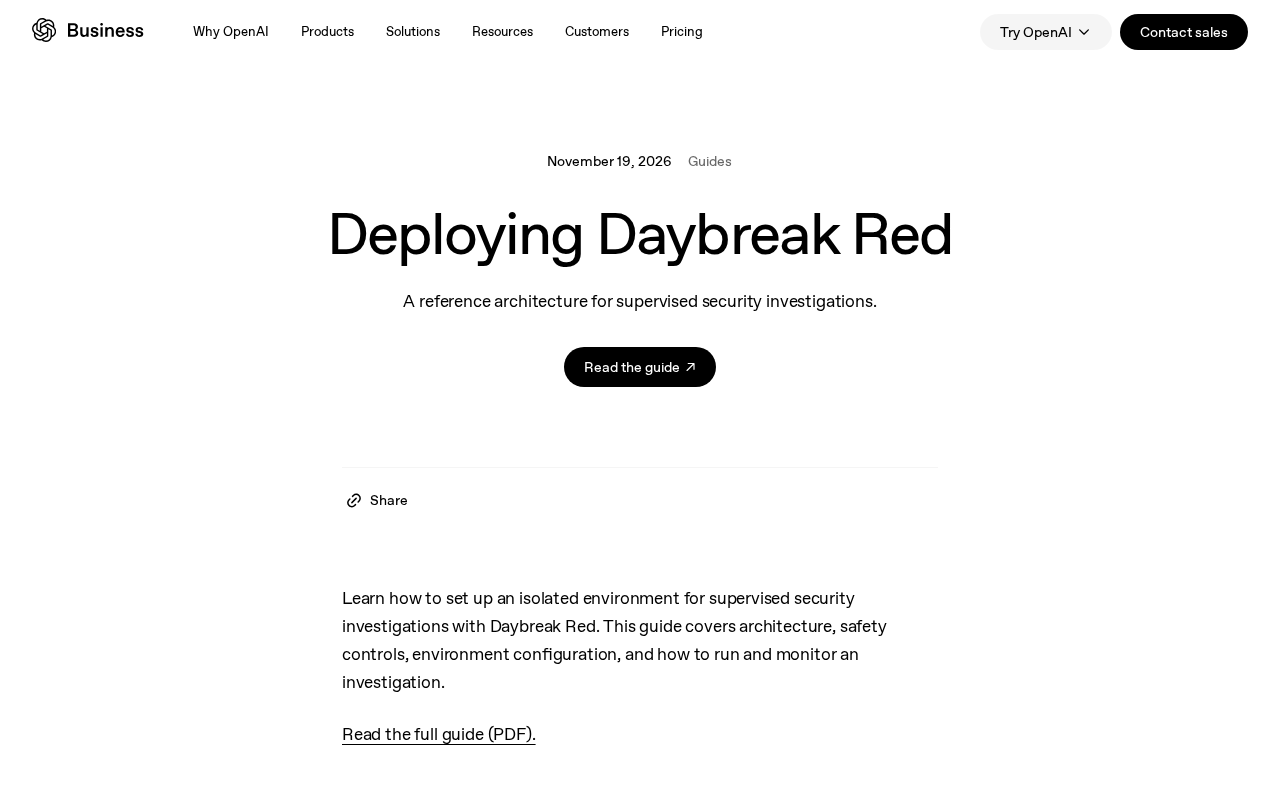
Daybreak Red Deployment Guide: A Reference Architecture for Supervised Security Investigation
A breakdown of the Daybreak Red reference architecture: security control design, deployment configuration process, and runtime monitoring for supervised security investigation.
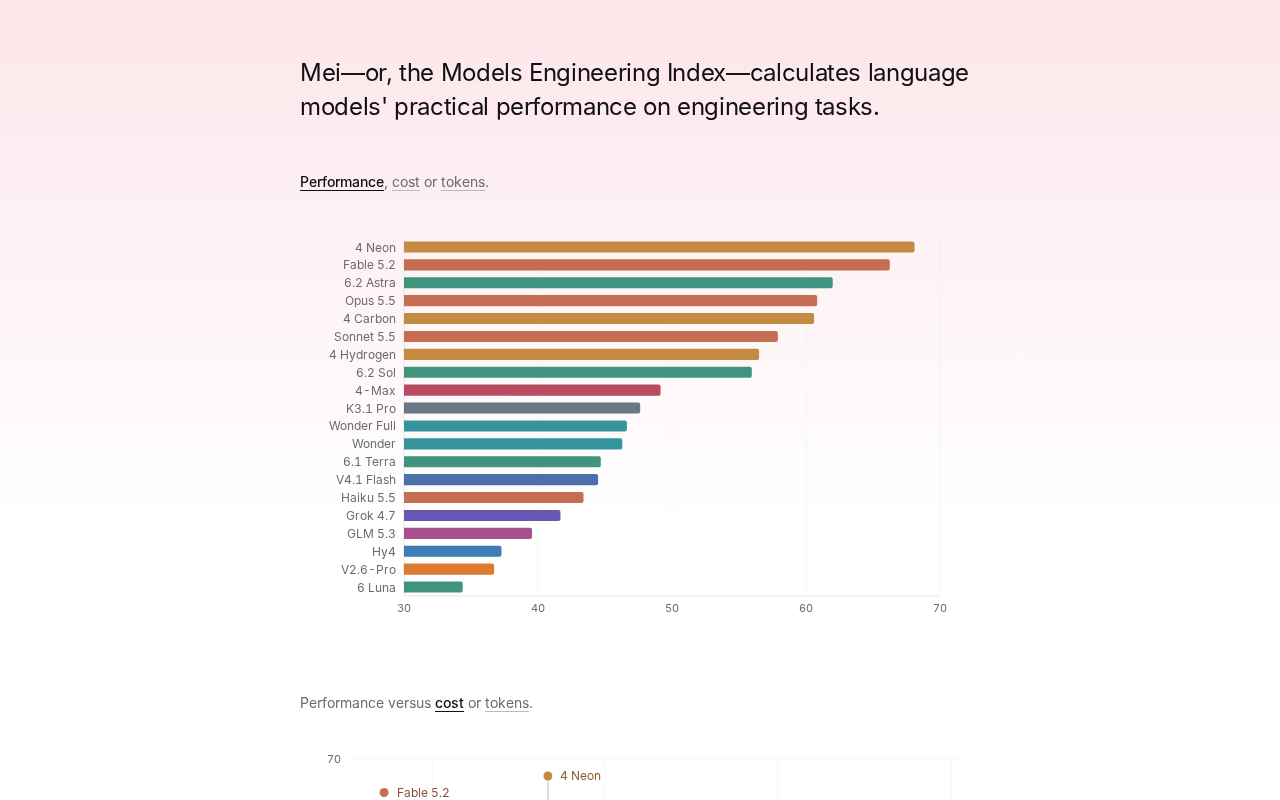
Gemini 4 Neon Tops the Models Engineering Index
Gemini 4 Neon tops the Models Engineering Index, sparking Hacker News debate over ranking credibility and evaluation methods. Here's what it means for developers.

Apple's Self-Developed AI Agent: An Agent That Can Operate Your Mac Is Coming
Apple is reportedly developing an AI agent that can operate a Mac, targeting Meta Muse, Claude, OpenAI Dots, and others. This article analyzes Apple's system-level advantages, the competitive landscape, and likely rollout paths in the agent race.