Claude Fable 5/5.1 Outage: A 30-Minute Postmortem
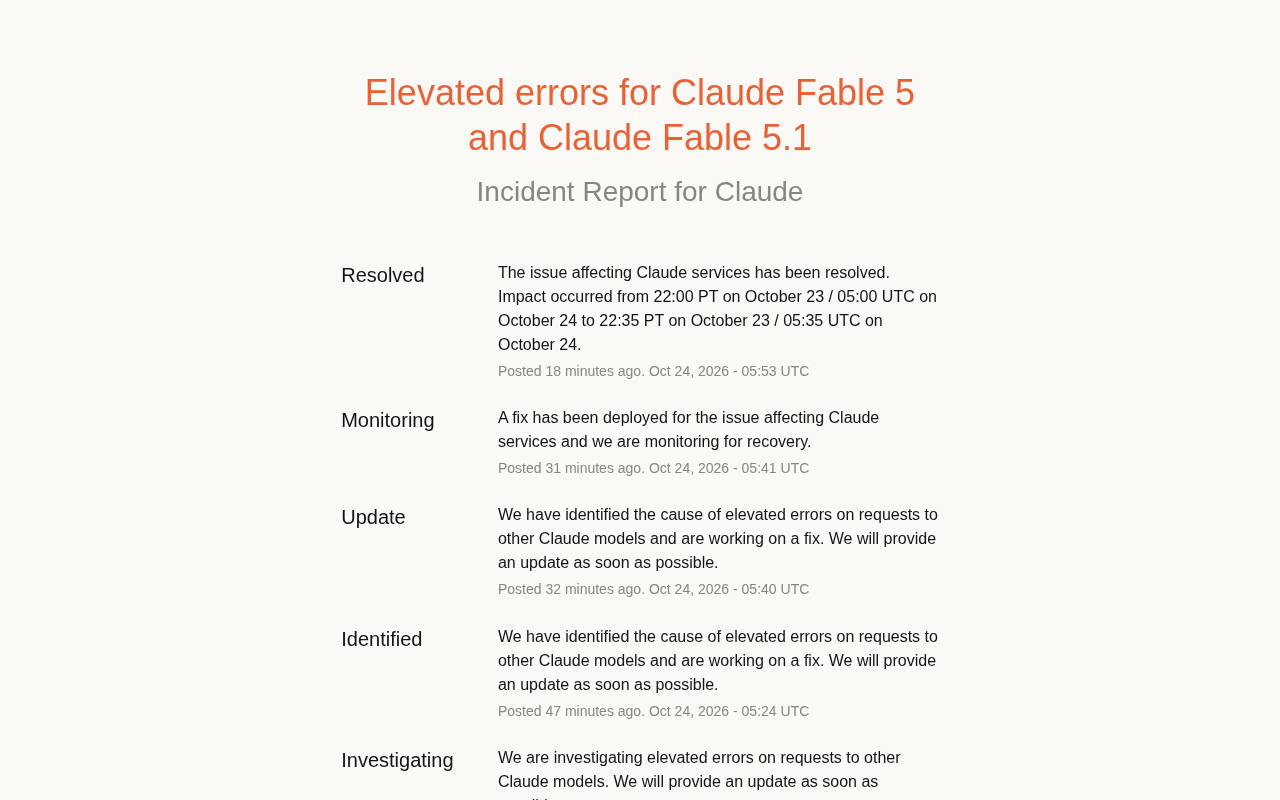
Claude Fable 5/5.1 error rates rose for about 35 minutes; fix deployed in 17 minutes.
The article reviews an approximately 35-minute elevated error rate incident affecting Claude Fable 5 and Fable 5.1. Per the official status page, the outage began at 22:00 PT on October 23; Investigating was first reported at 05:16 UTC, upgraded to Identified 8 minutes later, a fix was deployed at 05:41 UTC entering Monitoring, and Resolved was marked at 05:53 UTC. The update noted that "other Claude models" also saw elevated error rates, so the issue wasn't limited to a single model. The article recommends status page RSS/Webhook alerts, request-level retries with exponential backoff, multi-model routing, and user-facing degradation, and notes that because large model services share compute pools and scheduling layers, outages more likely stem from common dependencies than single-model defects.
Overview: An API Outage Resolved Quickly
According to information disclosed on the official status page, two models—Claude Fable 5 and Claude Fable 5.1—recently experienced a round of service anomalies characterized by "elevated errors." The status page timeline shows the outage began at 22:00 PT on October 23 (05:00 UTC on October 24) and ended at 22:35 PT / 05:35 UTC, lasting approximately 35 minutes in total. Interestingly, the official team deployed a fix and entered the monitoring phase at 05:41 UTC, then officially marked the incident as "Resolved" at 05:53 UTC. From "detection" to "fix deployed" took only about 17 minutes—a remarkably fast response for a large model service that relies on complex reasoning chains.
For developers building products with Claude, the core takeaway from this incident isn't the "downtime" itself, but the scope of error propagation: the status page update explicitly mentioned that "requests to other Claude models also saw elevated error rates," indicating the problem wasn't entirely confined to a single point in the Fable 5 series but showed signs of spreading to adjacent services.
Reconstructing the Incident Timeline
The 8 Minutes from Investigating to Identified
At 05:16 UTC, the official team first reported externally with an "Investigating" status, stating they were investigating elevated error rates on Claude model requests. Eight minutes later, at 05:24 UTC, the status was upgraded to "Identified," meaning the engineering team had pinpointed the root cause and begun fixing it. This phase is the most critical part of the entire incident handling process—the real time cost of most cloud service outages often lies not in the fix itself, but in locking down the fault source from massive logs.
"Investigating," "Identified," "Monitoring," and "Resolved" are standard state machine terms used by mainstream cloud service status pages: Investigating means an anomaly has been confirmed and troubleshooting has begun; Identified means the root cause has been located and a fix plan determined; Monitoring means the fix has been deployed and metrics are being observed for recovery; Resolved means the anomaly has been eliminated and the incident closed. The significance of this state划分 is to distinguish "knowing something went wrong" from "knowing why it went wrong," helping external users estimate expected recovery time. For teams automating off the status page, state transition events themselves are subscribable signals—more structured than body text descriptions and suitable for direct mapping to internal alert levels.
Fix Deployment and Monitoring Window
At 05:40 UTC, the official team updated again, confirming the cause had been identified and the fix was being pushed forward. Just one minute later (05:41 UTC), the fix was deployed and the status moved to "Monitoring." Then at 05:53 UTC, "Resolved" was published along with the complete outage impact window. This "deploy first, observe, then close" process aligns with mature SRE practices and explains why the final impact duration was precisely framed within 35 minutes.
The "deploy first, observe, then close" approach in SRE (Site Reliability Engineering) practice stems from a basic judgment: a fix going live doesn't mean the outage is over. Deployment only changes the system state; whether metrics truly return to baseline still requires an observation window, typically judged by SLIs such as error rate and latency percentiles recovering to normal ranges and remaining stable for several minutes. This also explains why the official team didn't immediately mark the incident resolved after deploying the fix at 05:41 UTC, but waited until 05:53 UTC to close it—the monitoring period is both a validation period and a buffer for potential rollback.
Practical Impact on Developers and Responses
From public information, this outage did not disclose specific error code distributions, the proportion of affected requests, or whether it was related to specific regions or specific calling methods. This means teams using the Claude API need to rely on their own error monitoring to determine whether their business was affected. For products using Claude as a core reasoning engine, it's recommended to retain three types of fallbacks at the architectural level: first, request-level retries with exponential backoff; second, multi-model routing (switching to other available models when the Fable series is anomalous); third, user-facing error prompts and degraded experiences.
Another detail worth noting is the granularity of outage notifications. The status page updated four times within 16 minutes, from Investigating to Identified to Update, with high information density. Developers can integrate the status page's RSS or Webhook into their alerting systems rather than relying on manual refreshes, so that internal response processes can be triggered as soon as the official first notification appears.
Exponential backoff refers to retry intervals growing exponentially, e.g., 1s, 2s, 4s, 8s, usually combined with random jitter to avoid a "retry storm" caused by many clients retrying simultaneously. For large model APIs, this is especially important: inference requests themselves occupy GPU time for extended periods, and if clients retry densely during an outage, it can exacerbate queuing and timeouts. Multi-model routing dynamically distributes requests to different models or providers based on availability, requiring pre-defined capability degradation mappings at the business layer—otherwise, temporary switching during an outage often leaves no time to verify whether output quality is acceptable.
Stability Challenges of Large Model Services as Seen from This Incident
Outages in large model services are fundamentally different from traditional APIs: inference service load is highly bursty, a single request may consume several seconds of GPU time, and different models often share underlying compute pools. When Fable 5 and Fable 5.1 errored simultaneously and affected "other Claude models," a reasonable inference is that the resource scheduling layer or shared dependency components had a problem, rather than a code defect in a single model. The official team did not disclose root cause details, so this judgment remains speculative.
For developers, this 35-minute outage is a gentle reminder: even the most mature large model platforms cannot guarantee 100% availability. Designing systems with "model unavailability" as the norm is more valuable than assigning blame after the fact. Specific practices include using cached results on non-critical paths, designing long tasks for checkpoint resumption, and aligning acceptable degradation standards with business stakeholders at the SLA level.
Large model inference services typically share infrastructure such as GPU compute pools, batch schedulers, and authentication/rate-limiting gateways. So-called "shared dependency components" may include model weight loading services, request queuing and batching layers, token billing and quota systems, etc. When multiple models simultaneously show elevated error rates, the fault point is more likely in these common layers rather than in any single model's inference code. This is also the basis for inferring a "resource scheduling layer or shared dependency" problem: a single-model defect generally wouldn't simultaneously affect multiple different model families.
FAQ
Q: Which models were affected by this outage? A: The official title points to Claude Fable 5 and Claude Fable 5.1, but the status update mentioned that requests to "other Claude models" also saw elevated error rates, indicating the impact scope may be broader.
Q: How long did the outage last? A: According to the official Resolved notice, the impact window was from 22:00 PT to 22:35 PT on October 23, approximately 35 minutes.
Q: Are there any follow-up actions needed? A: The official team did not indicate any user-side actions required. It's recommended to check your own monitoring for error rates during that period and assess whether retry strategies or model routing need adjustment.
One-line Summary
Claude Fable 5/5.1 saw elevated error rates for about 35 minutes; the official team deployed a fix within 17 minutes.
Paragraph Summary
The article reviews an approximately 35-minute elevated error rate incident affecting Claude Fable 5 and Fable 5.1. According to the official status page, the outage began at 22:00 PT on October 23; Investigating was first reported at 05:16 UTC, upgraded to Identified 8 minutes later, a fix was deployed at 05:41 UTC entering Monitoring, and Resolved was marked at 05:53 UTC. The status update mentioned that "other Claude models" also experienced elevated error rates, indicating the problem wasn't limited to a single model. The article recommends developers configure status page RSS/Webhook alerts, request-level retries with exponential backoff, multi-model routing, and user-facing degraded experiences, and notes that because large model services share compute pools and scheduling layers, outages are more likely to stem from common dependencies than single-model defects.
Related articles
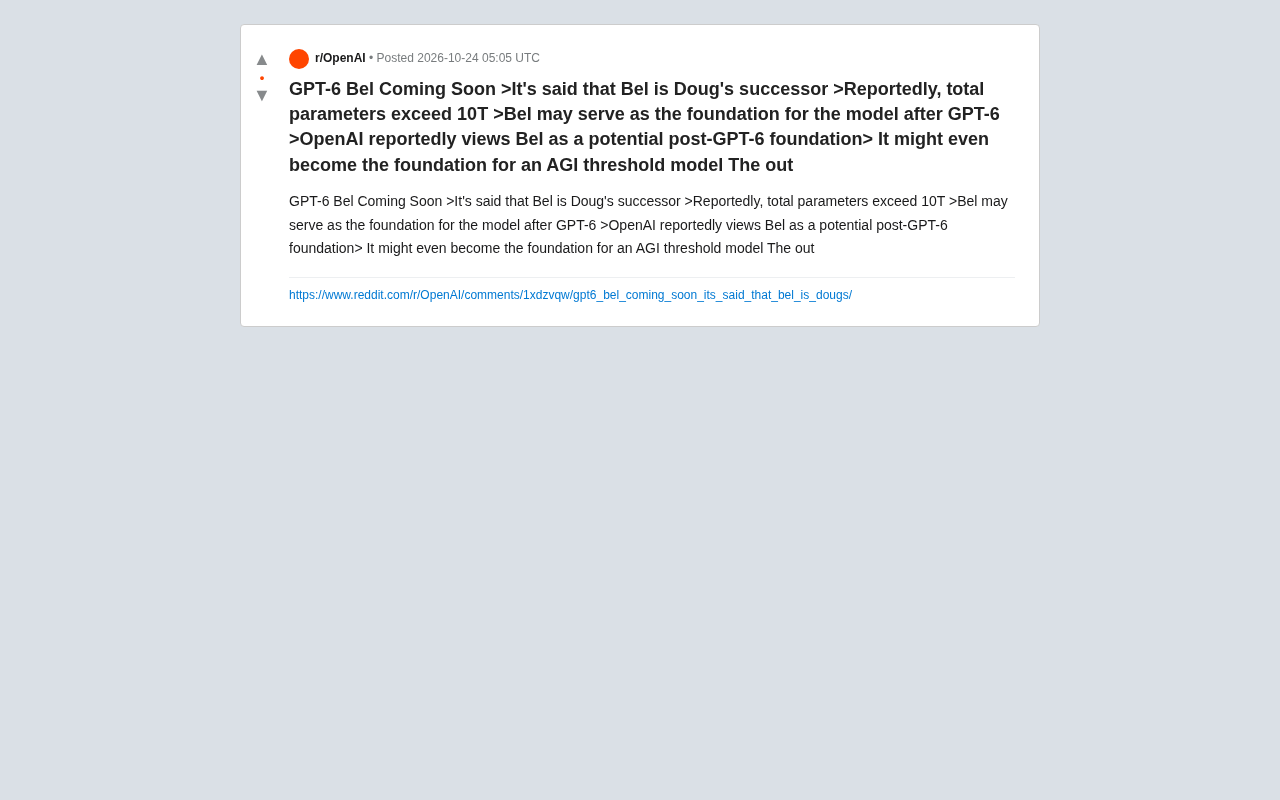
OpenAI's New Model Bel Leaked: 10 Trillion Parameters, Potentially the Foundation for AGI
A Reddit leak claims OpenAI's new model Bel is coming, with over 10 trillion total parameters, possibly serving as the foundation model after GPT-6 or even the base for the AGI threshold. This article breaks down the key claims and assesses their credibility.
Kimi K3.1 Open-Weight Model Hands-On: 3 Trillion Parameters Take On Closed-Source Giants
Kimi K3.1 open-weight model hands-on: 3T-parameter MoE, 1M-token context, stunning 3D rendering but weak spatial reasoning and factual accuracy. Benchmarks near Opus 5.5 at $2.11/task.
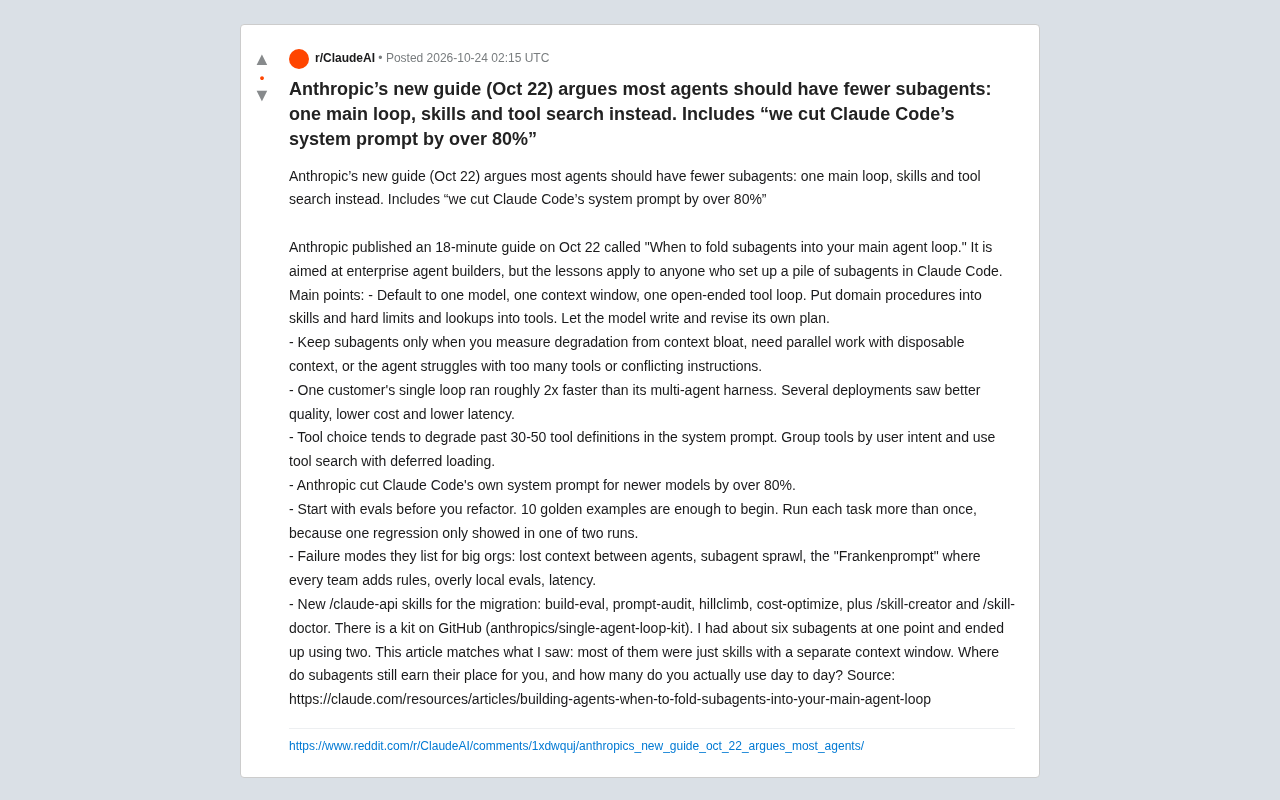
Anthropic's New Guide: Most AI Agents Don't Need Subagents — a Single Main Loop Is the Right Answer
Anthropic's new Agent architecture guide argues most use cases should return to a single-model, single-context open-ended tool loop, splitting only on measurable degradation. Single loops are ~2x faster, tool selection degrades past 30-50 definitions, and Claude Code's system prompt was cut by over 80%.