Kimi K3.1 Open-Weight Model Hands-On: 3 Trillion Parameters Take On Closed-Source Giants
Kimi K3.1 nears closed-source flagships with 3T-parameter MoE, but hands-on tests reveal spatial reasoning gaps.
Moonshot AI's Kimi K3.1 Pro packs 2.8T total/104.1B active parameters, MoE architecture, and 1M-token context as one of the largest open-weight models, with downloadable self-hostable weights. Matthew Berman's hands-on test finds the 3D Rubik's Cube fully implements lighting, controls, and algorithmic solving—one of the best—yet iPhone modeling distorts form and the climbing knot task fails outright, showing rendering quality, spatial reasoning, and factual accuracy are distinct capabilities. Official benchmarks near Opus 5.5, fourth on the intelligence index, at just $2.11 per task. But lived experience lags paper scores, and Claude-like output style raises distillation questions. Verdict: a cost-effective open-weight option, not a closed-source flagship replacement.
Kimi K3.1 Open-Weight Model Hands-On: 3 Trillion Parameters Take On Closed-Source Giants
Moonshot AI's Kimi K3.1, with a 3-trillion-total-parameter, 104.1-billion-active-parameter MoE architecture, is one of the largest players in the open-weight model space to date. After a thorough hands-on test, tech blogger Matthew Berman offered a telling verdict: "It's a great model, but it's still a ways off from Opus 5.5 and GPT 6.1 Sol"—and it's precisely this "close but not equal" positioning that maps out the real water level of open-source models today.

Model Specs: The Parameter Monster of the Open-Source Camp
Kimi K3.1 Pro's core specs pack a punch: 2.8 trillion total parameters, 104.1 billion active parameters, using a Mixture-of-Experts (MoE) architecture, meaning only a small subset of parameters is engaged per inference. The context window reaches 1 million tokens, with native multimodal input (images confirmed, video and audio highly likely). The official blog highlights improvements in full project-level coding (game development in Unreal, Unity, and Godot engines), parametric 3D modeling in Blender and FreeCAD, and financial modeling tasks, and claims a 65% reduction in hallucination rate.
What really excites the open-source community is availability: the model weights can be downloaded, deployed in your own data center, or called directly through the Kimi platform. Against a backdrop of closed-source models continually pushing the capability ceiling, an open-weight option that approaches the frontier has strategic value in itself.
Mixture-of-Experts (MoE) is a sparse architecture that splits a model into multiple "expert" subnetworks and activates only a small fraction of them per inference. Total parameters represent the model's capacity ceiling, while active parameters determine the actual compute cost of a single forward pass. For Kimi K3.1, 2.8 trillion total parameters correspond to roughly 104.1 billion active parameters, meaning only about 3.7% of the weights participate in computation during inference, keeping compute costs on par with a mid-sized dense model while maintaining large-capacity knowledge storage. The trade-offs of MoE are high VRAM usage (all experts must be held), complex routing design, and potential training imbalance across experts. This is also why "total parameters" and "active parameters" must be advertised separately—they measure completely different things.
Hands-On Performance: Strengths and Weaknesses Side by Side
3D Rendering: An Unexpected High Score
Berman opened with the classic "3D Rubik's Cube" test, expecting it had lost its discriminative power, only to find that open-weight models generally fail it—colors disappear, rotation logic breaks, or the cube suddenly solves itself. Kimi K3.1 not only rendered a complete 3D Rubik's Cube with lighting and reflections, but also implemented keyboard controls, a timer, undo/reset, speed adjustment, and an auto-solve routine genuinely based on algorithms (rather than reverse playback), finishing with a ribbon animation. Berman's assessment: "An absolute pass, and one of the best."
This matches the officially claimed 3D rendering capability and forms an interesting "capability convergence" with recent advances in 3D modeling by Opus 5.5 and GPT 6.1 Sol. By contrast, Meta's Muse Wonder Full is notably weak here, with Meta AI head Alexander Wang even publicly admitting, "We forgot to make it good at 3D modeling."
3D Modeling Accuracy: Great Looks, Distorted Details
In the "render an iPhone Duo in WebGL" task, Kimi took 28 minutes 45 seconds. Metal edge reflections and camera module sheen were handled well, but the product form was completely wrong—the Apple logo was distorted and the signature center seam was missing. Even though the model did initiate web searches, accuracy still fell short. This exposes a typical problem: rendering quality and factual accuracy are two separate capabilities. The former can "guess" something good-looking via visual priors; the latter requires genuine knowledge grounding.
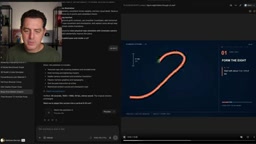
Spatial Reasoning: The Waterloo of the Knot Test
Berman's new test was clever: have the model model in Blender a belaying knot tied to a climbing harness. The task simultaneously tests computer control, web search, spatial reasoning, and understanding of physical interactions. It failed—the overall shape resembled a figure-eight knot, but it wasn't actually tied, nor connected to the harness, and the human figure modeling was equally rough.
In a follow-up task using animated diagrams, Kimi's first version produced a 28-second 1080p video in 5.5 minutes, but the rope's over-under interleaving was completely illegible. Even with a more detailed prompt asking to "give the rope texture and continuous camera movement," the second version still couldn't resolve the knot's occlusion relationships. By comparison, GPT 6.1 Sol at medium reasoning effort produced a 54-second animation that clearly showed the rope passing over and under, "If I had a rope handy, I could totally tie it by following along."
Spatial reasoning in multimodal models generally refers to the ability to understand the 3D position, orientation, occlusion, and topological relationships of objects—a different level of problem from 2D image recognition. Knot modeling tasks are difficult because they simultaneously require: inferring the rope's continuous path from a text description, ensuring the path doesn't self-intersect and alternates over-under (i.e., a genuine topological knot), and then precisely executing it in 3D software via code interfaces. Current models often generate surface forms that "look like knots" but err on occlusion order and connectivity—showing that visual priors can fit appearance but lack explicit modeling of physical and geometric constraints. This is also the root of the gap between high 3D rendering scores and low spatial reasoning scores.
Games and Web: Open Weights on the Passing Line
The Fall Guys clone game "Bean Blitz," generated in 48 minutes, included 12 animated characters, rotating bars, sliding doors, bounce pads, checkpoints, a timer, sound effects, touch controls, and other complete features. But the color scheme was overly pastel, collision detection was inaccurate, and the screen flickered noticeably. The website redesign task "looked like AI design"—brand colors and fonts were right, but spacing was often off.
Benchmark Data: The Gap Between Paper Scores and Lived Experience
Officially published benchmarks show Kimi K3.1 Pro approaching top closed-source models: on Terminal Bench it scored 65.7, second only to Opus 5.5's 66.4; on GDP Val real-world knowledge work evaluation it scored 1846 ELO, closely trailing Opus 5.5's 1866; on OS World computer control it scored 79.6, in the same tier as Opus and Fable; on the Artificial Analysis Intelligence Index it scored 55, ranking fourth behind Opus 5.5, Sonnet 5.5, and Muse Wonderful, but ahead of Fable 5.1, GPT-6 Astra Max, and Argon.
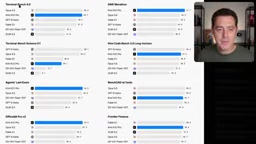
Cost efficiency is another bright spot: cost per intelligence task is only $2.11, far below Fable 5.1's $7.63 and Muse Wonder Max's $4.54. On pricing, standard speed is $2 per million input tokens and $10 per million output tokens; the high-speed version doubles the price but is 2-3x faster, while cached input pricing stays at $0.2.
But Berman's hands-on experience shows a clear gap from the paper data: "From these preliminary tests, you can see it's good, but not at the level of Opus 5.5 and GPT 6.1 Sol." This observation raises an unavoidable question—given that Kimi models have previously been suspected of distillation, and their outputs frequently exhibit "eyebrow text" design habits similar to the Claude family, the mismatch between benchmark scores and real-world experience deserves ongoing scrutiny.
Distillation refers to training a student model on the outputs (logits or generated text) of a strong teacher model so that the student approaches the teacher's capability at lower cost. It's standard industry practice, but if undisclosed—and if the student's output distribution overlaps heavily with the teacher's—it raises questions about whether benchmark scores truly reflect independent capability. Telltale signs typically include: highly similar output formatting and phrasing habits (such as specific header-style small labels), exceptional performance on question types unique to the teacher model, and opaque disclosure of one's own training data. For open-weight models, the distillation controversy directly affects whether the narrative of "reproducible frontier capability" holds, so benchmark scores need to be evaluated alongside independent hands-on testing rather than leaderboard rankings.
The Meaning and Limits of the Open-Source Frontier
Kimi K3.1's value isn't in surpassing closed-source flagships, but in packing "near-frontier" capability into downloadable, self-hostable weight files. The 3-trillion-parameter scale, million-level context, multimodal input, and highly competitive inference costs make it a solid upward breakthrough for the open-source camp.
But the hands-on test also draws clear boundaries: visual rendering can be stunning, yet spatial reasoning and factual accuracy still have obvious shortcomings; benchmark scores can approach the top, yet completion of complex tasks still lags. Those impressive demos in the official blog—the FreeCAD turbofan exploded view, the Blender cathedral structure, the NVIDIA financial model—prove the model's ceiling exists, but whether ordinary users can reliably reproduce them is another matter.
For developers, Kimi K3.1 is a cost-effective open-weight option; for the open-source ecosystem, it's a clear capability statement. As for whether "open source is really back," the answer depends on what you use it for—render a Rubik's Cube, and it's stunning enough; tie a knot, and it's still far off.
One-line Summary
Kimi K3.1 approaches closed-source flagships with a 3-trillion-parameter MoE architecture; hands-on tests show stunning rendering but lingering spatial reasoning gaps.
Paragraph Summary
Moonshot AI's Kimi K3.1 Pro, with a 2.8-trillion-total-parameter, 104.1-billion-active-parameter MoE architecture and 1M-token context, is one of the largest open-weight models, with downloadable self-hostable weights. Matthew Berman's hands-on test shows: the 3D Rubik's Cube fully implements lighting, controls, and algorithmic solving—one of the best; but iPhone modeling distorts the form and the climbing knot task fails completely, exposing rendering quality, spatial reasoning, and factual accuracy as separate capabilities. Official benchmarks approach Opus 5.5 (Terminal Bench 65.7 vs 66.4, GDP Val 1846 vs 1866 ELO), fourth on the intelligence index, at just $2.11 per task—outstanding value. But lived experience lags paper scores, and output style closely resembling Claude raises distillation questions. Verdict: a cost-effective open-weight option, not a replacement for closed-source flagships.
Related articles
OpenAI's New Model Bel Leaked: 10 Trillion Parameters, Potentially the Foundation for AGI
A Reddit leak claims OpenAI's new model Bel is coming, with over 10 trillion total parameters, possibly serving as the foundation model after GPT-6 or even the base for the AGI threshold. This article breaks down the key claims and assesses their credibility.
Claude Fable 5/5.1 Outage: A 30-Minute Postmortem
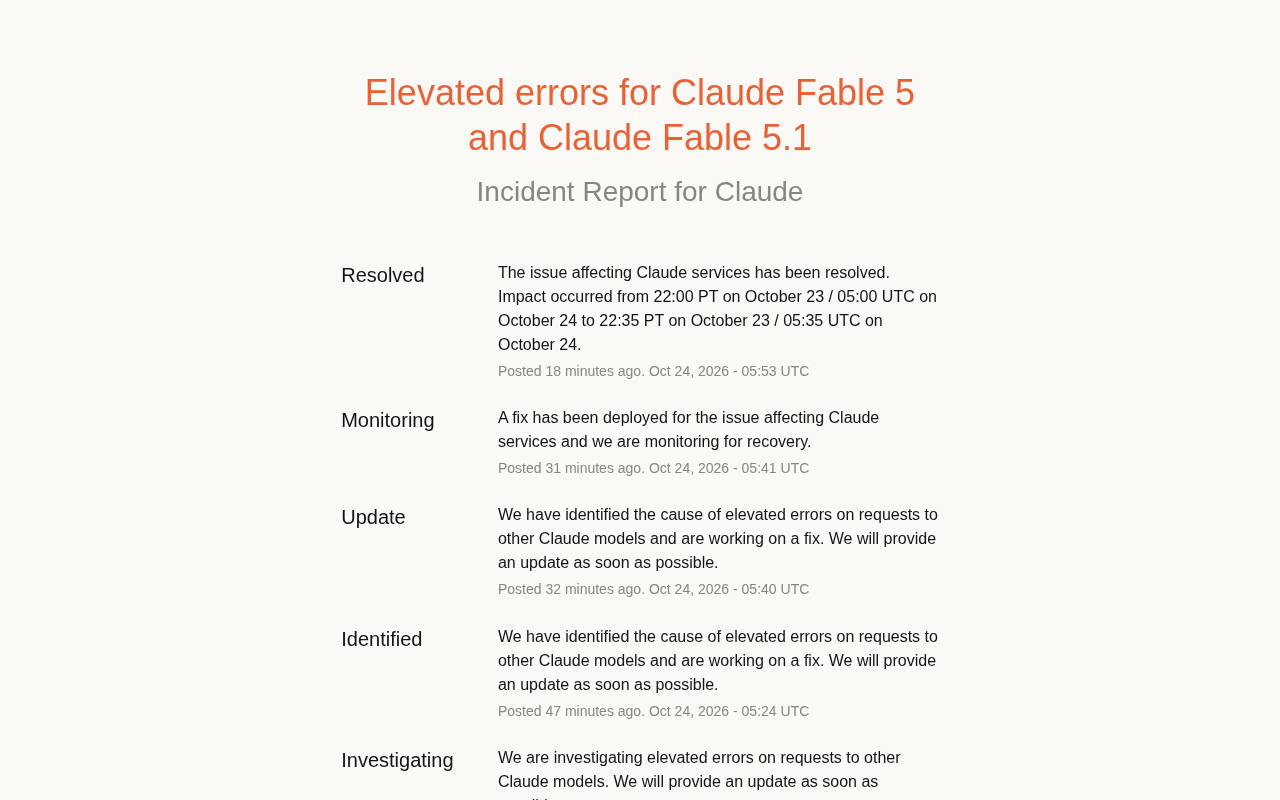
Claude Fable 5 and Fable 5.1 saw elevated error rates for about 35 minutes, per the official status page—from Investigating to Resolved in 37 minutes. This post reconstructs the timeline, analyzes impact on other Claude models, and offers developer guidance on retries, multi-model routing, and monitoring alerts.

Anthropic's New Guide: Most AI Agents Don't Need Subagents — a Single Main Loop Is the Right Answer
Anthropic's new Agent architecture guide argues most use cases should return to a single-model, single-context open-ended tool loop, splitting only on measurable degradation. Single loops are ~2x faster, tool selection degrades past 30-50 definitions, and Claude Code's system prompt was cut by over 80%.