Claude Fable 5 as a Computer Use Orchestrator Model: Excelling in Long-Running Agent Workflows

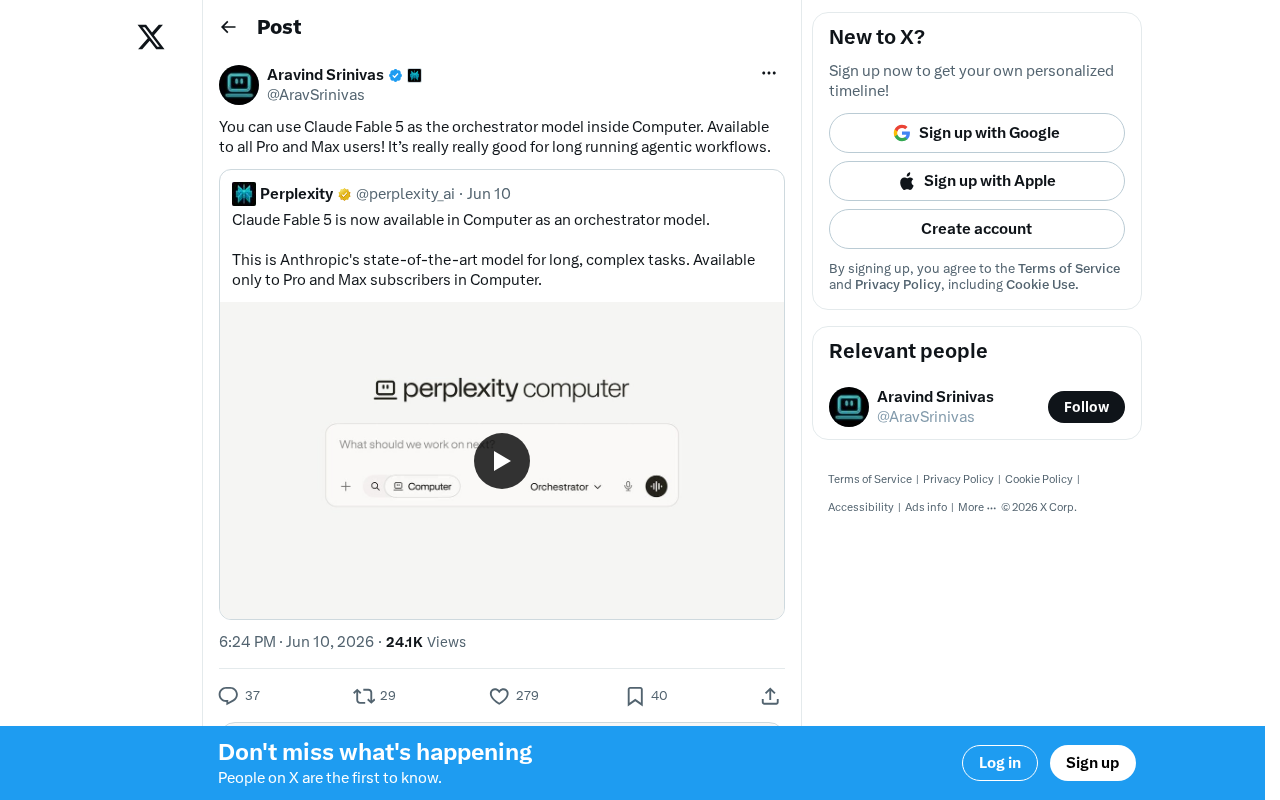
Claude Fable 5 now powers Computer Use as an orchestrator model, excelling in long-running agent workflows.
Anthropic has made Claude Fable 5 available as the orchestrator model for Computer Use, open to Pro and Max subscribers. Fable 5 shines in long-running agentic workflows, maintaining context consistency and handling exceptions gracefully. It supports use cases like automated data processing, software testing, and repetitive office tasks.
Claude Fable 5 Comes to Computer Use
Anthropic recently rolled out a new capability for Pro and Max users: Claude Fable 5 can now be used as the orchestrator model within the Computer Use feature. This means users can select Fable 5 as the core scheduling engine when leveraging Claude's computer control capabilities.
What Is a Computer Use Orchestrator Model?
In Anthropic's Computer Use architecture, the orchestrator model serves as the "brain." It's responsible for understanding the user's high-level instructions, breaking complex tasks into a series of specific computer operations, and coordinating the entire execution flow. The orchestrator model's capability directly determines the quality of Agent workflows—including how well tasks are planned, how errors are recovered from, and how stable the system remains during long-running sessions.
Choosing a different orchestrator model is like swapping out the decision-making algorithm in an autonomous driving system. The underlying "hands and feet" (mouse clicks, keyboard inputs, and other operations) may stay the same, but overall performance can vary dramatically.
Technical Background on Computer Use
Computer Use is a groundbreaking feature first introduced by Anthropic in October 2024. It allows AI models to directly control computer interfaces—moving the mouse, clicking buttons, typing text, capturing screenshots, and more. The core challenge lies in enabling AI to understand the visual layout of graphical user interfaces (GUIs) and translate high-level intent into precise, pixel-level actions. Unlike traditional API-based automation (where tools like Selenium or RPA require predefined operation paths), Computer Use simulates how a human user interacts with software. In theory, this means it can operate any application with a visual interface, without prior integration.
Where the Orchestrator Model Fits in Agent Architecture
In modern AI Agent systems, the orchestrator model is the top-level decision-maker in a layered architecture. This architecture typically consists of three layers: the orchestration layer handles task planning and workflow scheduling, the execution layer translates instructions into concrete actions (such as screen recognition and coordinate calculation), and the tool layer interacts directly with the operating system. The quality of the orchestrator model sets the "intelligence ceiling" for the entire system—it needs Chain-of-Thought reasoning to decompose complex tasks, working memory to track multi-step progress, and metacognitive abilities to judge when to retry and when to switch strategies. Fable 5 takes on precisely this most critical role.
Why Fable 5 Deserves Attention
The Core Advantage: Long-Running Agent Workflows
According to user feedback, Fable 5 excels in long-running agentic workflows. This is a critical differentiator, as one of the biggest challenges facing AI Agents today is maintaining coherence and accuracy across complex, multi-step tasks.
Long-running workflows require the model to demonstrate several key capabilities:
- Maintaining context consistency: Not losing sight of the task objective across dozens or even hundreds of operation steps
- Dynamically adjusting strategy: Flexibly modifying subsequent plans based on intermediate results
- Gracefully handling exceptions: Autonomously recovering from unexpected pop-ups, loading delays, and similar disruptions
Fable 5's performance in these areas has been described as "really really good," suggesting that Anthropic may have made targeted optimizations to the model's long-range reasoning and state management.
Technical Challenges in Long-Range Reasoning
It's worth understanding the core technical challenge that long-running Agent workflows face, known as "Context Drift." As the number of conversation turns increases, the model's attention may shift away from the original objective, causing execution deviations to gradually accumulate. There's also the "error avalanche" problem—a small early mistake, if not corrected in time, causes all subsequent steps to build on a flawed foundation. Current industry solutions include hierarchical state management, checkpoint rollback mechanisms, and training models for self-correction through reinforcement learning. Fable 5's strong performance on long-running tasks likely benefits from Anthropic's dedicated optimizations in these areas.
Available to Pro and Max Users
This feature is currently available to all Pro and Max subscribers, lowering the barrier to entry. In Anthropic's subscription tiers, the Pro plan offers enhanced usage quotas and priority access to new features, while the Max plan caters to power users with higher request limits and enterprise-grade capabilities. Computer Use itself is a compute-intensive service—each operation requires the model to process screenshots (visual understanding) and generate precise action commands, consuming significantly more computational resources than standard text conversations. That's why it's currently limited to paid users. For advanced users who rely on Claude for everyday automation tasks, this is an update worth trying immediately.
Practical Use Cases for the Fable 5 Orchestrator Model
Using Fable 5 as the Computer Use orchestrator model can deliver value in scenarios such as:
- Automated data processing: Collecting, organizing, and analyzing data across multiple web pages or applications
- Software testing: Automatically executing complex UI test flows covering various interaction paths
- Repetitive office tasks: Batch processing files, filling out forms, generating reports, and more
- Development assistance: Performing multi-step code refactoring or project configuration within an IDE
Summary
The introduction of Claude Fable 5 as a Computer Use orchestrator model marks Anthropic's continued iteration on AI Agent capabilities. For users who need AI agents to perform complex computer operations, a more powerful orchestrator model translates to a more reliable automation experience. Pro and Max users are encouraged to try it out early—especially in multi-step, long-running workflow scenarios—to experience the improvements Fable 5 brings.
Key Takeaways
Related articles
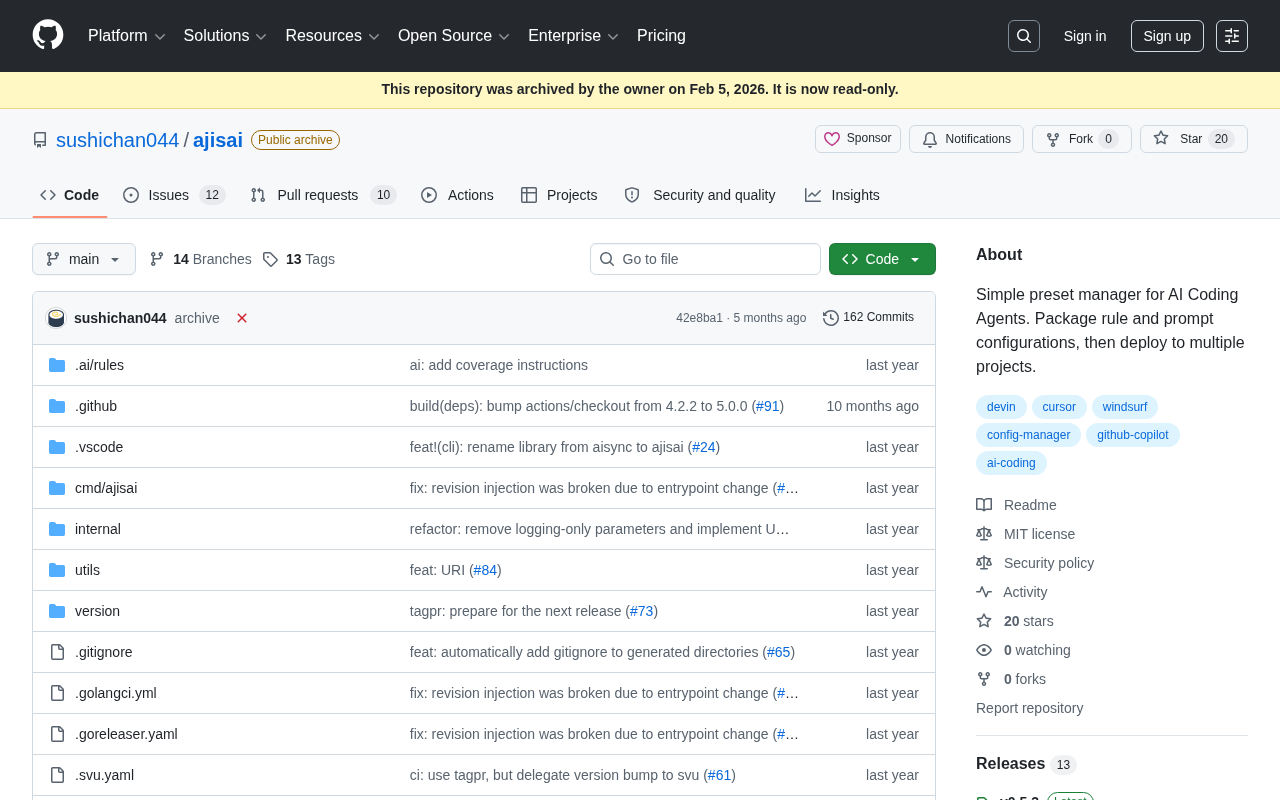
ajisai: A Preset Management Tool for Unifying Rules and Prompts Across AI Coding Assistants
ajisai is a Go-based preset manager for AI coding assistants like Cursor and Claude Code. Package rules and prompts once, deploy everywhere. Early-stage but promising.
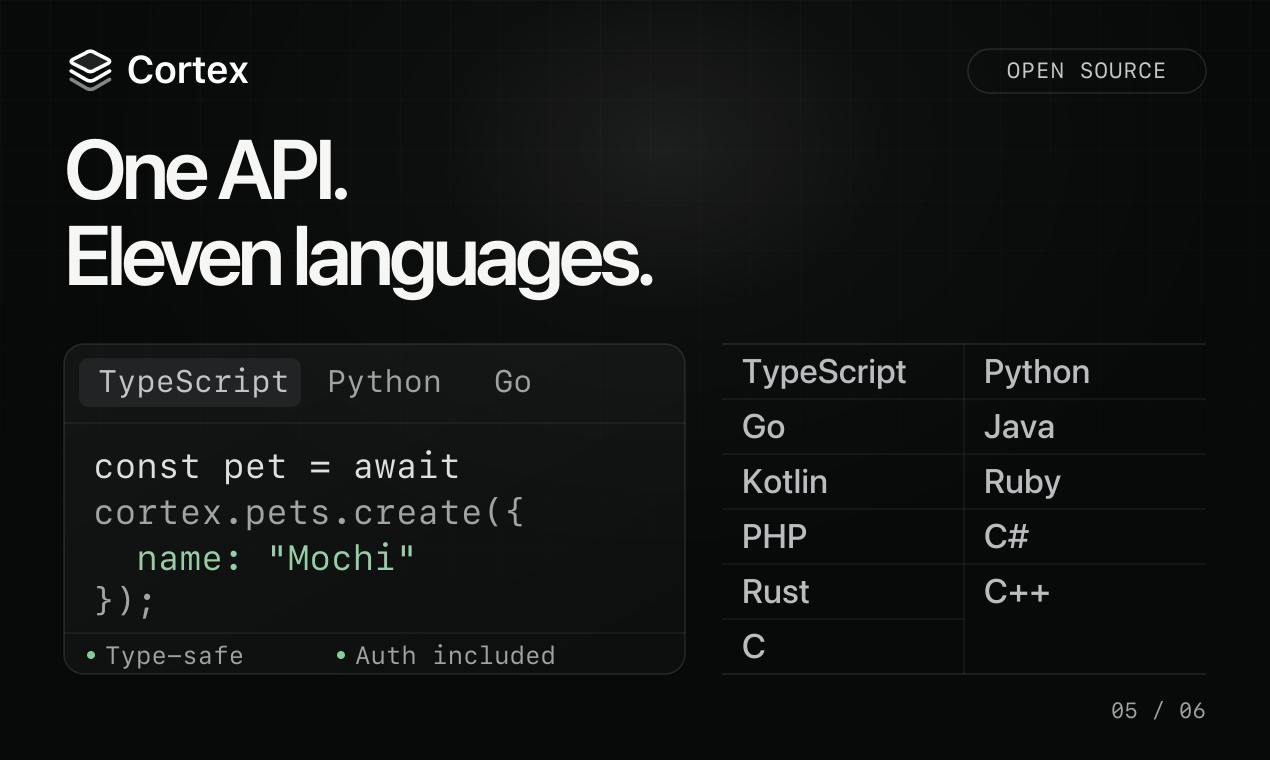
Cortex: Convert API Specs into Docs, SDKs, and MCP Servers in One Click
Cortex is an open-source tool that converts OpenAPI, GraphQL, gRPC and more into interactive docs, typed SDKs in 11 languages, and MCP servers for AI agents.

ABrush: An AI Studio Built for Digital Artists
ABrush is an AI studio for digital artists, ranked #4 on Product Hunt. It embeds leading AI models into existing workflows to remove repetitive tasks, speed up iteration, and keep artists in control.