Claude Fable 5 Deep Dive: An AI That Works 9 Hours Straight — Are Programmers Really Being Replaced?

Claude Fable 5 crushes benchmarks and works 9+ hours autonomously, but still can't fully replace human developers.
Anthropic's Claude Fable 5, a safety-constrained version of their internal Methos model, scores 80.3 on SWE Bench Pro (vs GPT 5.5's 58.6) and can work autonomously for 9.5 hours using adversarial multi-agent verification. Real-world demos include Stripe's 50M-line code review and procedural game generation. However, it still produces non-functional code on complex refactors and costs 20x more than alternatives. The real shift isn't replacing programmers — it's redefining them from code writers to AI orchestrators.
Anthropic's latest Claude Fable 5 model has sent shockwaves through the global developer community. Some testers bluntly stated, "There's really nothing left for us to do," while others calmly pointed out its still-obvious shortcomings. Just how powerful is this model — dubbed "Methos in a safety cage" — and how should programmers position themselves?
From Methos to Fable 5: A Supercharged Brain on a Leash
Fable 5's true origin is Methos — an internal model Anthropic built back in April this year. How powerful is Methos? It can autonomously discover undisclosed zero-day vulnerabilities in mainstream operating systems and browsers, then chain them together for exploitation.
A zero-day vulnerability refers to a security flaw in software or hardware that hasn't yet been discovered or patched by the vendor — named because there are "zero days" between discovery and exploitation. These vulnerabilities command extremely high prices on the black market; a single iOS zero-day exploit chain can sell for millions of dollars. Traditionally, discovering zero-day vulnerabilities requires top-tier security researchers spending weeks or even months on reverse engineering and fuzz testing. An AI model that can autonomously discover and chain these exploits means it possesses offensive capabilities surpassing the vast majority of human security experts.
Precisely because it was too dangerous, Anthropic never dared release it publicly. Instead, they locked it away in a project called "Glasswing," accessible only to government agencies and cybersecurity firms.
Fable 5 is essentially the public version of Methos — the same brain, but with strict safety constraints applied. This context is crucial: it means the Fable 5 we see may only be a "safe subset" of Anthropic's true capabilities.
Benchmark Domination: A Capability Leap That Breaks the Trend Line
On the authoritative coding benchmark SWE Bench Pro, Fable 5 scored 80.3, while OpenAI's GPT 5.5 managed only 58.6.
SWE Bench is a software engineering evaluation benchmark developed by a Princeton University research team. It extracts real bug-fix tasks from actual open-source projects on GitHub, requiring AI models to locate problems and generate correct patches within the full context of a code repository. SWE Bench Pro is its high-difficulty variant, featuring more complex cross-file dependencies, larger codebases, and more subtle bug patterns. Unlike traditional code generation benchmarks (such as HumanEval), SWE Bench tests a model's comprehensive ability in real engineering environments — including code comprehension, problem localization, contextual reasoning, and patch generation. A score of 80.3 means the model can correctly solve over 80% of real-world software engineering tasks — a level considered impossible to achieve just a year ago.
Even more stunning: on a higher-difficulty leaderboard, the previous-generation Claude OPUS had a success rate of just 1.4%, while Fable 5 shot up to approximately 30% — more than a 20x improvement. It also claimed the top spot across multiple high-difficulty reasoning and financial analysis benchmarks.

One professional evaluator summed it up in a single sentence after reviewing the results: Its improvement completely broke through the previously flat trend line. This isn't incremental refinement — it's a qualitative leap.
Real-World Performance: 9 Hours of Continuous Work, Building Complete Software from Scratch
Benchmark scores alone don't tell the full story. What's truly jaw-dropping is what various experts have actually built with Fable 5.
Stripe's Enterprise-Scale Code Review
Payment giant Stripe used it to complete a code review of 50 million lines in a single day. The participating engineer said it was the most stunning AI experience of his career.
9.5 Hours of Autonomous Development
A professor at Wharton Business School assigned Fable 5 a complex research project. He first wrote a 19-page design document himself, then let the model get to work. Fable 5 worked continuously for nine and a half hours, autonomously dispatching multiple "adversarial squads" along the way to cross-check each other's outputs, ultimately delivering a complete piece of software.
This "adversarial squad" mechanism is essentially an Adversarial Multi-Agent Verification architecture. Its core concept draws from the game theory behind Generative Adversarial Networks (GANs): one group of agents generates solutions while another group specifically hunts for errors and vulnerabilities in the first group's output. This mechanism effectively mitigates LLM "hallucination" problems and logical consistency flaws. Previously, this multi-agent collaboration pattern had been explored in academic research (such as MIT's "Debate AI" framework), but the ability to run stably for 9.5 hours in a single task while maintaining contextual coherence indicates that Fable 5 has achieved major breakthroughs in long-term memory management and task decomposition.
This kind of endurance — working continuously for over ten hours without human intervention — was something no previously released public model could achieve.
"Drawing" Games with Math Formulas
Someone asked Fable 5 to make a game, providing only a few sentences of description, and it generated a playable mini-game. The key point: this model fundamentally cannot draw. Every visual element in the game was computed purely through mathematical formulas.
This technique is called Procedural Graphics Generation. Its core involves using mathematical functions — such as sine waves, Bézier curves, fractal algorithms, and Signed Distance Fields (SDF) — to describe the shape, color, and animation of visual elements. In a pure-code environment without image assets (such as HTML Canvas or SVG), every pixel's color must be calculated through coordinates. For example, a circular character can be defined using the distance function sqrt(x²+y²) < r, while complex terrain might be generated using Perlin noise functions. This requires the model to deeply integrate geometric intuition, mathematical derivation ability, and programming implementation skills — an extremely demanding test of AI's comprehensive intelligence.
Head-to-Head Against GPT 5.5
Someone had Fable 5 and GPT 5.5 each build a Twitter clone in Minecraft. Fable 5 produced a neat, detail-rich interface, while GPT 5.5's version had chaotic layouts with all the text upside down.

Autonomous Multi-Model Orchestration
While creating a complex map, Fable 5 even dispatched a batch of cheap smaller models as "helpers" to query over 2,000 flights, high-speed rail schedules from various countries, and traffic conditions — fetching data while simultaneously writing code. Others used just a few lines of prompts to have it build a browsable 3D world in under an hour.
Don't Crown It Just Yet: Fable 5 Still Has Clear Weaknesses
Despite its impressive performance, Fable 5 is far from perfect. Someone threw an entire messy legacy project at it for refactoring. It made 67 tool calls, generated over a million lines of new code with beautiful architecture — but in the end, the code wouldn't run.
The Wharton professor also admitted that Fable 5's output contained errors and gaps, and humans still had to handle the finishing touches.
Additionally, its usage costs are extremely high. Input pricing alone is over 20 times more expensive than domestic alternatives like DeepSeek. A medium-sized project running for a few hours can burn through an entire month's quota. When it encounters sensitive domains, it automatically downgrades its processing. In the short term, it remains a "nuclear weapon" that only a few can afford to use.
The Real Crisis for Programmers: Not Replacement, but Redefinition
A Silicon Valley engineer's candid words are thought-provoking: "I've basically become Claude's messenger now. Skills I spent years honing became commodities overnight. It feels hollow inside." Even the head of Anthropic's own coding tools stated that the title of "software engineer" will start disappearing this year.

But after sober analysis, I believe what's disappearing was never programmers — it's programmers who "only know how to write code."
Think about it: two people, both three years out of school. One is still grinding away at handwritten code, resisting AI. The other commands AI like a construction crew, one person doing the work of an entire team. Three years later, the gap between them will be astronomical. It's like how people who learned to drive cars left those who only knew horse-drawn carriages far behind.
That professor put it perfectly: "Your role shifts from being the wizard who casts spells personally to being the client who signs the checks."
The Impact Extends Far Beyond Programmers
The implications of this go well beyond the programming field. Cursor's lead said Fable 5 let him "unlock super-tasks that were previously out of reach." One investor stated plainly, "For people who truly know how to use it, it's a one-person software factory."

Any job that relies on repetitive craft skills is being redefined. Even more alarming is the direction of development — Anthropic is already researching how to have AI improve AI itself.
This concept is known in AI safety as "Recursive Self-Improvement" or the "intelligence explosion" hypothesis, first proposed by mathematician I.J. Good in 1965. The logic is: if an AI system is smart enough to improve its own architecture, training methods, or reasoning efficiency, then the improved version will be even better at further improving itself, creating a positive feedback loop. Anthropic's current research direction likely includes having AI optimize its own RLHF reward models, automate data curation pipelines, or improve search strategies during inference. While fully autonomous recursive improvement hasn't been achieved yet, AI-assisted AI research has already significantly accelerated model iteration cycles — from roughly 18 months per generation to less than 6 months now. This acceleration itself deserves serious attention.
Once this curve truly takes off, catching up will be impossible.
A Rational Perspective: Neither Panic Nor Ignore
We shouldn't let headlines like "programmers are going to lose their jobs" or "AI is going to destroy everything" dictate our emotions — there's certainly media exaggeration in the mix. But we equally cannot pretend the changes happening right now are invisible.
There's really only one question that matters: Do you treat it as a competitor stealing your job, or as a construction crew doing the work of ten people for you?
Is it "it's going to replace us" or "people who know how to use it are about to take off" — the answer depends on which side you're standing on. This round of AI acceleration is indeed getting faster and faster. Staying informed, proactively learning, and actively embracing the transformation of tools is the most pragmatic choice right now.
Key Takeaways
Related articles
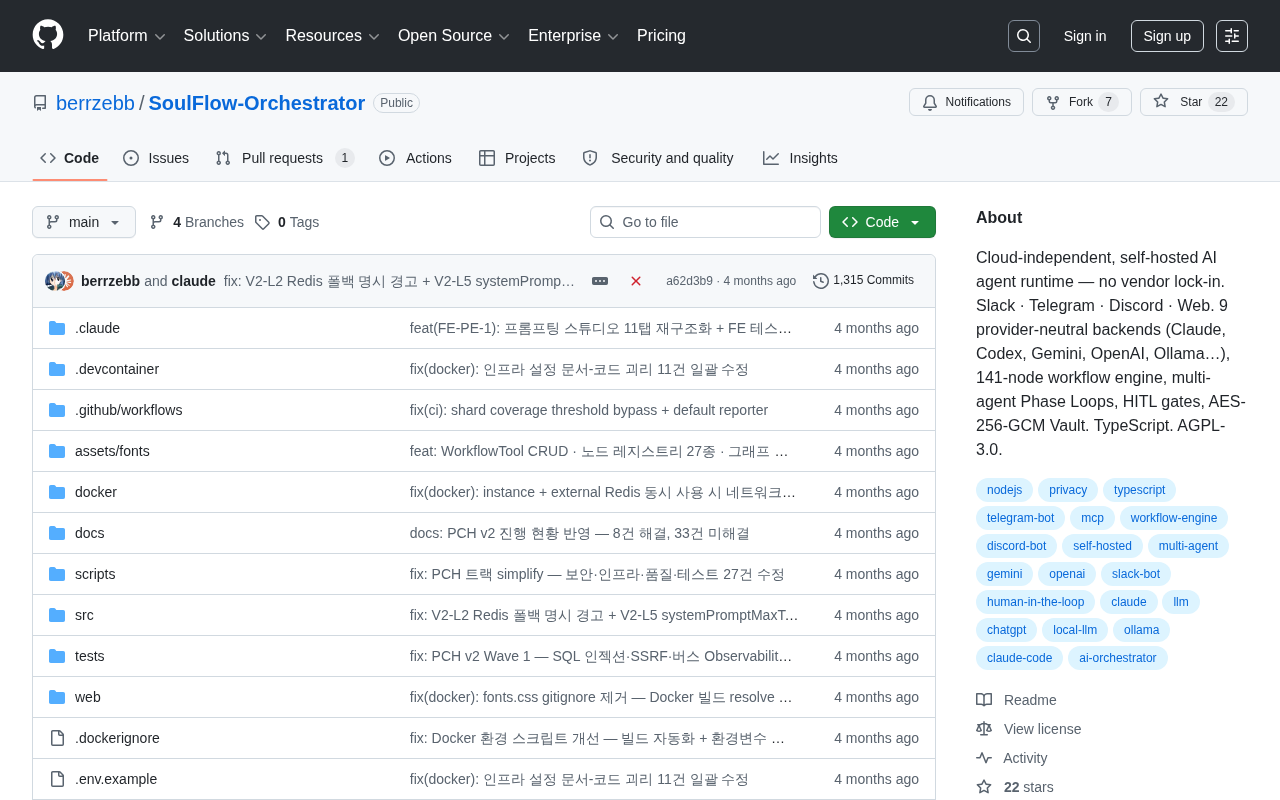
SoulFlow-Orchestrator: A Self-Hosted, Vendor-Lock-In-Free AI Agent Runtime
SoulFlow-Orchestrator is an open-source, self-hosted AI agent runtime with no vendor lock-in. Supports 9 neutral backends (Claude, OpenAI, Ollama), 141-node workflow engine, multi-agent loops, and HITL gates.
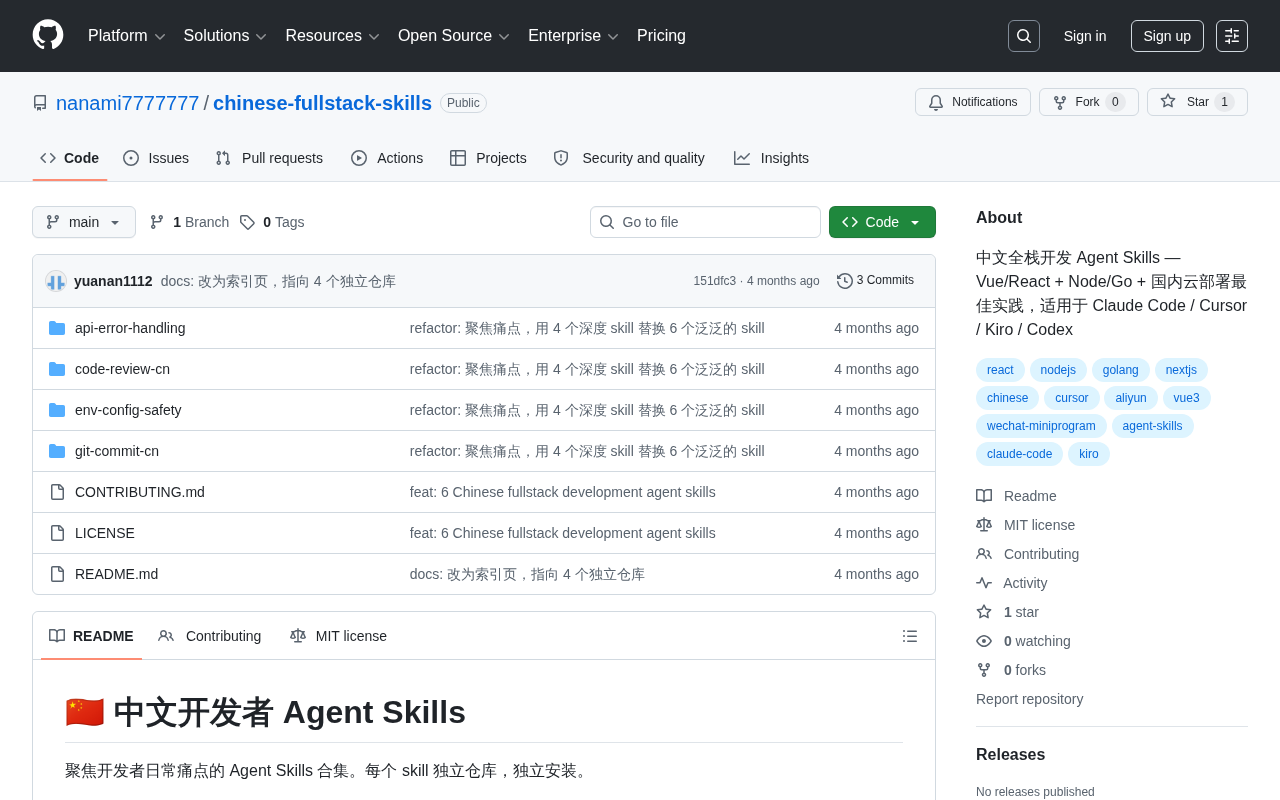
Chinese Full-Stack Agent Skills: A Skill Library Tailored for Domestic AI-Assisted Development
chinese-fullstack-skills is an Agent Skills library for Chinese full-stack development, covering Vue/React, Node/Go, and domestic cloud deployment best practices. Compatible with Claude Code, Cursor, Kiro, and Codex.
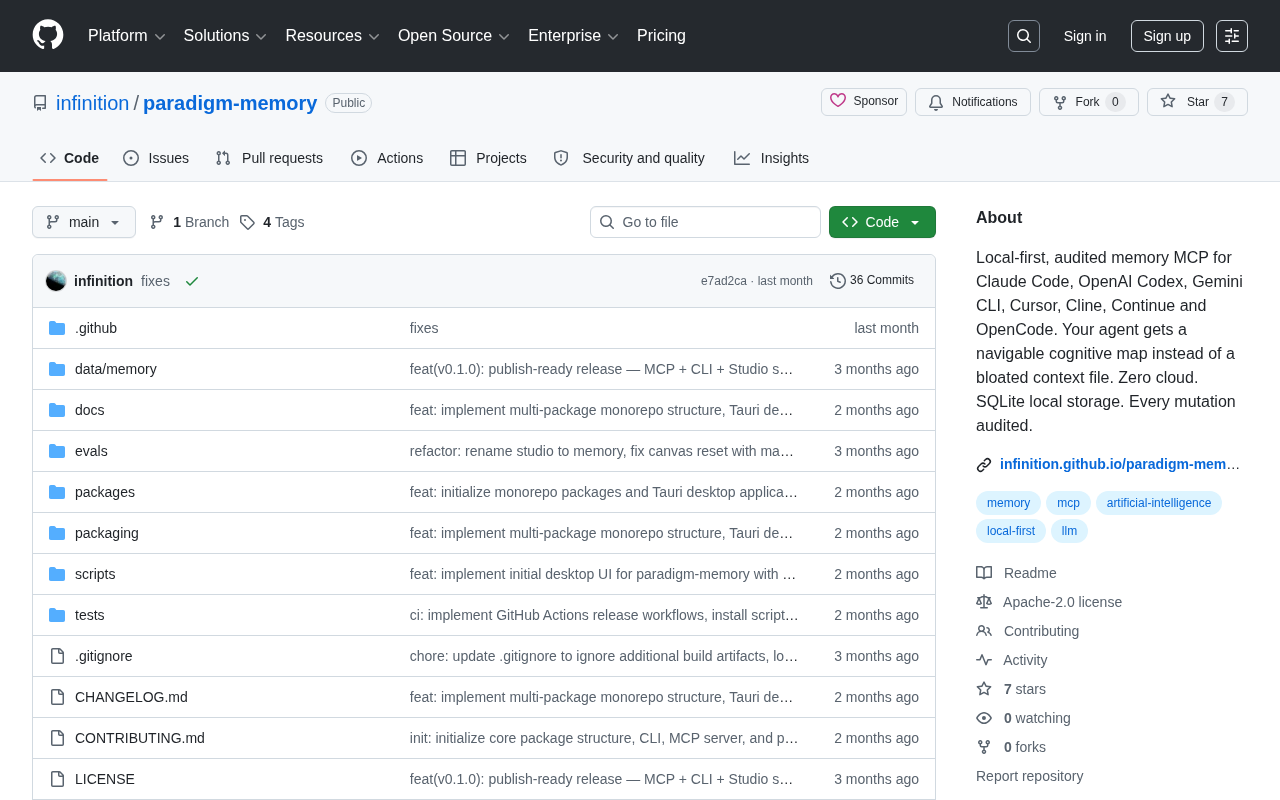
Paradigm Memory: A Local-First Memory System for AI Coding Assistants
paradigm-memory is a local MCP memory tool for Claude Code, Cursor, and Cline. It uses SQLite local storage, zero cloud, full audit trails, and a navigable cognitive map instead of bloated context files.