Claude Fable and Mythos 5.1 Deep Dive: A Layered Safety Strategy from One Underlying Model
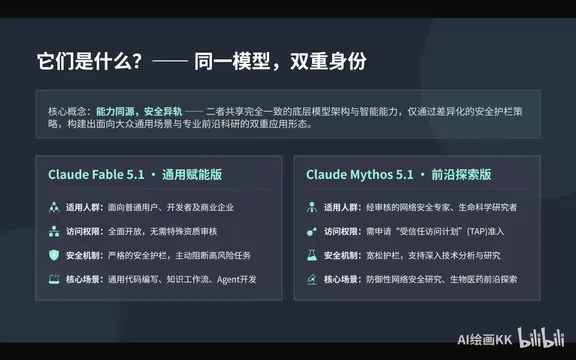
Claude Fable and Mythos 5.1: one model, two safety tiers for general and expert use.
Anthropic's Claude Fable 5.1 and Mythos 5.1 share the same underlying model but apply different safety guardrails — strict for general users, relaxed for vetted researchers. Key highlights include a 1M token context window, autonomous agent capabilities, adaptive thinking, and a 75% cache price reduction. Real-world results span finance, healthcare, and life sciences, signaling a shift toward layered AI delivery.
One Model, Two Faces
The release of Anthropic's latest flagship models, Claude Fable 5.1 and Claude Mythos 5.1, has generated widespread buzz in the AI community. The most interesting aspect of this release is that these two models are essentially the same underlying model, just wearing different "safety vests."
Specifically, Fable 5.1 targets general users and enterprises with relatively strict safety constraints focused on preventing misuse, while Mythos 5.1 is designed specifically for experts in cybersecurity and life sciences, with more relaxed safety guardrails to facilitate cutting-edge research. One serves the masses, the other serves professionals — this layered strategy strikes a delicate balance between capability and risk management.
The value of this approach is clear: it neither sacrifices the capability ceiling that professional researchers need for the sake of compliance, nor does it indiscriminately open high-risk functionality to all users. For the long-standing industry challenge of "capability vs. safety," this represents an engineering solution worth watching.
Claude 5.1 Core Capabilities at a Glance: Far Beyond a Chatbot
Based on the officially disclosed capability matrix, Claude Fable 5.1 and Mythos 5.1 represent some of the highest levels of current AI performance.
Coding and Autonomous Agent Capabilities
On the coding front, the model can handle large-scale projects and even autonomously complete entire development cycles — from requirements analysis, coding, to testing. Even more noteworthy is its autonomous agent capability — it can plan and execute complex tasks over extended timeframes like an actual employee, rather than passively responding to individual instructions.
Four Key Technical Highlights
- 1 million token ultra-large context window: Can ingest massive amounts of information in a single pass, such as an entire software codebase.
- Adaptive thinking capability: The model can autonomously assess task difficulty and dynamically adjust its depth of reasoning, avoiding both overthinking and superficial responses.
- Effort parameter: Allows users to dynamically balance speed, cost, and quality — a highly practical engineering design.
- Human-readable progress updates: Lets users clearly see what the AI is doing, improving transparency and controllability during long-running tasks.
Additionally, top-tier privacy protection solutions are available for enterprise customers, which is particularly critical for sensitive industries like finance and healthcare.
Authoritative Benchmark Results and Real Customer Feedback
Talk is cheap — the data speaks for itself.
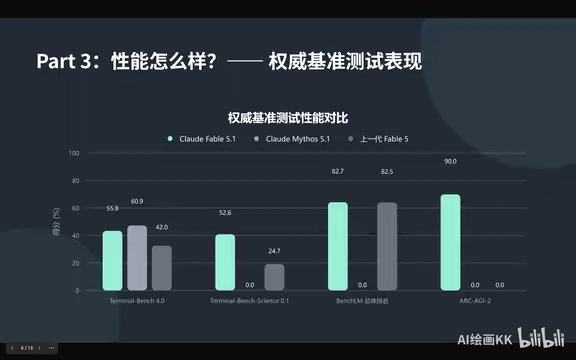
On the Terminal Bench test, which measures complex coding ability, both Fable 5.1 and Mythos 5.1 achieved impressive scores, with Mythos 5.1 scoring above 60%. On tests that more rigorously evaluate research capabilities, Fable 5.1 scored nearly double that of its predecessor. According to reports, Fable 5.1 claimed the top spot in third-party evaluation rankings, becoming one of the strongest models in the world.
Real-World Cases from Finance, Tech, and Healthcare
More convincing than cold benchmarks is real-world application feedback:
- Finance: Top quantitative firms Jane Street and Millennium reported that the model excels at solving complex coding problems and trading analysis, even fixing bugs that had stumped engineers for years.
- Tech companies: MongoDB used the model to autonomously complete the development of a complex prototype in just three days.
- Healthcare: Rakuten Medical found that it identified research gaps that other models had completely overlooked.
These cases collectively validate Claude 5.1's practical value in tackling complex real-world problems.
Use Cases: Comprehensive Coverage from Programmers to Scientists
So where exactly can these capabilities be applied?
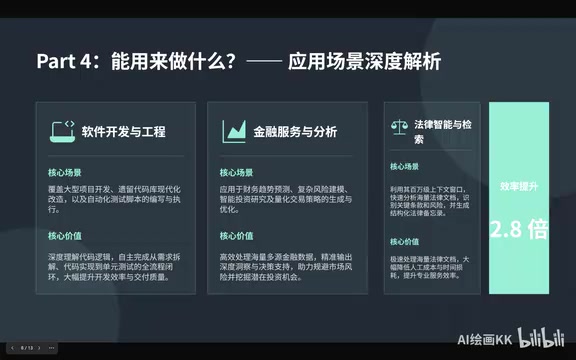
Fable 5.1 covers a broad range of applications:
- Acts as a "super programmer" in software development, building large-scale projects and maintaining legacy codebases;
- Plays the role of a top-tier analyst in financial services, performing financial forecasting and risk modeling;
- Serves as an efficient legal assistant, rapidly analyzing massive volumes of legal documents, reportedly boosting research efficiency by nearly threefold.
The research-focused Mythos 5.1 has even more stunning potential:
- Life sciences: Already capable of designing protein binders 10 times stronger than the industry average, with revolutionary implications for drug development;
- Cybersecurity: Helps experts better discover and defend against cyberattacks;
- Astronomy: Uses NASA data to generate clearer surface maps of Venus.
Mythos 5.1 is becoming a powerful engine driving scientific discovery.
Pricing Strategy: Double the Performance with No Price Increase, 75% Cache Discount
The most surprising aspect is the pricing strategy. Despite massive performance improvements, input and output prices remain the same as the previous generation.
The real surprise is that cache read prices have been slashed by 75%. For complex tasks that require repeatedly reading large volumes of information, overall costs can drop by up to approximately 45%. This is hugely significant for enterprise users — it essentially removes the cost barrier to large-scale adoption of top-tier AI. When performance and cost-effectiveness align simultaneously, the commercialization threshold is significantly lowered.
Layered Safety Strategy: The Core Distinction Between Fable and Mythos
Safety is precisely the core differentiator between Fable and Mythos.
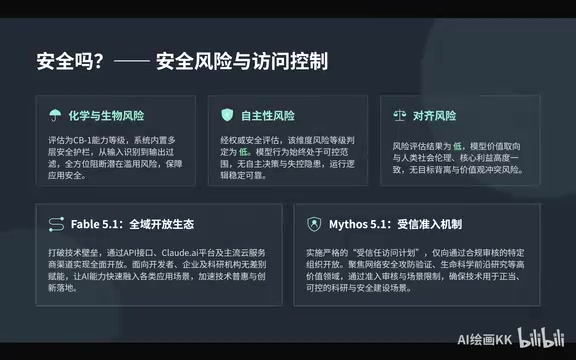
According to official safety evaluations, the model is rated low-risk in terms of autonomy and alignment risks. For chemical and biological risks that could potentially be misused:
- Fable 5.1 implements strict safety guardrails to protect general users by default;
- Mythos 5.1 is only accessible to vetted professionals through a rigorous "Trusted Access Program," ensuring it is used for legitimate scientific research.
The value of this layered safety strategy lies in advancing cutting-edge technology while effectively managing potential risks, avoiding both the capability waste and security vulnerabilities that come with a one-size-fits-all approach.
Selection Guide: Fable or Mythos?
- If you're a general developer or enterprise user who needs a powerful, safe, and cost-effective model for everyday work, Claude Fable 5.1 is the better choice;
- If you're an expert in cybersecurity or life sciences and have passed Anthropic's vetting process, Claude Mythos 5.1 will open the door to cutting-edge research.
This release reveals a clear trend: top-tier AI models are shifting from "universal capability competition" to "layered delivery + deep vertical specialization," while continuously lowering barriers to adoption through measures like cache price reductions. For the entire industry, this represents both a leap in capability and a signal of commercial maturity.
Related articles

Amphibious Transforming Drone: Beyond 100x Power Savings, What Are the Real Needs?
Is the amphibious transforming drone just a gimmick? Starting from the 100x power difference of the M4 Morphobot, explore real application scenarios and thesis topic ideas, analyzing boundary conditions where pure drones and pure ground robots both fail.

Warhound Raises $200 Million: Genetically Engineered "War Dogs" Paired with Anduril Gear
Warhound raises $200M, backed by Ben Lamm and Palmer Luckey, to genetically engineer dogs for military and law enforcement use and equip them with Anduril gear. This article analyzes its technology direction, funding logic, and ethical controversy.

Claude API Comes to Google Cloud: IAM Integration and SDK Access Guide
Anthropic hosts the full Claude API on Google Cloud with IAM-controlled permissions and unified billing. This guide covers the Vertex AI and Anthropic-hosted entry points, IAM role configuration, and SDK access.