Claude Max Members Now Get $100–200/Month in API Credits: Usage Guide and Limitations Explained
Claude Max users get $100–200 in API credits monthly to validate AI product ideas at zero cost.
Anthropic now gives Claude Max subscribers $100–200 per month in API promotional credits: Max 5x gets $100, Max 20x gets $200; Free, Pro, and Enterprise are excluded, while Team plans share credits per seat with a $500 cap. Credits cover API calls, Playground, Managed Agents, and Agent SDK but not interactive Claude Code. Claiming requires linking a Console organization on the claude.ai billing page and 7 days of active subscription, with no credit card needed. Credits reset monthly and don't roll over. The article suggests using them to prototype review replies, contract summaries, product descriptions, and support assistants at zero cost.
Recently, many users have been switching from ChatGPT to Claude, and Anthropic has just given them another strong reason: Claude Max subscribers now receive $100 to $200 per month in API credits to build applications on the Claude platform. These credits come at no extra cost and are included directly with the subscription plan. But there are quite a few details and limitations—used well, they let you validate product ideas at zero cost; used poorly, they may go to waste.
Credit Allocation Rules: Who Gets Them, Who Doesn't
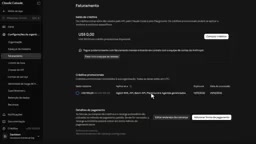
According to the official pricing page, Claude Max plans now explicitly list $100 to $200 per month in API credits. Specifically: Max 5x users get $100 per month, and Max 20x users get $200 per month. The Free, Pro, and Enterprise plans do not include this benefit.
Team plans use a shared pool model: $20 per month per standard seat, $100 per month per premium seat, with a shared balance cap of $500.
It's important to note that credits do not roll over. Whatever remains at the end of the month is reset to zero at the end of the billing cycle. So planning your usage early each month is key.
What the Credits Cover: What You Can and Can't Do
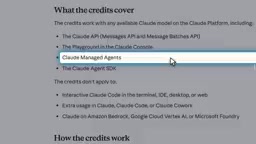
These promotional credits aren't all-purpose. According to the Help Center, they cover the following:
- API calls
- Playground
- Managed Agents
- Agent SDK
However, they do not cover regular interactive Claude Code in the terminal or editor—that still consumes the usage limits of your subscription plan itself. In other words, the credits are meant to encourage you to build, test, and deploy API-based products, not to replace everyday coding conversations.
API and Console Organization: The API (Application Programming Interface) is the channel through which developers call Claude model capabilities via code, and it is a separate product line from web-based chat. The Console is Anthropic's developer-facing management backend, used to create API keys, view usage, and manage billing and projects. The requirement to "link a Console organization" essentially connects your subscription identity with your developer identity so that promotional credits can be injected into the API billing system.
Two Forms of Claude Code: Claude Code exists both as interactive sessions in the terminal/editor and as programmatic calls through the Agent SDK. The former falls under the usage limits of your subscription plan, while the latter goes through API billing. This is exactly why the credits "cover the SDK but not interactive Code"—the promotional credits only subsidize the token-billed API path.
Managed Agents: Refers to Anthropic-hosted agent runtime environments where developers don't need to build their own scheduling and tool-calling infrastructure. The agent's inference consumption is also counted toward API usage.
How to Claim: Three Steps, No Payment Method Required
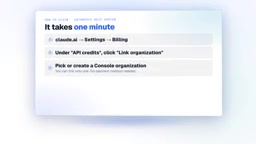
The claiming process is very simple and doesn't require binding a credit card. In claude.ai, go to Settings → Billing, find the "API credits" section, click "Link organization," and then select or create a Console organization.
The only prerequisite is that your subscription plan must have been active for at least 7 days.
The "active for at least 7 days" prerequisite is typically used to prevent abuse: a new subscription can be canceled and refunded immediately, and if credits could be claimed right away, there would be sign-up—claim credits—refund arbitrage. By setting a waiting period, promotional credits are tied to a real paid cycle, keeping costs controllable. The practical impact for users is that in the month you first upgrade to Max, you often can't get the credits immediately, so you need to push your product validation plans to the next billing cycle—planning ahead avoids disruptions to your schedule.
How to Make the Most of $100: Four Product Validation Ideas
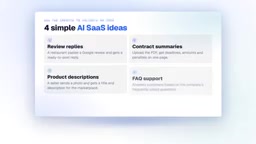
The best use of these credits is to validate an AI product idea at zero cost. You don't need to pay API fees out of pocket to build a first prototype and let real users try it. The following four directions are low-cost with clear demand:
- Restaurant review auto-reply tool: Generate personalized replies to Google reviews, helping small businesses maintain their online reputation.
- Contract summarizer: Upload PDF contracts to automatically extract deadlines, amounts, and penalty clauses—suitable for freelancers and small businesses.
- E-commerce product description generator: Sellers upload product photos to automatically generate marketplace-ready product descriptions.
- Customer service Q&A assistant: Build a support assistant based on company FAQ documents that can answer common customer questions.
Each idea can be quickly turned into an MVP using API credits, with 10 real users invited to try it out and iterate based on feedback. Spending credits on real usage is more valuable than idle speculation.
MVP (Minimum Viable Product): Refers to a product form that validates core assumptions with the fewest features possible. The goal is not to build a complete product but to get real user feedback as quickly as possible. The key to building an MVP with API credits is to spend your budget on "real calls": first run a small sample through an end-to-end flow to confirm that output quality is acceptable, then expand the number of testers. It's recommended to set a clear spending cap for each prototype (e.g., allocate $10–20 first) and log the input and output of each call to avoid exhausting your credits during the prompt debugging stage.
Is It Worth Upgrading to Max for the Credits?
It depends on your usage pattern. Max offers five times the usage of Pro plus $100 per month in API credits, but it also costs five times as much as Pro. If you mainly use Claude for conversation, Pro is more than enough. If you use Claude heavily every day and have plans to build API products, these credits significantly improve Max's value for money—equivalent to rebating part of your subscription cost each month.
For existing Max users, be sure to claim and plan your credit usage at the beginning of each month, because they expire if unused.
The Difference Between Credits and Subscription Limits: A Max plan includes two parts of resources—the in-subscription conversation usage limits (scaled up by multiplier) and billable API promotional credits—and the two are not interchangeable. When deciding whether to upgrade, you should value these two parts separately: first estimate your actual monthly API spending. If it approaches or exceeds $100, the credits alone offset most of the price difference; if you barely call the API, the credits are only nominal value and should not be a reason to upgrade.
Summary
Claude Max's API credits are a practical developer benefit, especially for independent developers and product managers looking to validate ideas at low cost. By clearly understanding the coverage, paying attention to the monthly reset rules, and building prototypes around real needs, you can get the most value out of these $100.
One-line Summary
Claude Max users get $100–200 in API credits per month to validate AI product ideas at zero cost.
Paragraph Summary
Anthropic has added monthly $100–200 API promotional credits for Claude Max subscribers: Max 5x gets $100, Max 20x gets $200, while Free, Pro, and Enterprise plans do not include this benefit, and Team plans share credits per seat with a $500 cap. Credits cover API calls, Playground, Managed Agents, and Agent SDK, but not interactive Claude Code in the terminal or editor. To claim, link a Console organization on the claude.ai billing page, and the subscription must have been active for at least 7 days with no credit card required. Credits reset monthly and do not roll over. The article recommends using them to validate four types of product prototypes at zero cost—review replies, contract summaries, product descriptions, and customer service assistants—and notes that upgrading to Max should be judged against actual API spending.
Related articles

Tencent Open-Sources World Model Hy-Nomas: Hands-On, Principles, and Deployment Guide
Hands-on test of Tencent Hunyuan's open-source world model Hy-Nomas: seamless video generation with text and camera control, segmented autoregressive generation with KV Cache, deployable on a single RTX 4090. This article covers the Bilibili creator's test results, architecture principles, and local deployment pitfalls.
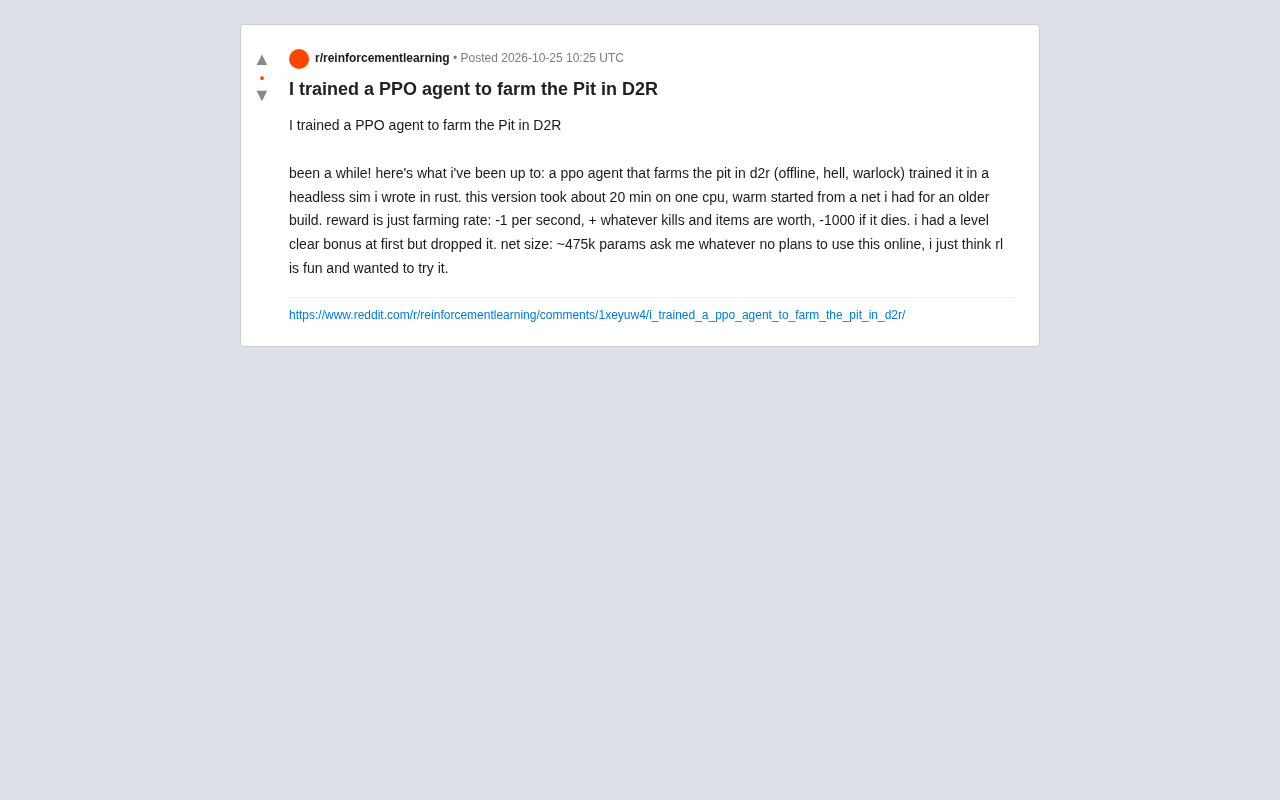
Training a PPO Agent to Farm D2R's The Pit in a Rust-Written Simulator
A Reddit user trained a PPO agent to farm D2R's The Pit in a Rust headless simulator: ~20 min on a single CPU, 475K parameters, rewards based on farming rate, -1000 for death, offline only.

Nikon Photo Contest Winner Stripped of Title Over AI Traces: A Crisis of Trust Emerges
A Nikon Photo Contest winner was stripped of the title after scientists detected AI-generated traces. This article analyzes AI detection clues, review loopholes in photography competitions, and the impact on creators and event credibility.