Claude Opus 5 In-Depth Review: Half the Price, Outperforms Fable — Cost Efficiency Reaches New Heights

Claude Opus 5 outperforms Fable 5 on nearly all benchmarks while costing half as much.
Anthropic's Claude Opus 5 delivers a rare combination of superior performance and lower cost. It outscores Fable 5 on Frontier Bench, ARC AGI 3 (jumping from ~8% to 30%), and most other benchmarks, while priced at half of Fable and directly competing with GPT 5.6 soul. Likely distilled from Fable, Opus 5 excels on cost-per-task metrics and shows deliberate cybersecurity capability reduction — signaling Anthropic's safety-first approach alongside a market shift toward efficiency over raw performance.
Opus 5: A Surprisingly Stronger and Cheaper Model
Anthropic has released Claude Opus 5, a model that caught the tech world off guard. To understand its significance, let's first revisit Anthropic's model family tree: Haiku, Sonnet, and Opus form the foundational three tiers, followed by Fable — the flagship that emerged as its "biggest and most powerful" model. Since 2023, Anthropic has established a multi-tier model system named after poetic and literary forms — Haiku is positioned as a lightweight, fast-response model suited for simple tasks and high-throughput scenarios; Sonnet is the mid-tier balanced option, offering a blend of performance and cost; and Opus is the high-end flagship, specializing in complex reasoning and long-context processing. This multi-tier strategy mirrors OpenAI's GPT-mini/GPT/o series and Google's Nano/Flash/Pro/Ultra lineup, aiming to provide users with different budgets and needs an appropriate entry point. But now, Opus 5 has shattered this hierarchy — it outperforms Fable 5 on nearly every benchmark while costing only half as much.
According to hands-on analysis by tech YouTuber Matthew Berman, the results took almost everyone by surprise. He put it bluntly: "Opus beating Fable on benchmarks is just insane." More critically, Opus 5 is priced at $5 per million input tokens and $25 per million output tokens — on par with its predecessor Opus 4.8 but at half the price of Fable — putting it in direct competition with OpenAI's GPT 5.6 soul. To understand LLM API pricing: a token is the smallest semantic unit after text is split by a tokenizer. In English, one token roughly corresponds to 4 characters or 0.75 words; in Chinese, a single character typically maps to 1-2 tokens. Input and output tokens are priced separately, with output tokens usually costing 3-5x more than input, because the generation process requires autoregressive decoding token by token, demanding far more computation than the encoding stage. This is precisely why Berman emphasizes later that "cost per task" is a more meaningful metric than "cost per token" — different models may consume vastly different total token counts to complete the same task.
In essence, Opus 5 is Anthropic's direct response to GPT 5.6 soul, which is likely the final iteration of the GPT 5 series before GPT 6 launches.
Benchmark Domination: Opus 5 Scores Explained
Looking at the published benchmark data, Opus 5's performance is nothing short of stunning:
Coding and Agent Capabilities
On Frontier Bench — a benchmark critically important for coding — Opus 5 scored 43 compared to Fable's 33. Frontier Bench is a specialized benchmark suite for evaluating frontier AI models' programming capabilities, covering code generation, debugging, refactoring, and multi-file project comprehension. Its difficulty far exceeds traditional benchmarks like HumanEval or MBPP — its problems typically come from real open-source project issues and pull requests, requiring models to understand complex codebase context before providing correct modifications. On OpenAI's GDP Val (which tests real-world practical tasks spanning data processing, document analysis, tool use, and other comprehensive scenarios), Opus 5 achieved a full 100-point improvement over Fable 5. On OS World (a computer operation benchmark testing models' ability to control screens, identify locations, click buttons, and complete tasks), it also showed a 4-point improvement. OS World matters because it evaluates a model's ability to function as an agent operating a computer desktop environment, involving visual understanding, spatial localization, action planning, and multi-step execution — one of the key capabilities on the path to general-purpose AI assistants.
The Stunning Leap on ARC AGI 3
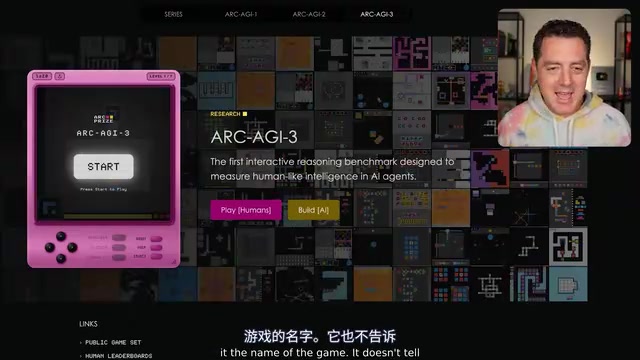
The most jaw-dropping result is the ARC AGI 3 score. ARC (Abstraction and Reasoning Corpus), proposed by François Chollet in 2019, is widely considered one of the gold standards for measuring "true machine intelligence." Unlike other benchmarks, ARC's core philosophy is testing a model's "out-of-sample generalization" ability: each problem presents a completely novel visual pattern reasoning task that cannot be solved by memorizing training data. ARC AGI 3, as the third-generation version, further increases difficulty by expanding test scenarios into interactive environments resembling unknown games — it drops the model into a game without telling it the name, explaining the rules, or describing how to win. The model must figure everything out on its own. Previously, the world's most powerful models could only score around 8% here, partly because these tasks require genuine abstract reasoning and rapid hypothesis testing rather than large-scale language pattern matching. Opus 5 leaped to 30% — Berman believes even the ARC Prize team probably didn't anticipate such a jump. The ARC Prize Foundation has established prizes totaling over $1 million to drive substantive progress in AGI research, and Opus 5's performance has undoubtedly sent shockwaves through the research community.
Trade-offs: Regressions on Some Benchmarks
Of course, it's not a clean sweep. On the legal benchmark, scores dropped from 13.3 to 11.7; HealthBench Professional also declined; and Berman's personal favorite benchmark, DeepSUI, showed a slight dip. He admitted that DeepSUI's minor regression is probably the closest signal to how users will actually "feel" the difference in day-to-day use.
Cost Efficiency: Opus 5's True Killer Feature
If benchmark scores are just the surface story, Opus 5's real value lies in the "cost per task" dimension.
Berman has repeatedly emphasized this metric over the past few weeks. He points out that looking at per-token pricing alone is no longer sufficient. Take Kimi K3 as an example: its price is half that of GPT 5.6 soul and less than half of Fable 5, but completing the same task requires twice as many tokens, making the actual cost roughly equivalent. The "half price" label turns into a mirage in real-world usage. The fundamental reason is that reasoning efficiency varies enormously across models — some models need to generate extensive chain-of-thought intermediate reasoning steps to reach the correct answer, while more efficient models can complete the same task with far fewer tokens. Comparing token unit prices alone can therefore be seriously misleading.
On the OS World benchmark, Opus 5 leads not only in performance but also in cost. The data shows that matching Opus 5's performance at its lowest cost setting with other models would cost more than double. On ARC AGI 3, Opus 5 scores 30 points at a lower cost than GPT 5.6 soul, while achieving more than triple the score.
This "both cheaper and stronger" combination is exceptionally rare. Berman speculates that Anthropic likely used Fable to distill and optimize Opus, squeezing maximum performance at lower cost. Knowledge Distillation is a model compression technique proposed by Geoffrey Hinton and colleagues in 2015. Its core idea is to use a large "teacher model's" output distribution to guide the training of a smaller "student model." During distillation, the teacher model's "soft labels" contain richer inter-class relationship information than hard labels — for example, the teacher model might assign an 80% probability to answer A being correct and 15% to answer B, and this probability distribution itself encodes deep knowledge. Fable, as the larger teacher model, "compressed" and transferred its advanced reasoning capabilities to the smaller Opus 5, achieving "stronger performance with fewer computational resources." This also validates Berman's earlier prediction: Fable's high token consumption was merely a first-version problem that would inevitably be optimized aggressively.
Enterprise Testing: Multi-Step Analysis Reveals the Edge
Box, the video's sponsor, conducted extensive testing of Opus 5. Their benchmarks cover real document tasks across 12 industries, simulating the actual work of knowledge workers: reading source documents, verifying numbers, performing due diligence, and reviewing expert outputs for errors.
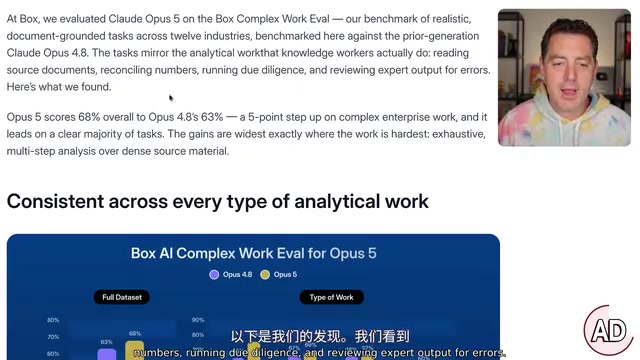
Compared to the previous Opus 4.8, results show clear improvements: due diligence rose from 63 to 70, report generation from data jumped from 65 to 76, and data analysis achieved a 6-point leap. Box's conclusion: for complex enterprise knowledge work, Opus 5 represents a "clear step forward" over its predecessor, with its advantages concentrated in the "thorough multi-step analysis" that drives real decisions.
Deliberate Capability Reduction: The Cybersecurity Strategy
The one area where Opus 5 clearly falls behind is cybersecurity capabilities — and this is very likely by Anthropic's design.
The data shows that for exploit success rate, the unguarded Mythos model reaches 13%, Opus 4.8 sits at 0%, and Opus 5 at 4%. Berman speculates that Anthropic not only added guardrails to Opus 5 but may have also actively removed certain cyberattack capabilities at the training level. In the AI safety field, "guardrails" typically refer to filtering layers added during the model's inference stage, including input moderation, output detection, and safety classifiers — they don't change the model's inherent capabilities but merely prevent dangerous outputs from being displayed. Actively removing specific capabilities at the training level (known as "capability elicitation prevention" or "unlearning") is far more fundamental — guardrails can be bypassed through jailbreaking, but training-level removal means the model fundamentally "cannot" rather than "will not."
Interestingly, reducing model capabilities typically degrades overall performance as a side effect, because knowledge in neural networks is highly entangled — removing one category of knowledge often affects adjacent capabilities. But Opus 5 shows the opposite effect — overall quality improved despite weakened cyberattack capabilities. This may suggest that Anthropic has achieved a breakthrough in "precision surgical" capability removal techniques. Berman believes that this safety restraint may be precisely why Opus 5 "won't be pulled from the market" and can remain available long-term. He even speculates that Anthropic may have demonstrated the model and its evaluation scores to the U.S. government in advance.
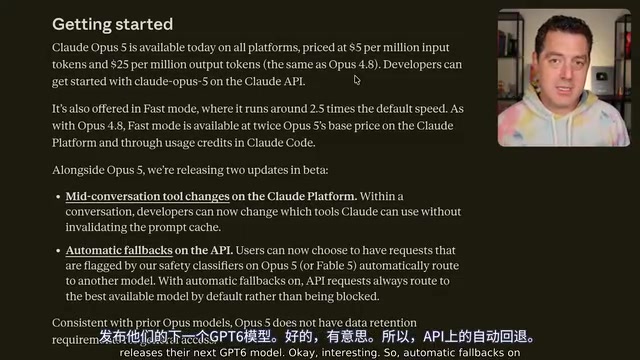
Additionally, the Opus 5 API introduces an automatic fallback mechanism: requests flagged by the safety classifier can be automatically routed to other models, though users must pay the fallback model's price. Berman isn't a fan of this design, finding it somewhat annoying and worrying that the classifier might be overly aggressive.
The Complete Claude 5 Family and the Three-Way Standoff
Anthropic's Tariq stated that Opus 5 "perfectly completes the Claude 5 family" — a remark that also raises questions about whether Haiku 5 will still be released. The official recommendation is to use Opus 5 as the daily workhorse, supplemented by Fable for planning, brainstorming, or fixing the trickiest bugs.
Here's a notable detail: the models currently sitting on the "Pareto frontier" (the optimal combination of quality and cost) are three: Opus 5, GPT 5.6 soul, and the open-source Kimi K3. The Pareto frontier concept originates from Italian economist Vilfredo Pareto's optimality theory: in multi-objective optimization, Pareto optimality is a state where it's impossible to improve one objective without compromising another. Applied to AI model evaluation, with cost per task on the x-axis and model performance on the y-axis, models on the Pareto frontier mean that at the same cost there's no stronger model, and at the same performance level there's no cheaper one. These three models together form this frontier line, each representing the optimal choice at different price points — signaling that the AI market has shifted from a pure "performance arms race" to an "efficiency arms race." This also means that closed-source and open-source camps are forming a three-way standoff on the battlefield of cost efficiency.
Opus 5 is now live across all platforms and will soon be integrated into Box AI. For developers and enterprise users, this competition centered on "cost per task" is redefining how we measure the value of large language models.
Related articles
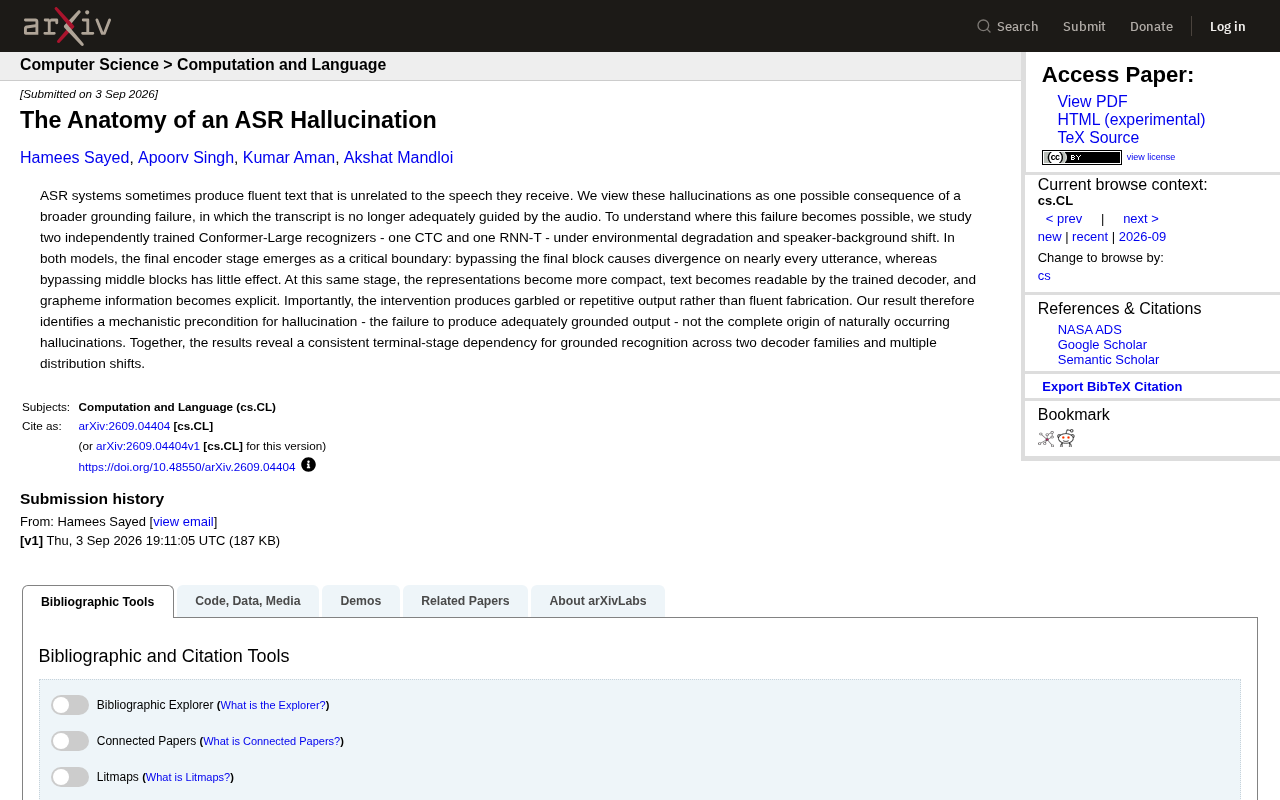
ASR Hallucination Explained: Why Speech Recognition Produces False Outputs
Dissecting the hallucination mechanism in ASR speech recognition systems. Research reveals the final encoder stage as the critical node for grounding failure, uncovering why speech recognition produces false outputs.

RAMageddon: AI Devours Chip Capacity, Consumer Electronics Supply Under Siege
AI training demand sparks a "RAMageddon" memory crisis as HBM and DDR5 chips are devoured by data centers, threatening consumer electronics with shortages and price hikes.

Claude Code Academic Research Skills: A Deep Dive into the Five-Stage End-to-End AI Research Assistant Framework
Deep dive into the GitHub project academic-research-skills: how Claude Code's five-stage Skills framework (Research, Write, Review, Revise, Finalize) builds a structured AI-assisted academic workflow.