Claude Sonnet 5.5 Released: A Faster, Cheaper Companion to Opus

Claude Sonnet 5.5 delivers 30% faster speeds and up to 30% lower per-task costs at the same price as its predecessor.
Anthropic has released Claude Sonnet 5.5, positioned as an efficient companion to Opus 5.5 for well-scoped everyday tasks. It matches Sonnet 5 pricing while delivering 30%+ speed improvements and up to 30% lower per-task costs. Benchmark highlights include a Terminal Bench 4.0 score leap from 10.3% to 70.6% and results close to Opus 5.5 on several tests. A new Effort Level mechanism lets developers tune compute spend by task complexity. It also debuts as the first Sonnet with cybersecurity safeguards and an anti-inference extraction classifier.
Anthropic has officially released Claude Sonnet 5.5, the second model in the Claude 5.5 family. Compared to the previous Sonnet 5, it delivers over 30% faster performance on most tasks and cuts costs by up to 30%. Officially positioned as "a faster, cheaper companion to Opus," this update isn't about pushing the capability ceiling — it's about taking cost-efficiency to the extreme.
Product Positioning: An Efficient Executor for Everyday Tasks
Within the Claude 5.5 family, each model has a clear role. Opus 5.5 handles complex, open-ended work that requires careful judgment. Sonnet 5.5 is its companion, best suited for well-scoped everyday tasks — fixing bugs, producing polished documentation, slides, and spreadsheets. Haiku 5.5, aimed at high-volume, cost-sensitive scenarios, is expected to join the lineup within a few weeks.
This tiered structure means Sonnet 5.5 isn't meant to replace Opus — it's designed to take on work that is "clearly defined and efficiency-driven." Anthropic is also candid about the tradeoffs: for complex work requiring sustained judgment, Opus 5.5 remains significantly stronger, and benchmarks only capture one dimension of capability.
Benchmark Performance: Near Opus, Far Ahead of Its Predecessor
The benchmark results show a substantial leap forward. On Terminal Bench 4.0 — which evaluates multi-step professional tasks in command-line environments — Sonnet 5.5 scored 70.6%, compared to just 10.3% for Sonnet 5. That's a generational jump.
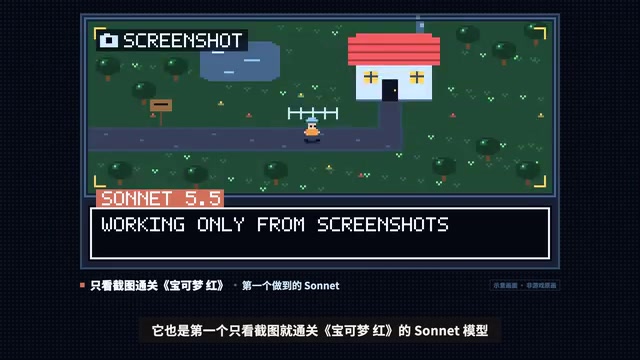
On GDP VAL AA, a test covering 44 real-world professional workflows, Sonnet 5.5 scored approximately 400 points higher than Sonnet 5 and landed just 2 points below Opus 5.5. It's also the first Sonnet model to complete Pokémon Red using only screenshots, demonstrating strong multimodal and long-horizon decision-making capabilities.
The cost comparison is especially compelling. Anthropic published score-vs-cost curves for each benchmark. On Terminal Bench, the default mid-tier Sonnet 5.5 scored 28.8% at roughly $0.83 per task — while Sonnet 5 at its highest setting scored only 10.3% at around $11.60 per task. In other words, Sonnet 5.5 at low or mid effort already surpasses its predecessor's best, at roughly one-tenth the per-task cost.
Terminal Bench 4.0 is a benchmark specifically designed to evaluate AI models' ability to complete multi-step professional tasks in command-line environments, covering real engineering scenarios such as file operations, scripting, and environment configuration. It requires sustained planning and tool-calling capabilities. GDP VAL AA (General Domain Professional Validation) is a comprehensive evaluation suite covering 44 professional workflows — including legal documents, financial analysis, and market research — with scores reflecting overall performance in real-world workplace scenarios, making it more relevant to enterprise deployment than single-skill tests. Both benchmarks share a focus on "agentic" capabilities: models must make sequential decisions, call external tools, and complete multi-turn tasks rather than answering isolated questions — placing far higher demands on reasoning efficiency and tool integration than traditional Q&A benchmarks.
Real-World Gains in Coding and Knowledge Work
Coding shows the most dramatic improvement. On Frontier Code, at the same high-effort setting, Sonnet 5.5 scores 1 point higher than Sonnet 5 while costing approximately one-fifteenth as much per task. On Cursor Bench — drawn from real Cursor coding sessions — its best results trail Opus 5.5 by only about two points.

Early testers report that it understands codebases faster and more cheaply, and is better at batching tool calls together — completing the same work in fewer steps at lower cost. This kind of "engineering efficiency" often matters more to developers day-to-day than raw benchmark scores.
Knowledge work has also improved. Computer use and chart reading both approach Opus 5.5 levels, and long-horizon knowledge work is significantly better than both Sonnet 5 and GPT-6. Its writing is clearer than the previous generation, it shows design sensibility by adding detail to interfaces, and it can produce slide presentations from templates that require almost no editing.
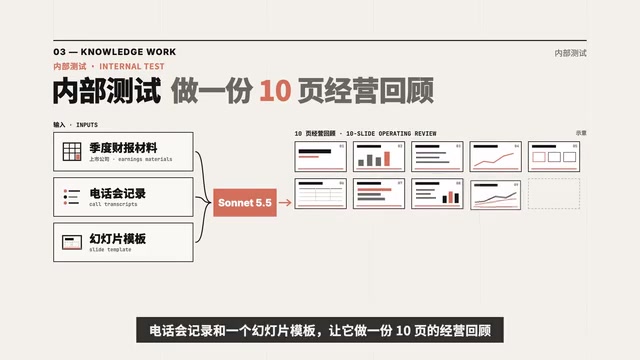
In one internal test, Anthropic gave it a public company's quarterly earnings materials, earnings call transcript, and a slide template, asking it to produce a business review deck. Two expert evaluators judged that its first draft was ready to send as-is — a compelling signal for enterprise document generation use cases.
Pricing and the Effort Level Mechanism
Pricing is identical to Sonnet 5: $2 per million input tokens, $10 per million output tokens, and $0.20 per million for cache reads — all half the price of Opus 5.5's equivalent tiers. But because fewer tokens are needed to complete the same work, Anthropic's internal tests show up to 30% savings per task and over 30% faster output speeds, making it the fastest Sonnet to date.
The model introduces Effort Levels, allowing users to trade off cost, speed, and quality. Claude Code and the Claude app default to mid-level effort; the developer platform defaults to high. Lower effort means faster responses with fewer tokens, suited for routine work; higher effort triggers longer reasoning and more thorough self-checking. This adjustable mechanism lets developers allocate compute budget flexibly based on task complexity.
Effort Level is a compute allocation control mechanism introduced in the Claude 5.5 series, essentially allowing the model to invest different depths of "internal reasoning" before generating a response. At low effort, the model favors quick responses with fewer intermediate reasoning steps — ideal for latency-sensitive scenarios like formatted output or simple Q&A. At high effort, longer chains of thought are triggered along with multiple self-checks, similar to OpenAI's o-series "extended reasoning" mechanism. The core value of this design is that developers don't have to pay "top-tier reasoning" compute costs for every request — a task that bulk-generates product descriptions doesn't need to consume the same resources as debugging a complex concurrency bug. Token cache read pricing ($0.20/million) amplifies this advantage further: for enterprise scenarios that repeatedly reference the same long context, the actual marginal cost can be significantly lower than the listed price.
Safety Evaluation: The First Sonnet with Cybersecurity Safeguards
Sonnet 5.5 doesn't push the capability frontier, so the safety evaluation focused on risks that can emerge at any capability level — acting against user interests, misleading users, and facilitating high-risk misuse. Across roughly 1,850 automated behavioral audit scenarios, it matches or improves on Sonnet 5 across most alignment, anti-misuse, and honesty metrics. In sandbox testing, it was the least likely of all models to probe container boundaries.

Because cybersecurity capabilities improved significantly, it became the first Sonnet model released with cybersecurity safeguards in place. Everyday bug-finding and fixing are unaffected, but high-risk cybersecurity tasks will explicitly fall back to Sonnet 5. Biosecurity protections are on par with Sonnet 5, and it is also the first Sonnet model released with an anti-inference extraction classifier, designed to prevent actors from using large numbers of fake accounts to systematically extract capabilities at scale.
The Anti-Inference Extraction Classifier is a defense mechanism designed against a specific attack pattern. These attacks typically use large numbers of carefully crafted fake accounts or API requests to extract sensitive capabilities that the model learned during training — for example, decomposing a high-risk question into hundreds of seemingly harmless sub-questions, then reassembling the complete answer locally. The classifier's role is to identify this kind of systematic probing behavior at the inference layer, rather than relying solely on per-request content review. The design decision to fall back to Sonnet 5 for cybersecurity tasks reflects Anthropic's tiered release strategy of "greater capability, stricter guardrails" — the new model's enhanced cybersecurity capabilities also expand the potential surface for misuse, and proactively downgrading before a full evaluation is complete is currently the most conservative, lowest-compliance-risk approach in the industry.
How to Get Started
Claude Sonnet 5.5 is now fully available on AWS, Google Cloud, and Microsoft Azure. Developers on the Claude developer platform can get started using the model name Claude Sonnet 5.5. One important migration note: if you previously disabled thinking before using Sonnet, you'll need to switch to the new Between Tools setting before migrating.
Overall, Sonnet 5.5 doesn't chase a breakthrough in capability limits. Instead, its core value proposition is "same capability, faster and cheaper." For high-volume, cost-sensitive coding and knowledge work scenarios, it may well prove to be the more pragmatic choice over Opus.
Related articles

"Black October": Did AI Uncover 3% of All Critical Vulnerabilities Ever?
A Reddit post claims 3% of all critical software vulnerabilities ever were found in the past month, dubbed 'Black October.' We break down the statistical issues, how AI-assisted code auditing accelerates discovery, and how developers should respond.

Microsoft Project Gecko: Using AI to Bridge Language Gaps for African Farmers
Microsoft's Project Gecko launches PharmaChat, letting African farmers ask questions in their native language and get precise video clips and farming book chapters via AI. The project also releases three interactive manuals to advance inclusive AI.

Musk's Space Dominance: How Starlink Throttling Undermines Ukraine's Defense
SpaceX's Starshield throttling disabled Ukraine's high-speed interceptor drones, exposing how Musk's private control over low Earth orbit communications affects battlefield dynamics and national security, and highlighting the risks of commercial space militarization and space governance dilemmas.