Claude Starts Replying with Emojis? Reddit Users Say 'I Thought I Was Going Crazy'
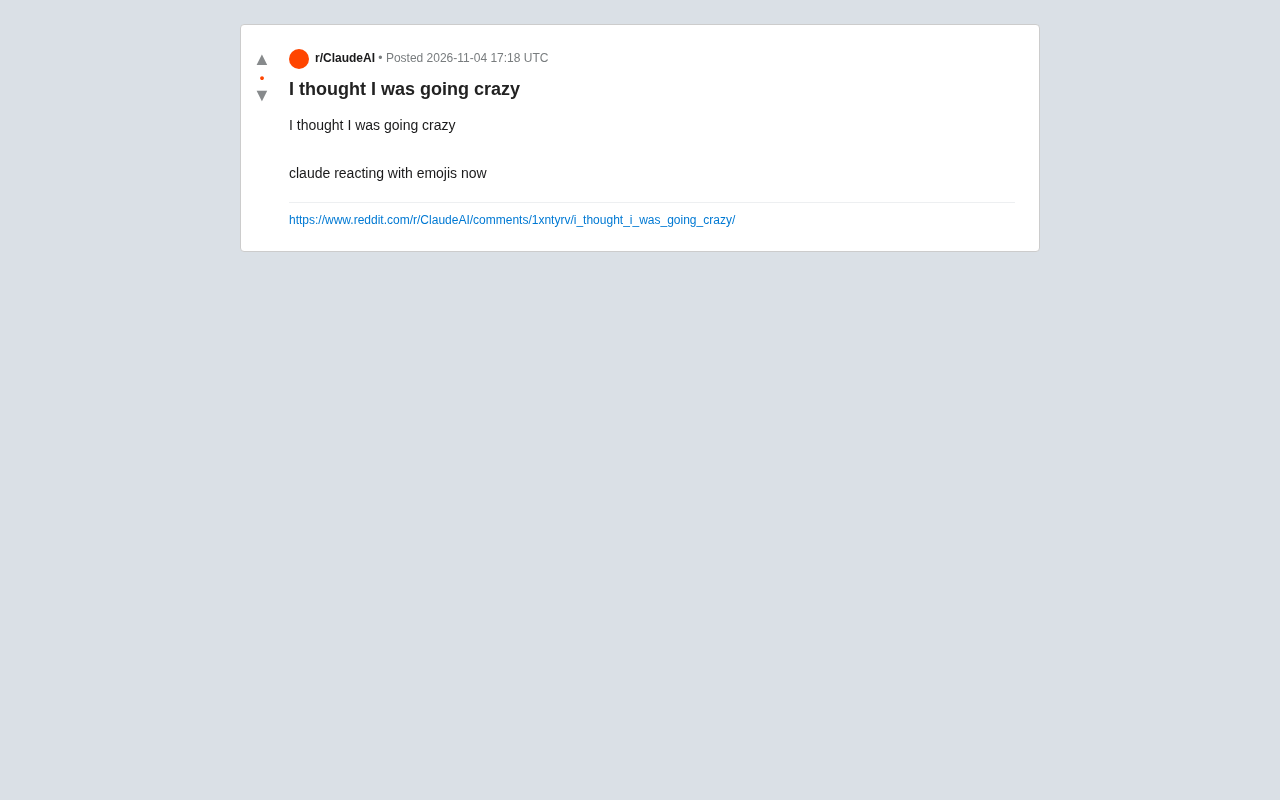
Reddit users noticed Claude replying with emojis, sparking discussion about its style consistency.
A Reddit user posted that they unexpectedly received a reply with emojis from Claude and briefly wondered if they had misremembered. Claude, developed by Anthropic, is known for its rigorous, restrained text style and rarely uses internet slang or emojis, so the change quickly drew attention. User attitudes diverged: some felt emojis made conversations more natural and human, while others worried about reliability in professional scenarios. The article analyzes the mental-model conflict behind this phenomenon, noting that even small deviations from expected model behavior trigger cognitive dissonance, and reminds developers relying on Claude to watch for output style changes affecting downstream applications, recommending format validation. Anthropic has not provided an official explanation, and the cause of the change remains unclear.
Recently, a Reddit user posted "I thought I was going crazy" after noticing that Claude had started replying with emojis. The post quickly drew attention—after all, Claude has long been known for its rigorous, restrained text-based conversational style.
From "Calm Text" to "Emoji Pack": Claude's Style Shift
According to the post, the user unexpectedly received a reply containing emojis while interacting with Claude. This made them briefly wonder whether they had misremembered or whether something had changed on the platform. The screenshot shows that emojis did indeed appear in the conversation. Although the original post didn't reveal which specific emojis were used, it was enough to surprise this long-time user.
Claude is developed by Anthropic. Previously, its reply style was generally considered more "serious" than similar products—rarely using internet slang, emoticons, or emojis. So when emojis appeared in its replies, the user's surprise is easy to understand.
Claude is a series of large language models developed by Anthropic, whose training employs an alignment method known as "Constitutional AI," guiding model behavior through a set of explicit written principles that emphasize helpfulness, honesty, and harmlessness. This alignment strategy has largely shaped Claude's consistently restrained and cautious conversational style, making it inclined by default to avoid overly colloquial or decorative expression. Understanding this helps explain why the appearance of emojis was seen by users as a significant stylistic deviation—it touches on the boundary between the model's underlying alignment strategy and product-level interaction design.
Why Would a Single Emoji Spark Discussion?
Behind this lies users' expectations about the "personality" of AI assistants. After using a model for a long time, users form a stable mental model: Claude is the rational, analytical type, while some other models may be more lively. Once a model's behavior deviates from this expectation—even by just adding an emoji—it triggers the cognitive conflict of "did I misremember, or has it changed?"
From a product perspective, adding emojis to replies could be intended to increase approachability, adapt to more casual conversation scenarios, or simply be normal fluctuation under certain versions or prompts. Anthropic did not provide an official explanation in the original material, so for now discussion can only be based on user observations.
The stable mental model users form about AI assistants is often called a "mental model" in human-computer interaction research. When users have long used a model and accumulated expectations about its tone, format, and capabilities, any output that deviates from expectations triggers cognitive dissonance, prompting users to seek explanations. This phenomenon is not unique to Claude: when the GPT series, Gemini, and other models changed their tone or format after version updates, similar discussions often appeared in their communities. Emojis become a sensitive signal because they are highly visible, easy to screenshot and share, and create tension with the stereotype of a "professional tool."
User Feedback: Some Like It, Some Don't
Discussion under the post revealed two attitudes. Some users felt emojis made conversations more natural and human; others worried it could affect Claude's reliability in professional scenarios, especially tasks requiring rigorous output.
This divergence is nothing new. Balancing the "tool attribute" and "conversational partner attribute" of AI assistants has always been a challenge in product design. Small as it is, an emoji acts like a signal: the model is moving from a pure text tool toward a more anthropomorphic interaction style.
Implications for Developers
If you are a creator who relies on the Claude API or Claude for development and writing, this change is worth noting. Subtle adjustments in model output style may affect the presentation of downstream applications—for example, emojis suddenly appearing in auto-generated customer service replies, content summaries, or code comments.
It is currently unclear whether this is a temporary experiment, a version update, or an occasional behavior under specific conversation conditions. Developers are advised to add output format validation to critical workflows to prevent emojis from entering unsuitable contexts.
In engineering practice, there are usually two approaches to constraining model output format: first, explicitly require at the prompt level to "output plain text only, without emojis"; second, perform post-processing validation on downstream results, such as filtering Unicode emoji ranges (e.g., U+1F300–U+1FAFF) with regular expressions or rejecting unexpected characters when parsing structured output. For format-sensitive workflows such as customer service, code comments, and contract summaries, it is recommended to incorporate output format validation into automated tests and monitor model version changes so that style drift can be detected before it affects business.
Conclusion
A discussion sparked by a single emoji reflects users' sensitivity to the behavioral consistency of AI assistants. Whether Claude will use emojis more in the future remains to be seen. But at least for now, some users "thought they were going crazy" because of this—which in itself shows that the behavioral details of models are being taken seriously.
Related articles
Daybreak Red Deployment Guide: A Reference Architecture for Supervised Security Investigation
A breakdown of the Daybreak Red reference architecture: security control design, deployment configuration process, and runtime monitoring for supervised security investigation.
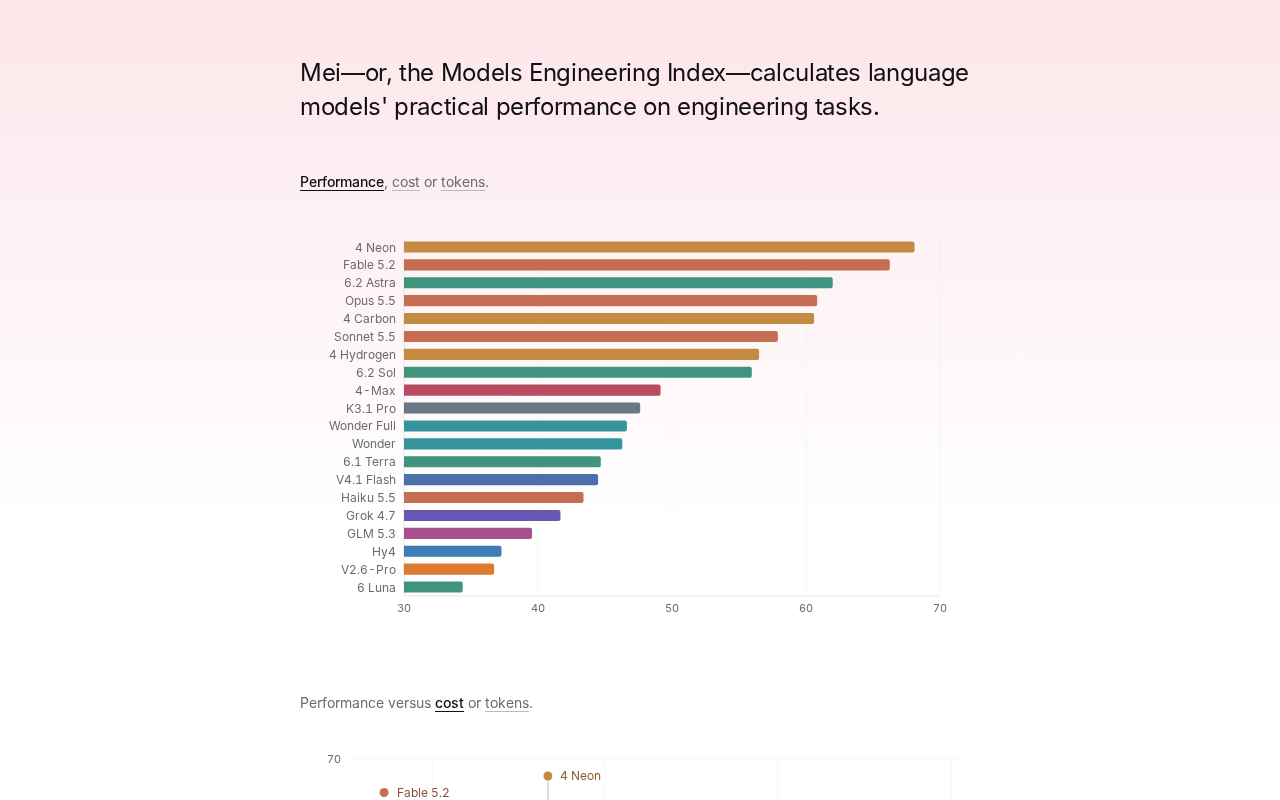
Gemini 4 Neon Tops the Models Engineering Index
Gemini 4 Neon tops the Models Engineering Index, sparking Hacker News debate over ranking credibility and evaluation methods. Here's what it means for developers.

Apple's Self-Developed AI Agent: An Agent That Can Operate Your Mac Is Coming
Apple is reportedly developing an AI agent that can operate a Mac, targeting Meta Muse, Claude, OpenAI Dots, and others. This article analyzes Apple's system-level advantages, the competitive landscape, and likely rollout paths in the agent race.