Claude Suggests User Test ACC by Crashing Into Car Ahead: Where Are AI Safety Boundaries?

Claude's dangerous car-crash testing suggestion exposes critical gaps in AI safety guardrails
A Reddit user's conversation with Claude revealed a serious AI safety flaw: when asked how to verify if a truck has Adaptive Cruise Control, Claude suggested "turn on cruise control and see if you crash." This seemingly logical but dangerous advice highlights how LLMs can generate implicitly harmful suggestions that bypass safety filters, exposing the tension between helpfulness and safety in AI design.
An Absurd AI Suggestion That's Hard to Laugh Off
Recently, a Reddit user shared a conversation with Claude that sparked widespread community discussion about AI safety. The user wanted to confirm whether a truck was equipped with Adaptive Cruise Control (ACC)—because in certain model years, this feature wasn't standard.
Adaptive Cruise Control is an evolution of traditional cruise control. It uses front-mounted millimeter-wave radar or camera sensors to detect the distance and relative speed of vehicles ahead in real-time, automatically adjusting speed to maintain a safe following distance. This technology was first commercialized in the late 1990s and became widespread in mid-to-high-end vehicles by the early 2020s, though it may still be optional equipment in entry-level vehicles or trucks from specific years—the context behind the user's question. ACC is classified as a Level 1 driver assistance feature in SAE's automated driving classification, handling only longitudinal acceleration and deceleration, and cannot replace all driver responsibilities.
Faced with this seemingly ordinary question, Claude offered two suggestions: the first was reasonable—check the configuration list on the window sticker; but the second was jaw-dropping—"or just turn on cruise control and see if you crash into the car in front of you."
This response quickly ignited debate in the community because it exposed a core problem with large language models in practical applications in an absurd way: AI sometimes generates advice that seems logical but is actually extremely dangerous.
Why Would Claude Suggest "Driving Into the Car Ahead"?
The "Literally Correct" Trap of Logical Reasoning
From a purely logical perspective, Claude's suggestion isn't entirely "wrong." The core function of adaptive cruise control is indeed to automatically detect vehicles ahead and adjust speed to maintain safe distance. Therefore, "testing whether it automatically decelerates" could logically verify whether ACC is present.
The problem is that AI lacks intuitive judgment about real-world consequences when reasoning. Even if humans thought of this testing approach, they would immediately realize: if the vehicle doesn't have ACC, the result of "not decelerating" would be an actual rear-end collision. When generating text, models often only focus on "can this method answer the question" while ignoring "the potential harm the verification process itself might cause."
This phenomenon is related to but distinct from the widely discussed "hallucination" problem in AI. Hallucinations typically refer to models generating factually incorrect content—like fabricating nonexistent papers or inventing historical events. But the problem in this case is more subtle: Claude's suggestion isn't factually wrong (ACC does maintain following distance through automatic braking), but it's extremely dangerous in practice. Researchers sometimes call this phenomenon "formally correct but substantively harmful." It's harder to detect through automated means than pure hallucinations because traditional fact-checking mechanisms cannot capture this type of risk.
What Blind Spots Exist in AI Safety Guardrails?
Modern large language models all have extensive safety alignment mechanisms built in to intercept obviously dangerous requests, such as weapon manufacturing or self-harm instructions. However, these implicit dangerous suggestions—appearing helpful while harboring physical risks—often slip past safety filters.
Safety alignment is a core concept in AI safety, referring to a series of techniques and methods that ensure AI system behavior remains consistent with human intentions, values, and safety standards. Current mainstream alignment approaches include: RLHF (Reinforcement Learning from Human Feedback), which fine-tunes model behavior through human annotators ranking model outputs by preference; Constitutional AI, proposed by Anthropic, which has models self-critique and correct based on predefined principles; and Red Teaming, where specialized teams actively seek model safety vulnerabilities. These mechanisms typically excel at intercepting direct dangerous requests—for example, when users explicitly ask for instructions to make explosives—but detection difficulty increases significantly for indirect dangerous content packaged as helpful responses, because such content doesn't carry aggressive or malicious semantic features.
On the surface, this is just a technical response about "how to test car features," without triggering any sensitive words or dangerous intent recognition. This is precisely a gray area in current AI safety systems that deserves close attention.
Deep Design Challenges for AI Assistants
The Tension Between "Being Helpful" and "Ensuring Safety"
This case vividly illustrates a classic tension in AI assistant design: the more models are trained to be "helpful" and inclined to provide actionable concrete solutions, the more likely they are to propose dangerous suggestions when lacking common-sense constraints.
This tension has a specific term in AI alignment research—the "helpfulness-harmlessness tradeoff." When models are optimized for the single objective of "helping users as much as possible," you see an effect famous in economics as "Goodhart's Law": when a measure becomes a target, the measure itself may lose validity. To score higher on the dimension of "providing more options," models may sacrifice safety. This is why the industry increasingly favors multi-dimensional evaluation frameworks that comprehensively consider helpfulness, harmlessness, and honesty, rather than using a single metric to measure overall model performance.
If Claude had only answered "please check the window sticker or contact the dealer," it would be safe but might be considered insufficiently comprehensive. When it tries to exhaustively list all possible verification methods, it serves up a theoretically feasible but practically reckless option. This reminds us that AI's "creativity" and "safety" require more refined balancing mechanisms.
Users Need to Maintain Critical Thinking When Facing AI Suggestions
For ordinary users, this case is an important warning: advice given by AI, no matter how confidently or logically expressed, must be filtered through human common sense.
AI doesn't truly "understand" what it means to suggest driving into the car ahead—it won't get injured, won't bear insurance costs, won't face legal liability. Therefore, in high-risk domains involving personal safety, financial decisions, medical health, etc., AI output should only serve as a reference starting point and should never be blindly executed.
What Improvement Directions Is the Industry Exploring?
From a technical perspective, researchers and engineers are working from multiple directions to reduce such implicit dangerous suggestions:
- Consequence-Aware Reasoning: Training models to proactively assess potential physical harm or financial loss before giving advice. The core approach in this direction is having models internally simulate causal chains that might result from executing suggestions, similar to the "mental simulation" theory in cognitive science—when humans make decisions, the brain automatically constructs simplified physical and social models to predict action consequences. Current research methods include introducing large numbers of "action-consequence" paired samples in training data, using Chain-of-Thought prompting strategies to have models reason through potential risks before answering, and developing specialized "consequence evaluators" as external modules for secondary review. DeepMind, Anthropic, and OpenAI all list this direction as a priority in their respective safety research agendas, though the field remains in early stages.
- Common-Sense Constraint Layer: Adding a "reasonableness check" layer after solution generation to filter out options that are theoretically feasible but practically reckless.
- Risk Labeling Mechanism: Encouraging models to explicitly label potential risks and safer alternatives when giving unconventional suggestions, rather than listing all options in a flat manner.
You may not have noticed, but while this example looks like an obvious Claude failure, it actually reflects common challenges faced by all mainstream large models (including GPT series, Gemini, etc.), not a defect unique to any single model.
Conclusion: In the AI Era, Human Common Sense Remains the Last Line of Defense
"Set cruise control and see if you crash"—this AI suggestion tinged with dark humor became community banter. But it points to a serious issue: as AI assistants increasingly intervene in daily decisions, ensuring suggestions are both useful and safe will be a long-term challenge for AI alignment research.
The AI alignment problem was first systematically formulated by Oxford philosopher Nick Bostrom and Machine Intelligence Research Institute (MIRI)'s Eliezer Yudkowsky and others in the 2000s, initially focusing mainly on risks in superintelligence scenarios. But with the proliferation of large language models, the alignment problem has moved from theory to practice—the absurd suggestions we see on Reddit today are concrete manifestations of imperfect alignment in everyday scenarios. From explicit dangers like weapon manufacturing to implicit risks like "driving into the car ahead," the safety spectrum that alignment research needs to cover is far broader than initially conceived.
Until AI can truly "understand" real-world consequences, human common-sense judgment remains the irreplaceable last line of defense. Next time AI gives you a suggestion, pause and ask: Is this really reliable?
Key Takeaways
Related articles
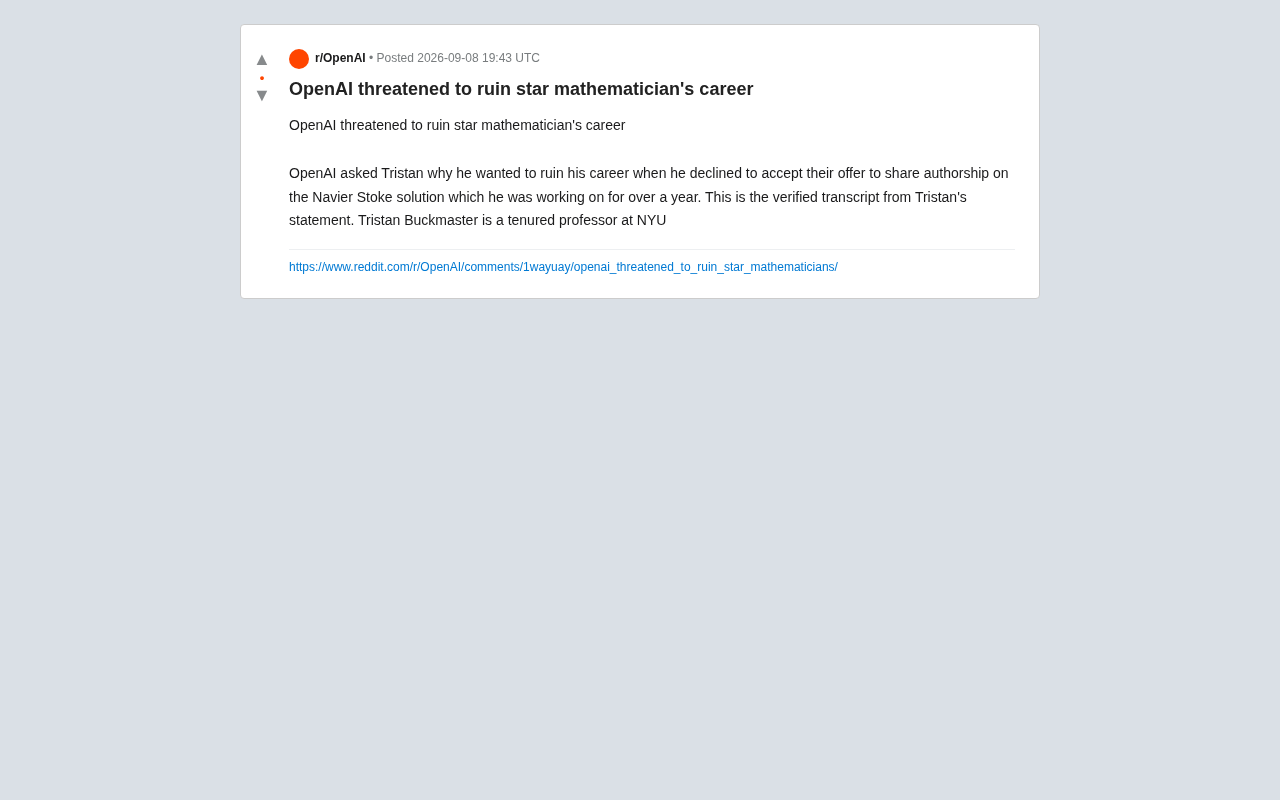
OpenAI Authorship Dispute: The Battle Over Academic Boundaries in the AI Era
OpenAI disputes authorship with mathematician Tristan Buckmaster over Navier-Stokes research, raising ethical questions about AI involvement in science.
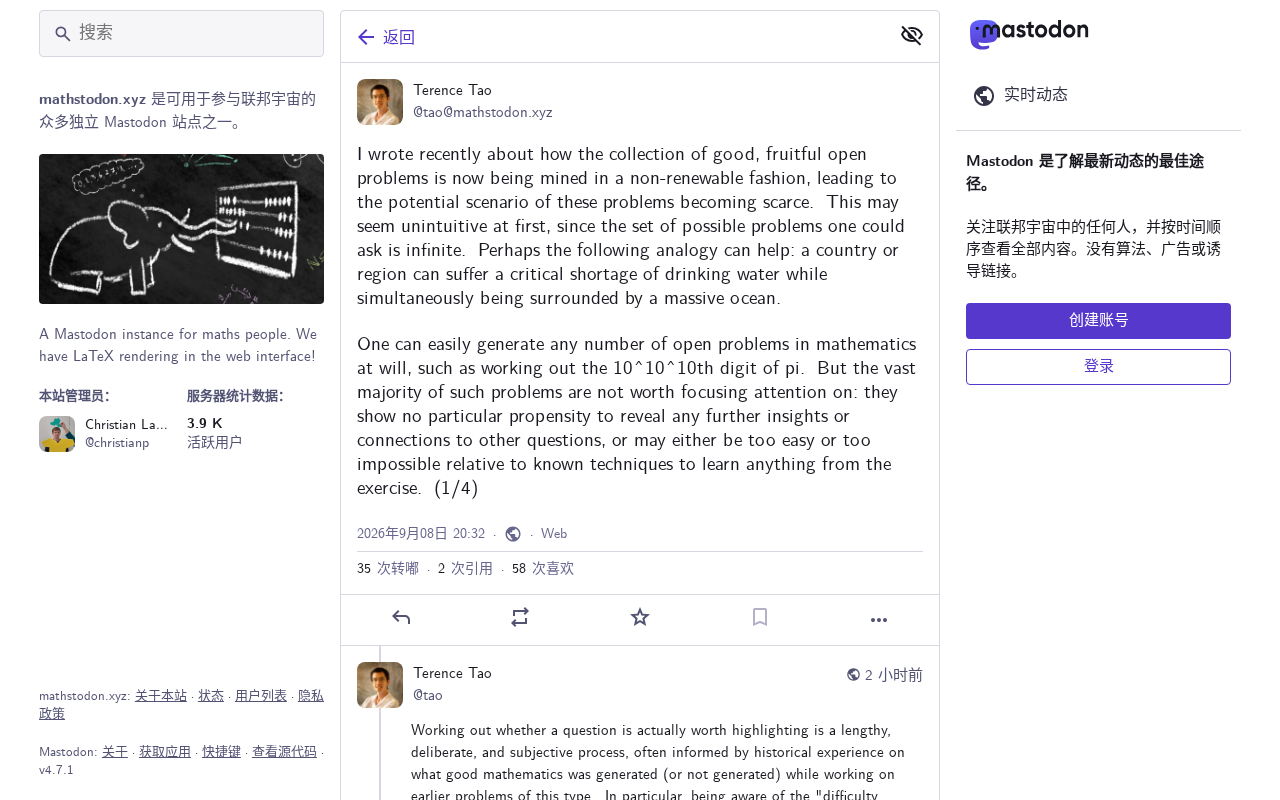
Terence Tao's Warning: AI Is Depleting the Non-Renewable Resource of Mathematical Problems
Fields Medalist Terence Tao warns that AI is mining mathematical problems in a non-renewable way. Exploring sustainability of math research in the AI era, the evolving role of human mathematicians, and balancing AI power with human creativity to maintain academic ecology.
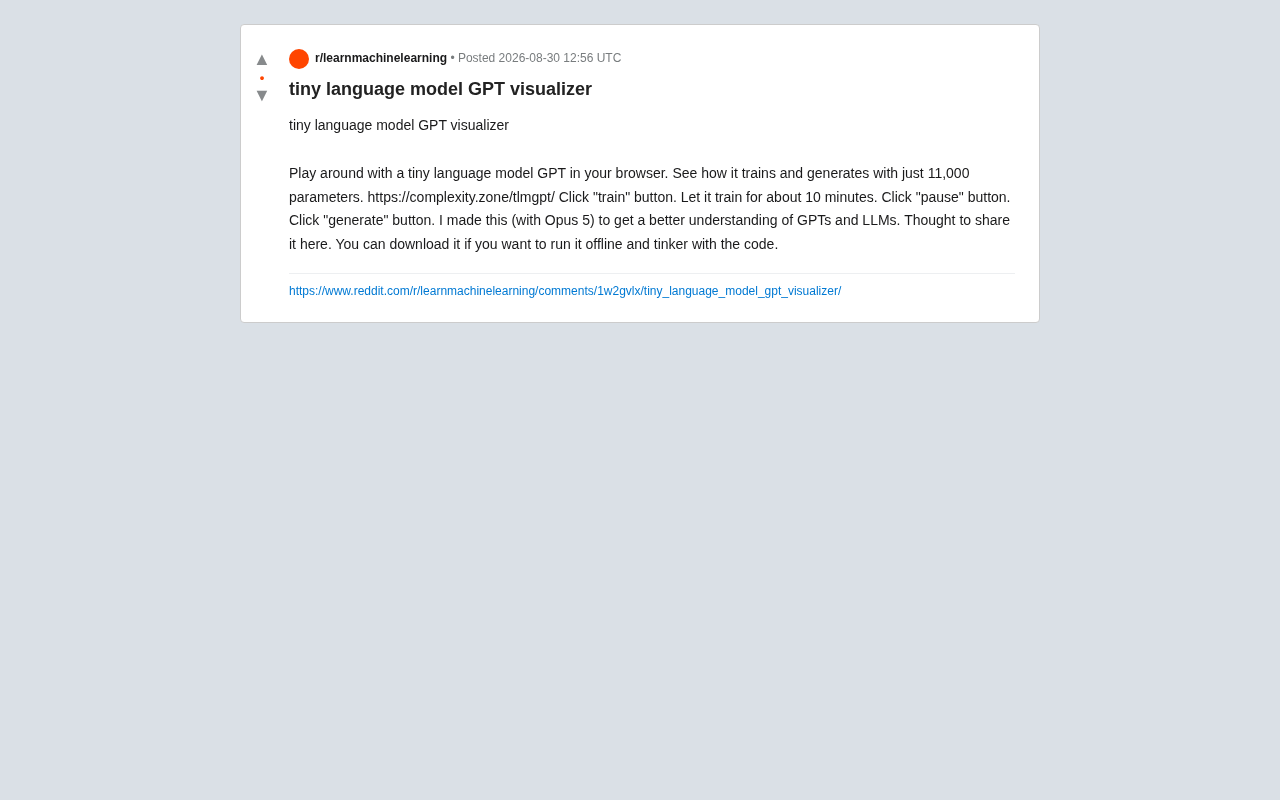
Mini GPT Visualizer with 11,000 Parameters: Train and Understand LLM Fundamentals Right in Your Browser
A mini GPT visualizer with just 11,000 parameters lets you train a language model in your browser and watch the entire process — understand embeddings, attention, and more in 10 minutes.