Claude Tag Comes to Slack: The Ambitions and Concerns of an AI Teammate

Anthropic's Claude Tag embeds AI into Slack as a teammate, raising strategic and privacy questions.
Anthropic's Claude Tag integrates Claude AI into Slack as an always-on teammate, marking a shift from passive tool to active participant. Beyond productivity, the feature strategically captures organizational context and institutional knowledge, creating powerful lock-in effects. However, it raises serious data security, privacy, and compliance concerns, while intensifying the AI giants' battle for the enterprise software gateway.
Introduction: AI Evolves from Tool to "Colleague"
Anthropic recently launched a new feature called Claude Tag, embedding Claude AI into the enterprise collaboration platform Slack as an "always-on AI teammate." This is far more than a simple chatbot integration — it marks a shift in AI's role from "passively invoked tool" to "actively participating team member."

But beneath the surface of productivity gains, Claude Tag's strategic intent runs much deeper than it appears: It's learning your company, one Slack message at a time.
What Is Claude Tag?
An Always-On AI Teammate
The core philosophy behind Claude Tag is to transform AI from a standalone application that requires you to actively open it and type prompts, into something that exists like a real team member within the flow of your daily work conversations. Within Slack — the central hub of enterprise communication — Claude can:
- Participate in channel discussions in real time, providing analysis and suggestions when @mentioned
- Understand conversational context, rather than answering individual questions in isolation
- Continuously accumulate organizational knowledge, becoming increasingly attuned to your team over time
This design philosophy is fundamentally different from traditional AI assistants. In the conventional model, users need to "transport" their questions from the work context into a separate AI tool. Claude Tag stations itself directly where work happens, eliminating that layer of friction.
Notably, Anthropic's choice of Slack as its entry point is no accident. Since its launch in 2013, Slack has become one of the core infrastructure platforms for global enterprise communication and collaboration. In 2021, Salesforce completed its $27.7 billion acquisition of Slack, making it a key component of the Salesforce ecosystem. Slack currently has over 30 million daily active users, spanning startups to Fortune 500 companies. Slack's unique value lies in being more than just an instant messaging tool — it serves as the nerve center of enterprise information flow. Through Channels, Workflows, and rich third-party integrations, Slack hosts vast amounts of unstructured business discussions, decision-making processes, and accumulated knowledge. This is precisely why Anthropic chose Slack as its entry point: it's one of the digital spaces with the highest density of tacit enterprise knowledge.
The Strategic Game Beyond Productivity
Capturing Organizational Context and Institutional Knowledge
On the surface, Claude Tag is a tool for improving team collaboration efficiency. But from a strategic perspective, Anthropic's real objective is to capture an enterprise's most valuable intangible assets — organizational context and institutional knowledge.
To understand the depth of this strategy, it's important to clarify what these two concepts mean. Organizational context refers to the background information surrounding how a company operates, including corporate culture, strategic direction, team dynamics, and project history. Institutional knowledge is the collective wisdom accumulated through long-term operations, often residing in the minds of experienced employees rather than in formal documentation. Management research shows that up to 80% of enterprise knowledge is tacit knowledge — experiential cognition that's difficult to transfer through written documents or process manuals. When key employees leave, this knowledge often disappears with them, creating what's known as a "knowledge gap." Traditional knowledge management systems (such as Confluence and SharePoint) primarily capture explicit knowledge, while daily conversations in Slack are the most natural carriers of tacit knowledge — the decision rationales, experiential judgments, and business intuitions shared in informal discussions are precisely what AI is most eager to learn.
Every company has vast amounts of undocumented tacit knowledge: the historical context behind project decisions, collaboration patterns between team members, the meaning of specific business terminology, the unwritten rules of internal processes... This knowledge is scattered across countless Slack messages, meeting discussions, and email threads. By embedding itself in Slack, Claude Tag gains an unprecedented window to absorb this information.
This means that the longer you use Claude Tag, the deeper its understanding of your company becomes, and the stronger your dependency on it grows — this creates an extremely powerful lock-in effect.
From a business logic perspective, lock-in effect is a core concept in technology economics, first systematically articulated by economists like Paul Krugman and Brian Arthur. It refers to the phenomenon where, once a user's investment in a product or service (time, data, learning costs, customized configurations) reaches a certain threshold, the cost of switching to a competing product becomes prohibitively high, effectively "locking" them into the current vendor's ecosystem. Classic examples of lock-in effects in enterprise software include Oracle databases and SAP ERP systems — once deeply deployed, migration costs can run into millions of dollars. The lock-in effect created by Claude Tag is more subtle but equally powerful: what it accumulates isn't technical configurations, but an understanding of the enterprise's unique context. This "cognitive lock-in" means that even if a competitor offers a stronger base model, enterprises would find it difficult to migrate because a new AI would need to learn everything about the organization from scratch.
Deep Integration into Enterprise Workflows
Beyond the knowledge dimension, Claude Tag is also quietly permeating daily enterprise workflows. When teams become accustomed to @mentioning Claude for data analysis, code reviews, copywriting suggestions, or meeting summaries during discussions, AI is no longer an optional add-on — it becomes an indispensable part of the workflow.
This shift from standalone tool to embedded intelligence reflects a fundamental evolution in AI application architecture. Early AI applications followed a "hub-and-spoke" model — users needed to actively visit a centralized AI interface (like the ChatGPT webpage) to access services. Embedded AI, on the other hand, follows the design philosophy of "ambient intelligence," allowing AI capabilities to permeate the user's work environment like air. The technological foundations of this trend include: the continued decline in large language model inference costs (API call costs for GPT-4-level models have dropped approximately 90% over the past year), the maturation of long context window technology (enabling AI to process large volumes of historical conversations), and techniques like RAG (Retrieval-Augmented Generation) that allow AI to access external knowledge bases in real time. From a user experience perspective, embedded AI eliminates the cognitive burden of "context switching" — research shows that knowledge workers lose 20-25% of their productive work time each day switching between different tools.
The business value of this deep integration for Anthropic is clear:
- Higher renewal rates: Migration costs grow exponentially with depth of usage
- Expanded use cases: Scaling from individual assistant to team-level and organization-level applications
- Training data accumulation: Real-world interaction data from enterprise scenarios is extremely valuable
Concerns Worth Watching
Data Security and Privacy Boundaries
When AI can "read" all conversations in a company's Slack, data security concerns are unavoidable. Enterprises need to seriously consider several key questions:
- Data storage and usage scope: Will information Claude extracts from Slack conversations be used for model training? What are the data retention policies?
- Access control: Should AI be able to see content from all channels? How should sensitive channels (HR, legal, executive discussions) be isolated?
- Compliance challenges: For regulated industries (finance, healthcare, government), does continuous AI monitoring of work conversations meet compliance requirements?
Data sovereignty issues have become unprecedentedly complex in the AI era. The EU's General Data Protection Regulation (GDPR), China's Data Security Law and Personal Information Protection Law, and privacy regulations being rolled out across U.S. states all impose strict requirements on the storage, processing, and cross-border transfer of enterprise data. When AI systems continuously access enterprise communication data, the EU AI Act's classification and compliance requirements for high-risk AI systems also come into play. In the financial industry, the U.S. SEC and FINRA require retention and auditability of all business communications; the healthcare industry is bound by HIPAA regulations with strict limitations on AI processing of patient information. When deploying tools like Claude Tag, enterprises need to establish comprehensive AI governance frameworks, including data classification and grading, access control matrices, audit logs, and clear Data Processing Agreements (DPAs). While Anthropic promises not to use enterprise data for model training, the gap between "promises" and "technical safeguards" remains a critical risk that enterprise security teams must carefully evaluate.
Anthropic has always positioned "AI safety" as its core brand identity. The launch of Claude Tag will be a real test of that commitment.
The AI Giants' Battle for the Enterprise Gateway
The launch of Claude Tag also reflects the broader competitive landscape in the AI industry. Microsoft is deeply binding Copilot to Teams and Office 365, Google is infiltrating Workspace through Gemini, and Anthropic has chosen Slack — a platform that has maintained an independent ecosystem even after its Salesforce acquisition — as its entry point.
The current battle among AI giants for the enterprise market has formed three major camps. Microsoft, leveraging the massive installed base of Office 365 and Teams, embeds AI capabilities across Word, Excel, PowerPoint, Outlook, and the full suite of office applications through Microsoft 365 Copilot, covering over 400 million paid users. Google integrates AI into Gmail, Google Docs, Google Meet, and other products through Gemini for Workspace, leveraging its advantages in cloud-based collaboration. Both share a common strategy of "platform bundling" — using existing enterprise software ecosystems to push AI adoption. Anthropic's situation is fundamentally different: it doesn't have its own enterprise collaboration platform, so it has chosen a "parasitic" strategy, reaching enterprise users by embedding itself in Slack, a third-party platform. The risk of this strategy lies in its dependence on Slack's platform policies, but the advantage is that Slack's user base tends to be technology-forward enterprises with higher AI adoption rates. Additionally, OpenAI is also competing for this market through ChatGPT Enterprise and integrations with various enterprise tools, making the competitive landscape even more complex.
Whoever becomes the enterprise's "default AI colleague" first will command the high ground in the next generation of enterprise software. The core of this competition isn't about model capability — it's about who can embed themselves most deeply into the daily workflows of enterprises.
Conclusion: Convenience and Vigilance Must Coexist
Claude Tag represents an important trend in AI applications: the shift from standalone tools to embedded intelligence. It genuinely has the potential to dramatically improve team collaboration efficiency and lower the barriers to knowledge access. But while embracing this convenience, enterprise decision-makers must also clearly recognize that when you let AI learn your company, you're also placing your organization's core knowledge assets in the hands of a third party.
In this new era where AI is deeply woven into work environments, finding the balance between productivity gains and data sovereignty will be a challenge every enterprise must face.
Related articles
AlphaGenome 2 Released: Predicting Variant Effects by Cell Type
Google DeepMind releases AlphaGenome 2, a conditional DNA sequence model predicting regulatory activity and variant effects by cell type, open via AlphaGenome API for non-commercial research. This article examines the significance of conditional modeling, API distribution trade-offs, and validation challenges.
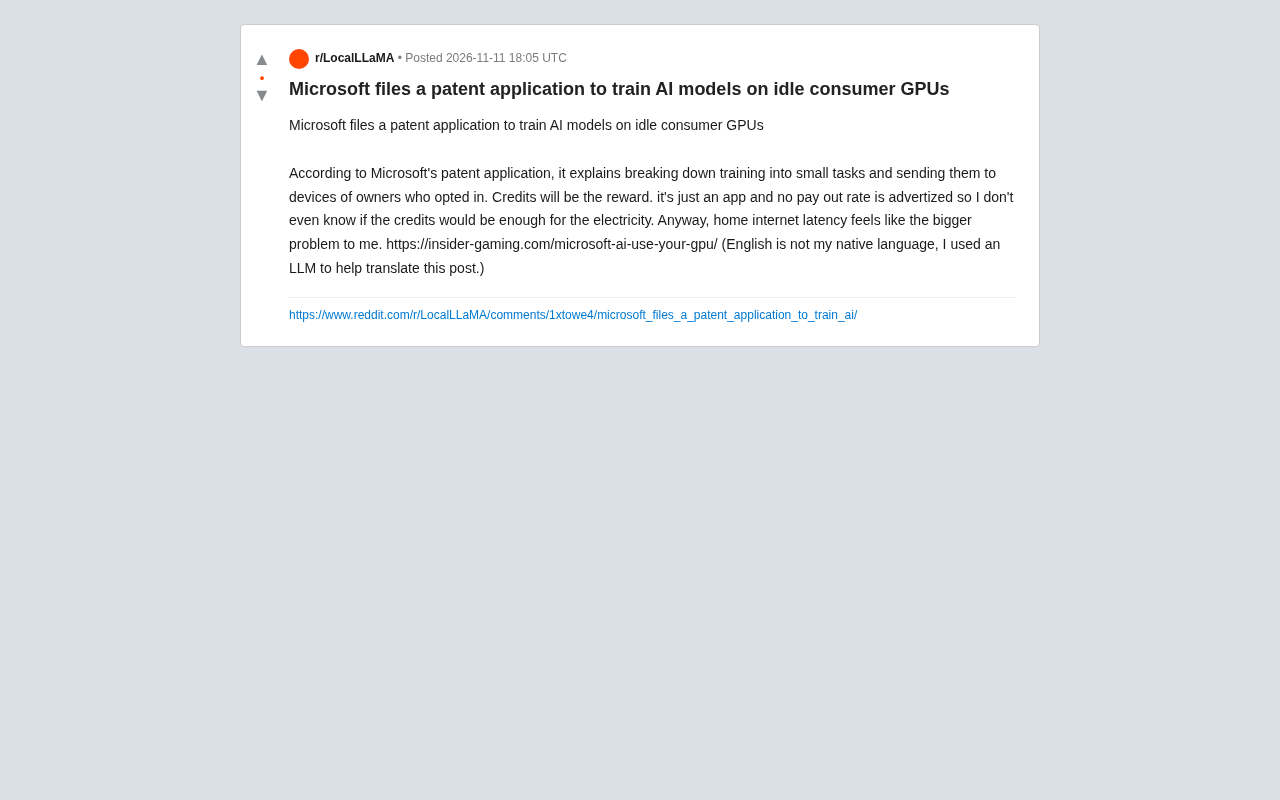
Microsoft Patent: Train AI on Your Idle GPU for Points—Is It Worth the Electricity Bill?
A Microsoft patent proposes splitting AI training tasks across users' idle GPUs with points as rewards. This article analyzes its incentive design, network latency bottlenecks, and differences from existing distributed training, exploring whether the model can be deployed.
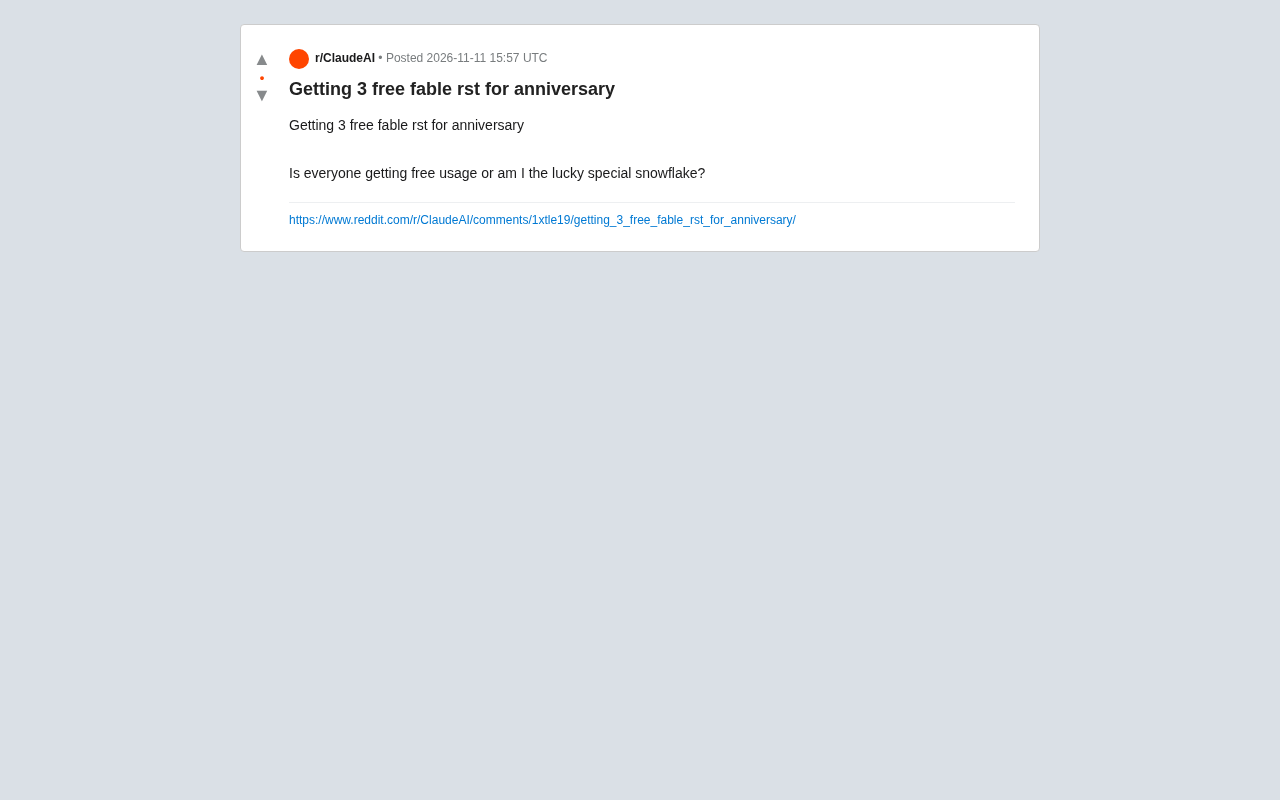
Reddit User Shares Free Fable Credits, Sparking Discussion
A Reddit user claims to have received 3 free Fable credits, sparking debate over whether AI tool freebies are universal. This article reviews the post and common operational logic, reminding users to rely on official statements.