Claude Usage and Cost Analytics API: Attribute Spend by API Key and User

Claude usage cost analytics API enables four-dimension attribution; reconcile before relying on it in beta.
Anthropic's Claude Usage and Cost Analytics API (beta) reports token usage and cost by model, workspace, API Key, and user, solving unattributable bills. It enables cost governance, quota allocation, and anomaly detection, but beta interfaces and definitions may change, so it shouldn't be the sole financial data source. Migration requires parallel reconciliation of token-counting boundaries and unit prices.
Why You Need Usage and Cost Attribution
As teams grow, Claude API bills often turn into a muddled mess: total spend keeps rising, but no one can say which product line, developer, or API Key is responsible. Anthropic's Claude Usage and Cost Analytics API (beta) is designed to fill this gap. It reports token usage and cost across four dimensions—model, workspace, API Key, and user—breaking down what was previously a single total bill into specific accountable parties.
For teams running multiple AI features across multiple environments (dev/test/prod), this granularity is a prerequisite for cost governance. Without attribution, budget control is guesswork; with attribution, you can do quota allocation, anomaly detection, and internal chargebacks.
The relationship between token usage and cost: In the Claude API, billing is based on token counts, including input tokens (prompts sent to the model) and output tokens (content generated by the model). Different models (such as Claude 3 Haiku, Sonnet, Opus) have significantly different per-token prices, and output tokens are usually more expensive than input tokens. Therefore, total token count alone is insufficient to accurately estimate cost—you must factor in model type and the input/output ratio. The Usage and Cost Analytics API reports both token usage and converted cost, helping teams understand actual spend across different models and calling patterns.
How the Four Dimensions Split Spend
Model and workspace
Statistics by model dimension make it easy to see each model's share of total cost and determine whether expensive models are being used unnecessarily for small tasks. The workspace dimension corresponds to internal team or project divisions, suitable for department-level cost accounting.
API Key and user
The API Key dimension is the most commonly used split on the engineering side—each Key typically corresponds to a service or an environment, so viewing spend by Key quickly identifies which integration is "burning money." The user dimension goes further, attributing usage to specific people, suitable for scenarios requiring per-member cost allocation or developer behavior analysis.
Used together, these two dimensions essentially cover the full accountability chain from "which system" to "which person."
The organizational hierarchy of workspace and API Key: In the Anthropic console, a workspace is the top-level organizational unit used to isolate different teams or projects; each workspace can contain multiple API Keys, and each Key can be assigned to a specific service or environment. The user dimension refers to member identities making direct calls through the Claude API (for example, requests initiated via organization member accounts), which helps distinguish automated service calls from human-initiated calls. Understanding this hierarchy is necessary to correctly interpret attribution data across the four dimensions: the model dimension reflects technology choice costs, the workspace dimension reflects department/project costs, the API Key dimension reflects service/environment costs, and the user dimension reflects individual or team behavior costs.
Known Limitations
The original article explicitly notes that this API is currently in beta and has corresponding limitations. Beta means the interface shape, fields, and statistical definitions may all change, making it unsuitable as the sole data source for financial systems.
In practice, you need to account for statistical latency and aggregation granularity: usage data is typically not returned in real time record by record, but aggregated over time windows. Therefore, for real-time alerting, you cannot rely on this API for second-level monitoring—it's better suited for daily reports, weekly reports, and periodic cost reviews.
Typical risks of the beta stage: Anthropic's beta APIs generally do not guarantee backward compatibility—fields may be added or removed, statistical definitions may change (for example, cache-hit tokens may start being counted toward usage on a given day), and even endpoints may change. Additionally, beta versions may have rate limits or data retention constraints. Teams should wrap an adapter layer when integrating to avoid business code directly depending on beta interface details; at the same time, monitor official changelogs and allow a buffer period for changes.
Migration Considerations
The original article mentions the need to pay attention to the migration path. For teams already tracking Claude usage through other means, the core migration work is verifying whether the old and new definitions match—especially token-counting boundaries (e.g., whether cache hits are included, whether input and output tokens are distinguished) and whether cost calculations use the same unit prices as the bill.
The recommended approach is to run in parallel for a period, reconcile the new API's aggregated results against the official bill, confirm the source of any differences, and then switch over. This step cannot be skipped; otherwise, all subsequent budget decisions based on this data will rest on a flawed foundation.
Specific differences in token-counting boundaries: Common points to verify include: whether input tokens and output tokens are distinguished (and whether they are priced separately); whether cache-hit tokens are included (some APIs offer discounted pricing for cache reads); whether tokens from system prompts or tool calls are included; and whether statistics are broken down by model. On the cost calculation side, confirm whether the unit prices used match the official bill (including volume discounts, committed-use discounts, etc.). During the parallel-run phase, it's advisable to export the new API's aggregated data daily and compare it line by line against the official bill details, identifying the source of differences before switching.
Implementation Recommendations
Feeding usage data into an internal cost dashboard is the most direct use case. Building daily spend curves by API Key and setting threshold alerts lets you detect abnormal calls from an integration at the earliest opportunity. Monthly aggregation by user dimension supports internal cost allocation.
A further use is correlating cost data with business metrics to calculate the AI cost per feature and per customer, thereby identifying scenarios with unreasonable return on investment. This kind of analysis is nearly impossible with only a total bill.
Conclusion
The value of the Claude Usage and Cost Analytics API lies not in providing new capabilities, but in turning a previously black-box bill into attributable, accountable data. The limitations of the beta stage require teams to keep a reconciliation step when integrating, but even so, the ability to attribute by Key and by user is already enough to change how teams manage AI costs.
One-line Summary
Claude Usage and Cost Analytics API enables four-dimension attribution; reconcile before relying on it in beta.
Paragraph Summary
Anthropic launched the Claude Usage and Cost Analytics API (beta), which reports token usage and cost across four dimensions—model, workspace, API Key, and user—solving the pain point of unattributable team bills. The API enables cost governance, quota allocation, and anomaly detection, but in beta the interface and statistical definitions may change, so it should not be the sole financial data source. During migration, run parallel reconciliation and verify token-counting boundaries (e.g., cache hits, input/output distinction) and cost unit prices. Implementation recommendations include feeding data into internal cost dashboards, setting threshold alerts by Key, monthly aggregation by user for cost allocation, and correlating costs with business metrics to analyze ROI.
Related articles
DeepSeek Harness in Practice: Integrating Browser and Phone Automation
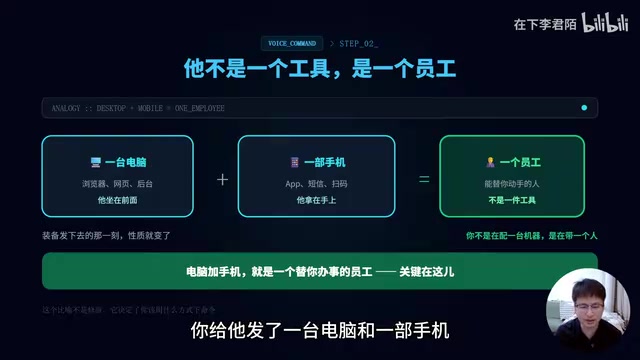
Bilibili creator shares DeepSeek Harness in practice: integrating browser and phone automation via the EcoLite browser Skill and Android ADB wireless debugging, with a Device Workbench plugin for unified monitoring and manual takeover, expanding capability boundaries 5 to 6 times.

Deconstructing a Scalable AI Agent Automation System Architecture
Deconstructing a scalable AI Agent automation system from a Bilibili creator's open-source practice: backend handles task dispatch and data management, Agent handles collection and execution, with flexible extension via MCP and Skills, and explores the architecture's reuse value in workflow automation.
Stop Hand-Writing Prompts: Deconstructing the Graph Engineering Workflow for AI Agents
Deconstructing Graph Engineering for AI Agents: distinguishing control graphs, knowledge graphs, and graphs of loops, explaining the code-as-graph and model-as-graph paths, plus the Super Design team's daily bad-design triage and change-release cases with key design points.