Claude Usage Limits Tighten: Is the Era of Unlimited AI Coming to an End?

Claude is leaving the "unlimited buffet" as AI service pricing matures toward rational, tiered billing.
Anthropic's Claude is moving away from its early near-"unlimited use" model toward stricter usage management and tiered billing. This article analyzes the compute cost logic behind the shift, its impact on heavy users of coding and long-text tasks, and how multi-model strategies can help navigate the maturing AI pricing landscape.
From "All-You-Can-Eat Buffet" to Pay-As-You-Go
Recently, a Reddit discussion titled "Claude Fable 5 Has Left the Unlimited Buffet" sparked widespread attention. The phrase "Left the Unlimited Buffet" in the title vividly captures a key shift happening in the AI large language model service space: leading models like Anthropic's Claude are gradually moving away from their early, near-"unlimited use" generosity, transitioning toward stricter usage management and tiered billing models.
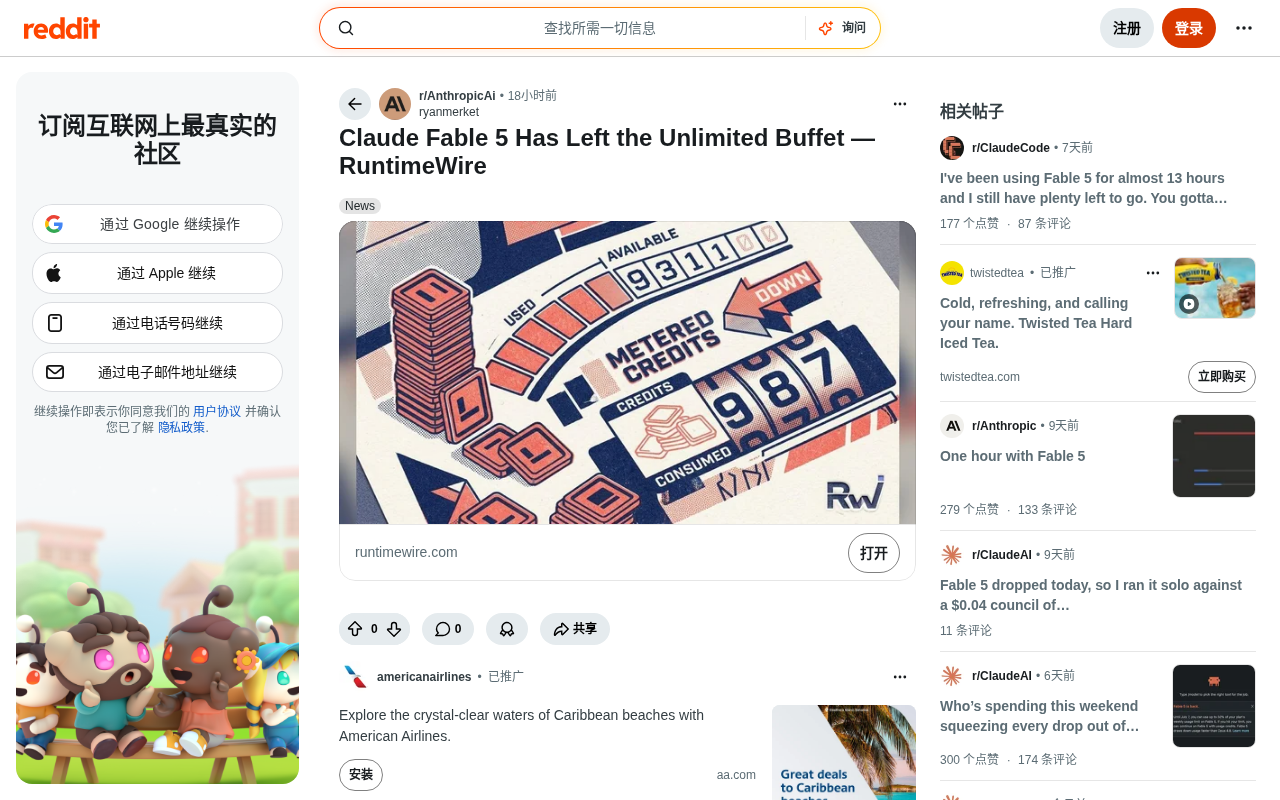
For heavy users—especially professionals who rely on Claude for coding, writing, and long-text processing—this change is undoubtedly a wake-up call: the business logic of AI services is returning to rationality, and the "land-grab" subsidy era is coming to an end.
Why Claude's "Unlimited Access" Was Unsustainable
The Real Pressure of Compute Costs
The inference cost of large language models is fundamentally different from traditional software services. Traditional API requests typically only require millisecond-level CPU computation, whereas every LLM generation requires large-scale matrix operations on GPUs. Take models at the level of GPT-4 or Claude 3 Opus—their parameter counts are typically in the hundreds of billions, and generating each token requires traversing all parameters for forward-pass computation. Industry estimates suggest that the inference cost of mainstream frontier models is several times, or even tens of times, the training cost—because a model is trained only once but must serve millions of inference requests.
A token is the basic unit through which large language models process text, roughly corresponding to 3/4 of an English word or 1-2 Chinese characters. Mainstream commercial models generally adopt a bidirectional "input token + output token" billing model. Take Anthropic's public API pricing as an example: Claude 3.5 Sonnet's input price is about $3 per million tokens, and output about $15. For subscription users (such as Claude Pro), the platform doesn't directly expose token consumption figures, but instead manages usage indirectly through "usage caps" or rate limits—this opacity was one source of the perception of "unlimited" use.
Claude is renowned for its ultra-long 200K token context window, and context length scales roughly quadratically with computational load (due to the attention mechanism). This means a single request processing a long document could cost tens of times more than an ordinary short conversation. When a small number of heavy users consume a disproportionate amount of resources, the platform is forced to maintain the overall health of the service through more granular usage limits.
From Growth-First to Sustainable Operations
Over the past two years, AI vendors have generally adopted a "user-growth-first" strategy, rapidly accumulating users and usage data through generous free or low-priced quotas. But as the competitive landscape gradually becomes clearer, vendors are beginning to shift their focus toward sustainable business models—meaning more transparent pricing, clearer usage boundaries, and differentiated services for different user groups.
The core of this heated community discussion is precisely the psychological gap users feel as they transition from "imperceptible use" to "needing to watch their quota." As platforms begin to more clearly display remaining quotas or trigger throttling notices, the finite nature of usage has truly entered users' awareness.
What Does Claude's Tightening Usage Mean for Users?
Heavy Users Need to Rethink Their Workflows
For developers and content creators who have deeply integrated Claude into their daily workflows, tightening usage policies means they need to manage their usage more deliberately:
- Optimize prompt efficiency: Reduce ineffective trial-and-error and use more precise prompts to obtain the desired results directly
- Choose the right model tier: Not every task requires the most powerful model; simple tasks can be downgraded to save quota
- Control context length: Avoid unnecessary ultra-long contexts and proactively manage token consumption per request
Multi-Model Strategies Become a Trend
The risk of relying solely on a single vendor's model is rising. An increasing number of professional users are adopting a "multi-model combination" strategy: assigning models from different vendors and different price tiers to different types of tasks, which both lowers overall costs and avoids the risk of being constrained by a single platform's policy changes.
The open-source LLM ecosystem matured explosively in 2024. Meta's Llama 3 series, Mistral, as well as domestic models like Qwen (Tongyi Qianwen) and DeepSeek, have on several benchmarks approached or even surpassed the early GPT-4 level, and fully support local deployment. For professional users, running quantized versions of models locally through tools like Ollama and llama.cpp incurs nearly zero marginal cost. This makes the hybrid strategy of "delegating high-frequency, low-complexity tasks to local models and calling cloud frontier models for high-complexity tasks" fully technically feasible. At the toolchain level, the emergence of middleware like LiteLLM and OpenRouter allows developers to orchestrate models from different vendors through a unified API interface, further lowering the barrier to implementing multi-model strategies.
Industry Perspective: AI Service Pricing Matures
From a more macro perspective, the adjustment of Claude's usage policy is not an isolated event but rather a microcosm of the entire AI service industry maturing. Similar shifts are evident across many mainstream vendors: from the early "unlimited" marketing rhetoric to today's widely adopted model combining pay-as-you-go billing, subscription tiers, and rate limits.
This maturation is actually beneficial for the industry's long-term development. A clear cost structure helps vendors sustain R&D investment and also encourages users to use AI tools in a more rational and efficient manner, rather than treating them as free resources to be squandered without limit. When the cost of using AI becomes visible and measurable, people will actually think more seriously: is this task really worth calling AI to handle?
Conclusion
"Leaving the unlimited buffet" is a moment tinged with regret yet entirely logical. For users, it reminds us: AI is powerful, but it is not a free lunch. Learning to use compute economically and building flexible multi-model workflows will become essential skills for professional users in the AI era.
For the industry, returning from the subsidy carnival to rational operations is precisely the mark of this technology truly becoming sustainable and mature. True value has never lain in "unlimited" quotas, but in whether each call creates equivalent meaning.
Key Takeaways
Related articles
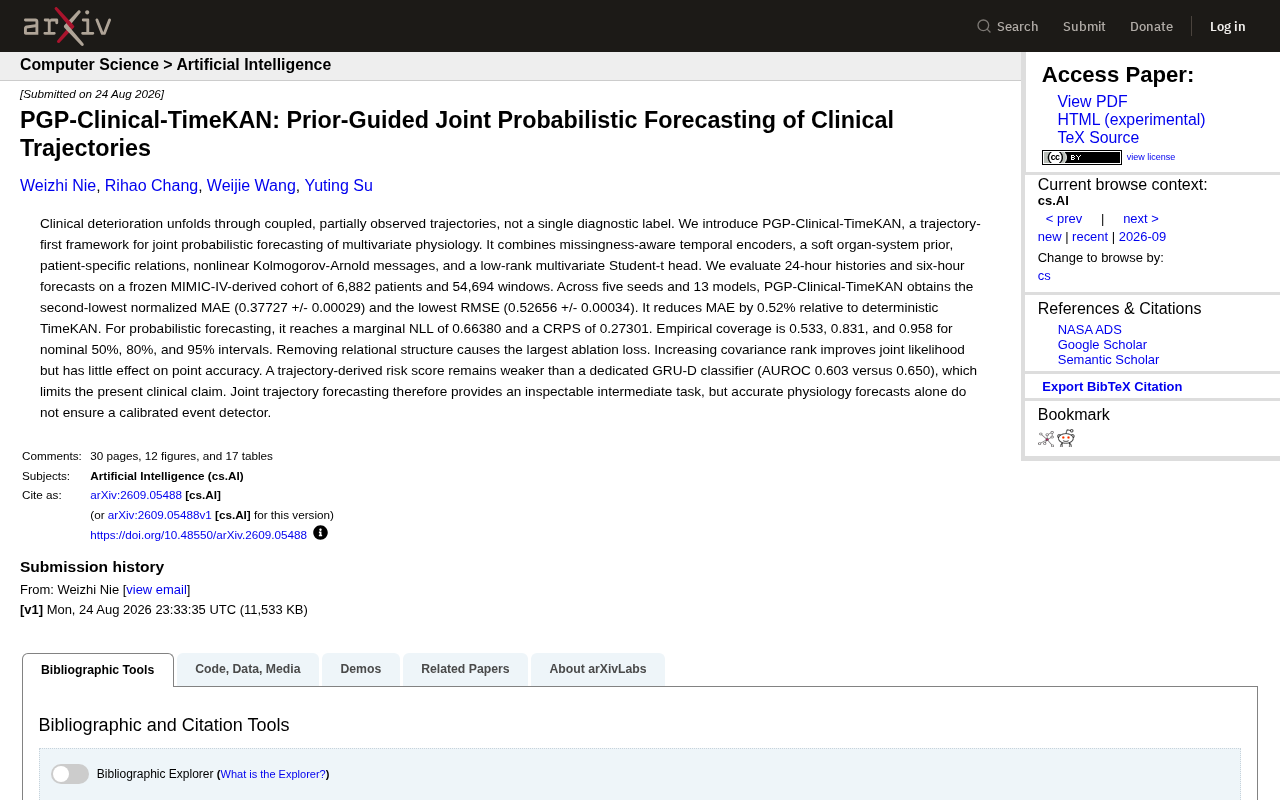
PGP-Clinical-TimeKAN: A Detailed Guide to the Multivariate Physiological Indicator Joint Prediction Framework
An in-depth analysis of the PGP-Clinical-TimeKAN framework for joint probabilistic prediction of multivariate physiological indicators, covering trajectory-first paradigm, KAN message passing, MIMIC-IV validation, and ablation studies.
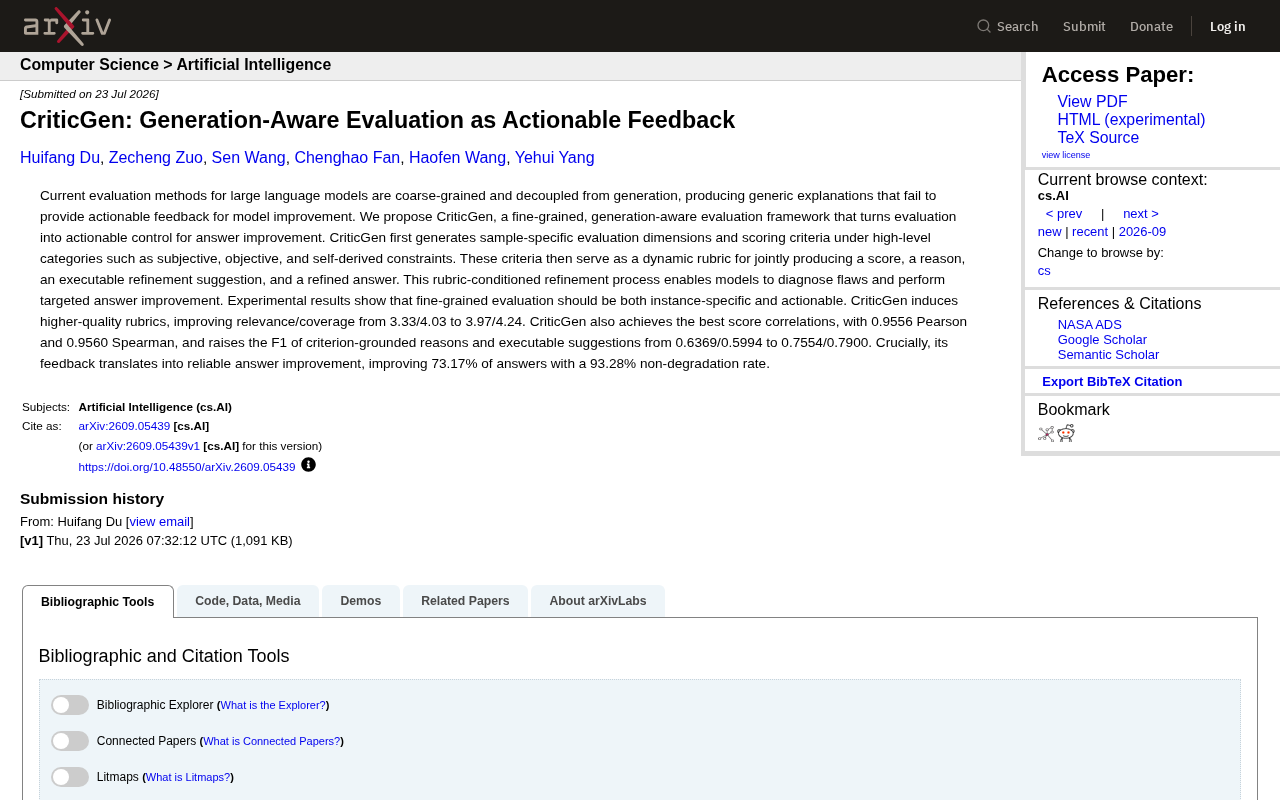
CriticGen: A New Framework That Transforms AI Evaluation into Actionable Improvement Feedback
CriticGen proposes a generation-aware evaluation framework that transforms AI assessment from passive scoring to an active optimization loop, achieving 73.17% answer improvement and 93.28% non-degradation rate.
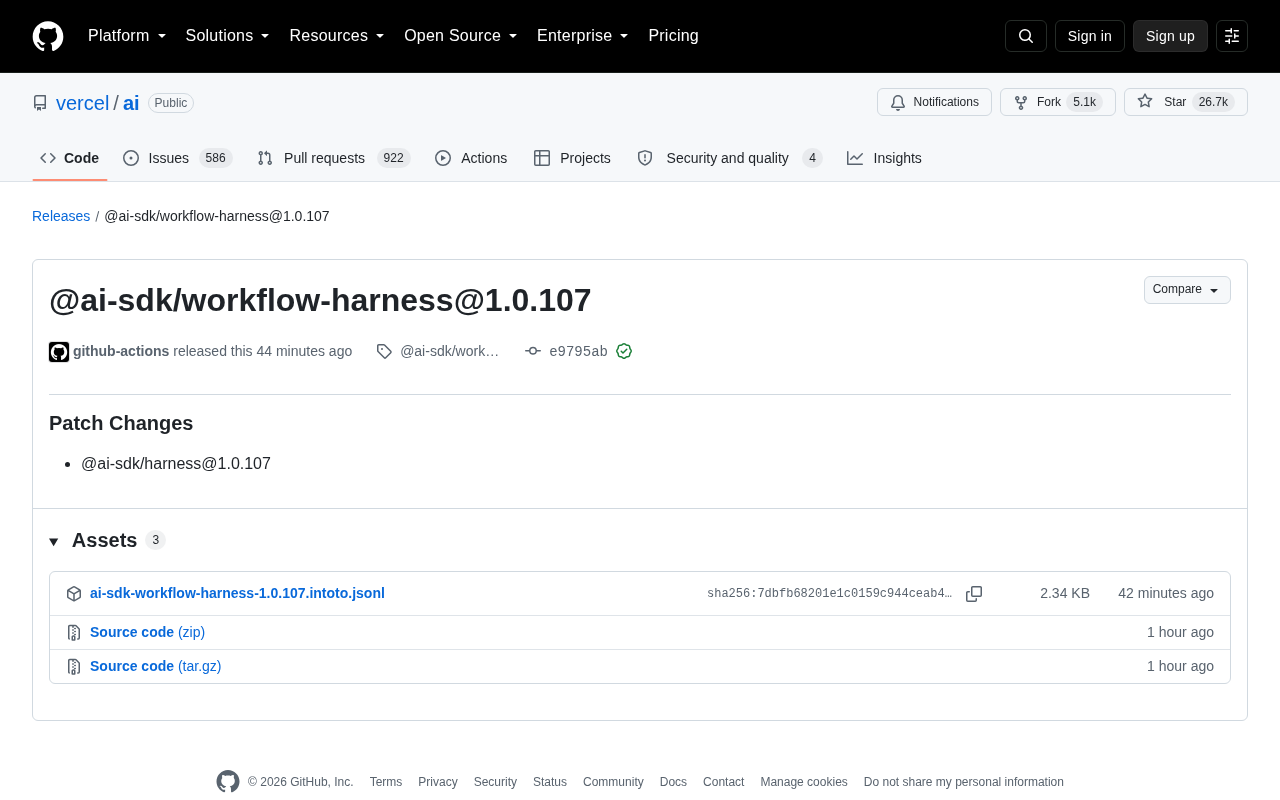
Vercel AI SDK workflow-harness Update Analysis
Deep analysis of Vercel AI SDK workflow-harness 1.0.107 update: architecture design, engineering practices, and developer value for building reliable AI apps.