Cleared: An AI-Powered Plan to Quit Smoking and Nicotine
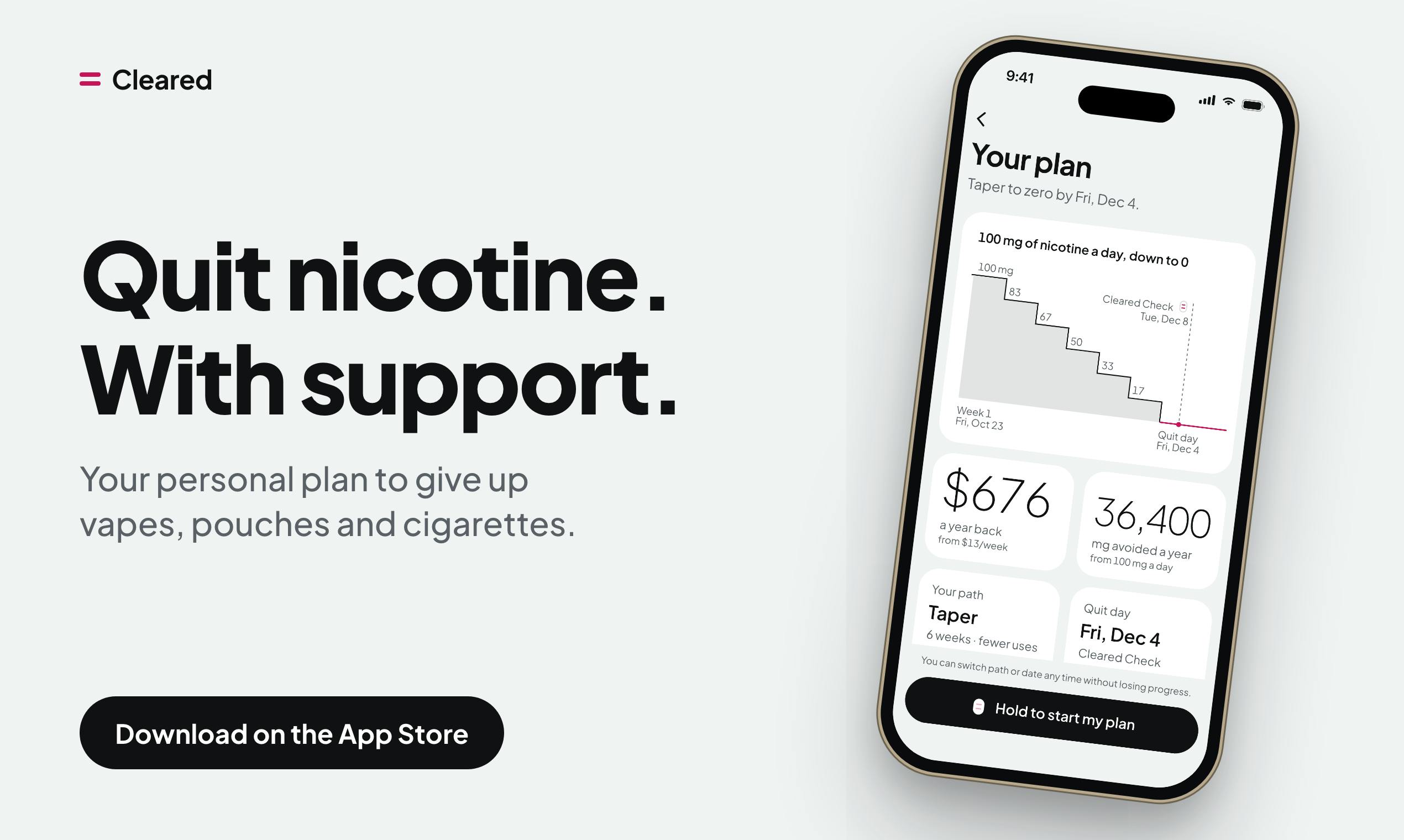
Cleared uses AI to build personalized nicotine quit plans from your habits, with daily support and craving SOS.
Cleared is an AI quit-smoking assistant that earned 86 upvotes on Product Hunt. Its core is generating personalized quit plans based on the actual nicotine products users rely on (vapes, pouches, cigarettes) rather than generic advice. It offers daily check-ins, a daily coach, one-tap logging, and Craving SOS, covering both daily maintenance and sudden cravings. Its standout feature lets users photograph home nicotine test results for AI to read, adding an objective data layer. The article praises its pragmatic "measure first, intervene second" approach while noting that as a health tool, its accuracy, medical boundaries, and professionalism still need usage feedback, and it should be positioned as behavioral support, not a medical substitute.
Cleared: An AI-Powered Plan to Quit Smoking and Nicotine
Most people trying to quit smoking, vaping, or nicotine pouches rely on sheer willpower, without any structured plan. Cleared, which earned 86 upvotes and ranked 13th on Product Hunt, aims to bring more method to the process using AI. Its positioning is straightforward: generate a personalized quit plan based on your actual nicotine habits, and walk you through one step each day as you execute it.
According to the product page, Cleared's core logic isn't to flatly tell you "stop smoking starting tomorrow," but to first understand what you use and how much, then build an actionable plan around that. For people who have long depended on nicotine, this "measure first, intervene second" approach is closer to the reality of behavior change than empty motivational slogans.
Starting from "what you use," not "what you should quit"
Cleared's starting point is the user's specific usage situation. Vapes, nicotine pouches, and traditional cigarettes each have different addiction rhythms, withdrawal responses, and usage contexts—lumping them together under a generic plan often fails in practice. Cleared has users first input their usage type and habits, then the system generates a corresponding quit plan.
The design rests on a pragmatic premise: the hard part of a quit plan isn't "knowing you should quit," but "knowing how to quit." Using usage habits as an input variable means the plan can adjust its pace for different product forms, and gives subsequent daily reminders and logging a concrete reference point.
Nicotine replacement therapy (NRT) is a common adjunct in the quitting process, delivering low-dose, non-inhaled nicotine (such as gum, patches, or lozenges) to ease withdrawal symptoms and gradually reduce dependence. While Cleared doesn't explicitly mention whether it integrates NRT recommendations, its "adjust pace by usage type" logic aligns with NRT's step-down tapering approach. Understanding NRT helps users judge: when the plan enters the reduction phase, should they consider medication support, and when should they seek a doctor's guidance?
Daily companionship: check-ins, coaching, one-tap logging, and craving SOS
The product breaks daily support into several concrete features:
- Daily check-in: a fixed action that keeps users aware of their quitting progress, preventing the plan from being forgotten once generated.
- Daily coach: delivers everyday guidance content, breaking big goals into small steps executable that day.
- One-tap logging: lowers the cost of recording usage—the easier data is to enter, the more likely the plan will be continuously adjusted.
- Craving SOS: provides an instant intervention entry point for the "hard moments" of craving surges—the scenario most prone to failure and most in need of support during quitting.
Together, these four features cover both "daily maintenance" and "sudden crisis" states in the quitting process. Craving SOS in particular places the intervention point at the moment users need it most, rather than waiting until the next check-in.
Craving SOS targets "cravings"—sudden, intense urges to use, typically lasting from several minutes to a dozen or so. Behavioral psychology commonly uses the "urge surfing" technique: rather than fighting the craving, observe its rise and fall and wait for the peak to pass. If Cleared's instant intervention entry point is based on such methods, it can help users delay action at critical moments. Understanding this mechanism allows a more rational assessment of whether Craving SOS is simply distraction or offers an evidence-backed behavioral strategy.
AI image reading: snap a photo of home nicotine test results
One of Cleared's more distinctive features is support for photographing home nicotine test results, with AI reading the test values.
These home tests typically come in test-strip or similar form, and interpreting results isn't always intuitive for ordinary users. Having AI handle the image-reading step can convert test results into recordable data, which then feeds back into the personal plan. It connects "objective measurement" into the quitting process, rather than relying solely on users' subjective self-reports.
It should be noted, however, that the original material doesn't disclose the specific accuracy of this image-reading feature, the range of supported test types, or whether it includes medical advice or connections to professional quit-smoking services. For health-related tools, this boundary information is quite critical for users judging product suitability.
Home nicotine tests typically use urine or saliva samples to measure the concentration of cotinine, a nicotine metabolite, to assess recent nicotine intake levels. Test-strip products usually rely on colorimetric card comparison, and interpretation is greatly affected by lighting and camera angle. The core challenge of AI image reading lies in image quality and color calibration, not simple numerical recognition. Users should note: such tests reflect recent exposure levels, cannot replace clinical assessment, and different products vary significantly in detection thresholds and sensitivity.
Opportunities and boundaries for health apps
Judging by its Product Hunt performance—86 upvotes, 9 comments, and 13th place for the day—Cleared shows that the "nicotine cessation + AI" combination genuinely hits a need for some users. Its product thinking is also clear: replace blind willpower with a personalized plan, sustain execution through daily touchpoints, catch high-risk moments with instant intervention, and fill in the objective data link with AI image reading.
But health tools are held to stricter standards than general productivity tools. Quitting nicotine involves physiological dependence and large individual differences; what the product can do is more behavioral support and process management than medical replacement. Cleared currently presents a structurally complete self-help tool framework. Whether it can truly help users depends on the reasonableness of plan generation, the professionalism of coach content, and the responsiveness of Craving SOS in real craving scenarios. All of these require longer-term usage feedback to verify.
For those considering quitting nicotine, Cleared offers a "with-a-plan" option worth trying; treating it as an auxiliary tool rather than a sole reliance is probably the more prudent expectation.
Related articles

Zero-Code Replication of a $10,000 3D Website with Claude Code: A Six-Tool Breakdown
Bilibili creator Yomi used Claude Code plus five free tools to build a 3D product landing page quoted at $10,000 overseas—zero code. Breakdown of the six-tool division of labor, image-to-3D workflow, and the core collaboration method: "give AI a reference, not 'make it look better.'"

Claude Code in Practice: Install, Connect Models, Calculate Tokens, and Ship a Full-Stack Project with a Single Document
Based on a Bilibili public course demo, this covers Claude Code installation, model connection, token cost calculation, and the practical path of shipping a full-stack project with a single document, plus comparisons with Copilot, Cursor, Trae, and other coding assistants.
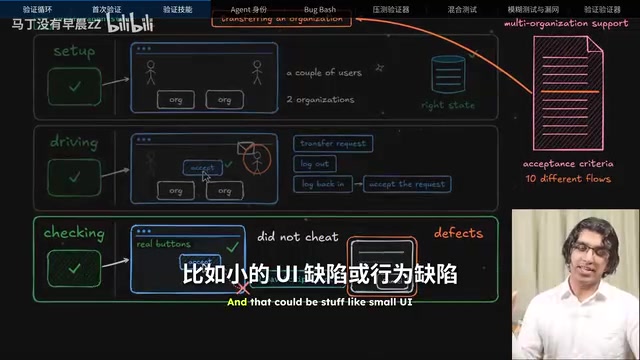
Who Accepts AI-Written Code? A 25-Minute Deep Dive into Verification Loops and the New Code Review Paradigm
After AI writes lots of code, how should Code Review verify it? This article breaks down the Claude Code team's verification loop framework: surface-level end-to-end verification, setup/drive/check three-stage skills, hybrid end-to-end testing and reliability checklists, and how to tighten the loop when issues slip through.