Cloak Fingerprint Browser + MCP: Letting AI Automate the Entire Reverse Engineering and Packet Capture Workflow

Cloak browser + MCP toolchain enables AI-driven automated reverse engineering with source-level fingerprint spoofing.
Cloak Browser MCP combines 71 Chromium source-code modifications for undetectable fingerprint spoofing with 69 MCP tool suites that give AI full browser control—covering page operations, network capture, debugger breakpoints, Hook injection, and WASM analysis. This lets AI autonomously bypass CAPTCHAs, locate encryption logic, and complete packet capture, though real-world effectiveness depends on evolving detection countermeasures.
In the world of web scraping and reverse engineering, anti-automation detection has always been an unavoidable pain point. Recently, a tool called Cloak Browser MCP has gained attention through a Chinese Bilibili creator's video — it combines "source-code-level fingerprint spoofing" with an "MCP toolchain," aiming to let AI take over the entire reverse engineering workflow, from opening a website to locating encryption logic. This article provides a comprehensive breakdown of the technical logic and practical value of this approach based on the original material.
Why Standard Browsers Fail Verification Challenges
When doing reverse engineering or writing automation scripts, the most common obstacle is various human verification challenges. When you open a target page using a standard Chrome browser or automation framework, it often triggers anti-automation detection mechanisms like Cloudflare or DataDome.
Cloudflare's "5-second shield" (Browser Integrity Check) is one of the most widely deployed anti-automation solutions on the internet, used by over 20% of websites globally. It works by inserting a JavaScript challenge page before the user accesses the actual content, running a series of JS tests to collect browser environment information, including navigator object properties, WebDriver flags, and automation framework signatures (such as the $cdc variable injected by Selenium). DataDome and PerimeterX (now HUMAN) go even further, analyzing behavioral biometrics like mouse movement trajectory entropy, statistical distribution of keyboard input intervals, and touch event pressure parameters — making simple environment spoofing insufficient to pass detection.
In the creator's demonstration, after opening a page with reCAPTCHA V2 slider verification using a standard Google Chrome browser, the slider verification failed every time regardless of how the slider was dragged. The reason is straightforward: the browser displays a banner saying "controlled by automated test software" at the top, and the detection system has already identified this as a non-genuine user through automation signals. At that point, even if mouse trajectories are simulated to look human-like, verification will still fail.
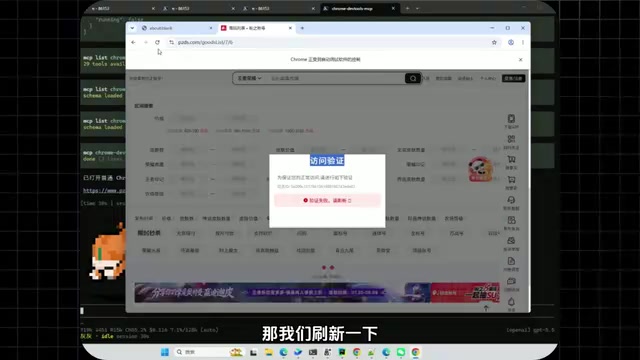
This is the core contradiction of automated reverse engineering: You need a genuine browser environment to pass detection, but automation itself is the tell that exposes your identity.
Cloak Fingerprint Browser: A Source-Code-Level Spoofing Approach
Cloak's approach is to solve the anti-detection problem at its root. According to the creator, it doesn't rely on JS script spoofing or post-hoc injection on a standard Chrome browser. Instead, it resets fingerprints to genuine user data directly at the Chromium source code level.
To understand the advantage of this approach, it helps to first understand browser fingerprinting technology. Browser fingerprinting is a technique that can identify and track users without cookies. The principle is that each browser produces a nearly unique combination of characteristics when rendering web pages, due to differences in operating system, hardware configuration, installed fonts, plugin lists, screen resolution, and more. Research shows that just three factors — Canvas rendering results, WebGL renderer information, and installed font lists — can distinguish different devices with over 90% accuracy. Anti-automation vendors leverage these fingerprints to determine whether a visitor is a real user or an automated program — automation tools tend to have highly consistent fingerprint characteristics or obvious anomalies (such as missing GPU information or an unusually short font list), which flag them as bots.
71 Source-Code-Level Modifications
Cloak reportedly includes 71 source-code-level C++ modifications covering the following key detection dimensions:
- Canvas Fingerprinting: Generates fingerprints by having the browser draw specific graphics and text on a hidden Canvas element, then extracting a hash of the pixel data — since different GPUs, drivers, and font rendering engines produce subtle pixel differences, this hash is virtually unique to each device
- WebGL Rendering Fingerprint: Uses the WebGL API to obtain GPU renderer name, vendor information, and image hashes from rendering through specific shader programs
- Audio Fingerprint: Generates audio signals at specific frequencies through the AudioContext API — different sound cards and audio processing pipelines produce different floating-point outputs, forming a fingerprint
- Font List and Rendering
- GPU Information
- Screen Parameters
- WebRTC Leak Prevention: WebRTC needs to perform NAT traversal through STUN/TURN servers when establishing connections, a process that exposes the user's real local IP address and public IP address — even if the user is using a VPN or proxy. Source-code-level WebRTC protection modifies ICE Candidate generation logic directly in Chromium's network stack, fundamentally preventing real IP leakage, rather than handling it through JS Hook methods like browser extensions do
- Automation Signal Flags
Traditional JS-layer spoofing solutions deceive detection by hooking the return values of these APIs, but advanced detection systems check API call timing, return value consistency, and whether hook traces exist, so the reliability of JS-layer spoofing is declining. All of Cloak's capabilities are implemented at the source code level, so detection websites see genuine browser-native characteristics rather than "post-injection JS spoofing."
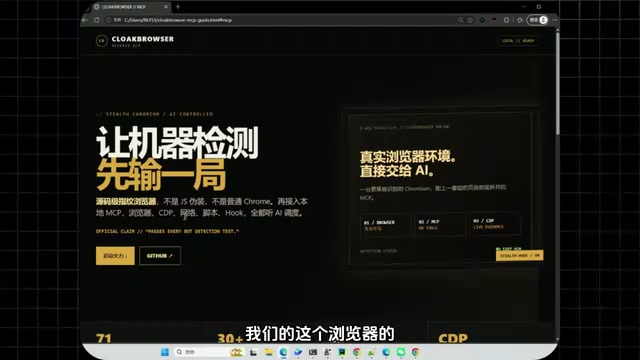
Verification Bypass Results in Practice
In practical comparison tests, when Cloak was used to open the same page with slider verification, no verification challenge even appeared on the first visit. After clearing the cache and re-entering, a single slider swipe passed verification and successfully replayed the data. The creator stated that it claims to cover over 30 detection vendors and pass mainstream bot detection systems (such as Cloudflare's 5-second shield, Google reCAPTCHA, etc.).
It's worth noting that these pass-rate claims come from the tool maker and a single creator's demonstration. Actual effectiveness will vary as detection strategies are updated, so readers should exercise rational judgment.
MCP Toolchain: Giving AI Hands to Operate the Browser
If the fingerprint browser solves the "environment" problem, then MCP (Model Context Protocol) solves the "operation" problem.
MCP is an open protocol standard released by Anthropic in late 2024, designed to provide LLMs with a unified interface for interacting with external tools and data sources. Before MCP, integrating AI with external systems typically required developing a separate adapter for each tool, resulting in N×M integration complexity. MCP uses a client-server architecture: the AI application acts as an MCP Client to initiate tool invocation requests, while tool providers act as MCP Servers exposing capability descriptions and execution interfaces. The protocol supports three core primitives — Tools (executable actions), Resources (readable resources), and Prompts (predefined interaction templates). This standardized design allows any MCP-compatible AI coding tool (such as Cursor, Windsurf, Claude Desktop, etc.) to plug-and-play with third-party tools, significantly lowering the barrier for AI Agent development.
Why Reverse Engineering Needs MCP
The creator provided a clear explanation: simple websites can be handled directly with WebFetch requests, fetching loaded JS files for analysis. But when a slider verification challenge appears, AI is powerless — it can't capture slider trajectories, view call stacks, perform instrumentation, or do packet capture.
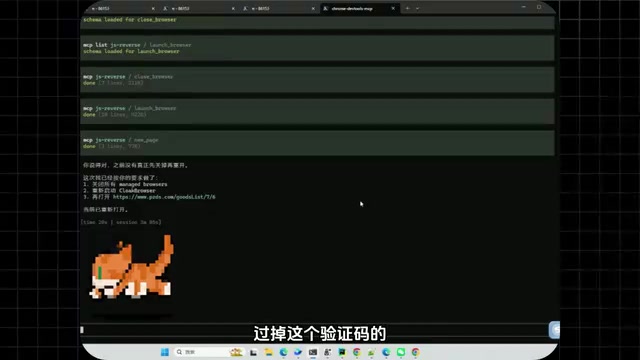
MCP's role is to give AI a pair of hands that can operate the browser. Through MCP, the browser's CDP (Chrome DevTools Protocol), Network panel, script Hook capabilities, and more are all delegated to AI orchestration, transforming AI from "can only watch" to "can take action."
CDP is Chrome's built-in remote debugging protocol and the underlying foundation of virtually all browser automation solutions. Major frameworks like Puppeteer, Playwright, and Selenium 4 all communicate with the browser through CDP. Based on WebSocket connections, CDP provides comprehensive control over the browser engine, including DOM manipulation, network request interception, JavaScript execution, performance profiling, memory snapshots, and dozens of other domains. In reverse engineering scenarios, CDP's Debugger domain can set breakpoints, step through code, and inspect scope variables; the Network domain can capture all HTTP/HTTPS requests with their complete request/response content; and the Runtime domain allows executing arbitrary JavaScript code in the page context. Notably, using CDP itself leaves detectable traces (such as signatures from Runtime.enable calls), which is an important check item for anti-automation detection — and precisely why Cloak needs special source-code-level handling.
69 Tool Suites Covering the Full Reverse Engineering Workflow
According to the introduction, Cloak MCP provides 69 tool suites. Page operations are just the entry point — the real power lies in network packet capture, breakpoint debugging, Hook injection, and runtime analysis:
- Page Operations: Basic actions like opening, navigating, clicking, and typing
- Network Panel: Capture and analysis of requests, responses, and call origins
- Sources Panel: View source code and locate encryption logic
- Debugger: Set breakpoints, inspect call stacks and variables, assist with stack tracing and instrumentation
- Hook Injection: Custom hooks to locate encryption points and generation locations
- Cookie/WASM Handling: Supports Cookie operations and WASM offline verification. WebAssembly (WASM) is a low-level bytecode format that runs in the browser at near-native execution speeds. An increasing number of websites compile core encryption logic, signature algorithms, and verification challenge code into WASM modules, making traditional JS reverse engineering techniques (such as keyword searching, function hooking, and AST analysis) difficult to apply directly. Supporting WASM offline verification means the tool can extract WASM modules and execute and debug them in an isolated environment, bypassing browser environment limitations for algorithm reconstruction — this is particularly important for handling anti-automation solutions like Kasada and Shape Security that encapsulate core logic in WASM
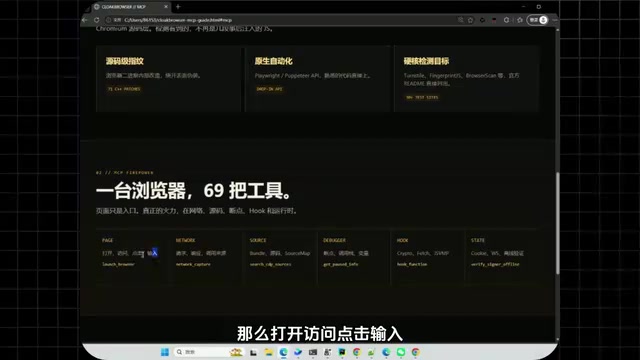
This combination means that from opening the target website, bypassing verification challenges, locating encryption logic, to completing packet capture analysis, everything can theoretically be done automatically by AI.
How to Connect to Cloak MCP
The configuration process is relatively straightforward, consisting of the following steps:
- Prepare an MCP-compatible AI coding tool (AI IDE), such as Cursor, Windsurf, or Claude Desktop
- Write the Cloak authenticator's reverse MCP link into the configuration file
- Once configured, AI can work in conjunction with the Cloak browser to perform reverse engineering operations
The creator emphasized that the core philosophy of this approach is "handing a genuine browser environment directly to AI, rather than trying to fake the environment" — using a fingerprint browser that's harder to detect, paired with an MCP toolchain capable of dissecting any page.
Value and Limitations Analysis
From a technical perspective, Cloak + MCP represents an important direction in reverse engineering automation: pushing environment spoofing down to the browser source code level and exposing operational capabilities to AI through the MCP protocol. Compared to traditional manual debugging and one-by-one encryption breakpoint searching, this approach can indeed significantly improve reverse engineering efficiency.
However, the following points should be considered rationally:
- Pass-rate data comes from a single source, and actual effectiveness will fluctuate as detection vendors escalate their countermeasures. Anti-automation detection is fundamentally an adversarial game, and detection vendors are continuously updating their strategies, including introducing machine learning models to analyze behavior patterns and detect browser kernel modification traces
- Compliance risks cannot be ignored — bypassing human verification and automated scraping must be strictly limited to authorized testing, security research, and other legitimate scenarios. In many jurisdictions, unauthorized circumvention of technical protection measures may violate the Computer Fraud and Abuse Act (CFAA) or similar regulations
- It's not a silver bullet — complex business risk control often layers behavioral analysis, account reputation, device profiling, and other multi-dimensional judgments. For example, some platforms combine historical visit frequency, account registration age, IP reputation scores, and other factors for comprehensive risk control decisions — browser fingerprint spoofing alone cannot cover these dimensions
For security researchers, scraping developers, and reverse engineering learners, it's worth understanding the principles behind these tools in depth. However, in actual use, always ensure your activities are legal and compliant.
Key Takeaways
Related articles
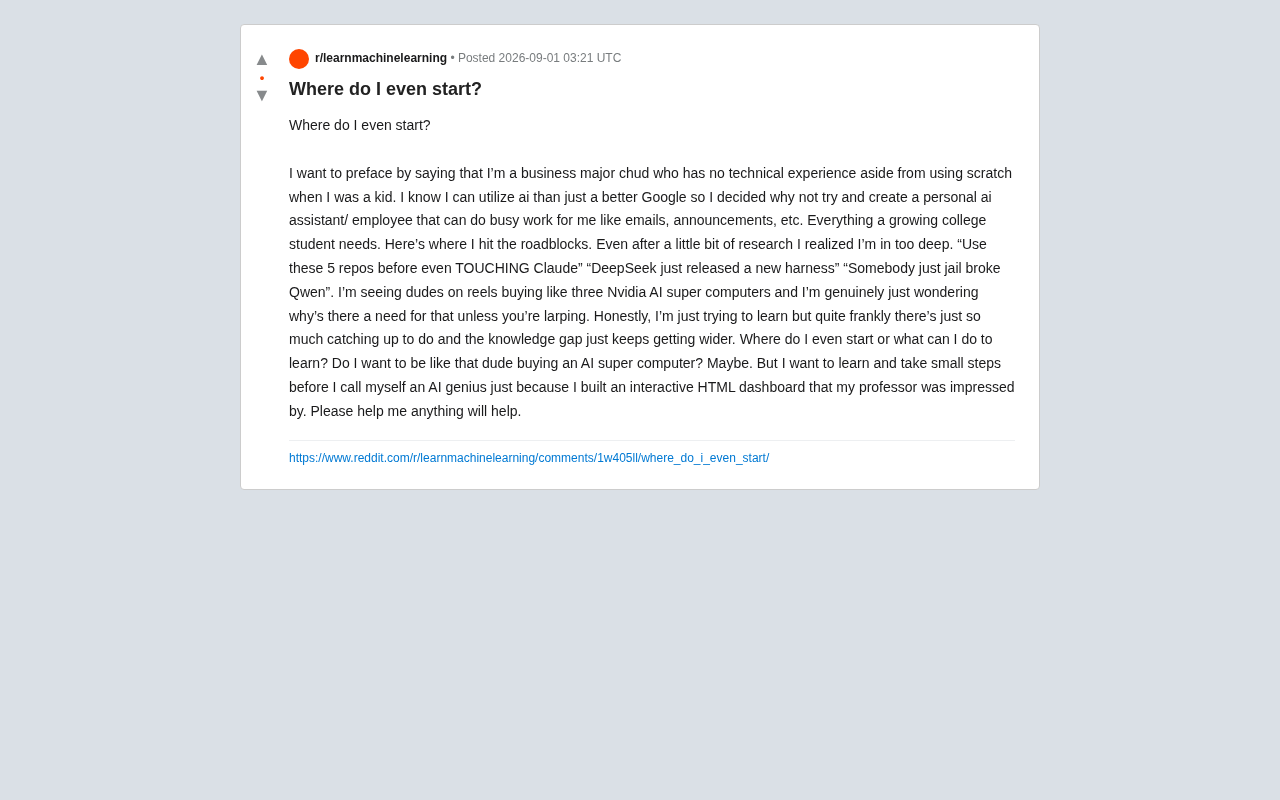
AI Beginner's Guide: Three Stages to Building Your Own Personal AI Assistant from Scratch
No tech background? No problem. This beginner's guide maps out a 3-stage path to building a personal AI assistant — from prompt engineering to no-code automation to API calls.
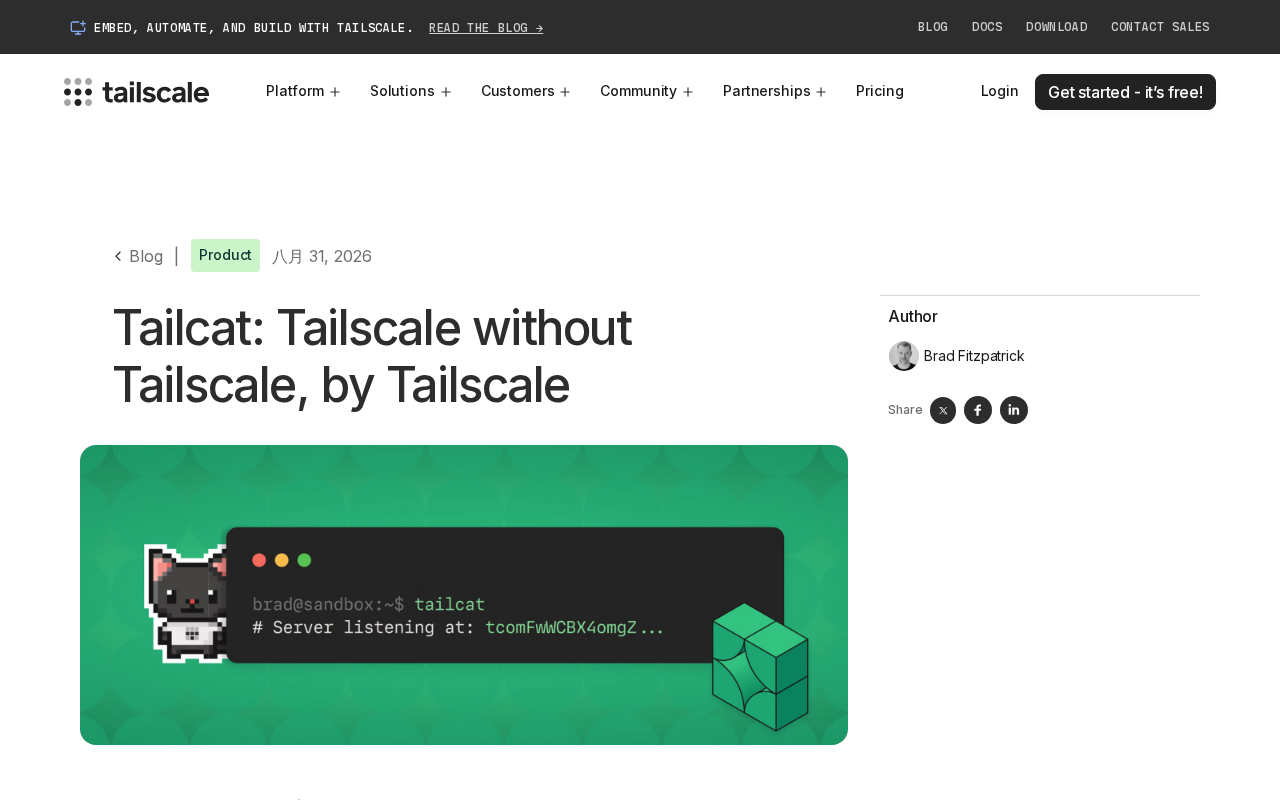
Tailcat: Tailscale's Official Decentralized Minimalist Networking Solution
Tailcat is Tailscale's official decentralized networking project that strips control plane dependencies, offering self-hosting users a more autonomous, privacy-focused WireGuard mesh experience.
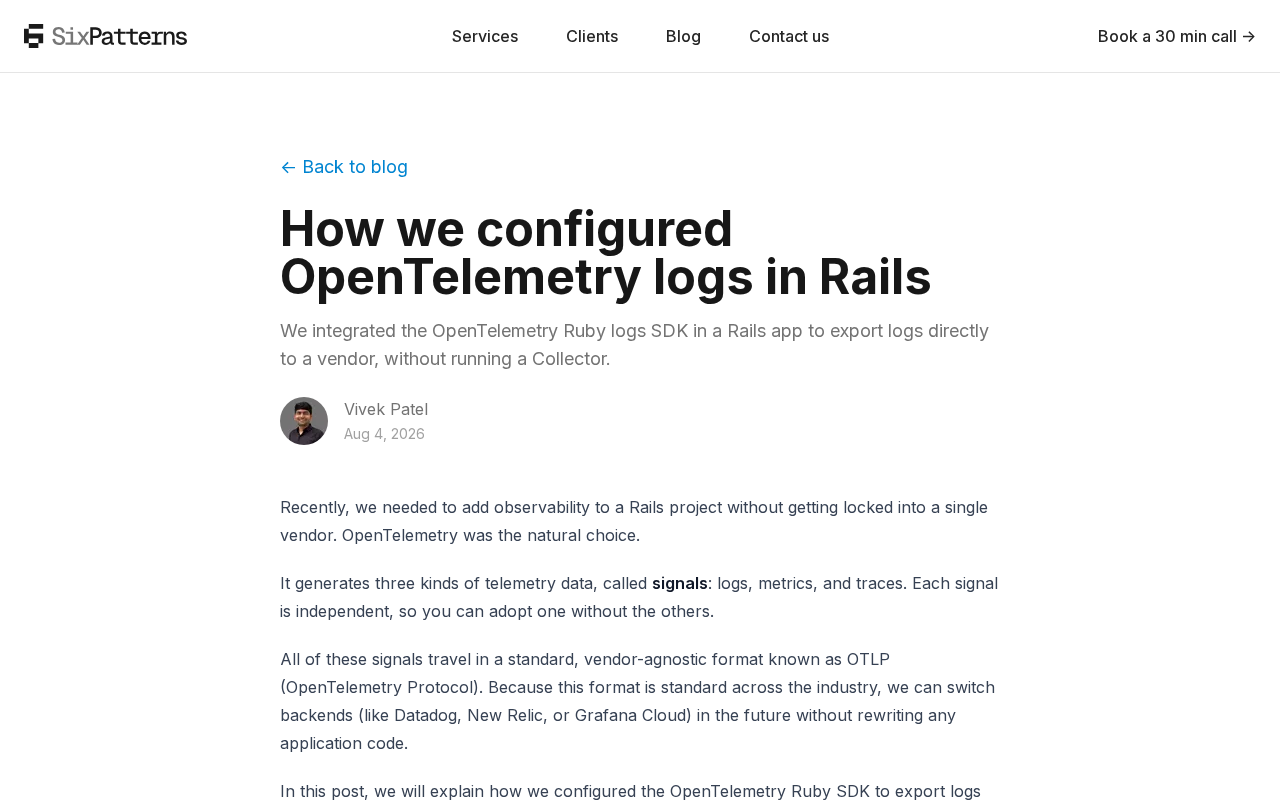
Configuring OpenTelemetry Logs in Rails: From Integration to Production
Learn how to configure OpenTelemetry logs in Rails, covering OTel SDK setup, trace context injection, structured log export, and performance optimization for seamless log-trace correlation.