Cobalt Strike Beginner's Guide: Breaking Down the CS Framework for Red Team Operations

A beginner's guide to Cobalt Strike's role in red team operations, C2 frameworks, and ethical penetration testing.
This article introduces Cobalt Strike (CS), a commercial post-exploitation framework widely used in red-blue team adversarial exercises. It explains how understanding offensive techniques is foundational to building effective defenses, covers CS's core architecture (Team Server, Beacon, Malleable C2), and outlines a four-stage learning path from tool proficiency to career development. It also offers a grounded look at cybersecurity job prospects and consistently emphasizes that all techniques must only be used in legally authorized environments.
Understanding Cobalt Strike: The Core Tool for Red Team Testing
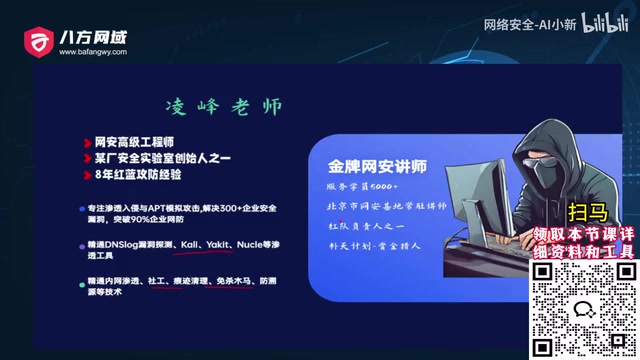
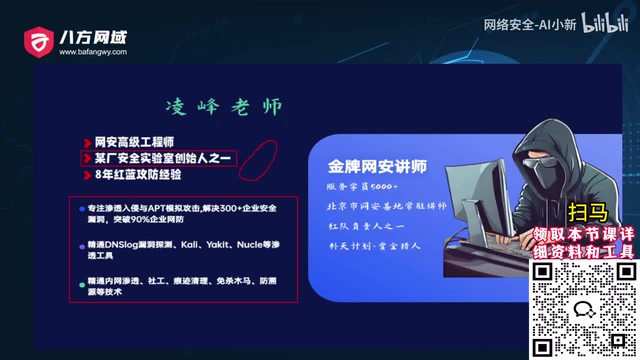
Cobalt Strike (commonly abbreviated as CS in the industry) is one of the most well-known commercial post-exploitation frameworks in the penetration testing and red-blue team adversarial space. As noted by Lin Feng, a project instructor at Mashibing Bafang Wanyu, the tool is often called the "CS powerhouse" in professional circles — a completely different CS from the gaming world — and is purpose-built software designed to simulate real-world attacks and evaluate the defensive capabilities of enterprise systems.
One important prerequisite needs to be stated upfront: everything discussed in this article is strictly for security education and legally authorized penetration testing. The internet is not a lawless frontier, and any unauthorized intrusion can carry serious legal consequences. The true purpose of learning offensive techniques is to build stronger, more comprehensive defense systems — consistent with the classic security principle that "the best defense is a good offense."
Why Security Professionals Need to Understand the Attacker's Perspective
Many people's understanding of cybersecurity stops at "firewall + antivirus software," but real security engineering goes far beyond that. The instructor emphasizes that without understanding the techniques and principles behind how hackers operate, it's simply impossible to build effective defenses.
This view is widely shared across the industry. The Red Team simulates the mindset and methods of attackers to proactively surface weaknesses in a system, while the Blue Team hardens defenses and responds to those findings. Cobalt Strike is a frequently used tool in red team workflows, integrating a full suite of post-exploitation capabilities including reconnaissance, payload generation, command and control (C2), and lateral movement.
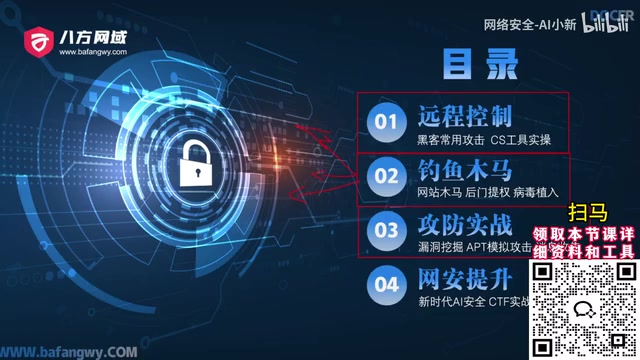
Looking at the overall structure of the tutorial, the author breaks the learning path into four logical stages that align well with how security professionals typically grow in the field:
The Four Stages of the Learning Path
Stage 1: Tool Proficiency. As the saying goes, "sharpen the axe before chopping the tree" — mastering common security tools is the foundation for getting started. This stage covers setting up the Cobalt Strike environment, connecting the server and client, controlling Beacons, and loading plugins.
Stage 2: Payloads and Phishing Techniques. This covers generating trojan payloads and constructing phishing scenarios. In a legally authorized test environment, security professionals need to understand how these techniques work in order to deploy targeted detection and protection measures.
Stage 3: Offensive and Defensive Practice. This includes vulnerability discovery, APT attack simulation, and reconnaissance. Skills at this level directly map to real enterprise security needs and are core requirements for some of the highest-paying roles in the industry.
Stage 4: Advanced Capability and Career Development. The author discusses participating in security competitions (CTF), joining national cybersecurity defense exercises (HW operations), and pursuing roles as security engineers (commonly known as "white hats") at enterprise security labs.
Red team vs. blue team adversarial exercises are playing an increasingly important role in enterprise security programs. The Red Team is not simply a "hacker group" — it's a professional team authorized to simulate real threat actors (APT groups, insider threats, etc.) with the goal of exposing blind spots in the defensive posture under controlled conditions. The Blue Team handles monitoring, detection, and response, continuously improving through ongoing adversarial engagement. Building on this, the concept of the "Purple Team" has emerged — where red and blue teams collaborate to review attack paths together, directly aligning offensive tactics and techniques with the blue team's detection logic to accelerate the operationalization of defensive capabilities. The MITRE ATT&CK framework serves as the common "tactical language" for red-blue operations, mapping attacker behaviors to Tactics, Techniques, and Sub-techniques, giving both sides a unified lens for describing the adversarial process. Many of Cobalt Strike's feature modules map directly to specific entries in the ATT&CK matrix.
Core Capabilities of Cobalt Strike
In an authorized test environment, Cobalt Strike can cover the majority of post-exploitation requirements. Its core architecture consists of a Team Server and a Client, allowing multiple testers to collaboratively connect to the same server for coordinated team operations.
The tool's core component, Beacon, is a customizable payload that supports multiple communication protocols — including HTTP, HTTPS, and DNS — to maintain a connection with the C2 server, enabling command execution, file transfer, screen capture, credential harvesting, and more on target hosts. Cobalt Strike also supports extending functionality through Aggressor Script plugins, which is a key focus of the "plugin usage" section in the tutorial.
From a defensive perspective, understanding Beacon's communication characteristics, traffic patterns, and behavioral fingerprints is precisely what blue teams rely on to detect C2 activity — once again reinforcing the "offense to improve defense" learning philosophy.
C2 (Command & Control) frameworks are the core infrastructure concept in post-exploitation operations. After gaining initial access, attackers need a C2 channel to continuously control target hosts, issue commands, and exfiltrate data. Cobalt Strike's Beacon receives significant attention because it supports Malleable C2 configuration — security testers can use custom profiles to disguise Beacon's traffic characteristics as normal HTTPS business traffic, CDN requests, or even legitimate software update requests, thereby evading rule-based traffic detection. In red team testing, this feature is used to evaluate the blue team's traffic analysis capabilities. Precisely because of this, Beacon detection requires behavioral analysis, memory scanning (e.g., detecting Beacon's characteristic in-memory structures), and deep integration with EDR (Endpoint Detection and Response) products — not just traffic signature matching. Understanding this offensive-defensive dynamic is the prerequisite for blue teams to build effective C2 detection capabilities.
Career Prospects and the Reality of Cybersecurity
The instructor also addresses employment prospects in the industry. He notes that the talent gap in cybersecurity is significant, and annual salaries in the range of 300,000–400,000 CNY are relatively common, though higher-paying roles require solid technical depth and sustained effort. While this framing carries some marketing flavor typical of course promotions, the overall talent shortage and strong demand in cybersecurity is broadly recognized across the industry.
It's worth keeping expectations realistic: security roles demand a high level of comprehensive capability, and simply knowing how to operate a single tool is far from sufficient for real-world work. Cobalt Strike is just one piece of the red team toolkit. A solid foundation in network protocols, operating systems, programming, and vulnerability principles is what drives long-term career growth.
Cybersecurity career tracks generally fall into several key directions: Penetration Tester, SOC Analyst, Vulnerability Researcher, Security Engineer, and more. Red team and penetration testing roles tend to command higher salaries due to high barriers to entry and scarce skill sets, but the industry clearly distinguishes between "tool operators" and "true offensive security engineers" — the former can only reproduce known exploits, while the latter understand vulnerability fundamentals, write custom exploit code, and bypass defensive mechanisms. HW operations (national-level cybersecurity adversarial exercises) are an important avenue for domestic security professionals to build hands-on experience, and participation carries significant weight on a resume. Internationally recognized certifications such as OSCP and CRTO, along with the domestic CISP-PTE credential, are well-regarded professional qualifications in the penetration testing space.
Closing Thoughts: Technology for Good — Stay on the Right Side of the Law
Cobalt Strike, as a powerful commercial penetration testing tool, is inherently neutral — it can be used by security teams for legitimate authorized testing, but it can also be misused maliciously. A point the tutorial repeatedly drives home is worth internalizing for every learner: all content is for educational reference only. Never conduct attack testing against any system without proper authorization.
For those looking to enter the cybersecurity field, starting with tools is a viable first step — but real competitive advantage comes from a deep understanding of offensive and defensive principles combined with continuous hands-on practice. Technology itself is not guilty; it's how you use it that matters. Respecting legal and ethical boundaries is the foundation upon which every security professional must stand.
Related articles

Automate Job Search with AI Agents and Residential Proxies for Precise Matching
Build an AI Agent with MCP and residential proxies to bypass recruitment site anti-scraping and geo-restrictions, scrape thousands of DevOps jobs, then have Claude score and rank each against your resume. Includes proxy comparison experiments, project structure, and cost analysis—filtering only, no auto-submission.

The AI Task Assistant That Knows When to Back Off: A Cure for Activation Struggles
One Small Step is an AI assistant for task initiation struggles, using agentic decisions for guilt-free reminders, timely retreat, and cross-platform task management. The developer shares real test results on 13 tasks and architectural trade-offs.

FastAPI: A High-Performance Python Framework and a Production-Ready API Development Powerhouse
FastAPI is a high-performance web framework based on Python type hints, supporting async and automatic OpenAPI docs. With over 100k GitHub stars, this article analyzes its core strengths, production readiness, and selection advice.