Code with Claude Event: AI-Powered Creative Experiments on Tiny Computers
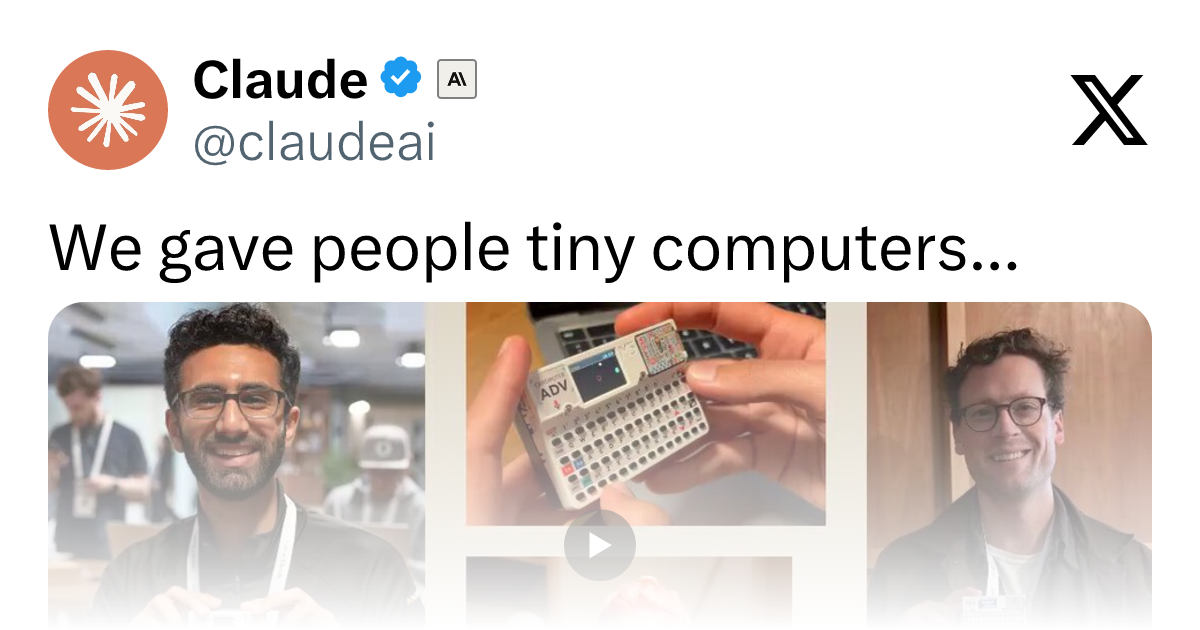
Anthropic's Code with Claude event hands developers tiny computers to explore AI-assisted maker creativity.
At the Code with Claude event, Anthropic distributed tiny computers and challenged participants to build "small, delightful" projects using Claude's AI coding capabilities in hardware-constrained environments. The format highlights a key value proposition of AI programming tools: dramatically lowering the barrier to embedded development, enabling developers without hardware backgrounds to quickly generate and debug device-level code. The event also signals a broader shift — AI coding assistants are expanding from professional software development into everyday creative experimentation, with Anthropic cultivating a hands-on developer community that points toward new possibilities for grassroots innovation.
An Experiment in Tiny Computers and AI-Assisted Programming
At the recently held Code with Claude event, organizers distributed a batch of "tiny computers" to participants, encouraging developers to leverage Claude's AI programming capabilities within hardware-constrained environments to build something "small and delightful." The event wasn't about tackling grand engineering challenges — it was about showcasing the creativity that ordinary developers can unleash when AI-assisted coding meets small-form-factor hardware.
Details from the event remain limited. Organizers confirmed that participants received tiny computers and produced "small, delightful things." Even so, the format itself speaks volumes about a broader trend: AI programming tools are increasingly penetrating lighter, more personal maker-oriented workflows.
Why "Tiny Computers + AI Programming" Deserves Attention
Historically, developing applications on resource-constrained micro devices has carried a steep learning curve — developers needed to understand low-level hardware, memory management, and lean coding practices. With mature AI coding assistants like Claude, developers can now rapidly generate, debug, and optimize code tailored to small devices, dramatically lowering the barrier to entry for makers.
The real significance here is that AI programming capability is being extended from large cloud-based projects down to physical, tangible hardware you can hold in your hand. Participants aren't just running programs on a screen — they're letting code drive a palm-sized device to accomplish something specific and fun. That kind of "instant, visible, playable" feedback loop is exactly what makes hackathon-style events so compelling.
What are "tiny computers"? In the maker world, the term typically refers to single-board computers or microcontrollers like the Raspberry Pi, Arduino, ESP32, or micro:bit. They share a few defining traits: low cost (usually ranging from a few dollars to around $30 USD), ultra-low power consumption, but very limited RAM — often just a few hundred KB to a few MB — and CPU clock speeds far below those of a typical laptop. This means developers must write highly optimized code, usually in C/C++, MicroPython, or CircuitPython, with a solid grasp of memory allocation, peripheral register operations, and communication protocols. This is precisely where AI coding assistants like Claude produce outsized leverage — Claude can directly generate pin configuration code for specific chips, interrupt handling logic, or I²C/SPI protocol implementations, compressing what used to be hours of datasheet-diving into just a few minutes.
How AI-Assisted Programming Empowers Maker Culture
Maker culture has always championed hands-on building, rapid prototyping, and sharing. AI coding assistants breathe new life into this ethos:
- Lower technical barriers: Even without a background in embedded engineering, developers can get a tiny computer up and running with AI assistance.
- Faster iteration: The time from idea to working prototype is dramatically compressed.
- Unleashed creativity: When writing code becomes easier, developers can focus more energy on "what cool thing should I build?" rather than wrestling with syntax and debugging.
The "small, delightful" projects showcased at Code with Claude are a direct reflection of this empowerment effect. They may not be commercial-grade products, but they prove the grassroots innovation potential of AI tools.
A note on hackathons: Hackathons are a cornerstone of maker culture — the core format is to form a team, and within a limited timeframe (usually 24–48 hours), ship a demonstrable prototype. Code with Claude follows a similar model, though with a greater emphasis on individual exploration over competition. Notably, the value of AI assistance in a hackathon context goes beyond writing code faster. It acts more like an always-available "domain expert" — ready to fill in contextual knowledge when participants venture outside their comfort zones. For example, a front-end developer who suddenly needs to control GPIO pins can get immediate, relevant guidance. This "capability boundary expansion" effect means a solo developer can now complete cross-disciplinary prototypes in a few hours that previously required a multi-person team.
Implications for the Developer Ecosystem
For practitioners keeping an eye on AI programming trends, events like this send a clear signal: the application landscape for AI coding tools is expanding from "professional software development" into "everyday creation and experimentation." Through initiatives like Code with Claude, Anthropic isn't just promoting Claude's coding capabilities — it's cultivating a community of developers who build with AI as a core tool.
As more developers grow accustomed to using AI assistance across tasks ranging from large-scale systems to micro devices, the very nature of programming is being redefined. In the future, we may see a growing creative ecosystem built around small-form-factor hardware and AI-assisted development.
Takeaways
Although publicly available details from this event remain sparse, the format — handing people tiny computers and inviting them to program with Claude — vividly illustrates the synergy between AI coding tools and the maker spirit. It's a reminder that the value of AI isn't limited to solving complex engineering problems. It also lies in making it easier for anyone with an idea to turn that idea into reality.
Related articles
No Valid Source Material: A Dad Joke Tweet Cannot Support a Technical Article
The source material provided is an unrelated dad joke tweet with no informational value. A valid technical article cannot be generated. Please provide relevant tech content.
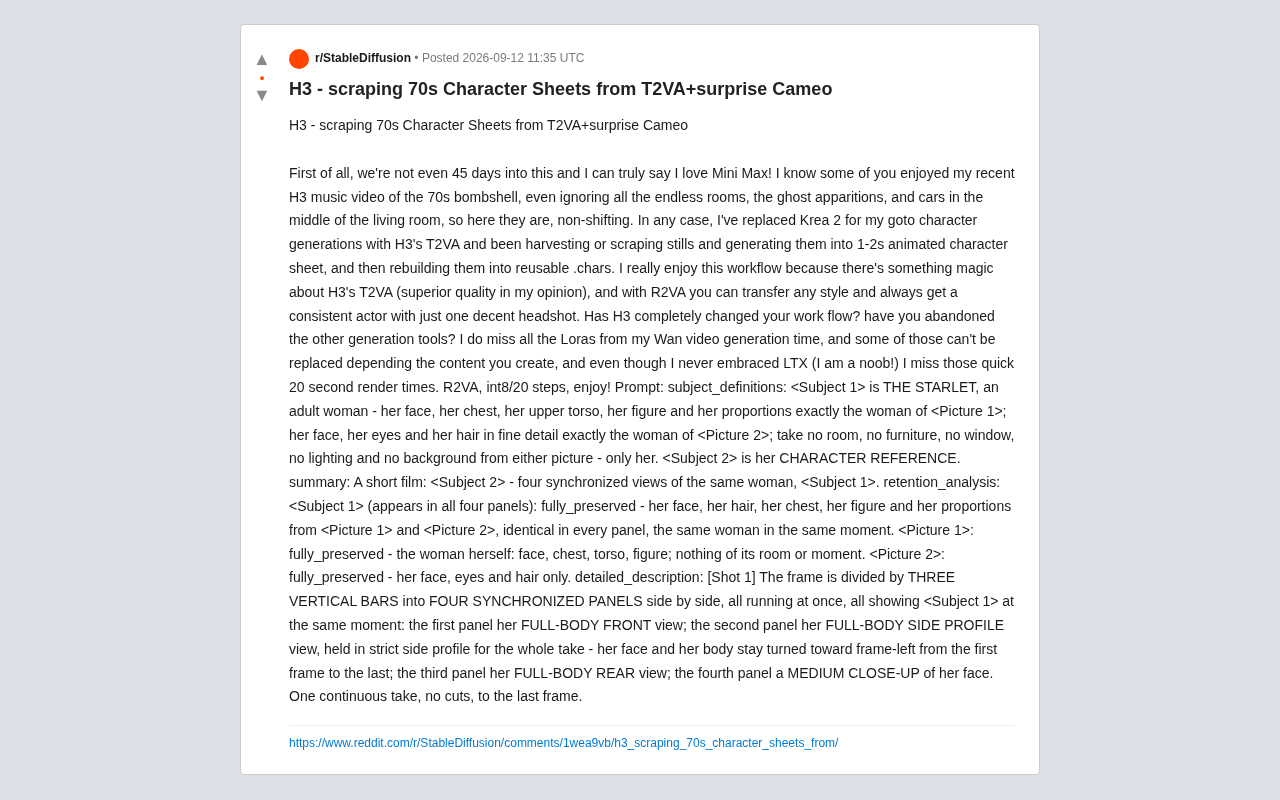
Building a Character Consistency Workflow with Hailuo H3: A T2VA Character Sheet Tutorial
A Reddit creator shares how to build a character consistency workflow using MiniMax Hailuo H3's T2VA/R2VA — from still harvesting to reusable .chars files, with a structured four-view character sheet Prompt.
25 Fields Medalists Issue Joint Statement: AI Is Causing Severe Misalignment in Mathematics
25 Fields Medalists issue a joint statement warning that AI is causing "severe misalignment" in mathematics — and what this means for the broader research community.