CodeMode: Let AI Agents Write Code Instead of Calling Tools, Slashing Token Costs by 90%

CodeMode lets AI agents write code to run in a sandbox and return results in one round trip, cutting token costs by up to 90%.
Traditional AI agents call tools one by one and stuff each result back into the context, leading to high token consumption and low efficiency, especially in multi-step tasks where the context balloons rapidly. CodeMode proposes letting the agent write a small program, execute it in a sandbox, and return only the final answer, achieving a single round-trip interaction. According to the source, this method can reduce token costs by up to 90% while reducing errors caused by information overload. Implementation requires a sandbox environment and code generation capabilities, with attention to security and error handling. Applicable scenarios include multi-step data processing and context-constrained tasks; simple tasks may not be suitable.
Title
CodeMode: Let AI Agents Write Code Instead of Calling Tools, Slashing Token Costs by 90%
Meta Description
Explore how CodeMode enables AI agents to execute code in a sandbox instead of calling tools one by one, reducing token consumption by up to 90%, and analyze its implementation key points and applicable scenarios.
Article Content
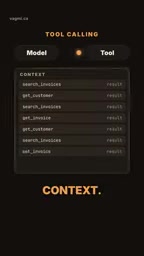
Traditional AI agents often call tools "one at a time" and stuff every result back into the context. If a task involves 10 invoices, this can trigger dozens of tool calls and thousands of lines of irrelevant data. CodeMode proposes a completely different approach: let the agent write a small program, run it in a sandbox, and return only the final answer. This requires just one round trip and drastically reduces token consumption. According to a YouTube source, this method can cut token costs by up to 90%.
The Dilemma of Traditional Agents: Calling Tools One by One Leads to Context Bloat
Most AI agents work like this: receive a user request, decide to call a tool, wait for the result, add the result to the context, then decide the next step. This loop works fine for simple tasks, but problems quickly escalate for multi-step, multi-source tasks.
Take invoice processing as an example. The agent needs to fetch information from multiple sources, possibly involving database queries, API calls, file reads, etc. Each call produces a result, and every result is pasted back into the context window in full. The agent needs to "remember" all intermediate results for subsequent steps, but this causes the context to balloon rapidly.
According to the source, 10 invoices can require dozens of calls and introduce thousands of lines of data the agent doesn't even need. This redundant information not only consumes tokens but may also interfere with the model's reasoning and reduce accuracy.
CodeMode's Solution: Write a Program, Execute in a Sandbox
The core idea of CodeMode is to change the agent's role: from "tool caller" to "programmer." Instead of calling tools one by one, the agent generates a piece of code that encapsulates the necessary tool-calling logic and executes it in a sandbox environment.
Specifically, the agent analyzes the task and writes a program that may include calls to multiple tools, data filtering, aggregation, and other operations. Then, this program runs in a secure sandbox and directly produces the final result. The agent receives only this result, not all intermediate data.
The key advantage of this approach is that the agent only needs one round-trip interaction with the sandbox, rather than multiple tool-call round trips. At the same time, the agent's context contains only the final answer, avoiding contamination from irrelevant data.
Sandbox is an isolated runtime environment that allows code execution but restricts access to host system resources. In AI agent scenarios, sandboxes are typically implemented via containerization (e.g., Docker) or lightweight virtual machines to ensure that agent-generated code cannot harm system security. The sandbox limits CPU, memory, network, and file system access, and may include timeout mechanisms. For CodeMode, the sandbox needs to support multiple programming languages (e.g., Python, JavaScript) and provide standard libraries and necessary dependencies so that programs written by the agent can call tool interfaces. Additionally, the sandbox should log execution for debugging and auditing.
One Round Trip, Drastically Lower Token Consumption
The most direct benefit of CodeMode is a significant drop in token costs. According to the source, costs can be reduced by up to 90%. This mainly stems from two factors: fewer interactions and avoiding stuffing large amounts of intermediate results into the context.

In the traditional mode, each tool call requires sending the result to the model, which then generates the next action, involving multiple API calls and large token consumption. In CodeMode, after the agent generates code, the code executes in the sandbox, and only the final result is returned to the model. For complex tasks, this difference is very pronounced.
Moreover, because the context is cleaner, the model may perform more stably and make fewer errors caused by information overload.
Implementation Key Points: Sandbox and Code Generation
To adopt CodeMode, you need to provide a sandbox environment for the agent and allow it to generate executable code. The sandbox should have resource limits and security isolation to prevent malicious code from affecting the host system. At the same time, the agent needs code generation capabilities, which usually rely on powerful language models.

The source suggests: "Give your agent a sandbox and let it write code." This implies the implementation path: integrate a code interpreter or similar tool so the agent can write and run code. Currently, some platforms already provide code execution capabilities, but usually for data analysis rather than replacing tool calls. CodeMode extends this into a general tool-calling pattern.
Code Interpreter is an extension capability of large language models (LLMs) that allows the model to generate and execute code to complete tasks such as data analysis and file processing. A typical implementation is OpenAI's Advanced Data Analysis (formerly Code Interpreter), which runs Python code in a sandbox and returns results. CodeMode borrows this idea but extends it from data analysis to general tool calling: the agent no longer directly calls tool APIs but generates code that calls those APIs. This requires the code interpreter to access tool interfaces (e.g., via SDK or HTTP requests) and return execution results to the model in a structured form.
Potential Challenges and Applicable Scenarios
Although CodeMode has promising prospects, it also faces challenges. Code generation may fail, requiring the sandbox to have error handling and retry mechanisms. Security risks also need careful evaluation, especially when the agent can execute arbitrary code. In addition, not all tasks are suitable for code mode; simple tasks may be more efficient with direct tool calls.
Applicable scenarios include multi-step data processing, tasks that require aggregating results from multiple tools, and situations with limited context length. For agents that need frequent tool calls and large amounts of intermediate data, CodeMode may bring significant efficiency gains.
Context Window is the maximum number of tokens an LLM can process in a single pass (including input and output). In the traditional agent mode, the result of each tool call is appended to the context, rapidly consuming window capacity and potentially causing key information to be truncated or the model's attention to be diluted. CodeMode keeps intermediate data in the sandbox and returns only the final result to the context, significantly reducing context usage. This is especially important for models with limited context windows (e.g., 8K or 16K tokens), enabling them to handle more complex multi-step tasks.
Summary
CodeMode provides an innovative agent design pattern that drastically reduces token consumption and the number of interactions by having the agent write code and execute it in a sandbox. According to the source, costs can be reduced by up to 90%. For developers building efficient AI agents, this is worth attention and experimentation.
One-line Summary
CodeMode lets AI agents write code to run in a sandbox and return results in one round trip, cutting token costs by up to 90%.
Paragraph Summary
Traditional AI agents call tools one by one and stuff each result back into the context, leading to high token consumption and low efficiency, especially in multi-step tasks where the context balloons rapidly. CodeMode proposes letting the agent write a small program, execute it in a sandbox, and return only the final answer, achieving a single round-trip interaction. According to the source, this method can reduce token costs by up to 90% while reducing errors caused by information overload. Implementation requires a sandbox environment and code generation capabilities, with attention to security and error handling. Applicable scenarios include multi-step data processing and context-constrained tasks; simple tasks may not be suitable.
Related articles

Overmind: An Open-Source Continual Learning Platform That Turns Production Traces into Custom Models
Overmind is an open-source continual learning platform launched on Product Hunt for AI teams. It turns production traces into team-owned custom models, covering training, benchmarking, and model serving.
Nuvio 5.0: Handing Financial Back Office to AI Agents
Nuvio 5.0 launches on Product Hunt to hand financial admin to AI agents—automated invoicing, expenses, and reconciliation—with ChatGPT, Claude, or custom agent access, plus new bookkeeping and tax services.
Notra: The GEO Tool That Helps Your Brand Stand Out in AI Search
Notra is a GEO tool that simulates buyer questions to ChatGPT, Claude, and Gemini to check brand visibility in AI search and provide optimization tips, helping marketers boost exposure in the generative AI era.