Codex Beginner's Complete Tutorial: A Step-by-Step Guide from Installation to Real-World Development

A complete beginner's guide to OpenAI Codex, from installation to real-world development.
This comprehensive tutorial walks beginners through OpenAI Codex, covering its core intent-driven code generation approach, support for dozens of programming languages, and full-stack development capabilities. It provides a three-step quick start guide, explains prompt engineering best practices for optimal output, and offers a balanced perspective on AI-assisted coding's benefits and limitations.
Why Every Developer Should Pay Attention to Codex
In an era overflowing with AI programming tools, OpenAI's Codex is becoming a powerful productivity booster for many developers. According to hands-on reviews shared by content creators, you can complete the entire development workflow on an ordinary computer — no need to grind through basic syntax, no late-night debugging marathons, and no complicated annual subscription hoops to jump through. Just open the software and start using it.
This "low barrier, high coverage" nature has quickly earned Codex attention in the developer community. For beginners, it lowers the entry threshold to programming; for experienced engineers, it serves as an intelligent assistant that accelerates the development process.

Codex's Core Positioning: Intent-Driven Code Generation
At its core, Codex is a code generation and comprehension tool powered by a Large Language Model (LLM). Large language models learn deep mapping relationships between natural language and programming languages by pre-training on massive volumes of text and code data. OpenAI's Codex originally evolved from the GPT-3 architecture, with later versions incorporating GPT-4-level reasoning capabilities. Unlike traditional code completion tools (such as static analysis based on syntax trees), large language models can understand contextual semantics, handle ambiguous natural language descriptions, and generate structurally complete code snippets. This capability stems from the self-attention mechanism in the Transformer architecture, which allows the model to reference all relevant contextual information in the input when generating each code token.
It doesn't require users to master every detail of a particular language. Instead, you describe your requirements in natural language, and the model automatically generates the corresponding code logic. This "intent-driven" development paradigm is redefining how humans interact with code.
Intent-Driven Development represents a significant paradigm shift in software engineering. Traditional development workflows require developers to manually translate business requirements into precise code implementations — a process that demands deep syntactic knowledge and engineering experience. In the intent-driven model, developers only need to describe the desired behavior in natural language or pseudocode, and the AI model handles the mapping from intent to implementation. This concept isn't entirely new — early low-code/no-code platforms and Domain-Specific Languages (DSLs) all attempted to shorten the distance between intent and implementation. However, large language models have achieved, for the first time, high-quality conversion from general natural language to general-purpose programming languages.
Programming Languages and Development Scenarios Supported by Codex
One of Codex's major advantages is its breadth of coverage. According to real-world testing, it supports dozens of mainstream programming languages. Whether you use Python, JavaScript, Java, Go, or other languages, you can get corresponding code generation support. This means developers don't need to switch tools for different projects — one solution handles multiple tech stacks.
Codex's ability to support such a wide range of programming languages is thanks to the massive multilingual code repositories from platforms like GitHub included in its training data. During training, the model not only learned the syntax rules of each language but also mastered coding conventions from different language communities, common library API calling patterns, and cross-language design patterns. It's worth noting that the model's support quality varies across languages — Python and JavaScript typically produce the best results due to having the largest volume of training data, while niche languages (such as Haskell or advanced Rust features) may require more precise prompts to achieve ideal results. Understanding how different languages perform within the model is crucial for practical use.

Full-Scenario Development Coverage: From Frontend and Backend to Automation Scripts
In terms of application scenarios, Codex covers virtually all mainstream full-stack development needs. Whether you want to build website features, write frontend interfaces, backend logic, automation scripts, plugin extensions, or even data processing tasks, you can hand your requirements directly to Codex.

This full-scenario capability makes Codex more than just a code completion tool — it's more like an intelligent collaborator that spans the entire development lifecycle. From requirements analysis and logic design to core workflow implementation, it can provide substantive assistance.
How Much Can Codex Improve Your Efficiency?
For developers, the most tangible benefit is efficiency. While the traditional approach involves staring at error logs and debugging late into the night, Codex helps you quickly organize logic and get core workflows running — creating a clear efficiency gap.

Prompts and Instruction Templates: The Key to Codex Output Quality
You might not have noticed, but the effectiveness of AI programming tools largely depends on how users structure their prompts. In hands-on testing, the author mentioned having compiled commonly used full-scenario development prompts and instruction templates for users to reference directly. This is critically important — high-quality prompts can significantly improve the accuracy and usability of generated code.
Prompt Engineering has evolved into an independent practical discipline. Its core principle is that the output quality of large language models is highly dependent on the structure and information completeness of the input. In code generation scenarios, a high-quality prompt typically includes the following elements: task description (what to do), technical constraints (which language/framework to use), input/output specifications (data formats), boundary conditions (exception handling requirements), and code style preferences. Common prompting techniques in the industry include Few-shot Prompting (providing example code snippets to guide generation), Chain-of-Thought (guiding the model to analyze logic before coding), and Role Prompting (having the model assume a specific role such as "senior backend engineer"). A systematic prompt template library essentially codifies these best practices into reusable assets.
For beginners, starting with ready-made prompt templates and gradually understanding the logic behind prompt construction is a shortcut to mastering Codex. For advanced users, building a personalized prompt library based on your own business scenarios becomes a valuable long-term asset.
Codex Beginner's Quick Start Guide: Three Steps to Get Going
For developers who want to try Codex, here's a recommended step-by-step approach:
Step 1: Environment Setup and Installation
A regular computer is all you need — no high-end hardware required. After completing the software installation and basic configuration, you can start using it right away. The installation process isn't complicated; just follow the official documentation and you'll get through it smoothly.
Step 2: Start with Small Tasks and Gradually Familiarize Yourself with the Interaction
Don't jump into complex projects right away. Start with simple scripts or individual feature modules. Describe your requirements and let Codex generate code, observe its output, and gradually refine your prompting approach. For example, try having it write a data processing function or an API request snippet to experience the transformation from natural language to code.
Step 3: Accumulate Prompt Experience and Build Your Personal Template Library
During practice, record which prompting approaches work best and gradually build your own template library. This will become a core asset for long-term productivity improvement. Good prompt templates can be reused across different projects, dramatically reducing time spent on trial and error.
A Rational Perspective on Codex and AI Programming Tools
Despite Codex's impressive capabilities, users should maintain a rational perspective. AI-generated code requires manual review and verification. In production environments especially, security, performance, and edge cases all need developer oversight.
Security auditing of AI-generated code is a topic receiving significant attention in the industry. A 2022 Stanford University study showed that developers using AI-assisted programming didn't necessarily outperform manual coders in secure coding practices, partly because developers may develop over-reliance on AI output. Common risks include: SQL injection vulnerabilities, insecure encryption implementations, hardcoded credentials, and unvalidated user input handling. Additionally, AI models may generate code that is functionally correct but suboptimal in performance — for example, using an O(n²) algorithm for a problem that could be solved in O(n log n). Therefore, Code Review, static analysis tools (such as SonarQube and Semgrep), and automated testing become even more important — not less — in AI-assisted development workflows.
Codex's value lies in "acceleration" rather than "replacement" — it helps developers eliminate repetitive work and rapidly build prototypes, but final architectural decisions and quality control still require human judgment. Positioning it as a capable assistant rather than a fully automated solution is the key to truly leveraging its power.
For technical professionals looking to boost development efficiency, mastering AI programming tools like Codex has gradually shifted from being "optional" to being a "must-have skill." The sooner you get familiar with it, the sooner you gain a competitive edge in the productivity race.
Key Takeaways
Related articles

OpenCodex and CodexBar: Solving Two Key Pain Points — Model Switching and Quota Tracking in Codex
Discover OpenCodex and CodexBar — two tools that solve Codex's model switching and quota tracking pain points, enabling tool-model decoupling and centralized quota visibility.
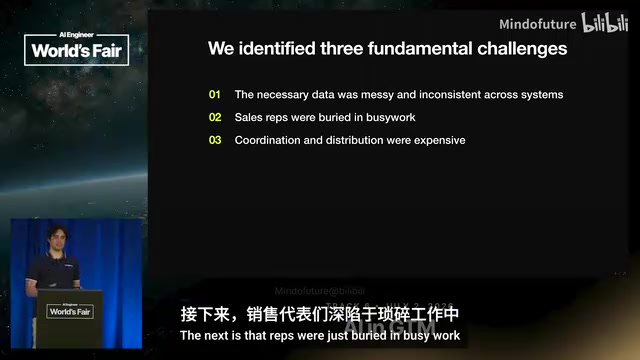
How Ramp Rebuilt Its GTM Orchestration System with AI Agents: From Intent to Automated Execution
Deep dive into how Ramp built an AI-driven GTM orchestration system from scratch — covering unified CDP, unstructured data, skill libraries, and MCP tooling for intent-to-execution automation.
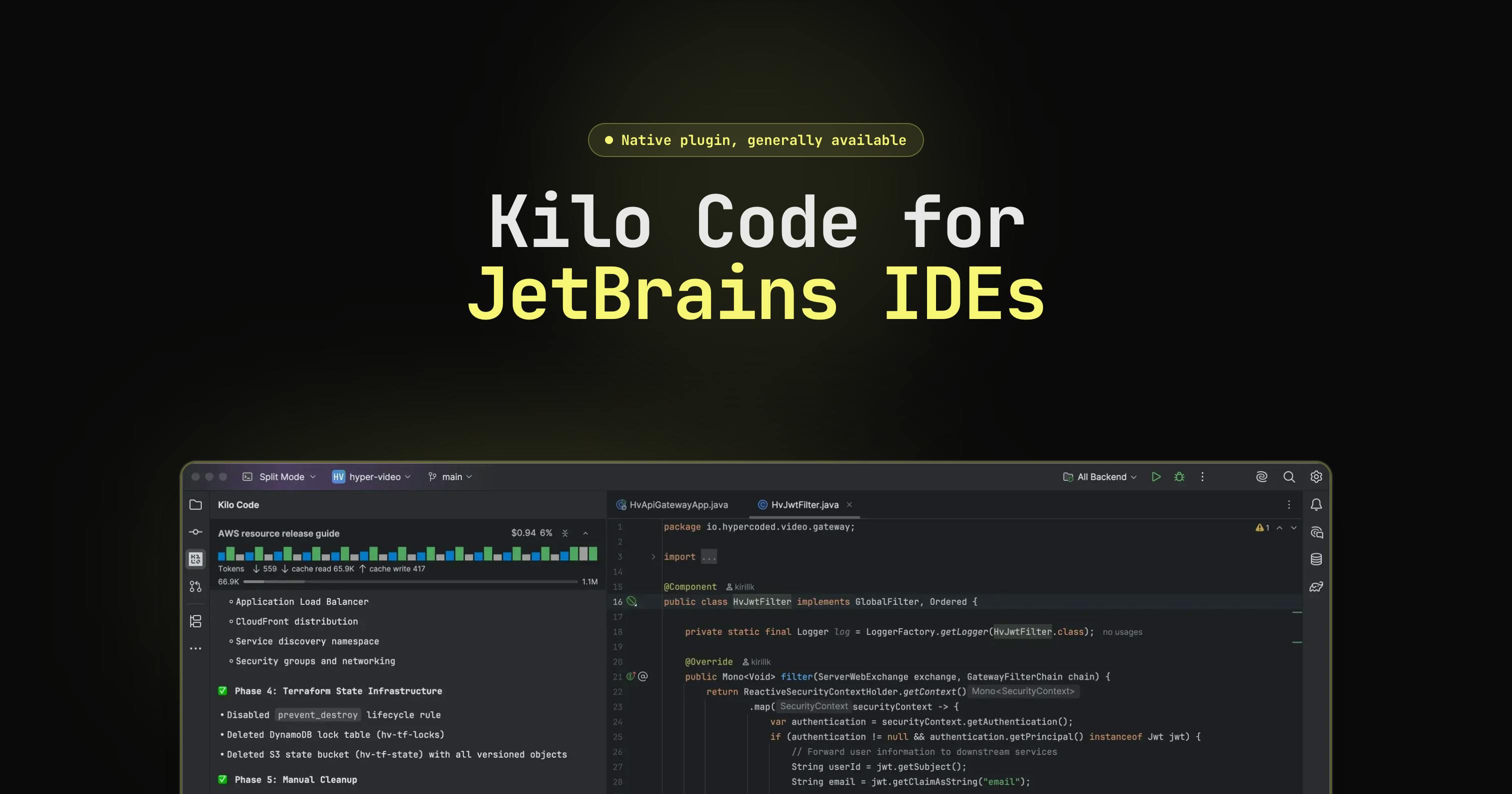
Kilo Code Lands on JetBrains: A Deep Dive into the Open-Source AI Coding Agent
Kilo Code for JetBrains is a fully native, open-source AI coding Agent supporting IntelliJ IDEA, PyCharm and more, featuring parallel Agents, 500+ models, and inline GitHub PRs.