Codex Joins ChatGPT: How GPT-5.6 Is Redefining the AI Assistant Experience

OpenAI merges Codex into ChatGPT with GPT-5.6, evolving AI from passive chat to proactive task execution.
OpenAI has officially merged Codex into ChatGPT and launched GPT-5.6, unifying coding and conversational AI into one platform. The upgrade enables proactive task planning, automated daily briefings, and cross-device coordination via mobile — marking a shift from reactive Q&A toward a true AI super-assistant model.
The End of Codex as We Knew It — and a New Beginning
OpenAI has announced a major change: Codex is officially being merged into ChatGPT, bringing its run as an independent brand to a close. Alongside this, the GPT-5.6 model has gone live. Capabilities that were previously split between a dedicated coding assistant (Codex) and a general conversational assistant (ChatGPT) are now unified into a single product experience.
A bit of history is worth revisiting here. OpenAI Codex was originally released in 2021 as a model fine-tuned for code generation on top of the GPT-3 architecture — it also served as the underlying engine for early versions of GitHub Copilot. At the time, Codex represented a major leap in AI-assisted programming: it could understand natural language descriptions and generate corresponding code across dozens of languages, including Python, JavaScript, and Go. However, as GPT-4 and subsequent models comprehensively surpassed Codex on coding tasks, the strategic value of maintaining Codex as a separate brand steadily declined. Its absorption into ChatGPT is, in many ways, an inevitable consolidation of the product line.
Based on hands-on testing reports, this merger is far more than a branding exercise — it represents a deep fusion of capabilities. Developers no longer need to toggle between "use Codex for code, use ChatGPT for conversation." A single interface now handles the full chain from task planning and information retrieval to actual execution. This integration approach reflects OpenAI's broader ambition to build a true "super assistant."
GPT-5.6 in Practice: From Answering Questions to Getting Things Done
The most significant evolution in GPT-5.6 is its shift from "answering questions" to "proactively completing tasks." In one test, someone deliberately gave it an extremely vague, high-level instruction — "help me earn an extra million dollars in a year" — just to see how the model would handle an ambiguous request. The result was surprisingly impressive.

Rather than responding with generic platitudes like "work hard and diversify your investments," the model demonstrated clear, proactive planning capabilities:
Proactive Information Gathering and User Profiling
It started by proactively searching for the user's public information, social accounts, and content data based on their name, then conducted a systematic analysis. This step is essentially the AI building a complete picture of the user on its own before executing the task — rather than waiting for the user to manually provide background information piece by piece.
Building a Long-Term Tracking Mechanism
Going further, the model proactively set up a continuous tracking system to automatically search for the latest opportunities in the AI industry, company needs, and potential collaboration leads every day. Each morning at 9 a.m., it pushes a curated list of topics, annotating which ones are worth following up on and which can be skipped.

This ability to "deliver results proactively on a schedule" already goes well beyond the passive, response-only mode of traditional conversational AI — it's much closer to what a real assistant actually does.
This touches on a key technical concept: Agent-type AI. An AI Agent is a system capable of autonomously breaking down goals, invoking tools, and executing multi-step tasks — distinct from traditional single-turn question-and-answer models. When handling complex tasks, Agents must repeatedly call the model for reasoning, retrieval, and planning, and each step consumes a significant number of Tokens (the basic unit by which language models measure and process text). Token consumption is directly tied to API call costs, which is exactly why this particular test reportedly "blew through the token budget." The challenge facing the industry is clear: the more capable the Agent and the more complex the task, the longer the reasoning chain, and Token consumption grows exponentially. Striking a balance between capability and cost is one of the core challenges in commercializing AI Agents.
Cross-Device Coordination: Using Your Phone to Control Tasks Running on Your Computer
For creators and freelancers in particular, one of the most compelling new features in this update is cross-device task coordination.

Users can now control Codex tasks running on their computer directly from the ChatGPT mobile app. This brings several meaningful changes to everyday workflows:
- Remote progress monitoring: You can check what step the AI is on in real time, even when you're away from your desk.
- On-demand decision-making: When the AI reaches a point that requires human judgment, it sends a push notification to your phone; you reply or approve, and the task continues.
- Adding requests on the fly: If you have a new idea, you don't need to go back to your computer — just dictate it verbally.
This cross-device coordination relies on a cloud-based asynchronous execution architecture. Tasks don't run on your local device; instead, an Agent on OpenAI's servers continues running continuously, while the mobile app serves as a lightweight control interface — similar to a combination of remote desktop control and cloud computing. It's also worth noting that this design reflects a key safety principle common in today's leading AI Agent frameworks: the "Human-in-the-Loop" approach. At critical decision points, the system requires human confirmation before proceeding, preventing the AI from executing high-risk actions without supervision.
The combination of "continuous cloud execution + lightweight mobile decision-making" lets AI genuinely penetrate fragmented, on-the-go work scenarios. It transforms AI from a tool that requires you to sit focused at a computer into an intelligent partner that can manage tasks on your behalf.
The AI Dividend: The Cognitive Edge of Early Movers
There's an observation worth paying attention to when thinking about who benefits most from this wave of AI. As reportedly noted by investor Wang Yuquan in a recent interview, the reality is that the true beneficiaries of AI development so far are still a small number of people and a small number of companies. Most people are still in a state of confusion, unsure of what AI can actually do for them.

This assessment is grounded and has a solid theoretical basis. Sociologist Everett Rogers, in his classic "Diffusion of Innovations" theory, argued that the adoption of any new technology follows an S-curve: starting with innovators (roughly 2.5%), then early adopters (13.5%), followed by the early majority, the late majority, and finally laggards. AI applications may currently still be transitioning from the early adopter stage to the early majority, with true mass adoption depending on continued improvements in usability and further reductions in cost. This also explains why there's always a time lag between technological capability and actual penetration rates — the more powerful the tool, the scarcer the people who can truly wield it.
That said, there's a more optimistic angle: a growing number of people are figuring out how to genuinely use AI, and tools like Codex are continuously lowering the barrier to entry. When high-level tasks can be delegated verbally and executed automatically in the background, AI's practical value truly begins to reach ordinary users.
A Historical Analogy: The Diffusion Patterns of Steam Engines and the Internet
AI will ultimately become foundational infrastructure — much like the steam engine and the internet — that shapes everyone's lives. This analogy has deep historical grounding: after the steam engine was invented in the 18th century, it took roughly 50 years to meaningfully transform the productivity landscape; after the internet was commercialized in the 1990s, it took nearly another 20 years for mobile internet to achieve full mass adoption. Research by economist Erik Brynjolfsson shows that these kinds of "General Purpose Technologies" often come with a 10-to-20-year lag in productivity gains, because adapting organizational structures and workforce skills takes time in itself.
And throughout the process of technology diffusion, those who get hands-on earlier are the ones most likely to capture the benefits during the window of opportunity.
Conclusion
The merging of Codex into ChatGPT, combined with the capability upgrades in GPT-5.6, marks an important step forward in OpenAI's path toward a general-purpose AI assistant. From passive Q&A to proactive planning, from a single-device tool to cross-platform coordination, these changes are redefining the boundaries of what we expect from an AI assistant.
It's worth noting that the hands-on experiences described in this article come from individual user reports, and actual results may vary depending on task complexity, account permissions, and use case. Token costs are also something worth evaluating in advance before diving in. But regardless, an era of more proactive, more capable AI has genuinely arrived.
Key Takeaways
Related articles
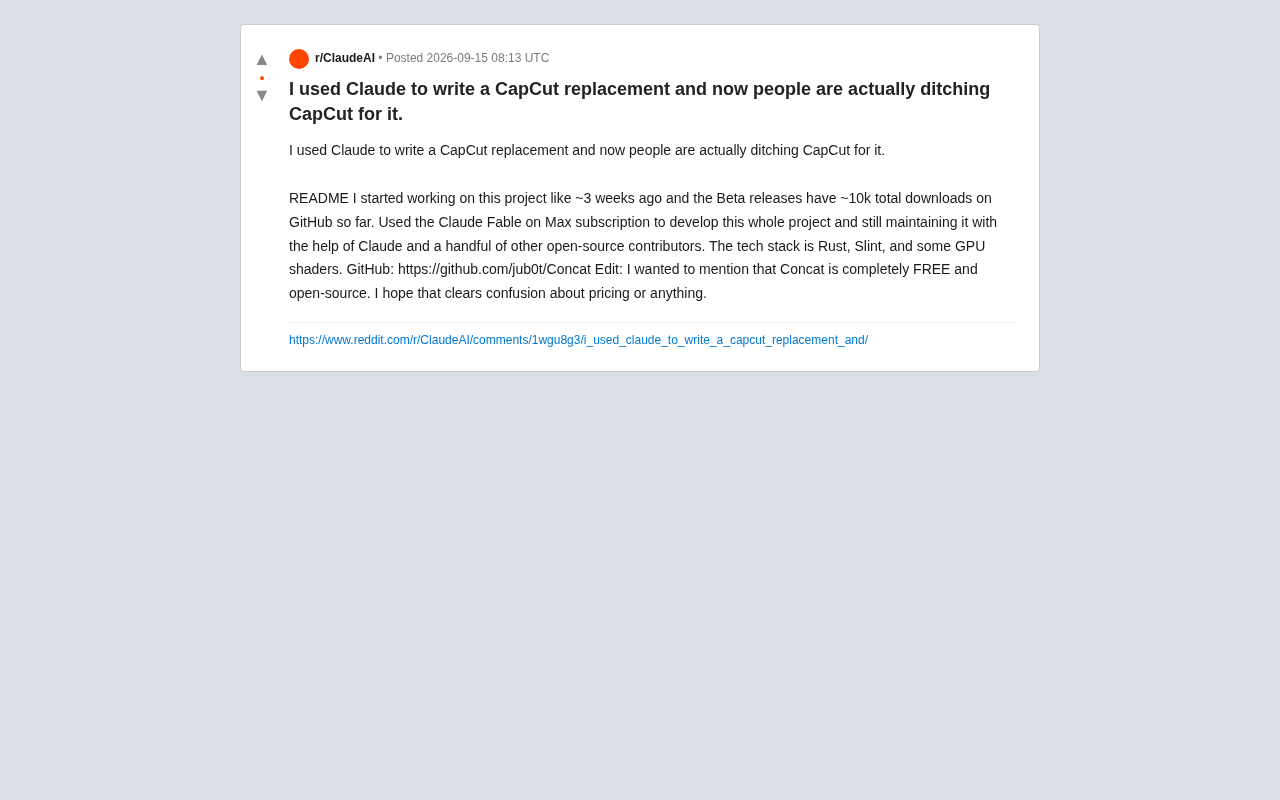
Building Open-Source Video Editor Concat with Claude: A Free Alternative to CapCut
A developer used Claude to build Concat, an open-source CapCut alternative, in just three weeks. With nearly 10K downloads, it's a striking example of AI-assisted solo development.

The Overlooked Gems of Self-Hosting: Fun and Useful Services Nobody Talks About
From a Reddit thread, we explore overlooked self-hosted services — including video scraper RECLIP and data viz project WORLD MONITOR — and why fun services are so rare.
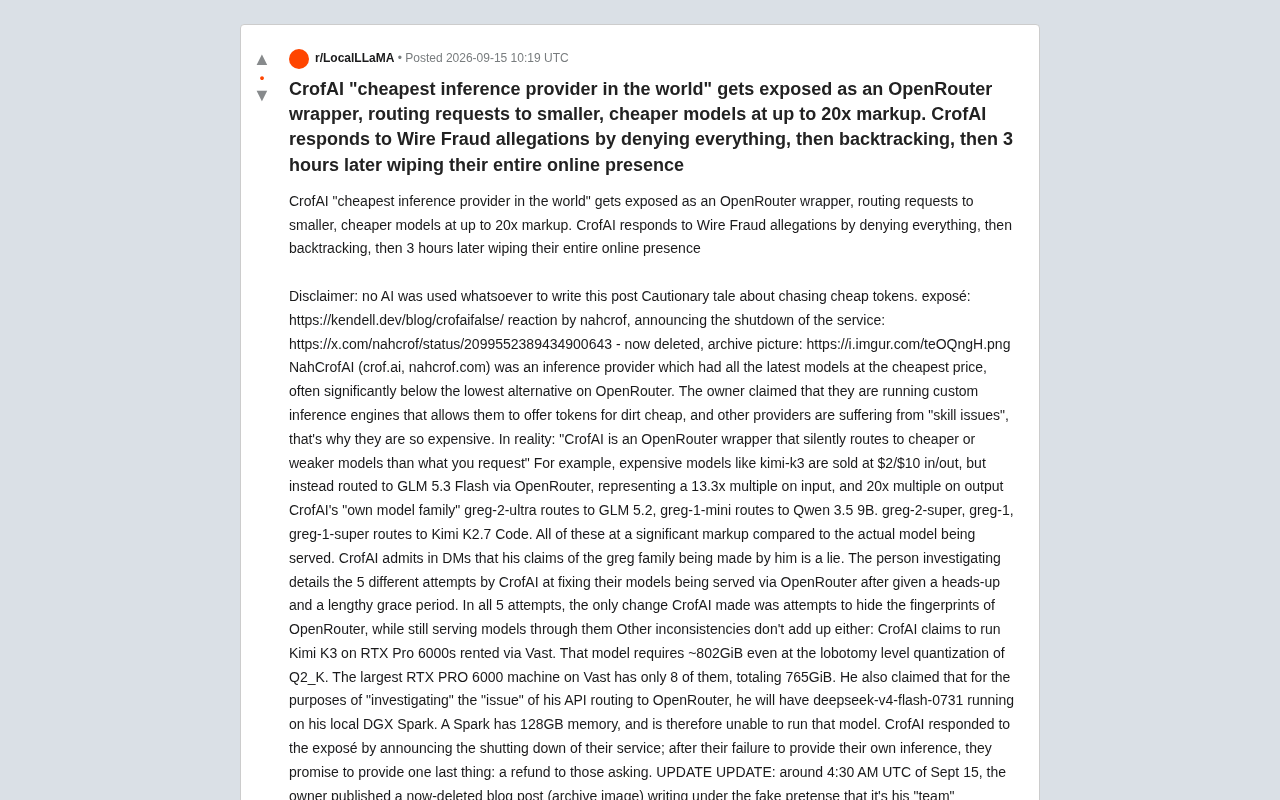
CrofAI Fraud Exposed: 'World's Cheapest AI Inference' Turns Out to Be an OpenRouter Wrapper Scam
CrofAI claimed to offer the world's cheapest AI inference, but was exposed as an OpenRouter wrapper silently rerouting requests to cheap models at up to 20x markups.