Codex Tutorial: Build Monetizable Products with AI Coding — No Experience Required
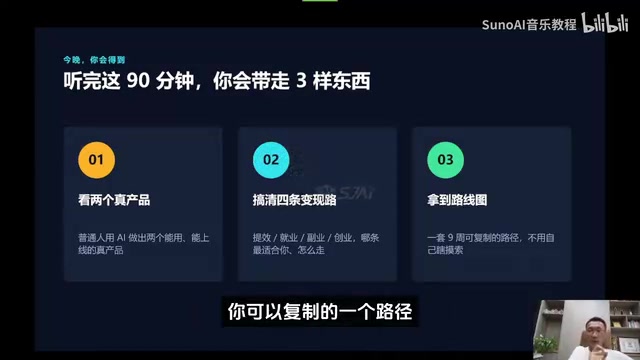
Use Codex to build real, monetizable products with AI — no coding experience needed.
This hands-on Codex tutorial walks through two real projects — an e-commerce product finder and a spaced-repetition flashcard mini program — to show how anyone can direct AI to write code without technical skills. It covers requirements decomposition, prompt techniques, the gap between "runs" and "ships," and four concrete paths to monetize AI coding skills.
Before Chasing the Latest Trend, Know What You Want to Build
Over the past two years, AI tools have been coming in waves: large language models like Doubao and Kimi led the charge, followed by workflow platforms (Coze/Dify/n8n), then Claude Code and Cursor, and most recently — Codex.
Many people have gone down the same costly path. Early on, one developer went all-in on an AI coding tool, spending $800 in the first month just on direct API calls, then another $200 the next month — only to find that "half the time was spent fixing bugs": channel errors, unstable models, lost training memory, and sky-high costs.
The more important question is: if you're just writing content for a public account, why burn through tokens via API when free tools like Doubao or Kimi exist?
Tokens are the basic unit of text processing in large language models — think of them as "word fragments." In English, roughly 4 characters equal 1 token; in Chinese, 1 character typically maps to 1–2 tokens. When calling an official API, you're billed on the total token count (input + output). With OpenAI's GPT-4 series, for example, costs range from a few dollars to tens of dollars per million tokens. For tasks like writing articles, products like Doubao and Kimi have already absorbed the model costs into free or low-cost subscriptions — users never see the token bill. Calling an API directly means every generation costs real money. Choosing whether to use an API is fundamentally a trade-off between "flexibility and customization" versus "cost and convenience" — and content creation usually doesn't need the former.
Spending this way with such poor ROI comes down to one thing: not being clear about what you actually want to use AI for.
Before diving into Codex, take a moment to identify your real goal:
- Boost workplace productivity: Double your efficiency at your current job
- Side hustle after hours: Build a secondary income stream
- Career transition: Switch to a more promising track
- Build and monetize: Become a solo entrepreneur or one-person company
Without anchoring to a goal, you'll fall into the trap of "always chasing the next hot tool" — today it's Codex, next month it'll be something else.
Why AI Coding Is a Ground-Floor Opportunity for Everyday People
AI coding (Web Coding) is often called "the foundational layer of the AI world," and for good reason: you can direct AI using plain language and produce genuinely valuable products. The barrier to entry is incredibly low — no programming languages to learn, no syntax to memorize, no algorithms to understand.
The entire workflow breaks down into three steps:
- Define your requirements — Know what you want to build
- Generate the code — Let AI do the heavy lifting
- Complete the project — Test, export, and ship
A useful analogy: you're not the construction worker, you're the general contractor. Workers write code line by line — exhausting, slow, and technically demanding. The general contractor breaks down requirements and delegates the work to AI.
This is the fundamental difference between traditional development and AI coding. Traditional development takes months to learn frameworks and systems, and every error sends you down a rabbit hole. With AI coding, you just need to describe what you want and know how to work with AI — you can ship in weeks, and bugs get fixed by asking AI to fix them.
Codex in Action, Case 1: Build an E-Commerce Product Finder in 3 Minutes
Product selection is make-or-break for e-commerce. Here's a live demo of building a pure front-end product selection tool using Codex.
Step-by-Step
Create a new folder on your desktop called "Product Finder," select that directory in Codex to start a project, then paste in your prepared prompt (including evaluation criteria, weight settings, blue ocean rules, export functionality, and other requirements). Select "Quick" mode with "High" reasoning intensity, and let AI run.
The result is striking: in 3 minutes and 5 seconds, AI wrote 1,322 lines of code. Writing this manually would take days at minimum — "Who's doing the work? You're directing it to work for you."
What It Looks Like in Practice
The generated tool lets you paste or upload up to 50 rows of messy product data (price, monthly sales, rating, review count), automatically calculates a "potential score," and flags blue ocean products based on preset rules.
The "blue ocean" concept comes from Blue Ocean Strategy, published in 2005 by W. Chan Kim and Renée Mauborgne. It originally described how companies can create uncontested new market spaces to achieve value innovation. In cross-border e-commerce product selection, a blue ocean product refers to a category where "genuine demand exists but competition hasn't yet saturated." Common quantitative signals include: monthly sales volume (confirms demand), review count (measures saturation), rating (reflects quality baseline), and price range distribution.
Example rule: monthly sales ≥ 2,000, review count < 800, rating ≥ 4.5 → flagged as blue ocean. This is a classic "high demand + low competition + high quality baseline" filter. The thresholds typically need to be calibrated to the actual data distribution of a specific platform (AliExpress, Amazon, etc.). The value of AI tools here is instant batch scoring across massive SKU catalogs — not replacing your judgment about the rules themselves. Click "Show Blue Ocean Only" to filter, then export the results.
For a cross-border seller dealing with 100,000 SKUs, manual analysis is practically impossible. AI handles it in seconds — that's the order-of-magnitude difference in efficiency.
Codex in Action, Case 2: A Flashcard App Built for My Daughter
The second case comes from a real pain point: a middle schooler cramming for finals, with a messy notebook full of wrong answers and no good way to find them. Nothing on the market really solved it.

From Pain Point to Requirements: A Conversation with AI
First, ask AI to survey existing solutions. AI outlines three categories (mainstream learning apps, physical mistake-printer hardware, AI smart mistake notebooks) and honestly reports that "there's no dedicated standalone, verifiable WeChat mini program solution."
If it doesn't exist, build it yourself. After several rounds of back-and-forth with AI, five core requirements took shape:
- Photograph and log wrong answers
- Practice with related variations
- Spaced repetition review schedule
- Push reminders when review is due
- Export and print wrong-answer sets
The "spaced repetition review schedule" has solid cognitive science backing. The Forgetting Curve was proposed by German psychologist Hermann Ebbinghaus in 1885, describing how memory decays over time — about 42% of new content is forgotten after 20 minutes, ~66% after a day, and ~77% after a week. Spaced repetition scheduling reviews just before memories fade, maintaining the highest possible retention rate with the minimum review frequency. Tools like Anki and SuperMemo have productized this algorithm for years. Applying it to a K–12 mistake-review app — dynamically generating push reminders based on the last review time for each wrong answer — combines scientific validity with genuine practical value.
Building the WeChat Mini Program with Codex
Create a new "Mistake Notebook" project in Codex, paste the prompt, and AI starts executing. This project is more complex: AI writes 19 files in parallel, ultimately touching 33 files and approximately 1,027 lines of code, completing in about 10 minutes. Along the way, AI self-audits, auto-fixes bugs, and re-validates.
Once generated, import the code into WeChat DevTools and it's ready to run — with full features including photo capture, subject categorization, error reason tagging, and test paper export.
A more complete version (roughly two days of development, two weeks of real-world testing) also includes a progress log, high-frequency error topic clustering, and blank test paper printing for parents.

The "Cup of Milk Tea" Monetization Math
A quick back-of-the-envelope calculation: 50 parents in one class, ¥15 per person (the price of a milk tea), equals ¥750 per month — about ¥8,000 per year. That's both a side hustle and a potential starting point for a business.
Similar examples abound. A simple "Children's Height/Weight BMI Calculator" posted in a parenting group has already accumulated 300 users. Small tools that solve real problems consistently out-perform large products at cold-start.
"It Runs" and "It Ships" Are Two Very Different Things
Here's an honest caveat: "it runs" does not equal "it ships." The demos above are all pure front-end products. "Pure front-end" means the application logic runs entirely in the user's browser or on their local device, with no server-side processing or database storage. Data is stored in the browser's LocalStorage or exported as files — making deployment cost essentially zero.
However, pure front-end architecture has real limitations: data can't sync across devices, user account systems aren't feasible, and payment and authentication logic is difficult to implement securely. If users clear their browser cache, all data is gone.
Getting an app truly live and monetizable requires: deploying to a server, ensuring security, handling login and payment flows, and continuously patching vulnerabilities.
Real-world data makes this concrete: out of 5,600 randomly generated applications, approximately 2,000 serious security vulnerabilities were found during scanning. What AI replaces is the act of "writing code," but what's truly valuable is the ability to use AI to build genuinely usable products — including product thinking, requirements decomposition, and the skill of having high-quality interactions with AI.
Four Ways to Monetize the Same AI Coding Skill Set
Once you have AI coding capabilities, the same skill set maps to four distinct monetization paths:
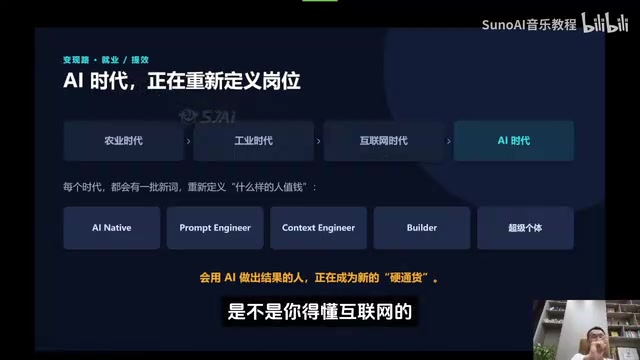
Path 1: Workplace Productivity — The New Hard Currency
Just like "proficiency in Office" was a hiring edge 20 years ago, or a driver's license before that, the AI era has introduced new competitive dimensions:
- AI Native: Your first instinct when facing a problem is to use AI, not a search engine
- Prompt Engineer: Ability to craft effective prompts
- Context Engineer: Ability to manage context effectively
- Builder: Can independently build and ship products
- OPC (One Person Company): The solo entrepreneur
Context Engineering is a concept that emerged in AI practitioner circles around 2024–2025, widely considered the evolution beyond Prompt Engineering. While Prompt Engineering focuses on "how to write a good instruction," Context Engineering is about "how to build a complete, accurate, and efficient information environment for the model" — including system prompt design, conversation history trimming and compression, external knowledge retrieval injection (RAG), tool-call result formatting, and state management across multi-turn tasks. As mainstream model context windows have expanded to hundreds of thousands or even millions of tokens, knowing how to place "the most valuable information" within a finite window has become a key engineering skill that determines the ceiling of any AI application's effectiveness.
Here's a concrete example: build a company "Performance Review Assistant" in Codex — complete with review modules, cycle settings, reporting relationships, WeChat reminders, and KPI/OKR switching. Which HR professional is more valuable: the one who can build this, or the one who can't?
Another example: instead of hiring 10 interns at ¥3,000/month (¥30,000 total) to write graduation evaluations, write a Codex script that completes the task in a day — saving ¥30,000 outright.
Path 2: Career Transition — Your Work Is Your Resume
Real projects on GitHub are your portfolio. AI coding lowers the barrier from zero to finished work, letting career changers produce compelling output in a fraction of the time it used to take.
Path 3: Freelancing After Hours — Side Income
Common freelance project types and price ranges:
- Business showcase mini programs: ¥2,000–¥8,000 each
- Automation scripts: ¥500–¥3,000 each
- Channels to find clients: Xianyu, Taobao, personal social networks
Path 4: Entrepreneurship — Become a Solo Founder
Start by finding a product direction with real paying demand, build the product, acquire your first users, and iterate toward a sustainable business model. A one-person company is more achievable than ever.
Why Now Is the Right Time to Get In
Today's AI coding tools are mature enough to get real work done. The trend toward solo operators and one-person companies is accelerating. And people who have genuinely mastered these skills are still extremely scarce — most people are still at the stage of "just chatting with an AI assistant."
Whether your goal is workplace productivity, a career change, a side hustle, or building a company, AI coding is a foundational capability worth taking seriously.
This isn't a question of whether you want to level up — it's a mandatory question. If you don't learn this, someone else will. That's where the gap opens up.
Key Takeaways
Related articles
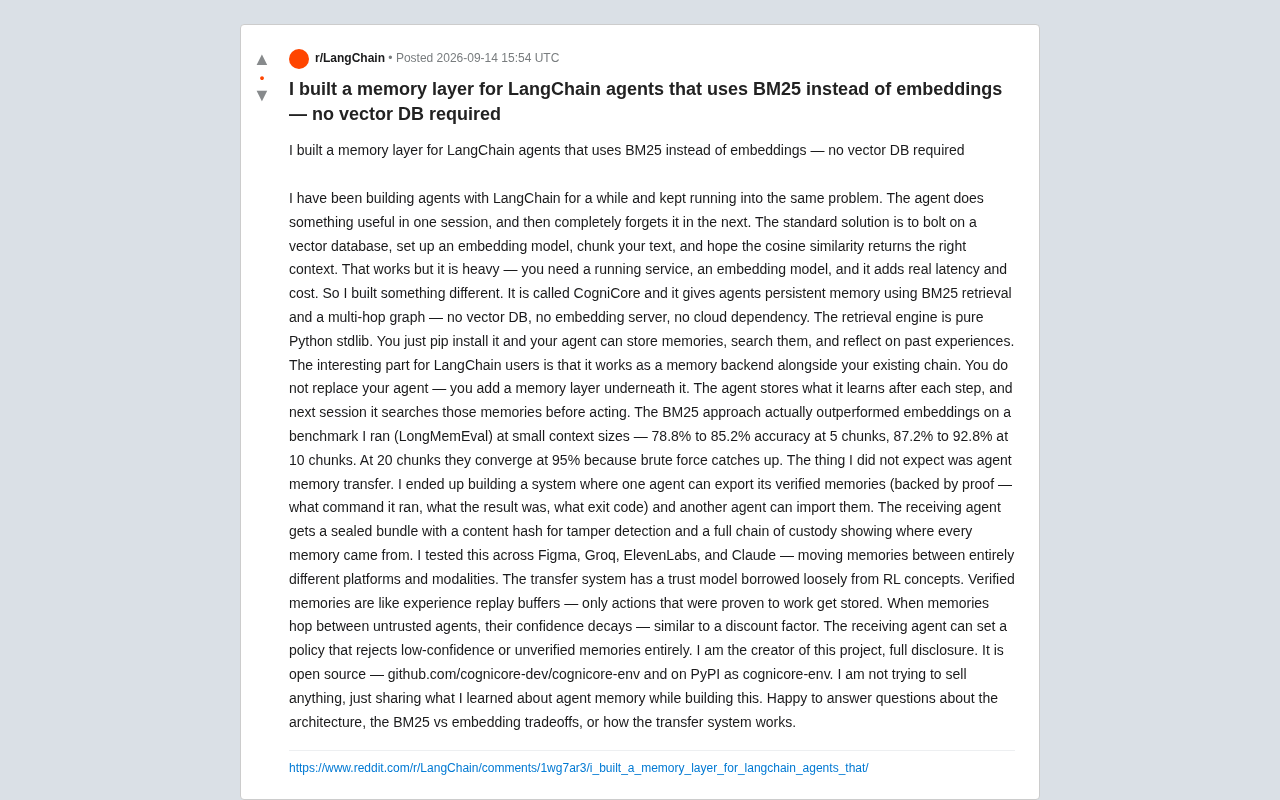
Ditch the Vector Database: Building a Memory Layer for LangChain Agents with BM25
CogniCore replaces vector databases with BM25 retrieval for LangChain agent memory, outperforming embeddings in small-context benchmarks with zero external dependencies.
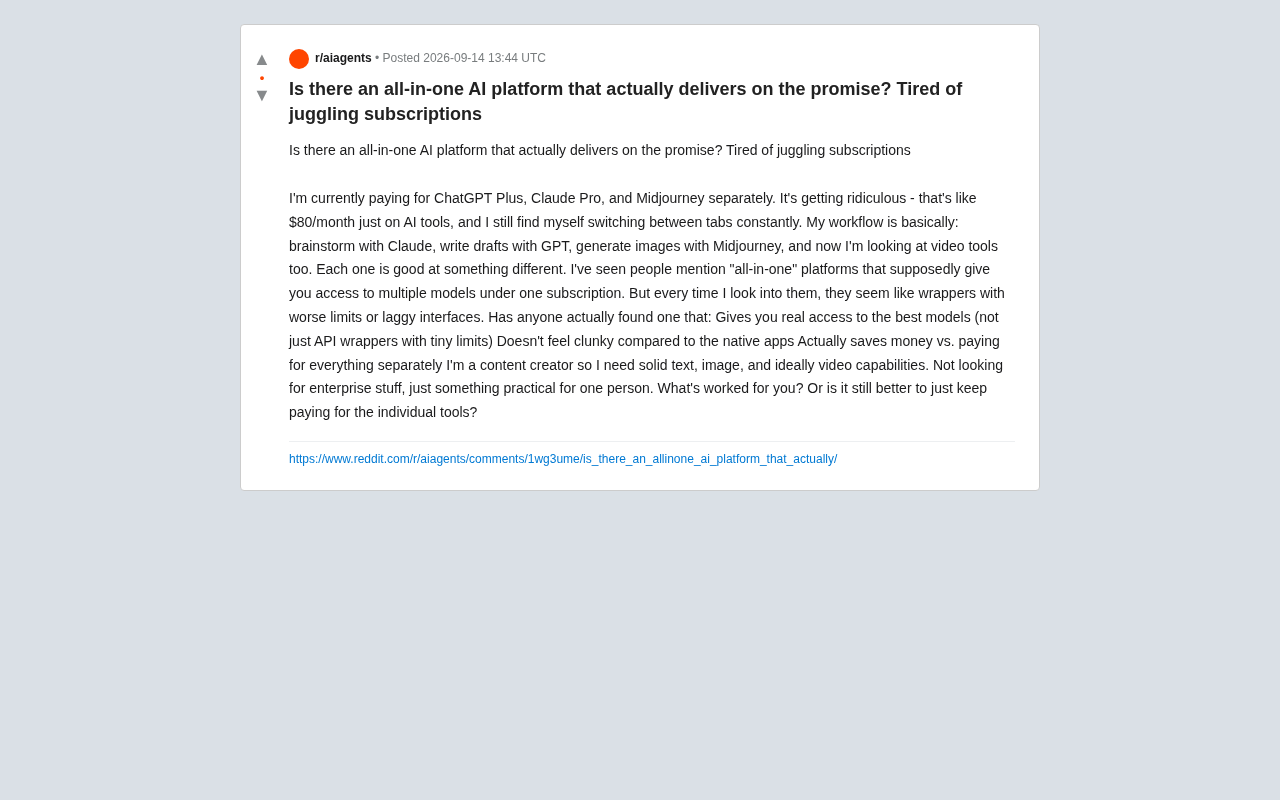
Are All-in-One AI Platforms Actually Worth It? A Practical Guide to Escaping Subscription Overload
Tired of paying for ChatGPT, Claude, and Midjourney separately? We break down whether all-in-one AI platforms are actually worth it — and what a smarter subscription stack looks like.
Volkswagen Mission Efficiency: The World's Lowest-Drag EV Breaks Multiple Efficiency Records
Volkswagen's Mission Efficiency prototype claims the world's lowest drag coefficient, built on MEB+ platform with ID. Polo and ID. Cross components. Here's what it means for EV efficiency.