Codex vs Claude Code: A Deep Cost Comparison — Which AI Coding Assistant Saves You More Money?

A real-bill comparison of Codex vs Claude Code costs — how to pick the more affordable AI coding assistant.
With near-identical performance in daily research work, Codex and Claude Code can differ enormously in cost. This article breaks down the input/output/cache billing structure, the multiplier traps that inflate bills, and whether subscription plans save money — helping you find the most cost-effective AI coding assistant.
Stop Obsessing Over Which Is Stronger — Look at Your Wallet First
The debate over which AI coding assistant is best never seems to end, and the hottest topic is undoubtedly OpenAI's Codex (based on the GPT-5.x series) versus Anthropic's Claude Code. On top of that, domestic Chinese models like Kimi K3 and MiniMax have also delivered impressive performances recently. But beyond all the benchmark reviews, Bilibili creator "科研推土机" (Research Bulldozer) approaches the topic from a very practical angle — cost comparison.
As a heavy user for the past six months, this creator offers a blunt conclusion: in daily research work, the experience gap between Claude Code and Codex is actually negligible. The so-called 1%–2% difference in accuracy is barely noticeable in practice. But the cost difference between the two is enormous.
The motivation for this content came from fans who had followed his tutorials to set up VS Code + Claude/Codex and kept asking the same question: which one should I actually use? His answer was straightforward — instead of comparing performance, do the math.
Breaking Down the Billing Structure of AI Agents
Many users only half-understand how AI coding tools are billed, focusing solely on the "output price" — which is far from enough. Almost all Agent providers charge for three components simultaneously:
- Input: the content you provide to the model
- Output: the content the model returns
- Cache: the context caching portion
Only by adding up these three parts do you get the real cost per million tokens that you actually pay.
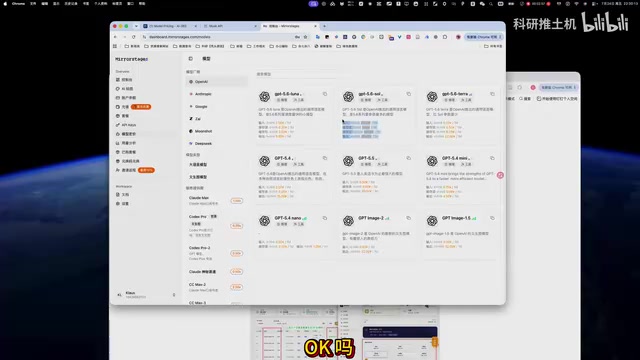
Take the GPT-5.x series as an example: after adding up input, output, and cache, the cost per million tokens is roughly ¥70–81 RMB. On the Claude side, one platform shows a structure of 45 + 12.5, totaling about ¥57–68. Does that make Claude cheaper? But this is just the sticker price — your actual spending depends on your usage intensity and model choice.
The Multiplier Trap: The Same Model Can Cost 6x More
Different channels apply vastly different billing multipliers to the same model — a detail that's easy to overlook. For example, GPT via the standard channel is a 1x multiplier (about $0.16/unit), but if you go through AWS's Claude channel, the multiplier can shoot straight up to 6x.

Similarly, the Plus tier is 1x (0.16), while the Pro tier jumps to 0.37 — "Pro is indeed a bit smarter, but the price is more than double." Pick the wrong channel or tier, and your bill can balloon instantly.

A Real "Painful Bill"
The most convincing evidence is the creator's own real spending record. When Claude Opus 4.x had just been released, he used it exclusively for his research work — and in just three days, he burned through around $200, roughly ¥1,400 RMB.
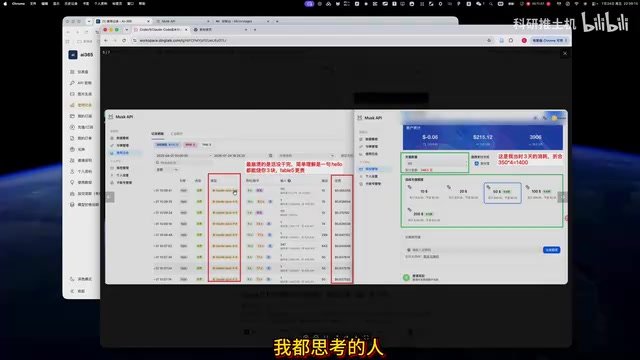
He used a vivid analogy: with the most expensive Claude model, "just saying hello to it costs you the price of a bottle of Coke (¥4.5)." Every single interaction with a high-end model consumes real money — a reality that can't be ignored.
By comparison, the GPT-5.x on the Codex side has a combined cost of about ¥7 per million tokens. Switch to Claude Opus level and it immediately doubles to over ¥12.5. There are also cheaper options — some third-party channel models cost as little as half of the mainstream options (in the ¥2–3 range).
Can Subscription Accounts Save You Money?
For those wondering, "I already have a GPT or Claude membership, so do I really need to spend that much?", the creator ran some real tests:
- Claude Pro ($20/month): In each 5-hour conversation window, you can only ask about 6–7 questions. Once you get into actual coding tasks, you'll hit the limit very quickly.
- Codex Plus: The situation is relatively more generous, and as OpenAI's user base surpassed ten million, it has frequently reset quotas and even removed the 5-hour usage limit.
He described this reset mechanism as follows: it's like buying a month of GPT Plus but getting close to two months' worth of quota — "poverty has given us hope."
Is Migrating from Claude to Codex Difficult?
For research users who have already built their workflow in the Claude Code environment, migration isn't difficult. Many workflow configurations are stored locally, so they can still be used after switching to Codex. There's no need to be locked into a high-cost option just because you're afraid of the hassle.
Choosing an AI Coding Assistant: Cost-Effectiveness Is the Real Necessity for Researchers
The core of this content boils down to one sentence: stop asking only who's stronger — first figure out whether you can afford the bill.
For the vast majority of research and everyday development scenarios, the performance gap between Codex and Claude Code is negligible, but the cost difference can be more than double, or even several times. The tool that lets more people use it stably over the long term without burning their budget on flagship models — that's the truly cost-effective choice.
As the creator puts it: "Poverty limits everything." Without ample project funding to reimburse you, Codex is often the more rational choice. Before you pick your tool, it's worth weighing your wallet first.
Related articles
Osprey: General-Purpose Pretraining Makes Speculative Decoding Draft Models More Efficient
Osprey treats pretraining as a reusable, target-agnostic asset. Through pruning and lightweight adaptation, a single draft model transfers across multiple LLMs, boosting mean acceptance length by 16%-22%.
PGP-Clinical-TimeKAN: A Detailed Guide to the Multivariate Physiological Indicator Joint Prediction Framework
An in-depth analysis of the PGP-Clinical-TimeKAN framework for joint probabilistic prediction of multivariate physiological indicators, covering trajectory-first paradigm, KAN message passing, MIMIC-IV validation, and ablation studies.
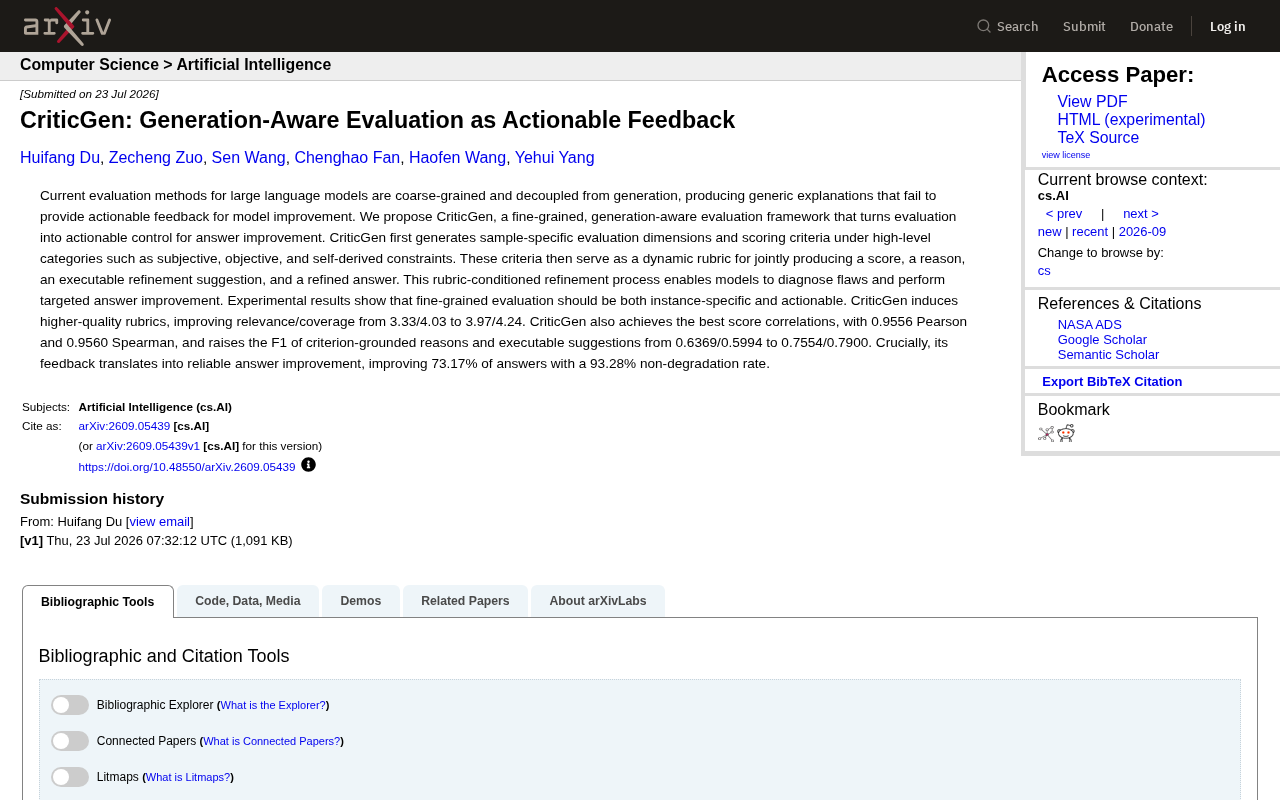
CriticGen: A New Framework That Transforms AI Evaluation into Actionable Improvement Feedback
CriticGen proposes a generation-aware evaluation framework that transforms AI assessment from passive scoring to an active optimization loop, achieving 73.17% answer improvement and 93.28% non-degradation rate.