Cognition Releases SWE-2: What Does a 92.8 Score on Terminal-Bench Really Mean?
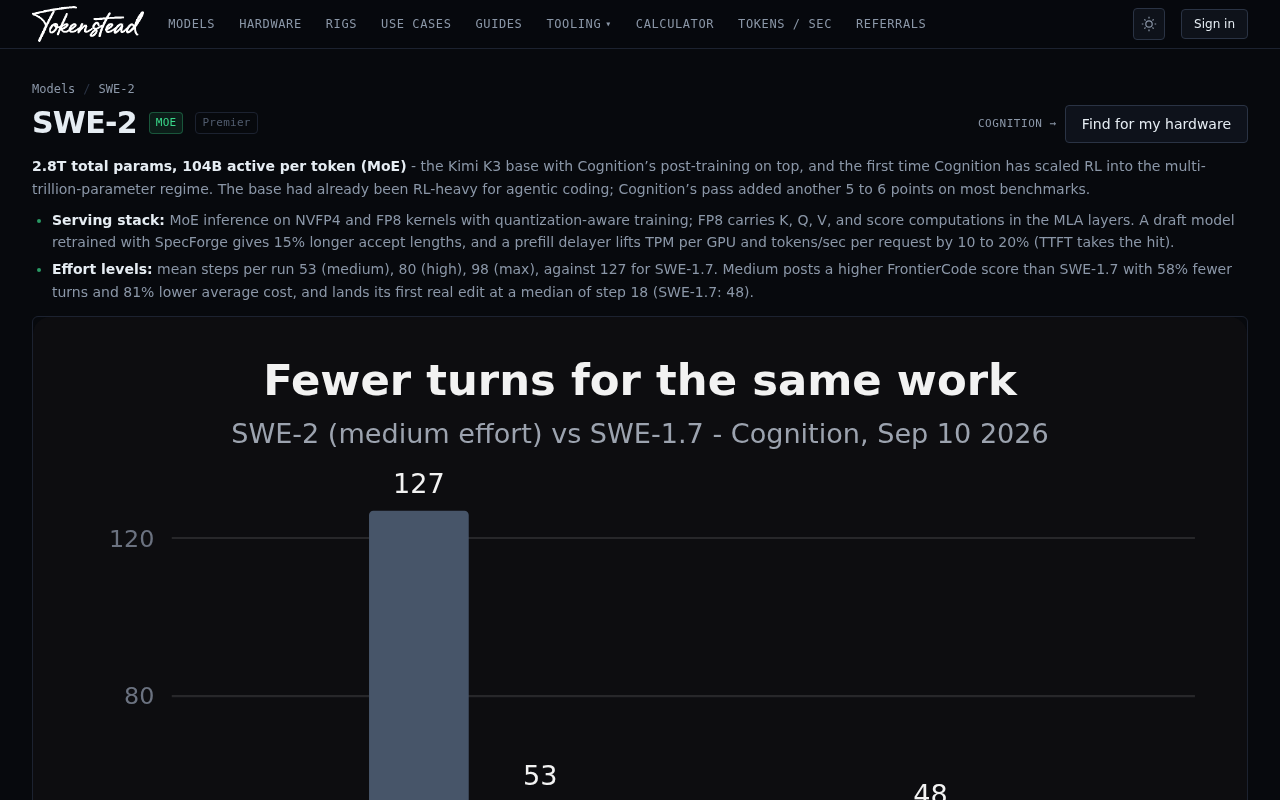
Cognition's SWE-2 agent scores 92.8 on Terminal-Bench 2.1, leading the autonomous AI software engineering field.
Cognition has launched SWE-2, its next-generation AI software engineering agent, achieving a leading score of 92.8 on Terminal-Bench 2.1 — a benchmark focused on real-world command-line engineering tasks. Unlike function-level benchmarks such as HumanEval, Terminal-Bench requires agents to independently handle end-to-end tasks including installing dependencies, debugging errors, and multi-step planning. The high score indicates SWE-2 has robust task planning, error recovery, and environment interaction capabilities, marking a significant step in AI coding's evolution from assisted code writing to autonomous task execution. The article also cautions that benchmark scores don't fully reflect real-world complexity, and independent large-scale validation is still needed.
Overview
Another major milestone has arrived in AI-powered software development. Cognition (the company behind the AI software engineer Devin) has released SWE-2, its next-generation software engineering agent, achieving a score of 92.8 on the Terminal-Bench 2.1 benchmark. This result currently leads the field in automated software engineering evaluations and has quickly captured widespread attention across the tech community.
Terminal-Bench is a benchmark focused on real-world engineering tasks in command-line environments — far more challenging and practical than traditional code completion tests. SWE-2's high score on version 2.1 signals that AI agents are approaching — and in some cases surpassing — human engineers when it comes to executing complex, multi-step engineering tasks.
Why Terminal-Bench 2.1 Matters
From Code Completion to End-to-End Engineering Tasks
For years, the dominant benchmarks for measuring AI coding ability were tools like HumanEval and MBPP, which center on function-level code generation. But these tests have a significant gap from real-world development — in practice, engineers rarely write isolated functions. They need to understand codebases, run commands, debug errors, and iteratively refine their work.
Terminal-Bench was designed to bridge exactly that gap. It places AI agents in a real terminal environment and requires them to complete tasks through the command line just as a human engineer would: installing dependencies, running scripts, reading output, and adjusting strategy based on feedback. This "end-to-end" evaluation approach better reflects how useful an AI coding agent would actually be in a production environment.
What 92.8 Really Means
A score of 92.8 is not simply an accuracy percentage. In terminal-based evaluations, tasks typically require multiple rounds of interaction to complete, and a single misstep can cause the entire task chain to fail. Scoring this high means SWE-2 doesn't just generate correct code — it demonstrates consistent task planning, error recovery, and environment interaction capabilities.
For developers focused on real-world AI deployment, this kind of metric is far more meaningful than isolated code generation accuracy, because it directly reflects whether an agent can actually be trusted to complete a full software engineering task end to end.
Cognition and the Positioning of SWE-2
Cognition rose to prominence with the launch of Devin, marketed as the "first AI software engineer." Devin caused a stir across the industry, though it was also followed by debate and discussion about the real boundaries of its capabilities.
SWE-2 can be seen as Cognition's continued evolution along the path of autonomous coding agents. The name itself (SWE stands for Software Engineer) makes the company's core ambition clear: building agents capable of independently handling software engineering tasks, not merely tools that assist with coding. This draws a sharp line of differentiation from the mainstream AI coding assistants on the market, such as code completion products.
The Core Difference Between Autonomous Agents and Coding Assistants
It's worth distinguishing between two distinct approaches that SWE-2 represents:
- Coding Assistants: Provide code suggestions and completions within a developer-led workflow, where humans remain in the decision loop at all times.
- Autonomous Agents: Receive a task goal, then independently plan, execute, and verify — with humans primarily responsible for defining the task and reviewing the final result.
Benchmarks like Terminal-Bench are precisely the right measuring stick for autonomous agents, because what they test is the AI's ability to execute independently without continuous human intervention.
Keeping Benchmark Scores in Perspective
While 92.8 is an impressive number, benchmark results still warrant careful scrutiny.
First, there is always a gap between benchmarks and real-world scenarios. No single benchmark can fully capture the complexity and diversity of real engineering work, and a high score does not automatically translate to equally strong performance in production environments.
Second, the choice of evaluation criteria and task sets affects comparability. Different agents can show significant variation across different versions and task distributions, and a single score cannot comprehensively reflect the boundaries of an agent's capabilities.
Finally, this news is currently circulating primarily in technical communities (such as Hacker News), where discussion is still in its early stages. Large-scale independent third-party replication and long-term real-world validation are still lacking. The more prudent stance is to treat this as a positive progress signal rather than a definitive conclusion.
Implications for the Industry
SWE-2's performance once again reinforces a clear trend: AI coding is rapidly evolving from "helping write code" to "autonomously completing engineering tasks." As agents grow more capable of executing tasks in terminal environments, the software development workflow of the future may undergo structural change — with engineers increasingly shifting toward task definition, architectural design, and results review.
For developers and technical teams, staying informed about developments in benchmarks like Terminal-Bench — and experimenting with incorporating autonomous coding agents into real workflows in controlled settings — will help them get ahead of both the opportunities and challenges this wave of technological change brings.
Related articles
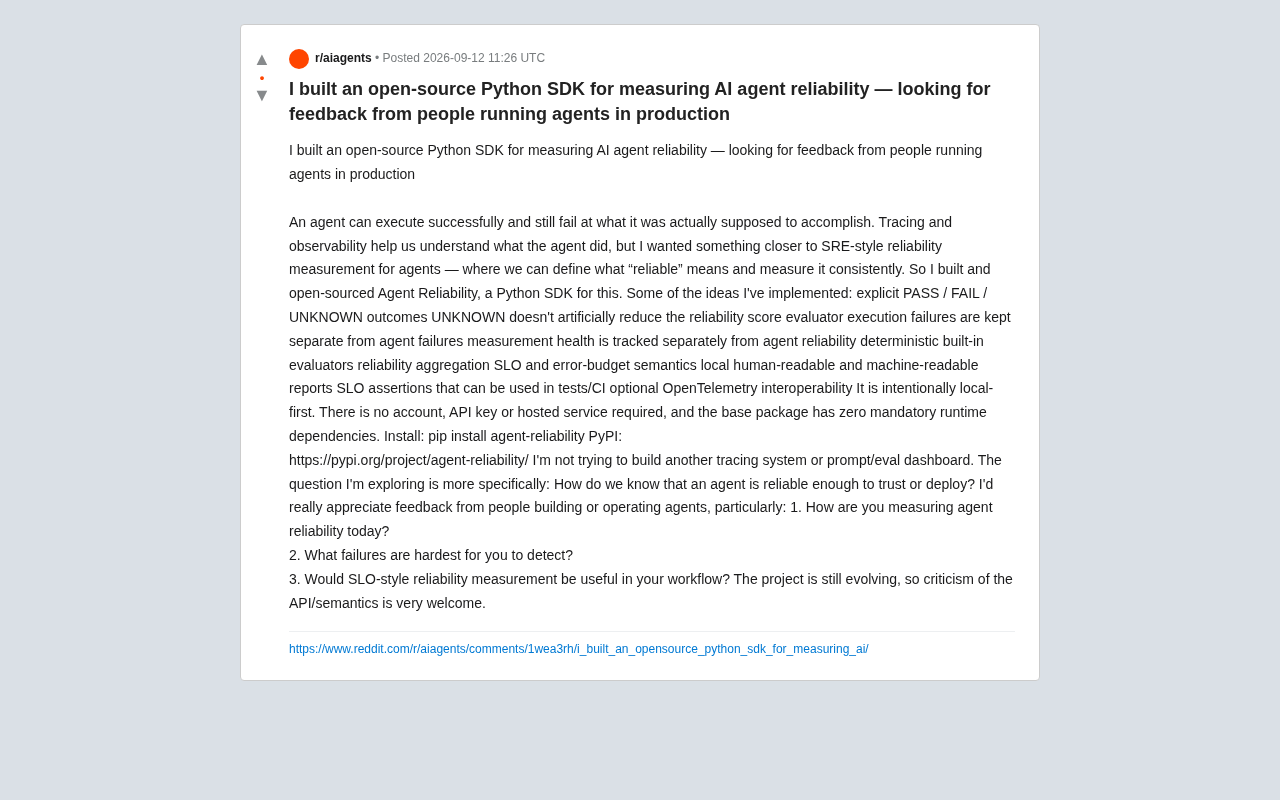
Open-Source Python SDK: Measuring AI Agent Reliability with SRE Principles
Agent Reliability is an open-source Python SDK that applies SRE's SLO and error budget concepts to AI Agent evaluation, with PASS/FAIL/UNKNOWN states, CI assertions, and zero forced dependencies.
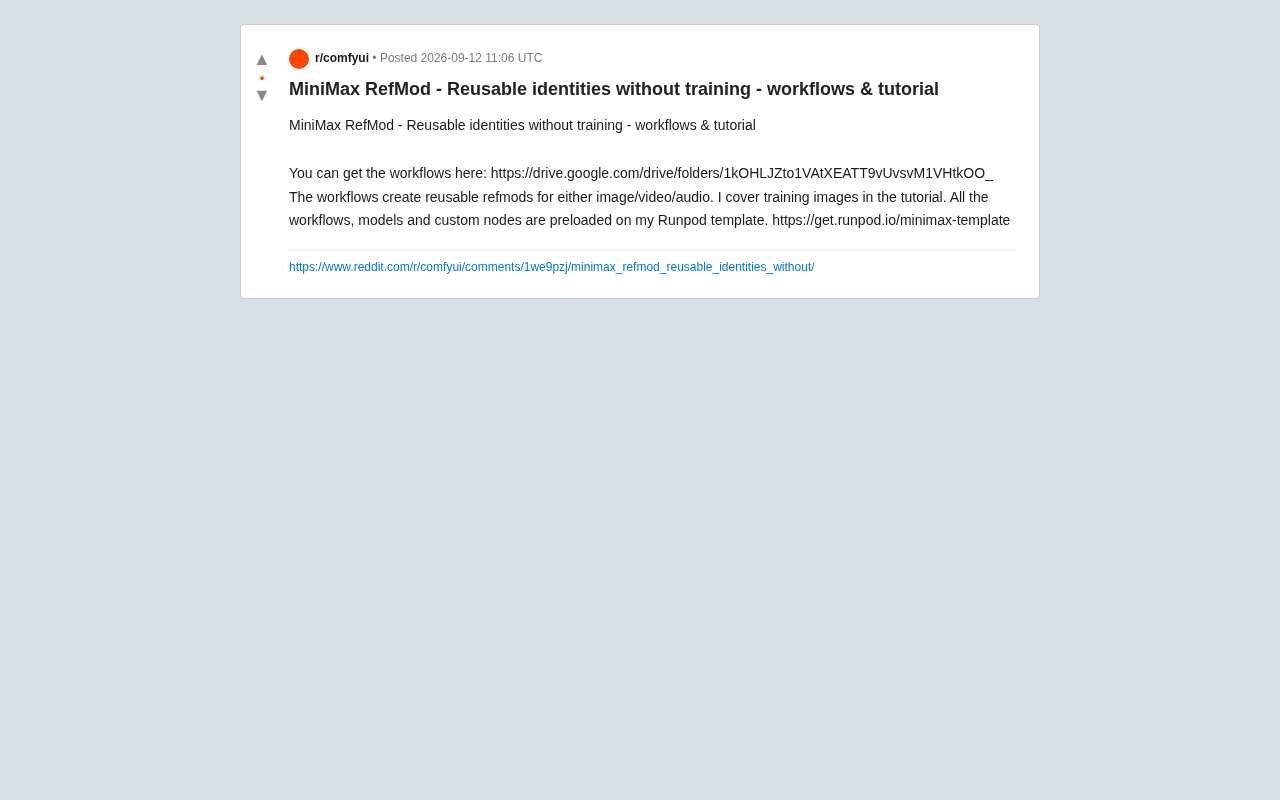
MiniMax RefMod: A Complete Guide to Training-Free Reusable Identity Workflows
MiniMax RefMod offers training-free reusable identity workflows for image, video, and audio generation. Includes Runpod template and tutorial for quick setup.

Invalid Source Material Notice
The source material provided lacks substantive information and is unrelated to AI/tech topics, making it impossible to produce a complete professional article.