ComfyUI Gets a YuE2 LoRA Trainer: Customizing Music Generation Models

ComfyUI adds a YuE2 music model LoRA trainer, letting creators fine-tune personalized music styles with minimal data.
Developers filliptm and MachineDelusions have released a LoRA trainer for the YuE2 music generation model inside ComfyUI (ComfyUI-FL-YuE2), now open-source on GitHub. Built on custom encoder and tokenizer scripts rather than generic tools, it leverages LoRA's low-rank parameter training to dramatically reduce memory and data requirements. Creators can train personalized music models using their own audio data — a technique already proven in image generation. The project is early-stage with tutorials still pending, best suited for technically confident users, and marks another step in ComfyUI's expansion from an image tool to a general-purpose AI creative platform.
ComfyUI Gets a YuE2 LoRA Trainer
The open-source community has a new tool to explore. Developer filliptm, in collaboration with MachineDelusions, has built a YuE2 LoRA trainer for ComfyUI — allowing users to fine-tune the YuE2 music generation model directly within ComfyUI's visual node environment. The project is open-source and available on GitHub at ComfyUI-FL-YuE2.
According to the author's Reddit post, these nodes aren't a simple wrapper — they were built specifically around encoder and tokenizer scripts developed through their own research. In other words, the underlying logic of the trainer is tailored for YuE2 as a specific model, not a port of some generic tool.
Why LoRA Training Matters
LoRA (Low-Rank Adaptation) is one of the most widely adopted model fine-tuning techniques today. Rather than updating all parameters in a large model, it trains only a small set of newly introduced parameters, enabling the model to adapt to specific styles or tasks at a fraction of the memory and compute cost. The technique has long been standard in image generation (think Stable Diffusion), and bringing it to music generation models means creators can now train personalized music models using their own audio data.
YuE2 is an open-source music generation model capable of generating musical pieces from text or other conditioning inputs. Integrating LoRA training into ComfyUI lowers the barrier significantly — instead of setting up complex training scripts from scratch, users can configure the entire pipeline by connecting nodes.
ComfyUI as an Expanding Workflow Platform
ComfyUI originally made its name as a node-based workflow interface for Stable Diffusion. Its ecosystem has since expanded well beyond image generation. The arrival of a music generation LoRA trainer is yet another sign of ComfyUI's evolution from an "image tool" into a "general-purpose AI creative platform." The node-based design allows different modules — encoding, training, inference — to be mixed and matched freely, which is particularly appealing for users who want deep control over their workflows.
From a technical standpoint, LoRA's core idea is to decompose weight update matrices into the product of two low-rank matrices. If the original weight matrix has dimensions d×d, LoRA only trains two smaller matrices of dimensions d×r and r×d (where rank r is much smaller than d), which are then added on top of the original weights during inference. This can compress the number of trainable parameters to as little as 1% of the original. In the context of music generation, this means users can train a model on just a few dozen audio samples — teaching it the arrangement style of a specific artist, the tonal characteristics of particular instruments, or the structural patterns of a given genre — without having to train a full music generation model from scratch, which typically requires tens of thousands of training samples and dozens of GPUs.
ComfyUI's node-based architecture is fundamentally a directed acyclic graph (DAG) computation model: each node represents an independent operation unit, and nodes pass tensors, text, or other data types between each other via connections. Workflows can be saved as JSON files and shared, and community developers can extend the platform with new nodes as plugins without touching the core codebase. This is why ComfyUI's plugin ecosystem has grown so rapidly — from Stable Diffusion text-to-image, to video generation, 3D asset generation, and now music model training — the core framework barely needs to change; you just need a custom node package to plug in. This open architecture is a major reason ComfyUI is a strong candidate for becoming the de facto standard for multi-modal AI workflows.
Current Project Status and Usage Notes
The author mentions that tutorial videos are "coming soon." This means the project is currently better suited for users with some technical background who are willing to explore on their own. Since the trainer relies closely on the author's custom encoder and tokenizer scripts, it's worth reading the GitHub repository's documentation carefully before getting started, paying attention to environment dependencies and data format requirements.
It's worth noting that this is an early-stage community project by individual developers. Missing tutorials and potential compatibility issues are things early adopters should anticipate. For enthusiasts looking to get into music model customization, it's a promising starting point worth keeping an eye on — but if you're after a stable, out-of-the-box experience, you may want to wait for the tutorials and further updates before diving in.
The Value of Open-Source Collaboration
One highlight of this project is its collaborative model: a developer focused on encoder/tokenizer research teamed up with a developer skilled in ComfyUI node development to turn foundational research into a usable creative tool. This "research + engineering" combination is a classic pattern in how the open-source community brings AI tools to life. In the rapidly evolving niche of music AI, community-driven tools often move ahead of commercial products, giving creators early access to capabilities that haven't yet made it into polished products.
Related articles
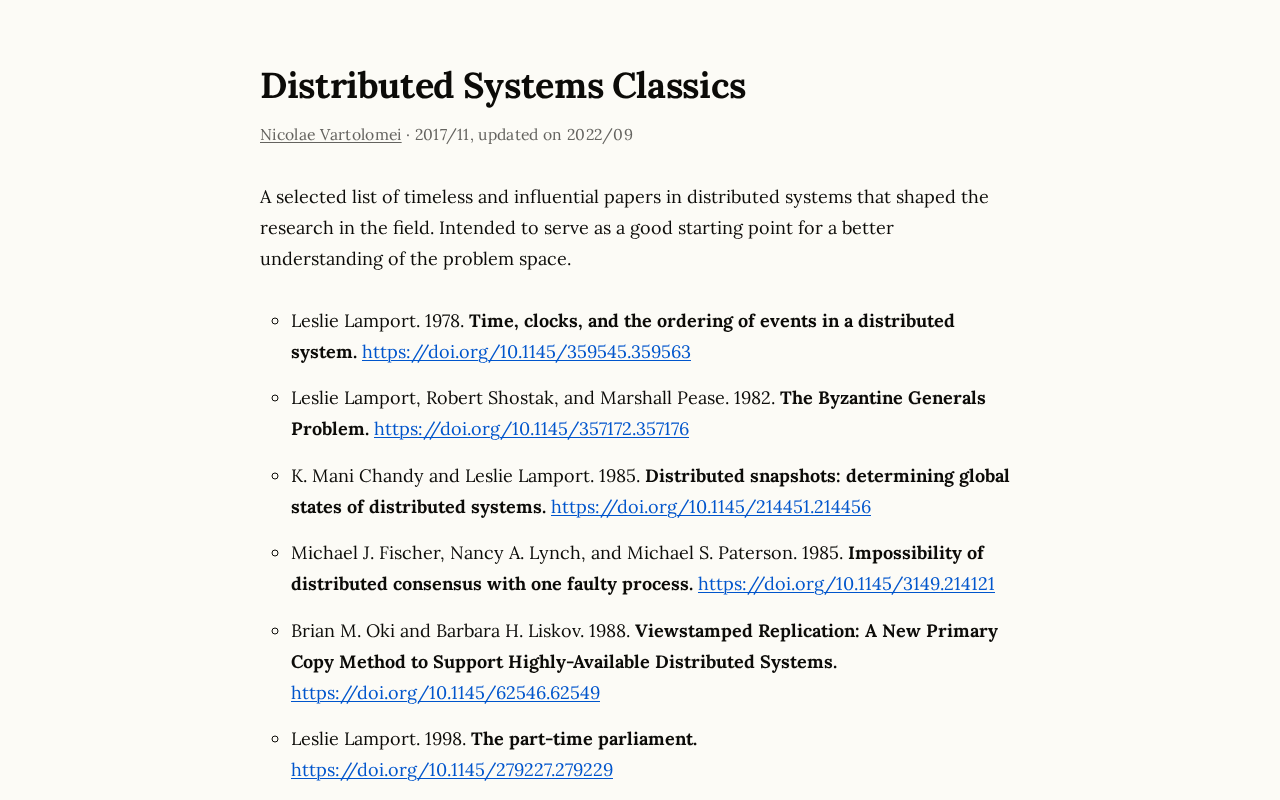
A Reading Guide to Distributed Systems Classic Papers: From Beginner to Expert
A viral Hacker News list of distributed systems classic papers covering consensus algorithms, logical clocks, and the CAP theorem — a structured learning path for engineers.

Valve Is Still Weighing When and How to Launch Steam Deck 2
Valve has completed its 2026 hardware lineup with Steam Controller, Steam Machine, and Steam Frame, but Steam Deck 2 still has no set timeline. Valve says it's still weighing "how and when" to launch.

Regulatory Capture Accusations: The Controversy Over Anthropic's Capital and Policy Loop
A Hacker News post questions whether Anthropic is caught in a regulatory capture financial loop. We unpack the concept and why it's being aimed at top AI firms.