ComfyUI Prompt Studio: A Workflow for Turning Reference Images into Production-Ready Prompts
Prompt Studio is a ComfyUI workflow that turns reference images into model-specific image and video prompts automatically.
Prompt Studio is a ComfyUI workflow tool built by a Reddit user to eliminate repetitive manual work in AI image and video creation. It takes a reference image and a brief creative direction, then automatically outputs customized still-image prompts for models like FLUX, SDXL, and Krea 2, along with structured MiniMax H3 video scripts and automatic aspect ratio detection. It offers RECREATE and DIRECT modes, treats image and video prompts as separate tasks, uses OpenRouter for multimodal analysis, and stores API keys locally. Available on GitHub and CivitAI as ComfyUI-Prompt-Studio.
A ComfyUI Workflow Built to Eliminate Repetitive Work
Anyone doing AI image and video creation knows the drill: load a reference image, analyze the scene, figure out the aspect ratio, write a detailed image prompt, then write a separate video script. Each step seems simple on its own, but doing it from scratch every single time is both time-consuming and error-prone.
A Reddit user shared a tool they built to solve exactly this pain point — Prompt Studio, a prompt "pre-production" workflow that runs directly inside ComfyUI. The core idea: give it a reference image and a simple creative direction, and it automatically produces a complete set of production-ready prompt assets.
What It Actually Does
According to the author, Prompt Studio's output covers the full pipeline from still images to video:
- Production-ready detailed image prompts: Not just a pile of keywords, but structured descriptions with complete detail.
- Model-specific customized prompts: Supports the distinct prompt syntax of Generic, FLUX, Krea 2, SDXL, and other models. Different models respond to prompts differently, and targeted optimization can significantly improve output quality.
- Structured MiniMax H3 video scripts: Generates script content ready for use with video generation models.
- Automatic aspect ratio detection: No more manual measuring and setting.
- Separate creative directions for stills and video: Each can have its own independent instructions, avoiding redundant descriptions.
This design philosophy is worth noting — it treats "image prompting" and "video prompting" as two distinct but related tasks, rather than simply reusing the same block of text. This reflects real creative needs: a still image emphasizes composition and texture, while a video script cares more about motion, camera movement, and timing.
RECREATE vs. DIRECT: Two Modes for Different Intentions
The tool offers two working modes corresponding to different creative goals:
RECREATE Mode
For faithful reconstruction of a reference image. Use this when you want to reproduce the style, composition, and details of a reference as closely as possible — ideal for replication or as a starting point for derivative work.
DIRECT Mode
For when you want to transform the reference image — creating variations or an entirely new interpretation based on it. This mode gives creators greater freedom; the reference serves as inspiration rather than a strict template.
This distinction addresses a common tension in AI creation: do you want "precise reproduction" or "inspiration-driven generation"? Putting that choice explicitly in the user's hands is a pragmatic product decision.
Technical Implementation and Privacy Considerations
On the technical side, Prompt Studio uses OpenRouter for its multimodal analysis and generation tasks. The demo configuration uses Krea 2 as the target image model and MiniMax H3 as the video script model.
One thing worth highlighting is the privacy handling: the author explicitly states that API keys are saved in the user's local workflow and are not included in the publicly downloadable files. For users who care about key security, this is an important assurance — it eliminates the risk of accidentally leaking credentials when sharing workflows.
The tool has been open-sourced on both GitHub and CivitAI under the name ComfyUI-Prompt-Studio.
Why "Prompt Pre-Production" Is a Smart Direction
At the end of the post, the author posed an open question: is anyone else building this kind of "prompt pre-production" directly into ComfyUI?
The framing itself points to a real trend. As AI generative models become increasingly capable, the bottleneck is shifting from "can the model do this?" to "how do I efficiently translate ideas into instructions the model can understand?" Writing high-quality prompts by hand is a skill that takes experience — automating, templating, and model-tuning that process can dramatically lower the barrier to entry.
Transforming prompt engineering from a one-off manual task into reusable workflow nodes is a natural product of the ComfyUI ecosystem maturing. The value of tools like Prompt Studio isn't in any single feature — it's in consolidating scattered, repetitive work into a single pipeline. That's exactly the kind of efficiency boost professional creators need most.
Summary
Prompt Studio is a highly targeted, practical tool that addresses a real pain point in AI image and video creation: repetitive manual labor. Its standout features include multi-model support, separate handling of image and video prompts, and local key storage for privacy. For creators who use ComfyUI regularly, this kind of "pre-production" workflow may well become a standard part of their setup.
Related articles
Claude vs. GPT Control a Robotic Arm to Paint: Which One Does It Better?
A developer tested Claude Fable 5.1 and GPT 6 Astra on the same SO-101 robotic arm for a single-color shape-filling painting task, comparing their embodied AI and motor control capabilities.
2D Gravity Sandbox Experiment: What Happens When You Throw Everything into a Black Hole?
Developer used AI assistant Opus 5 to revive a long-shelved 2D gravity sandbox, First Light. Built on three.js, it lets you draw rocks, gas, stars, and black holes and watch gravity unfold — even land on worlds you create.
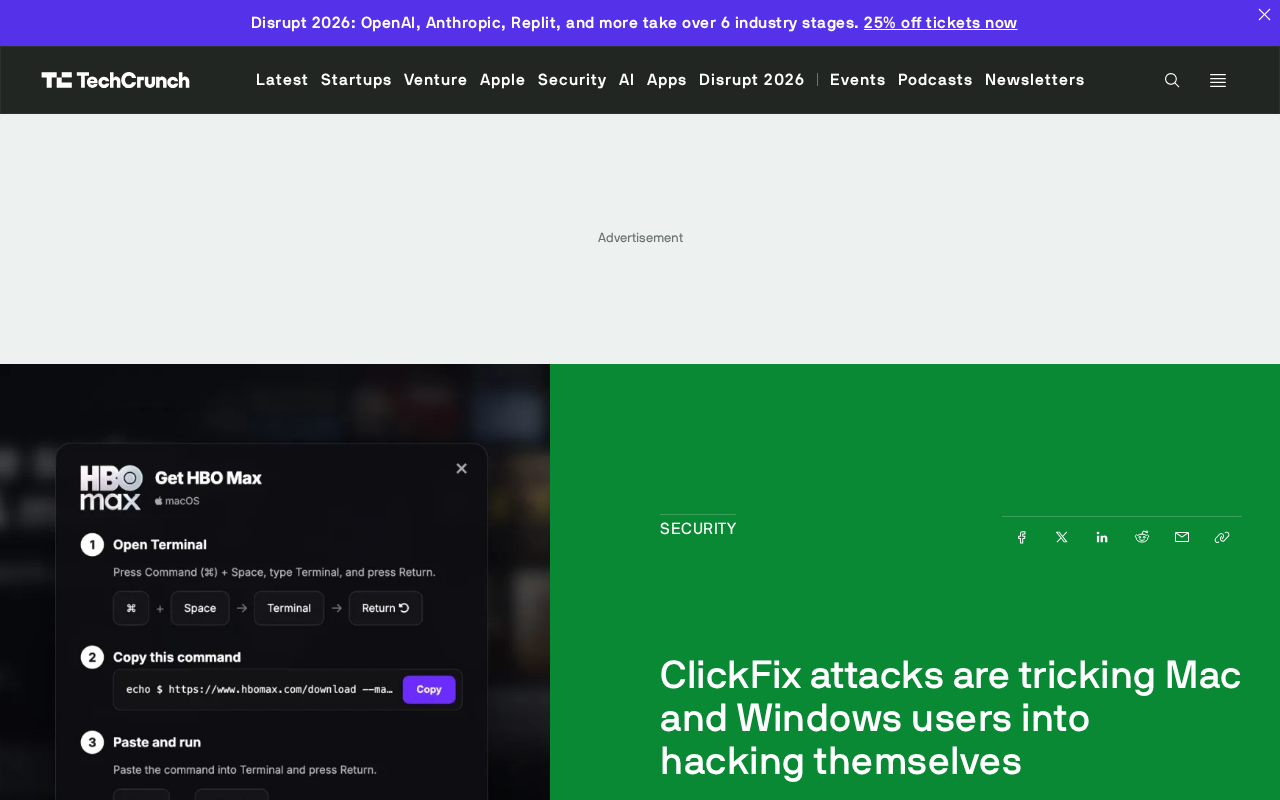
The Rise of ClickFix Attacks: How Mac and Windows Users Are Tricked Into Hacking Themselves
ClickFix is an emerging threat that tricks Mac and Windows users into running malicious commands by impersonating brands like HBO Max. Learn how it works and how to stay safe.