Container Ship Sinks in Strait of Hormuz: Iran Escalates Attacks and Shipping Risks

Container ship sinks in Strait of Hormuz as Iran escalates attacks, threatening global shipping and energy markets.
According to a single RSS source, a container ship sank in the Strait of Hormuz amid accusations that Iran is stepping up attacks. The strait, about 39 km wide at its narrowest, carries roughly one-third of global seaborne oil trade. The incident may raise insurance rates, force rerouting, and cause short-term oil price swings, though key details and official verification are lacking.
Incident Overview
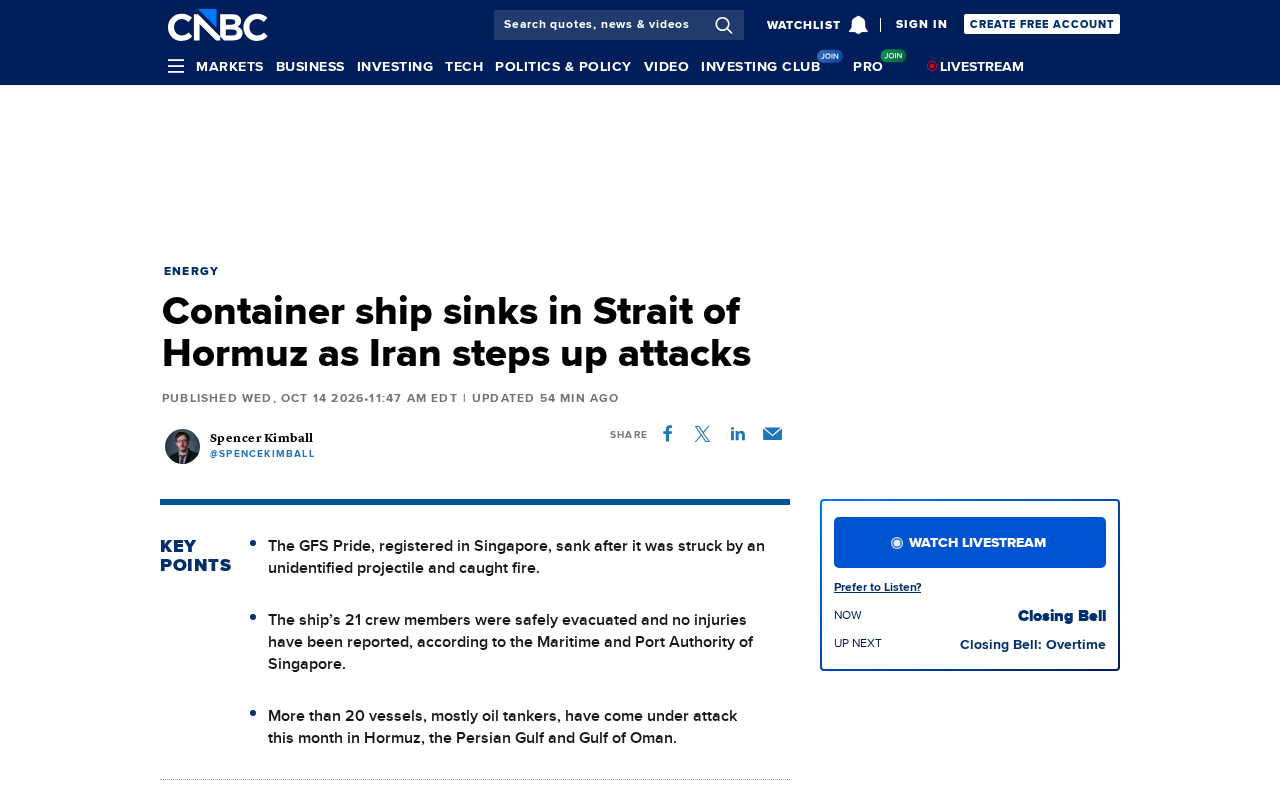
According to an RSS source, a container ship sank in the Strait of Hormuz, around the same time Iran was accused of stepping up attacks. The news first surfaced in a Hacker News discussion, sparking widespread concern about global shipping safety and energy supply chains. As the chokepoint connecting the Persian Gulf to the Gulf of Oman, the Strait of Hormuz carries roughly one-third of the world's seaborne oil trade. Any military conflict or shipping accident there could trigger ripple effects on international oil prices and logistics costs.
The Strategic Importance of the Strait of Hormuz
At its narrowest point, the Strait of Hormuz is only about 39 kilometers wide, serving as the primary channel for oil exports from Saudi Arabia, the UAE, Kuwait, Iraq, and Iran. Large numbers of tankers and container ships pass through daily. Should the waterway be obstructed, global energy markets would feel the pressure immediately. Historically, the region has repeatedly become a flashpoint due to regional conflicts—during the Iran-Iraq War, for instance, the "Tanker War" damaged hundreds of vessels. This container ship sinking, whatever the cause, once again highlights the vulnerability of this waterway.
The "Tanker War" was a key phase in the later years of the Iran-Iraq War (1980–1988). Starting in 1984, Iraq and Iran attacked each other's tankers and merchant ships, as well as those of neutral countries supporting the opposing side, including vessels from Kuwait and Saudi Arabia. In 1987, the United States launched Operation Earnest Will to escort Kuwaiti tankers, and U.S. and Iranian naval forces clashed multiple times in the Persian Gulf. Across the conflict, an estimated 400 to 500 vessels were damaged or destroyed, and international oil prices fluctuated sharply, marking the first time the world recognized the vulnerability of the Strait of Hormuz. This history is often cited to illustrate how quickly insurance, shipping, and energy markets react once the strait becomes a war zone.
Background on Iran's Escalating Attacks
The report mentions that Iran is stepping up attacks, but the original information does not provide specifics on the method, targets, or casualties. Looking at the regional situation, tensions between Iran and Western countries over nuclear issues, sanctions, and regional proxy conflicts have long persisted. Recent attacks could be a warning aimed at specific shipping targets, or part of a broader military posture. Given the lack of official confirmation, it is currently impossible to determine whether this is an isolated incident or the beginning of a systematic escalation.
Regional proxy conflict refers to Iran exerting influence or striking adversaries in multiple countries by supporting groups such as Hezbollah in Lebanon, the Houthis in Yemen, and Shiite militias in Iraq. This model allows Iran to threaten shipping and regional security without declaring war directly. The Houthis, for example, have repeatedly attacked commercial vessels in the Red Sea and Gulf of Aden, and are widely believed to be linked to Iran. So when reports say "Iran is stepping up attacks," it could mean direct Iranian action or an escalation of proxy activity. Understanding this context helps determine whether the incident is a localized friction or part of a wider conflict.
Impact on Global Shipping and Energy Markets
The direct impact of a container ship sinking falls on shipowners, cargo owners, and insurers. Shipping insurance rates may rise as a result, and some shipping companies may choose to reroute around the Cape of Good Hope, increasing transit time and costs. For energy markets, if the incident is interpreted as a precursor to supply disruption, crude oil prices could see short-term volatility. However, with limited information available, market reactions will depend on how events unfold.
Shipping insurance rates are one of the most sensitive indicators of waterway risk. Shipowners typically carry separate insurance for hull, cargo, and third-party liability, with "war risk" premiums fluctuating based on regional tensions. When a sea area is designated high-risk by insurers (such as the "Listed Areas" established by the Joint War Committee), shipowners must pay additional premiums for each voyage, with rates potentially jumping from a few thousandths to a few percent of hull value. Higher premiums are passed directly to freight rates, ultimately borne by cargo owners and consumers. In addition, some shipping companies may choose to reroute around the Cape of Good Hope, adding roughly two weeks of voyage time and substantial fuel costs per trip, further driving up global logistics prices.
Information Limitations and What to Watch
One more note: this material comes solely from a single RSS source and Hacker News comments, lacking cross-verification from mainstream media or official institutions. Key details such as the ship's name, flag, cargo type, cause of sinking, and whether there were casualties are all absent. Therefore, until more reliable information emerges, it is unwise to draw conclusions about the nature of the incident. It is advisable to continue monitoring statements from maritime safety agencies, shipping companies, and relevant governments for a more complete picture.
One-line Summary
A container ship sinks in the Strait of Hormuz as Iran is accused of escalating attacks, posing potential shocks to global shipping and energy markets.
Paragraph Summary
According to a single RSS source and Hacker News discussion, a container ship sank in the Strait of Hormuz while Iran was accused of stepping up attacks. The strait, only about 39 kilometers wide at its narrowest, carries roughly one-third of global seaborne oil trade and is the primary export channel for Saudi Arabia, the UAE, Kuwait, Iraq, and Iran. The incident could raise shipping insurance rates, prompt vessels to reroute around the Cape of Good Hope, increase logistics costs, and cause short-term crude price fluctuations. However, the original information lacks key details such as the ship's name, flag, cargo, cause of sinking, and casualties, and has no official or mainstream media cross-verification, so conclusions about the incident's nature should not be drawn. Continued attention to statements from maritime safety agencies, shipping companies, and relevant governments is recommended.
Related articles

5 Practical Ways Real Estate Agents Can Use AI to Boost Efficiency (2026 Edition)
How can real estate agents use AI to boost efficiency? Based on a YouTube walkthrough, this breaks down five methods — ChatGPT for listing descriptions, Canva for marketing materials, forms for open house leads, Zapier for automated follow-up, and seller meeting prep — and flags risk boundaries like fair housing laws, photo authenticity, and price verification.

Grok Bot vs ChatGPT Agent: Which AI Agent Is More Powerful?
How does Grok Bot differ from ChatGPT Agent? This comparison examines how they work: Grok Bot has a cloud computer and runs persistently inside tools to execute multi-step tasks automatically; ChatGPT Agent operates web pages in a browser and is more mature at general tasks. Includes selection advice.

Walmart Agent Gateway: AI Shops for You Automatically—Why Is Amazon Going the Opposite Way?
Walmart's Agent Gateway lets ChatGPT, Gemini and other AI assistants access its product catalog to search, compare and add to cart, with spending limits and per-purchase approval. Amazon blocks external AI agents—two retail giants, opposite paths. Currently US-only, India may follow.