context-mode: The Open-Source Tool for Optimizing AI Coding Assistant Context Windows

context-mode cuts AI coding assistant context bloat by up to 98% with sandboxing, SQLite memory, and MCP routing.
context-mode is an open-source TypeScript tool designed to tackle three key pain points in AI coding assistants like Claude Code and Gemini CLI: sandbox isolation keeps raw outputs such as webpage snapshots and logs out of the context window, reducing bloat by up to 98%; SQLite-based session memory persistence prevents agents from forgetting past edits and task states when conversations are compacted; and MCP (Model Context Protocol) with hooks enforces unified routing rules across up to 17 platforms. With over 26,000 GitHub stars, it represents a practical exploration of "context engineering" for developers seeking fewer wasted tokens, less agent amnesia, and simpler multi-platform workflow management.
Context Bloat: The Hidden Bottleneck of AI Coding Assistants
Developers who rely on AI coding assistants like Claude Code or Gemini CLI have likely run into a frustrating scenario: midway through a conversation, the assistant suddenly "forgets" previously edited files or ongoing tasks, or the precious context window gets stuffed with raw data like webpage snapshots and log outputs — causing a sharp drop in response quality.
This is exactly the core problem that the open-source project context-mode aims to solve. It's a TypeScript-based tool focused on optimizing the Context Window for AI coding agents. The project is actively growing on GitHub, gaining 178 new stars in a single day and surpassing 26,000 cumulative stars — making it one of the AI tools worth keeping an eye on right now.
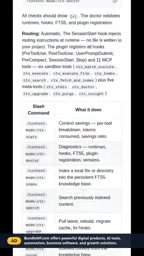
Sandbox Isolation: Keeping Raw Output Out of the Context
One of context-mode's most impressive capabilities is using sandbox tools to isolate "raw outputs" — such as webpage snapshots and command-line logs — from the context window.
In a traditional workflow, when an agent performs a web scrape or runs a script, the large chunks of raw text returned are fed directly into the context. This content is often verbose with a low signal-to-noise ratio, yet it consumes real token budget. context-mode's approach keeps this raw output inside the sandbox environment, passing only the distilled, agent-relevant information into the context.
The official numbers are striking — this isolation mechanism can achieve up to 98% reduction in context bloat. For LLM applications billed by token, this means not only more stable output quality, but also a significant reduction in API costs.
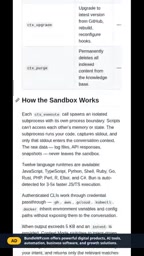
The "context window" refers to the maximum length of text a large language model can read during a single inference pass, typically measured in tokens. GPT-4o supports roughly 128K tokens, Claude 3.5 Sonnet handles 200K tokens, and Gemini 1.5 Pro can reach up to 1 million tokens. Despite ever-growing window sizes, in agent workflows, the accumulation of full web pages, terminal output, and diff logs can fill the window within dozens of conversation turns. The fuller the window, the more likely the model is to "forget" earlier information, while inference latency and API costs grow linearly with token count. The core idea behind sandbox isolation is that not all raw content returned by tools needs to enter the context — only a summary or key fields of the result need to be passed to the model, while the raw data stays in the external environment for on-demand retrieval.
SQLite Persistence: Preventing Agent Amnesia
The context window is inherently limited. As conversations grow longer and trigger compaction, early edit records and task progress often get discarded — and the agent "forgets." This is one of the most frustrating issues with AI assistants in long-session scenarios.
context-mode's solution is to persist session memory to a SQLite database. Even when a conversation is compacted, the agent can still retrieve previous changes and task states from the database, maintaining continuity. Compared to cramming everything into the context window and hoping for the best, this external memory approach better aligns with the long-term direction of agent engineering — using structured storage to compensate for the physical limits of the context window.
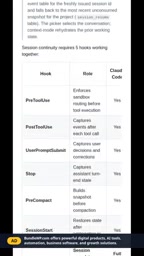
Cross-Platform Routing Across 17 Platforms with MCP Integration
Beyond context optimization and memory persistence, context-mode also provides cross-platform routing capabilities. Using MCP (Model Context Protocol) and hooks, it can enforce routing rules across up to 17 platforms.
MCP, a standard protocol that has rapidly gained adoption in the AI tooling ecosystem, enables interoperability between different tools and models. The routing layer that context-mode builds on top of MCP and hooks means developers can manage agent behavior across multiple platforms within a unified framework, without writing separate adapter logic for each one. This is practical engineering infrastructure for teams that need to switch between multiple coding assistants or build complex agent pipelines.
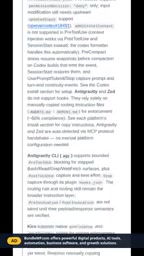
MCP (Model Context Protocol) is an open standard proposed and open-sourced by Anthropic in late 2024, aimed at defining a unified interface for interactions between AI models and external tools and data sources. By analogy, MCP's significance to the AI tooling ecosystem is similar to LSP (Language Server Protocol)'s significance to code editor ecosystems — it decouples "tools" from "models," so any MCP-compliant tool can be called by any MCP-supporting client without building a separate adapter for every pair. Major AI coding assistants including Claude Code, Cursor, and Continue already support MCP, which allows context-mode's MCP-based routing layer to inject unified context management and routing strategies without modifying each platform. The hooks mechanism further allows developers to insert custom logic at lifecycle points of tool calls (e.g., before or after a call), which is the key mechanism for intercepting and transforming raw output.
Why It's Worth Watching
Context engineering is becoming a critical discipline in AI agent development. No matter how capable the underlying model is, if the context gets filled with noise and state is frequently lost during long sessions, real-world performance will suffer. context-mode bundles sandbox isolation, SQLite memory persistence, and multi-platform routing into a single open-source TypeScript project — addressing several of the most practical shortcomings of today's AI coding assistants.
For developers who heavily rely on tools like Claude Code or Gemini CLI, it offers a straightforward optimization path: fewer tokens spent, less amnesia, and more unified multi-platform management. Developers interested in trying it out can visit the context-mode repository on GitHub and integrate it into their AI coding workflow.
Related articles

Random Pruning of the DPO Computation Graph: 1.4x Training Speedup and Lower Peak Memory
DPO training too slow and memory-hungry? This paper proposes a random pruning framework for the DPO computation graph, sampling independently across position, sequence, and branch dimensions; branch pruning achieves a 1.426x step-time speedup and cuts training time by about 30%, with in-depth attribution of memory and time gains.

Why Does JEPA Underperform MLM in Longitudinal EHR Representation Learning?
New study compares JEPA and MLM for longitudinal EHR representation learning on MIMIC-IV: three JEPA variants train stably without collapse but underperform MLM; target size, not heterogeneity, drives prediction error.

Transfer Learning + Visible Light Communication: A New Approach to Energy-Efficient Indoor Positioning
A study proposes a transfer learning-based visible light communication indoor positioning method, achieving 47% accuracy improvement on the BOSCH factory dataset, 67.5% model efficiency under high noise, and introducing the ME composite metric for energy-efficient positioning in energy-constrained industrial IoT scenarios.