Cornelis Raises $205M to Challenge NVIDIA's Dominance in AI Networking
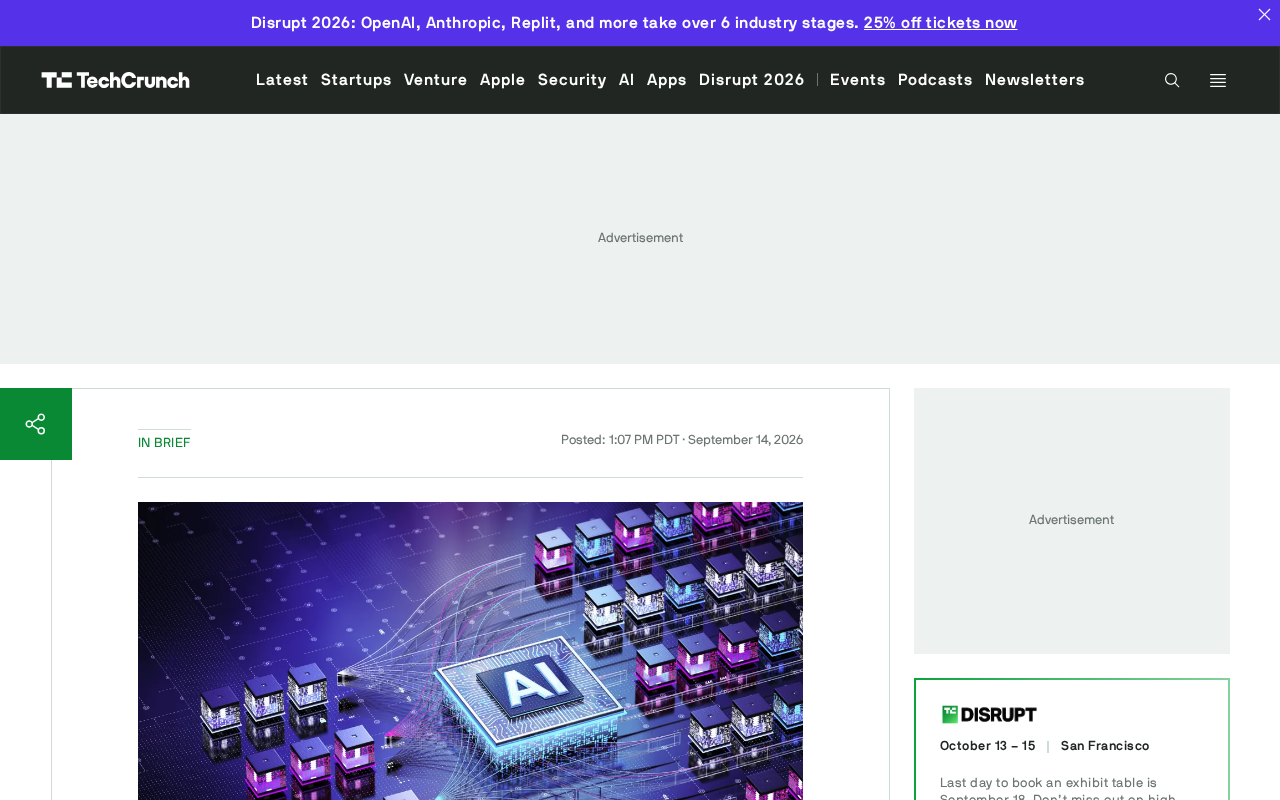
AI networking startup Cornelis raises $205M to challenge NVIDIA's hold on inter-chip communication technology.
AI networking startup Cornelis has raised $205 million to challenge the interconnect moat NVIDIA built with NVLink and InfiniBand. In large-scale AI training, data transfer efficiency between thousands of accelerator cards often becomes a bigger bottleneck than raw compute — poor networking limits how well performance scales regardless of GPU count. Rather than competing on GPU compute directly, Cornelis targets the "nervous system" layer of AI infrastructure with a more open interconnect alternative. The raise reflects a broader trend toward AI infrastructure diversification, with cloud providers, AMD, and multiple startups all working to reduce NVIDIA dependency. Still, the technical barriers and ecosystem switching costs are steep, and Cornelis must prove its technology can convert into large-scale commercial deployment.
Another challenger has entered the AI infrastructure arena. Cornelis, a company focused on inter-chip communication networking for AI workloads, announced on Monday that it has closed a $205 million funding round. The capital will be used to accelerate development of its networking technology, with NVIDIA's dominance in AI interconnects squarely in its sights.
Why Inter-Chip Communication Is So Critical for AI
In large-scale AI training and inference environments, the raw compute power of a single chip is no longer the only bottleneck. When thousands of GPUs or AI accelerators work in tandem, the efficiency with which they exchange data directly determines the real-world performance of the entire cluster.
Training a large language model often requires thousands — sometimes tens of thousands — of accelerator cards working in concert. At that scale, any latency or bandwidth limitation in chip-to-chip data transfer leaves expensive compute sitting idle, waiting on communication. In other words, poor network efficiency means stacking more chips simply won't scale performance linearly.
That's exactly the pain point Cornelis is targeting — by building more efficient network interconnect technology to smooth data flow between AI chips and unlock the true potential of large clusters.
Challenging NVIDIA's Moat
NVIDIA's dominance in the AI hardware market rests not just on its GPUs, but on the entire ecosystem built around them — including high-performance interconnect technologies like NVLink and InfiniBand (acquired through the purchase of Mellanox). This integrated hardware-software approach has created an exceptionally deep moat.
Cornelis's decision to focus specifically on network interconnects is a strategically shrewd move. Rather than attacking NVIDIA head-on in GPU compute, the company is attempting to offer an alternative at the "nervous system" layer of the data center. If it can deliver comparable or superior performance with a more open interconnect solution, it stands a real chance of carving out a position in the AI infrastructure value chain.
A $205 million raise is substantial for a company focused on a niche infrastructure segment, and it reflects continued investor appetite for the premise of breaking NVIDIA's near-monopoly grip.
Industry Context: A Growing Push for Alternatives
Efforts to reduce dependence on NVIDIA have never let up. Cloud providers are developing custom silicon, AMD is advancing its GPU roadmap, and multiple startups are targeting breakthroughs in interconnects, memory, and other subsystems. The AI infrastructure ecosystem is becoming increasingly diversified.
For hyperscale data center operators, supply chain diversification is about more than cost — it's about negotiating leverage and technological autonomy. Any vendor that can provide a reliable alternative in a critical area will attract serious attention. Cornelis's latest funding round is yet another data point in this broader trend.
That said, a dose of realism is warranted. The technical barriers in network interconnects are extremely high, and the cost of ecosystem migration is not trivial. To genuinely threaten NVIDIA's position, Cornelis will need to demonstrate convincing product maturity, customer validation, and ecosystem compatibility. The funding is just the starting line — the real test is whether the technology can translate into large-scale commercial deployment.
Takeaway
Cornelis's $205 million raise is a microcosm of intensifying competition across the AI infrastructure stack. As AI cluster sizes continue to grow, the importance of inter-chip communication becomes ever more pronounced, and network interconnects are emerging as the next strategic battleground after raw compute. Whether this company can truly chip away at NVIDIA's market share remains to be seen, but its arrival injects new uncertainty into a highly concentrated market.
Related articles

RTX 5090 Stock Crisis: Why Third-Party Sellers Are Charging $9,500
NVIDIA's RTX 5090 has vanished from U.S. online retail, with third-party sellers asking up to $9,500. Here's how AI compute demand is driving GPU prices to extremes.

Apple Siri May Support Swapping in Claude and ChatGPT — Code Already Shows Signs
Leaked code shows Apple is developing third-party AI model integration for Siri, potentially allowing users to swap in Claude or ChatGPT under EU DMA pressure.

EPA Moves to Scrap Power Plant Greenhouse Gas Emission Standards Amid Surging AI Energy Demand
The EPA plans to eliminate all power plant greenhouse gas emission standards, just as AI, EVs, and manufacturing drive electricity demand higher — making U.S. power potentially far dirtier.