RTX 5090 Stock Crisis: Why Third-Party Sellers Are Charging $9,500

RTX 5090 disappears from U.S. retail as surging local AI demand drives third-party prices to $9,500.
NVIDIA's flagship consumer GPU, the RTX 5090, has all but vanished from U.S. online retail, with third-party sellers asking up to $9,500 — several times the official MSRP. The primary driver isn't gaming demand but the explosive appetite for local AI inference and LLM deployment. Some early buyers have seen their cards multiply in value several times over, while those who waited are left regretting it. Faced with zero availability, some users are selling their 5090s and switching to AMD, even building multi-card RX 9700 setups as an alternative. With AI demand showing no signs of cooling, this supply-demand imbalance is unlikely to resolve anytime soon.
NVIDIA's fastest consumer GPU, the RTX 5090, is quietly vanishing from U.S. online retail channels. According to discussions across multiple Reddit communities, third-party sellers have pushed asking prices as high as $9,500 — several times the official MSRP. Behind this GPU shortage lies yet another violent collision between exploding AI compute demand and supply-side constraints.
A Flagship GPU That's Gone from the Shelves
The RTX 5090, NVIDIA's current performance ceiling for consumers, was supposed to be the dream card for enthusiasts and content creators. Instead, it has all but vanished from mainstream U.S. online retail platforms. In its place, third-party sellers on the secondary market are quoting eye-watering prices — up to $9,500.
This isn't a modest premium. It's a near-uncontrolled price multiplier. Multiple community members have confirmed just how much their cards have appreciated: one user holding two MSI Suprim Liquid 5090s said the value had more than doubled, calling it "insane"; another who picked up a Founders Edition on launch day said prices are now "around 5x retail."
For everyday consumers, this means that even if you're willing to pay, finding the card through legitimate channels at a reasonable price is nearly impossible. The flagship GPU has gone from "expensive but available" to "priced but unobtainable."
The AI Boom Is the Core Price Driver
Community discussions make it clear: the driving force behind this price surge is a sharp increase in demand for local AI compute. One user mentioned buying in March at $3,000, having correctly anticipated "pure market greed" and a rapid rise in local AI use cases after that month — a call that proved remarkably accurate.
The RTX 5090's powerful VRAM and compute capabilities have made it a go-to piece of hardware for running large language models locally, as well as for AI inference and training. Once consumer GPUs began handling significant AI workloads, demand was no longer limited to gamers — it became directly tied to the AI wave's insatiable appetite for compute. This overlap of demand from two distinct markets is what has pushed prices beyond any rational threshold.
For comparison, earlier this year some users agonized over a $3,150 price tag, thinking it was "too high" and planning to hold off with a 5070 Ti until prices dropped. Prices didn't drop. They kept climbing — and most of those who waited now regret it.
Impressive Performance, Significant Trade-offs
Even setting aside price, the RTX 5090 itself is not without its critics. Users who own one acknowledge that the card is "fast af," but also "energy hungry and loud." For those chasing peak performance, these are acceptable trade-offs. But for users who prioritize power efficiency and a quieter experience, a slightly lower inference speed (t/s, tokens per second) is a perfectly reasonable compromise.
This reflects a broader reality: the "right" high-end hardware choice varies by user. When prices become this distorted, the cost-performance equation is completely broken, forcing buyers to rebalance "performance," "power draw," "noise," and "budget" from scratch.
AMD Emerges as an Alternative for Some Users
Faced with NVIDIA's sky-high prices and near-zero availability, some users are turning to AMD. Community members have openly stated they're "switching to AMD before those prices go up too," citing noticeably improved drivers and support.
Even more telling, some users are planning to sell their 5090s and buy multiple AMD RX 9700s instead. The logic: since the 5090 has already appreciated far beyond its purchase price, it makes sense to cash out at the peak and use the proceeds to build a multi-GPU AMD setup — satisfying AI compute needs without paying an absurd premium for a single card.
Of course, AMD isn't without its detractors either — some users say they're "frustrated with AMD" even as they admit it's "genuinely a good option" given the current situation. This ambivalence speaks volumes: extreme supply-demand imbalances are reshaping brand loyalty in real time.
What This GPU Shortage Tells Us
The disappearance of the RTX 5090 and its astronomical prices isn't just a hardware supply story — it's a microcosm of the compute arms race in the AI era. Once consumer GPUs get swept into the demand tide of AI infrastructure, the traditional "gamer pricing logic" simply doesn't apply anymore.
For anyone considering buying a high-end GPU, a few practical observations are worth keeping in mind: first, "waiting for prices to drop" carries serious risk as long as AI demand continues rising; second, secondary market premiums can far exceed expectations, and early buyers have ended up as the real winners; third, alternatives like AMD, with increasingly mature driver support, are steadily becoming a viable Plan B.
This frenzy over the fastest consumer GPU on the market is unlikely to cool down anytime soon. Until AI compute demand peaks, the RTX 5090 will probably remain "available in name only."
Related articles
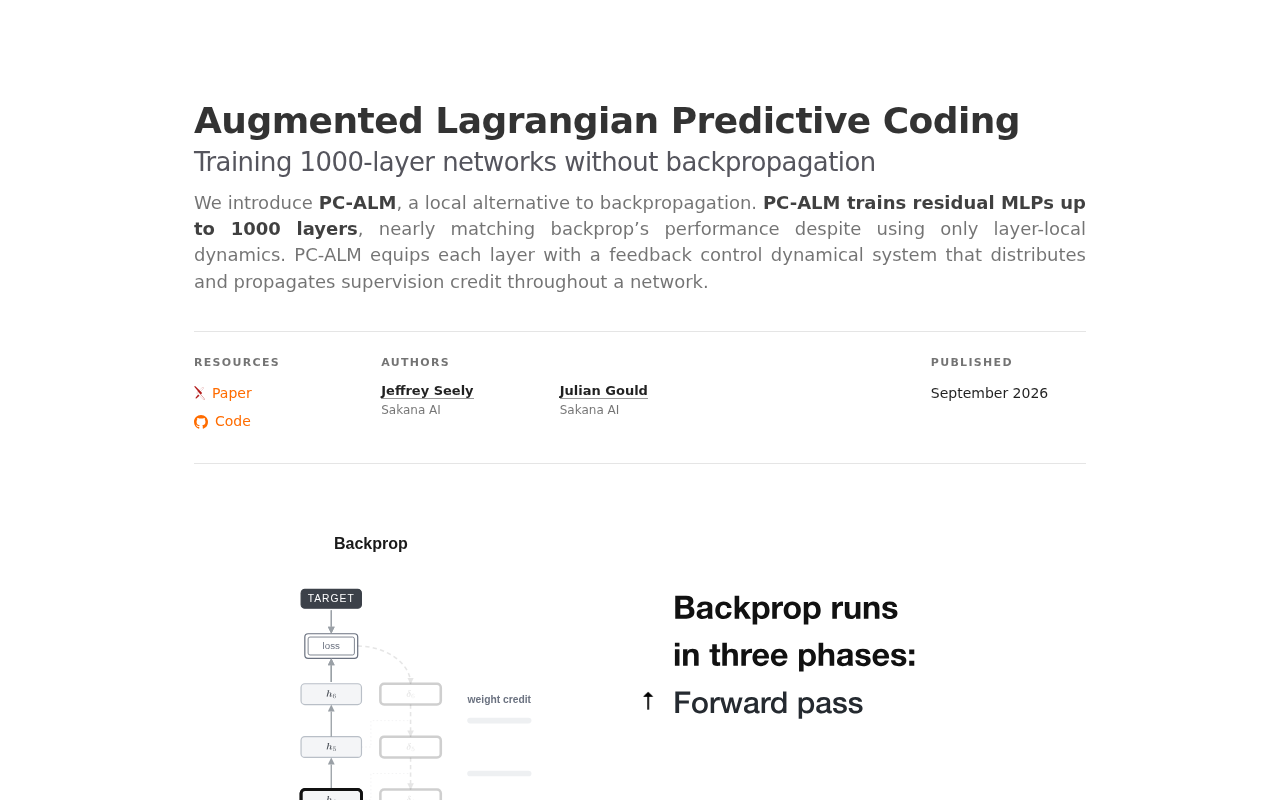
A Challenger to Backpropagation? Augmented Lagrangian Predictive Coding Explained
Augmented Lagrangian Predictive Coding combines biologically plausible predictive coding with constrained optimization as an alternative to backpropagation. Learn how it works and its real-world limits.

The Contagion of Fear: Why AI Doomsday Claims Deserve Scrutiny
Bryan Cantrill critiques AI doomsday claims, arguing that technical experts must not abuse public trust by issuing extinction warnings without rigorous, verifiable evidence.

The Ceiling of Vector RAG: Why It Can't Answer "Why"?
Vector RAG retrieves relevant chunks but can't explain reasoning or connect cross-document facts. Learn why knowledge graphs like Neo4j solve the structural limits of vector retrieval.