Cosmic Agent Plugins: Connecting AI Agents with Developer Tools via the MCP Protocol
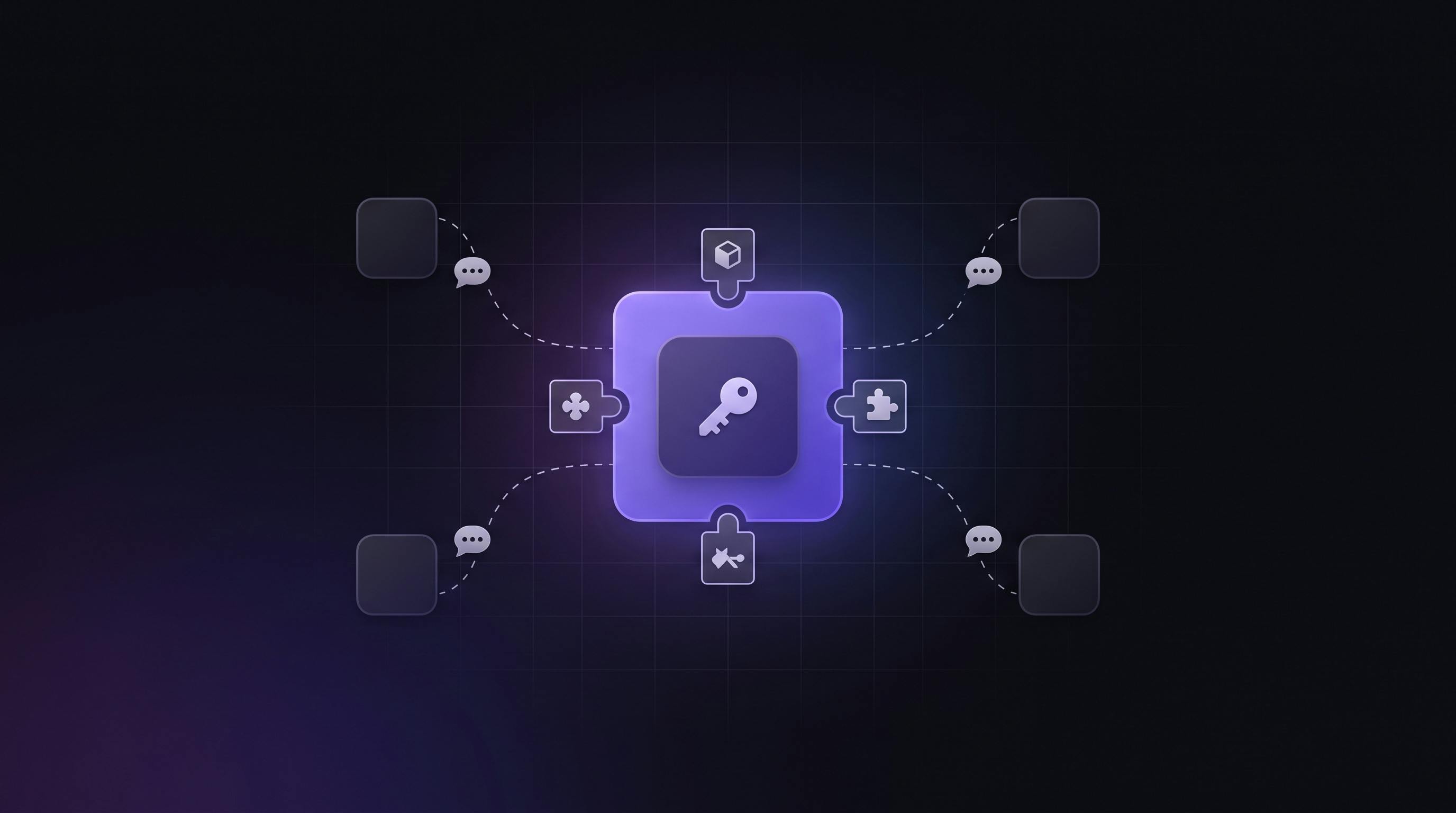
Cosmic Agent Plugins connects AI agents to developer tools like GitHub and Stripe via the MCP protocol.
Cosmic Agent Plugins leverages the MCP (Model Context Protocol) to let AI agents connect with mainstream developer tools such as GitHub, Stripe, Render, PostHog, and Resend. Each plugin bundles an official MCP server, a skill set, and a token slot, enabling one-click integration with real vendor APIs instead of guessed calls. This pluggable, composable approach lowers engineering barriers and opens the door to cross-system automated workflows for developers and product teams.
When AI Agents Move Beyond Content Management
As AI agents rapidly evolve, a core proposition becomes increasingly clear: an agent's value lies not in "how much it knows" but in "what it can do." Cosmic Agent Plugins, which recently appeared on the Product Hunt leaderboard, offers a direct answer to this proposition. It ranked 18th on its launch day with 75 upvotes, categorized under Productivity, Developer Tools, and Artificial Intelligence.
In simple terms, Cosmic's existing agents could already manage your content. The new Plugins mechanism allows these agents to break beyond their own boundaries, connecting to the other tools you use daily and executing real actions. The key technology behind this is MCP (Model Context Protocol), which has been drawing significant attention lately.
MCP is an open standard protocol introduced by Anthropic in late 2024, designed to establish a unified communication specification between large language models and external data sources and tools. Before MCP, integrating AI applications with external services suffered from severe fragmentation — every service provider had different API styles, authentication methods, and data formats, forcing developers to write extensive glue code for each integration. Drawing inspiration from how USB unified hardware connections, MCP defines a standardized client-server architecture: AI applications act as MCP clients, while external tools expose their capabilities through MCP servers. This design allows any MCP-compatible agent to plug-and-play with any MCP-compatible service, dramatically reducing integration costs.
How the MCP Protocol Enables Agents to Call "Real Tools"
From "Hallucinated Calls" to "Official Tool Interfaces"
In its introduction, Cosmic's team emphasized a particularly weighty statement: "Real vendor tools, not guessed API calls." This single line exposes one of the biggest pain points in real-world AI agent deployment.
In the past, getting large language models to operate external services often relied on the model "guessing" how to call an API — it might piece together request parameters from memories in its training data. At best, the call would fail; at worst, it would produce hard-to-detect erroneous operations. This "guessing" behavior is essentially the extension of AI hallucination into the domain of function calling. LLM training data contains vast amounts of API documentation and code examples, and when a model is asked to call an external service, it may generate API requests based on outdated documentation from its training memory — but the API endpoint may have changed, the parameter format may have been upgraded, or even the entire authentication mechanism may be different. More dangerously, the model may output incorrect call parameters with extremely high "confidence," and these errors could trigger serious consequences downstream, such as financial operation mistakes or data deletion. While Function Calling mechanisms have alleviated this problem to some extent, they rely on developers manually writing and maintaining JSON Schema tool descriptions, which still carries high maintenance costs and the risk of drifting out of sync with actual APIs.
By connecting to officially provided MCP servers from service vendors, agents receive verified, structurally defined tool interfaces (skills), significantly reducing uncertainty and error rates. MCP servers maintained by the vendors themselves ensure that tool descriptions always stay in sync with the latest APIs, fundamentally eliminating the risks of "guessed calls."
The Three-Layer Architecture of Each Plugin
According to the product description, when each Plugin is installed on an individual agent, it actually comprises three components:
- The vendor's official MCP server: Provides a standardized tool access channel;
- Skill set (skills): Defines the specific operations the agent can perform;
- Token slot: Securely stores the authentication credentials for that service.
This "server + skills + token" triple-layer design essentially packages a complete third-party service integration into a user-friendly "one-click install" experience.
First Supported Services: Focused on the Developer Ecosystem
Cosmic Agent Plugins launched with support for five mainstream services, covering several critical stages of a modern software team's daily workflow:
- GitHub: Code hosting and collaboration;
- Stripe: Payment and subscription management;
- Render: Application deployment and hosting;
- PostHog: Product analytics and user behavior insights;
- Resend: Transactional email delivery.
The selection of these five launch services reflects the typical tech stack of a modern SaaS development team. GitHub, as the world's largest code hosting platform with over 100 million developer users, is essentially the central hub of the software development process. Stripe is a globally leading online payment infrastructure provider, processing payments for millions of businesses; its API is renowned for being developer-friendly and is the most common payment integration choice in SaaS products. Render is a next-generation cloud application hosting platform known for simplifying deployment workflows, widely regarded as a modern alternative to Heroku. PostHog is an open-source product analytics tool supporting event tracking, funnel analysis, A/B testing, and more, rapidly rising in popularity within developer communities in recent years. Resend, founded by a former Vercel engineer, is a modern email delivery service that has gained widespread recognition for its API-first design philosophy and excellent developer experience.
From this list, it's clear that Cosmic's initial push is squarely aimed at developers and product teams. Strung together, these five services essentially cover the complete product operations loop: "write code → deploy → collect payments → analyze users → communicate with users." An agent that can read and write code repositories, query payment data, trigger deployments, and send emails is no longer just a "content assistant" — it's closer to an automated work node capable of cross-system collaboration.
The Value and Deeper Implications of This Model
Pluggable, Composable Agent Capabilities
The philosophy behind Cosmic Agent Plugins aligns closely with the broader trend the MCP ecosystem is driving: making agent capabilities into pluggable, composable modules. Users no longer need to write custom integration logic for each service. Instead, they can add new skills to their agents on demand, much like installing browser extensions. This pattern dramatically lowers the engineering barrier to deploying agents, enabling even non-professional developers to quickly build automated workflows.
The concept of pluggable and composable software architecture has a long history. From the Unix philosophy of "do one thing well and combine through pipes," to browser extension ecosystems, WordPress plugin systems, and the VS Code extension marketplace, and now to AI agent plugins — the core logic remains consistent: decompose a complex system's capabilities into independent, standardized functional modules that users can assemble on demand. In the AI space, OpenAI's ChatGPT Plugins, launched in 2023, was an early exploration in this direction but was ultimately discontinued due to ecosystem building and user experience challenges. The industry subsequently shifted toward a more foundational path of protocol standardization, and MCP is the defining product of this shift. Unlike the centralized ChatGPT Plugins model, MCP as an open protocol allows any platform to independently build its own plugin ecosystem. Cosmic Agent Plugins is a practical example of this decentralized ecosystem development.
Security and Trust Are Unavoidable Core Issues
The "token slot" design is particularly noteworthy. When agents gain the ability to operate high-privilege services like GitHub and Stripe, credential management and permission boundaries become unavoidable concerns. Managing tokens in isolated slots is a sensible approach to balancing convenience and security.
When AI agents gain permissions to operate real systems, credential security challenges far exceed those of traditional application scenarios. While the traditional OAuth 2.0 authorization framework has already established mature mechanisms for "applications acting on behalf of users," AI agents introduce new complexities: agents may autonomously combine multiple tool calls in ways that are difficult to predict, and traditional static permission models may be insufficient. The industry is exploring multiple countermeasures, including the principle of least privilege (granting only the minimal set of permissions needed to complete a specific task), operation audit logs (recording every tool call an agent makes along with its context), human-in-the-loop approval (requiring human confirmation for high-risk operations), and sandboxed execution environments. The token slot design isolates each service's credentials, preventing a single credential leak from exposing all services — a defense-in-depth approach.
However, as agents gain increasing autonomy in executing operations, how to audit their behavior and how to define the scope of their actions will remain areas that products like this need to continuously refine. More granular permission controls and behavioral auditing remain persistent challenges for the entire industry.
Ecosystem Expansion Depends on the Proliferation of Official MCP Servers
The upper bound of this product's capabilities largely depends on how many service providers are willing to offer and maintain official MCP servers. Currently, MCP as an emerging protocol is gaining support from an increasing number of vendors — many mainstream services including GitHub, Slack, and Google Drive have begun providing official MCP server support, and this trend continues to accelerate. If this ecosystem continues to grow, "plugin marketplace" products like Cosmic will be well-positioned to rapidly expand the breadth and depth of connectable services. It's worth noting that the healthy development of the MCP ecosystem depends not only on the growth in the number of service providers but also on the protocol's version evolution, the refinement of security standards, and the vibrancy of the developer community.
Conclusion
Cosmic Agent Plugins represents a microcosm of AI agents evolving from "single-scenario assistants" to "cross-system automated collaborators." By embracing the MCP standard and connecting to official tools rather than relying on model guesswork, it takes a pragmatic step forward in reliability. For developers and teams looking to truly integrate AI into their existing workflows, this "one-click install, real calls" model deserves attention. How far it can go will ultimately depend on the maturity of the MCP ecosystem and its continued investment in security and controllability.
Related articles

Chain of Thought Isn't Just for AI: How Humans Can Use CoT to Improve Thinking Quality
Chain of Thought isn't just a prompt trick for large models. Starting from a Hacker News discussion, this article analyzes why CoT works for human thinking too, breaks down actionable ways to transfer it, and highlights the key differences between human CoT and machine CoT.
Cloudflare Teams Up with OpenAI: Closi…
Cloudflare Teams Up with OpenAI: Closing the Loop from Vulnerability Discovery to Defense with AI
Cloudflare uses OpenAI Daybreak to investigate security vulnerabilities and generate reviewable remediation plans, while developers use Codex to boost coding efficiency and quality.

Orca Multi-Agent Orchestration in Practice: A Guide to Parallel Collaboration with Claude and Codex
Orca is Stable AI's free open-source agent workbench supporting 34 agents like Claude Code and Codex in parallel. Learn its Git worktree isolation, multi-model orchestration, and mobile management.