Court Halts Pentagon's Move to Blacklist Anthropic from Supply Chain
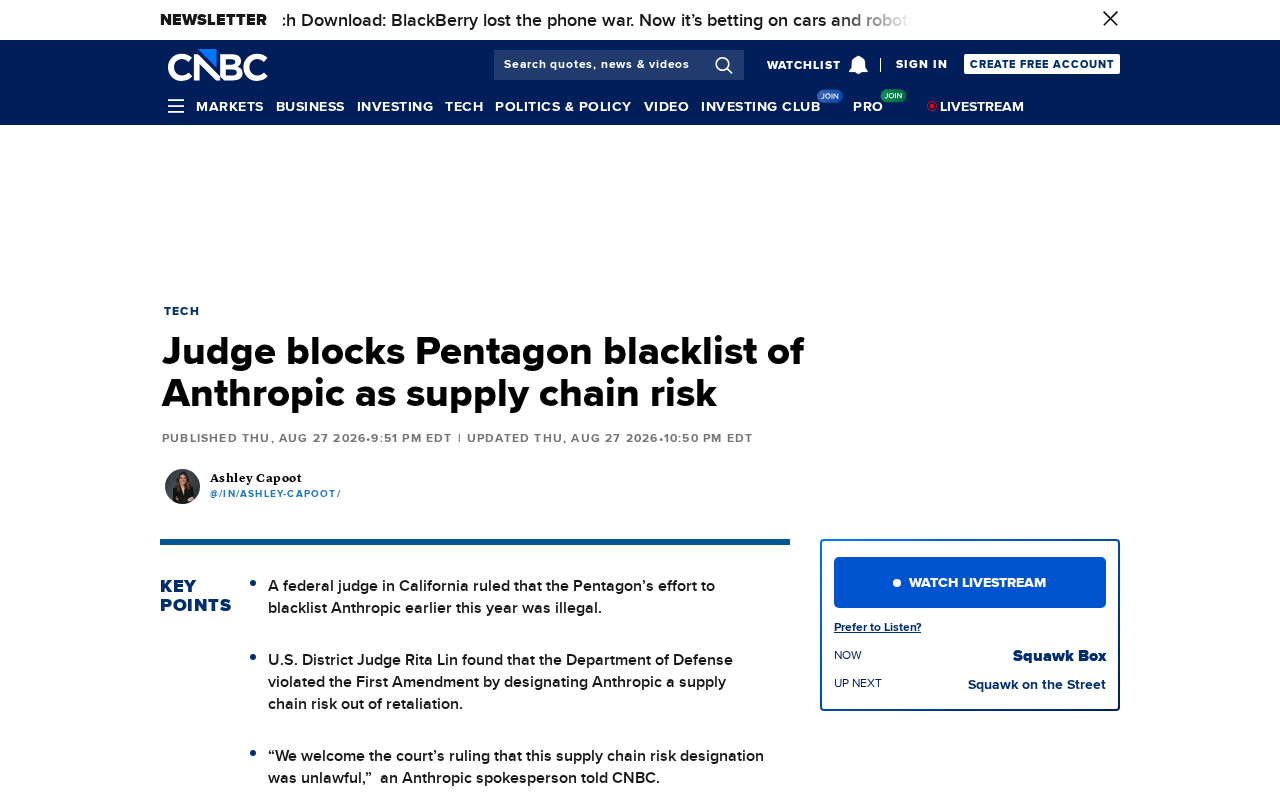
Court halts Pentagon's attempt to blacklist Anthropic, preserving AI firm's government market access
A federal judge issued a preliminary injunction blocking the Pentagon from placing Anthropic on its supply chain risk blacklist, allowing the AI company to continue participating in government procurement. The ruling highlights tensions between AI innovation and national security concerns, questioning the government's procedural legitimacy in supplier exclusions.
Overview
Recently, a legal ruling involving AI giant Anthropic and the U.S. Department of Defense (Pentagon) has sparked widespread attention in both tech and policy circles. According to the HackerNews community, a federal judge issued a ruling temporarily blocking the Pentagon from placing Anthropic on its so-called "supply chain risk" blacklist.
This ruling means that until the lawsuit reaches a final conclusion, Anthropic can continue participating in procurement and collaboration processes related to the Department of Defense as a normal supplier, temporarily preserving its commercial standing in the government market. For an AI company in rapid expansion and actively pursuing government and enterprise markets, this is undoubtedly a critical judicial victory.
About Anthropic
Anthropic is an artificial intelligence safety company founded in 2021 by Dario Amodei, former VP of Research at OpenAI, and his team. The company's core product is the Claude series of large language models, renowned for emphasizing AI safety and interpretability. Anthropic employs a "Constitutional AI" training approach, attempting to constrain AI behavior through explicit values and rules. As of 2024, the company has raised over $7 billion from investors including Google and Spark Capital, reaching a valuation of $18 billion. Its business model primarily includes API services, enterprise solutions, and government agency partnerships, rapidly emerging as one of OpenAI's main competitors.
What is the Pentagon's "Supply Chain Risk" Blacklist?
The so-called "supply chain risk" is a security vetting mechanism that the U.S. government increasingly emphasizes in procurement related to defense, intelligence, and critical infrastructure. With rising geopolitical tensions and growing concerns about technological security, the Pentagon has been granted greater authority to exclude suppliers it deems to pose "security or supply chain risks" from procurement processes.
This mechanism is intended to prevent sensitive technology, data, or supply chain elements from being infiltrated or exploited by external forces. However, issues of transparency and due process in its implementation have been consistently controversial. Companies placed on the blacklist often struggle to obtain adequate opportunities to appeal and may not even fully understand the specific reasons for their inclusion, setting the stage for related judicial challenges.
Legal Framework for Supply Chain Risk Management
U.S. supply chain risk management is primarily based on multiple laws and executive orders. Section 889 of the 2018 National Defense Authorization Act (NDAA) explicitly prohibits federal agencies from procuring equipment and services from specific Chinese tech companies. Executive Order 14034, issued by the Biden administration in 2021, further strengthened supply chain review mechanisms, requiring comprehensive assessments of semiconductors, high-capacity batteries, critical minerals, and pharmaceuticals. In the AI domain, the AI Executive Order signed by Biden in October 2023 requires developers to report training details to the government, particularly for national security applications. These regulations grant agencies like the Department of Defense and Commerce Department broad discretion but have been criticized for lacking clear standards and appeal mechanisms.
Special Significance of Supply Chain Risk Designation for AI Companies
For cutting-edge AI companies like Anthropic, supply chain risk designation is particularly sensitive. AI model training involves massive data, computational resources, and complex third-party partnerships—any element could be viewed as a potential risk by reviewers. Once labeled with "supply chain risk," it means not only losing government contracts but potentially suffering collateral damage to commercial reputation.
Supply Chain Complexity of AI Models
Modern large language models involve dependencies across multiple layers. At the compute layer, training relies on specialized GPU chips from companies like NVIDIA and infrastructure from cloud providers like AWS and Microsoft Azure. At the data layer, training data may come from internet crawling, licensed datasets, synthetic data, and other sources, with data processing potentially involving annotation teams distributed globally. At the software layer, there's dependence on open-source frameworks like PyTorch and TensorFlow, plus various third-party libraries and toolchains. Additionally, model deployment involves infrastructure like CDN services, API gateways, and security protections. This highly distributed, multi-tier supply chain structure makes complete traceability and control of every element extremely difficult, presenting unprecedented challenges for security reviews. Vulnerabilities at any point could be amplified into systemic risks.
Core Significance of the Federal Court Ruling
The judge's decision to "block" this blacklisting action typically means the court believes the government's decision is questionable procedurally or substantively, and should not be immediately enforced at least until full review. Issuing such a temporary injunction generally requires the applicant to prove:
- Irreparable harm will occur if not blocked
- The case itself has substantial likelihood of success
Anthropic's ability to secure such a ruling indicates the court gave preliminary recognition to the reasonableness of its claims. This again highlights that even in government procurement, even national security-related decisions remain subject to judicial review and due process constraints.
Legal Standards for Preliminary Injunctions
In the U.S. federal legal system, obtaining a preliminary injunction requires meeting four core elements: First, the plaintiff must demonstrate substantial likelihood of success on the merits; second, without the injunction, the plaintiff will suffer irreparable harm that cannot be remedied through monetary compensation; third, balancing both parties' interests, the plaintiff's harm outweighs the defendant's harm from the injunction; fourth, the injunction serves the public interest. In government procurement cases, commercial reputation loss and lost market opportunities are typically considered irreparable harm. The court's issuance of a preliminary injunction indicates initial doubts about the procedural legitimacy or substantive reasonableness of government action, which is especially rare in national security cases, highlighting the special nature of this case.
Deep-Level Contest Between AI Industry and Government Regulation
This case reflects the increasingly complex relationship between the AI industry and government regulation. On one hand, government agencies like the Pentagon have unprecedented demand for AI technology, hoping to leverage capabilities from companies like Anthropic and OpenAI to enhance defense and intelligence efficiency; on the other hand, the government harbors deep concerns about the security and supply chain controllability of these emerging technologies.
This contradictory mindset of "wanting cooperation while guarding against risk" creates unique challenges for AI companies expanding into government markets. They must find balance between commercial expansion and compliance reviews while dealing with the uncertainty and subjectivity of policy standards themselves.
Current Status and Trends in Government AI Procurement
The U.S. federal government is becoming a major purchaser of AI technology. According to a 2023 Government Accountability Office (GAO) report, federal agency spending on AI-related projects grew from $1.1 billion in 2020 to over $3 billion in 2023. The Department of Defense, Department of Homeland Security, and intelligence agencies are primary purchasers, with applications spanning cybersecurity, intelligence analysis, logistics optimization, autonomous weapon systems, and more. However, government procurement faces unique challenges: ensuring technological advancement while meeting strict security compliance requirements; leveraging commercial innovation while guarding against supply chain risks. This tension has spawned specialized systems like FedRAMP (Federal Risk and Authorization Management Program) for cloud service certification and new review frameworks for AI. Federal AI procurement is expected to exceed $5 billion by 2025, but the regulatory framework continues to evolve rapidly.
Implications for the Broader AI Supply Chain Ecosystem
The case's outcome may set important precedents for future AI-government collaboration:
- Outcome favorable to companies: If the court ultimately determines that the government cannot arbitrarily blacklist AI suppliers without sufficient basis, it will help establish more transparent, predictable government procurement rules and reduce policy risks companies face.
- Outcome favorable to government: If the government's blacklisting authority receives judicial endorsement, AI companies will have to invest more resources in compliance, auditing, and supply chain transparency when engaging in sensitive business areas.
Conclusion
As of now, this case remains in early stages, and the court's temporary ruling is not a final determination. But it has clearly revealed the tension at the intersection of technology and power in the AI era: when cutting-edge artificial intelligence capabilities become critical assets in national competition, the contest over "who can provide, who deserves trust" will only intensify.
For Anthropic, this is a critical reprieve; for the entire AI industry, it's a bellwether worth long-term attention. The outcome of future rulings may profoundly influence the boundaries of collaboration between AI companies and government.
Key Takeaways
- Temporary victory: Federal judge blocks Pentagon from placing Anthropic on supply chain risk blacklist, company temporarily retains government market access
- Legal significance: Court's issuance of preliminary injunction indicates doubts about procedural legitimacy of government decision, relatively rare in national security cases
- Supply chain review: U.S. government increasingly strict on AI supply chain security reviews, but unclear standards and insufficient appeal mechanisms spark controversy
- Industry impact: Case outcome will set precedent for AI-government collaboration, affecting future procurement rules and compliance requirements
- Nature of the contest: Reflects government's contradictory mindset of needing AI capabilities while fearing technological risks, and tension between technological innovation and national security
Related articles

OpenAI Launches ChatGPT Images 2.5: A New Breakthrough in AI Image Generation
OpenAI launches ChatGPT Images 2.5, supporting sketch, reference image, and text multimodal input, significantly enhancing personalized image generation and refinement.
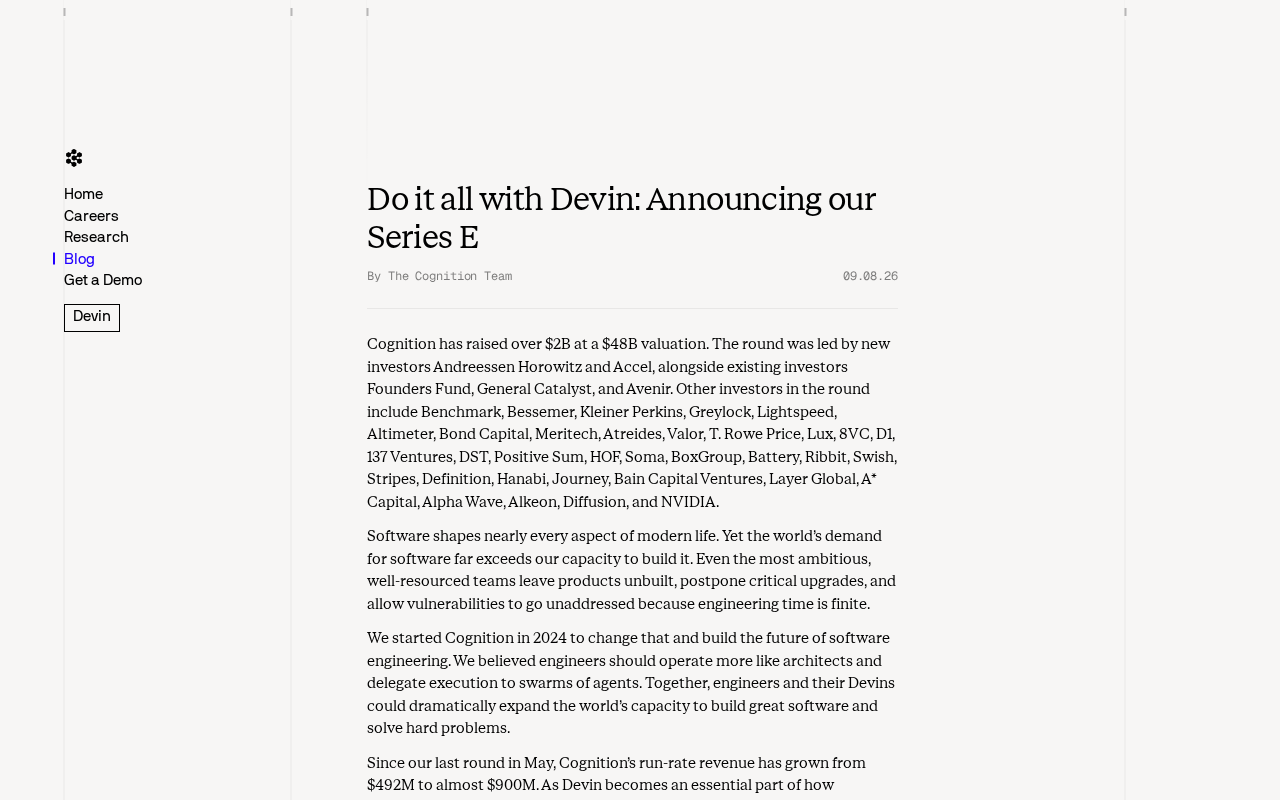
Devin's Parent Company Cognition Raises $2B, Valuation Soars to $48B
Cognition closes $2B funding round at $48B valuation, joining the ranks of highest-valued AI startups. Deep dive into Devin's technical positioning, capital logic, and competitive landscape.
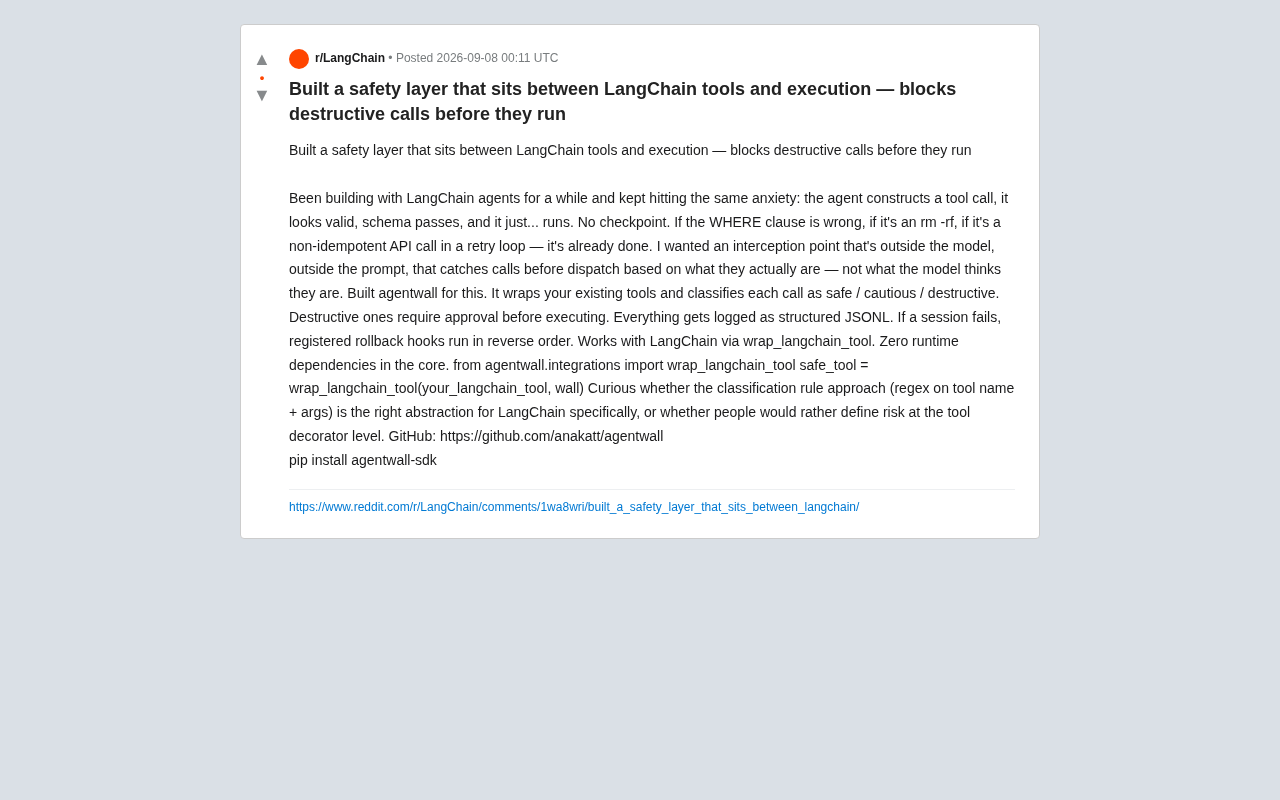
AgentWall: A Security Interception Solution for LangChain Tool Calls
AgentWall provides pre-execution security interception for LangChain Agents through three-tier risk classification, human approval, and rollback hooks, addressing architectural risks of unchecked autonomous tool execution.