Devin's Parent Company Cognition Raises $2B, Valuation Soars to $48B
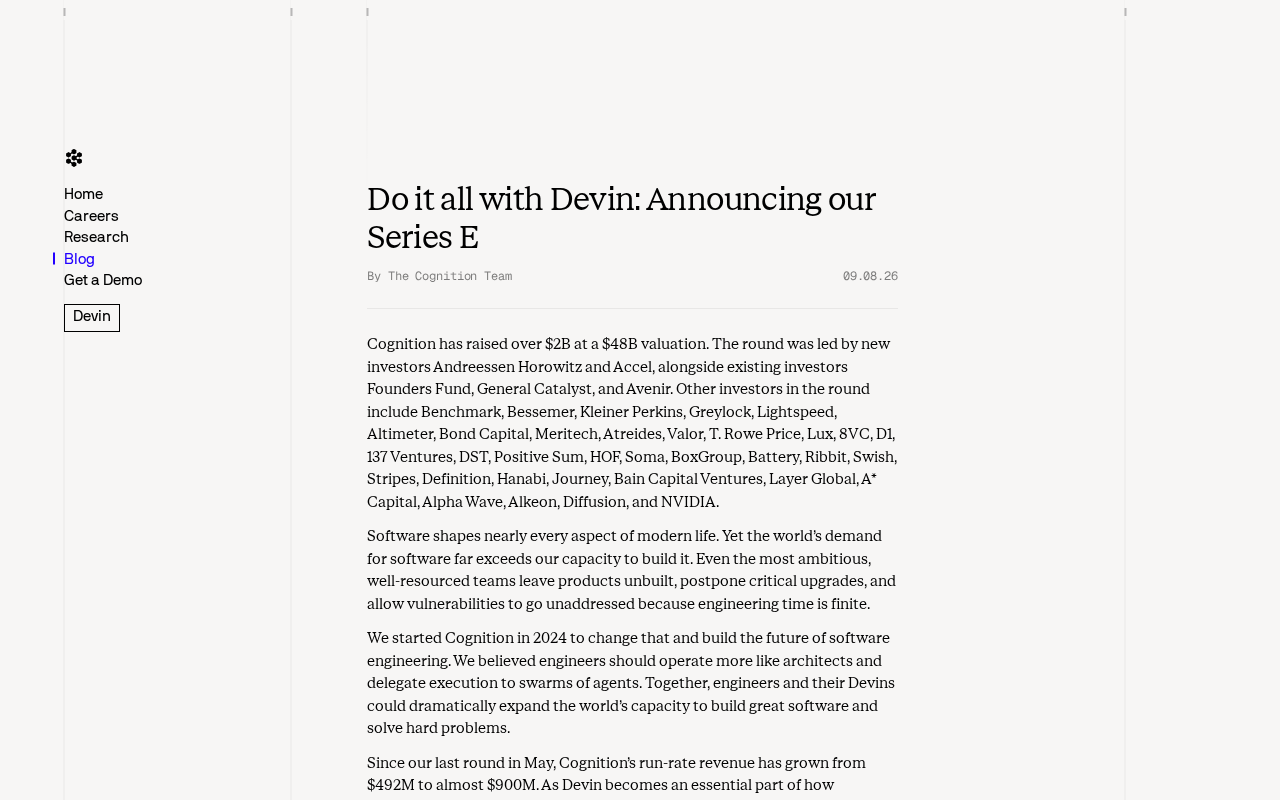
Cognition raises $2B at $48B valuation, positioning Devin as autonomous AI engineer in heated programming tools race
Devin's developer Cognition secured $2 billion in funding at a $48 billion valuation, placing it among top AI unicorns. Devin represents a paradigm shift from code completion to autonomous programming through AI Agent architecture. Capital bets on AI programming's trillion-dollar market potential and code's inherent verifiability. Competition intensifies across GitHub Copilot, Cursor, and open-source alternatives in a multi-dimensional battle for developer mindshare.
AI Coding Unicorn's Valuation Skyrockets
The AI programming space has been hit with another bombshell. According to reports, Cognition, the developer behind Devin, has closed a massive $2 billion funding round, propelling the company's valuation to $48 billion. This figure places Cognition among the world's highest-valued AI startups and once again validates the capital market's intense enthusiasm for the "AI software engineer" track.
Where does the $48B valuation stand among AI unicorns? Currently, the highest-valued AI company is OpenAI at approximately $157 billion; Anthropic ranges between $40-60 billion; Cerebras, focused on AI chips, sits at around $24 billion. In the AI application layer, Cognition's $48 billion already exceeds most vertical domain unicorns. By comparison, GitLab (a code hosting and DevOps platform with over 20 years of history) has a market cap of roughly $8 billion, while Atlassian (provider of Jira and other development tools) stands at about $60 billion. This valuation inversion reflects capital's bet on AI technology's exponential growth potential, but also hints at bubble risks. Historically, during the 2000 dot-com bubble, many companies' valuations surged before rapidly collapsing. Key metrics for judging AI company valuation rationality include: user growth velocity, paid conversion rates, unit economics, and the durability of technical moats.
From product debut to today's sky-high valuation, Cognition's growth trajectory has been nothing short of astonishing. This isn't just one company's victory—it reflects the explosive growth the entire AI programming tools market is experiencing.
What Is Devin: The First Autonomous AI Software Engineer
Cognition shot to fame with Devin. Unlike traditional code completion tools (such as GitHub Copilot), Devin is positioned as an "autonomous AI engineer" capable of completing software development tasks end-to-end.
The Leap from Code Completion to Autonomous Programming
AI programming tools have undergone a clear evolutionary path. The first generation consisted of simple code snippet recommendations, like early Kite; the second generation comprised code completion tools based on large language models, typified by GitHub Copilot, which uses OpenAI's Codex model to predict the next line or block of code in real-time as developers type; the third generation features AI agents with autonomous planning capabilities, able to understand high-level requirements, formulate execution plans, and invoke multiple tools to complete full development tasks. Devin belongs to the third generation, integrating code generation, environment operations, debugging, testing, and other modules to form an end-to-end development loop. This architectural shift's core lies in the paradigm leap from 'coding assistance' to 'autonomous programming,' underpinned by comprehensive advances in large model reasoning capabilities, multimodal understanding, and function calling technologies.
Devin's core selling point is its autonomy. It can not only write code but also:
- Independently plan and execute complex multi-step development tasks
- Debug and fix errors it produces
- Run and test code in real development environments
- Handle end-to-end engineering projects
The technical foundation for this autonomous capability is the AI Agent architecture. AI Agents represent a cutting-edge AI application paradigm, with the core being to give large language models a 'plan-execute-reflect' closed-loop capability. Typical architectures include: a planning module responsible for decomposing complex tasks into subtask sequences; a tool invocation module allowing the model to operate external systems (like running code, reading/writing files, calling APIs); a memory module storing context and execution history; and a reflection module adjusting strategies based on execution results. AI programming agents like Devin build on this foundation by adding development environment integration, including sandboxed code execution environments, version control system interfaces, and test framework invocations. Technical challenges include ensuring multi-step task coherence, handling error recovery after execution failures, and maintaining long-term task memory within limited context windows. The degree to which these problems are solved directly determines an AI Agent's practicality.
This "give me a requirement, I'll deliver a result" product philosophy strikes at the core pain point of efficiency and cost reduction in the software development industry, explaining why capital has bet so aggressively.
Controversy and Skepticism Coexist
Interestingly, Devin has been accompanied by considerable controversy since its launch. Some independent evaluations early on pointed out that Devin's performance in real projects differed from official demonstrations, with some showcase cases suspected of being "cherry-picked." This reminds us that amid the AI programming tools hype, it's crucial to rationally assess their actual deployment capabilities.
The Capital Logic Behind Cognition's $48B Valuation
What does $48 billion mean? This valuation already exceeds many established tech companies with years of operation. For a relatively young AI startup, such a valuation reflects investors' high confidence in several judgments:
AI Programming Is the Most Certain Commercial Landing Scenario
Among various AI application directions, programming is widely considered one of the areas where large language models can deliver the most value and most easily validate commercial loops. Code has clear correctness standards (whether it runs, whether it passes tests), making AI output quality in this domain relatively measurable and commercial value more direct.
Why is the code domain particularly suitable for AI? First, code is a structured formal language following strict grammatical rules, making it easier for models to understand and generate than natural language; second, open-source code repositories provide massive high-quality training data, with over 400 million repositories on GitHub; third, code execution results can be immediately verified, with compilers and testing frameworks providing objective feedback signals—this 'verifiability' enables AI to rapidly iterate and improve through reinforcement learning and other methods; finally, software development itself is highly procedural work containing numerous repetitive tasks (like writing boilerplate code, formatting, writing test cases), precisely what AI excels at.
Vast Global Software Development Market Space
The global software development market is a trillion-dollar industry. Statistics show that in 2024, there were approximately 27 million professional software developers worldwide, projected to reach 45 million by 2030. Average annual salaries for software engineers are about $120,000 in the US, RMB 150,000-300,000 in China, and INR 800,000-1,500,000 in India. Calculating by global average labor costs, engineer salary expenditures alone exceed $2 trillion annually. Additionally, enterprise investments in software development tools, infrastructure, and training reach hundreds of billions of dollars. The AI programming tools' value proposition is to unlock this enormous market's cost space by improving development efficiency (such as saving 20-40% development time) or reducing labor requirements. Even penetrating just 10% of the market and generating 10% efficiency gains represents potential commercial value in the tens of billions of dollars—this is the economic logic foundation investors are willing to provide high valuations for.
With tens of millions of software engineers globally and high labor costs, if AI tools can significantly boost development efficiency—even partially replacing or augmenting human engineers' work—the potential market scale is astronomical. This is the fundamental reason capital is willing to pay a premium.
Accelerated Industry Consolidation, Funding as Ammunition
In recent years, Cognition has been active in capital operations, continuously expanding its capabilities through financing and acquisitions, attempting to consolidate its leading position in the fiercely competitive AI programming track. The massive $2 billion in funding will provide ample ammunition for talent competition, computing power investment, and technical iteration.
AI Programming Track Competitive Landscape: Giants and Upstarts Battle
The track Cognition occupies has become an intensely competitive red ocean.
From GitHub Copilot and Cursor to Anthropic's Claude Code and various open-source solutions, AI programming tools competition has entered close combat. Everyone is fighting for developers' mindshare and usage time.
GitHub Copilot occupies significant advantages as a market pioneer. GitHub Copilot is currently the AI programming assistant with the highest market share, jointly developed by GitHub and OpenAI, trained on billions of lines of public code. It adopts a subscription business model at $10/month for individuals and $19/person/month for enterprises. Copilot's core function is context-aware code completion, intelligently predicting subsequent content based on comments, function names, and existing code, significantly boosting coding speed. But it remains essentially a 'passive assistance' tool requiring developers to lead the development process, make architectural decisions, and handle complex debugging. It cannot independently understand product requirement documents, plan module structures, or execute end-to-end feature development. This positioning makes it more like an 'intelligent code completer' rather than an 'autonomous engineer'—this is precisely the boundary Devin attempts to break through.
Competition has entered a multi-dimensional game stage. AI programming track competition has expanded from single technical capabilities to multiple dimensions. First is model capability, including code generation accuracy, context understanding length, multi-language support—top players commonly use GPT-4, Claude 3.5, or proprietary models; second is product form, from IDE plugins (like Cursor) to independent platforms (like Replit's AI features) to command-line tools, each with different focuses; third is integration depth, whether supporting end-to-end workflows, accessing private code repositories, handling enterprise security compliance; fourth is pricing strategy, from freemium to per-seat subscriptions to usage-based billing; fifth is ecosystem positioning, with GitHub Copilot leveraging Microsoft's ecosystem, Cursor binding to VS Code, and Replit controlling online development environments. Cognition's differentiation lies in 'autonomy' as a higher-order capability, but whether it can translate into user stickiness and willingness to pay still requires market validation. Open-source solutions like Continue and Tabby are also eating into market share, intensifying competitive complexity.
Against this backdrop, Cognition's sky-high valuation is both an advantage and pressure. High valuation means the market has extremely high expectations for its future growth—the company must continuously prove it can convert technological leadership into tangible commercial revenue and user scale, or face valuation correction risks.
Viewing the AI Funding Frenzy with Calm
While celebrating this milestone financing, we also need to maintain clarity.
Current AI field valuations are generally elevated, with some projects' valuation growth far exceeding actual revenue and user growth. Behind the $48 billion valuation is capital's confidence in AI's grand narrative, but whether technology can deliver on promises and whether business models can succeed still requires time to test.
For developers and enterprise users, rather than being swept up by sky-high valuation news, it's better to return to the products themselves—to what extent can these AI programming tools actually improve efficiency in real work scenarios? This is the key determining their long-term value.
Conclusion
Cognition's $2 billion funding round and $48 billion valuation are yet another strong signal of the AI programming track's continued heating up. It demonstrates both the enormous imaginative space in this field and portends even fiercer future competition. Whether Devin can truly deliver on the grand vision of an "AI software engineer" will become a focal point for the entire industry. In the wave of AI reshaping software development, this is undoubtedly an important coordinate worth continuous tracking.
Key Takeaways
- Cognition completed a $2 billion funding round at a $48 billion valuation, joining the ranks of top global AI unicorns
- Devin represents AI programming tools' paradigm shift from 'code completion' to 'autonomous engineer,' based on AI Agent technical architecture
- Three logics for capital's optimism about AI programming: code's verifiability makes it AI's best landing scenario, the global software development market exceeds trillion-dollar scale, and industry consolidation windows require funding support
- Competitive landscape shows multi-dimensional game: GitHub Copilot holds first-mover market advantage, upstarts like Cursor rapidly rise, and open-source solutions also carve out market share
- High valuation is both advantage and pressure—whether technology can deliver and business models succeed still requires time validation; vigilance against valuation bubble risks is needed
Related articles

DeepMind Releases AlphaGenome Atlas: AI-Powered Prediction of Human Genome Variant Effects
Google DeepMind releases AlphaGenome Atlas, using AI to predict the impact of every DNA variant in the human genome, accelerating rare disease diagnosis, precision medicine, and drug target discovery.

OpenAI Launches ChatGPT Images 2.5: A New Breakthrough in AI Image Generation
OpenAI launches ChatGPT Images 2.5, supporting sketch, reference image, and text multimodal input, significantly enhancing personalized image generation and refinement.
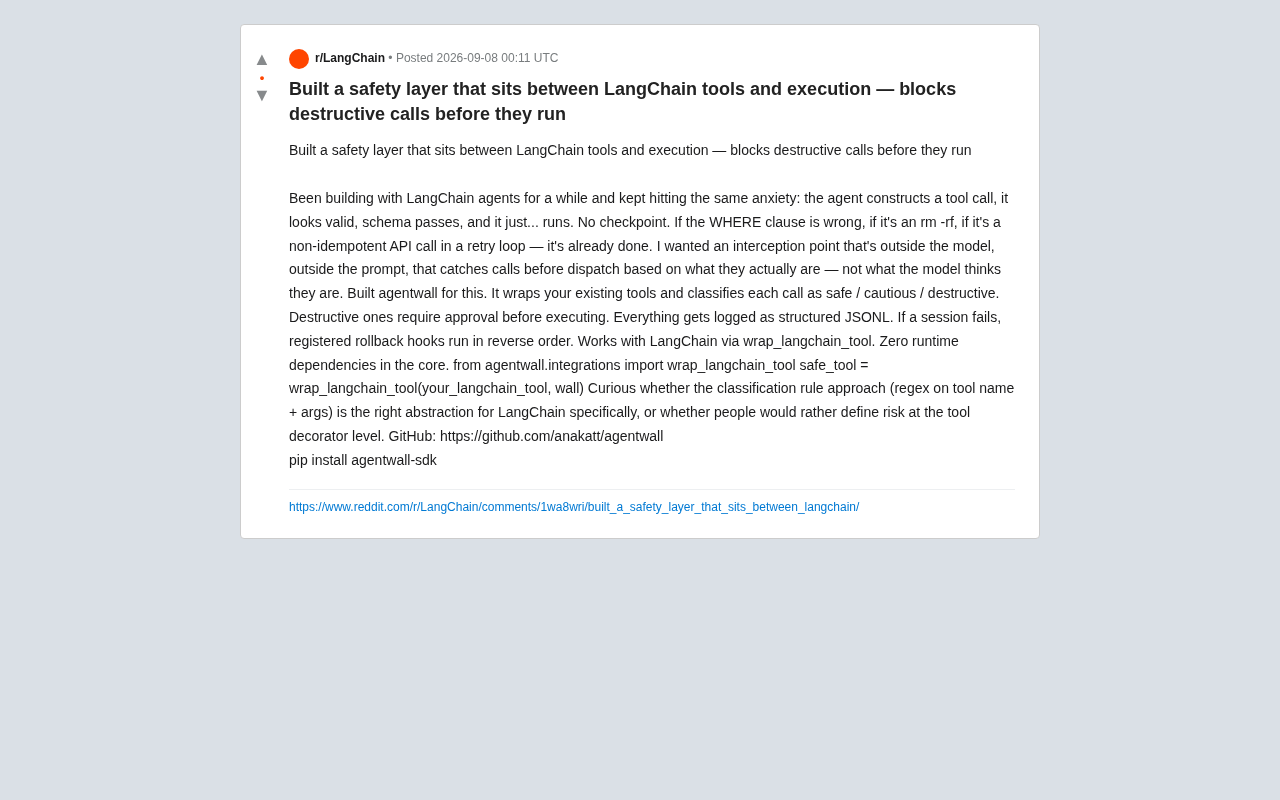
AgentWall: A Security Interception Solution for LangChain Tool Calls
AgentWall provides pre-execution security interception for LangChain Agents through three-tier risk classification, human approval, and rollback hooks, addressing architectural risks of unchecked autonomous tool execution.