Coze 3.0 Workflow in Practice: Build an Automated AI Agent in Three Steps

A three-step guide to building automated AI Agents using Coze 3.0's low-code workflow platform.
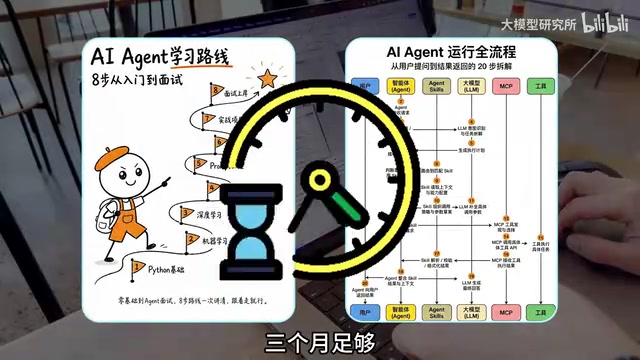
This article outlines a structured three-step learning path for AI Agent development on Coze 3.0: starting with prompt engineering and API fundamentals, progressing to RAG-powered knowledge base construction for domain-specific Q&A, and culminating in building autonomous multi-agent systems capable of self-directed tool selection and task execution.
Introduction: Why AI Agent Development Has Become a Must-Have Skill
As large model technology continues to penetrate the application layer, more developers and enterprises are turning their attention to building and deploying AI Agents. Coze, a low-code AI application development platform launched by ByteDance, has become the go-to tool for many beginners and SMEs entering the AI space, thanks to its visual workflow orchestration and rich plugin ecosystem.
Coze was launched in late 2023, initially targeting overseas markets before quickly expanding domestically. Its core design philosophy is to lower the barrier of AI application development from "knowing how to code" to "knowing how to drag and drop flowcharts." The platform integrates multiple foundation models including Doubao (豆包) at its core, allowing developers to rapidly assemble AI applications through three major modules—plugins, workflows, and knowledge bases—without worrying about model inference details. Version 3.0 further strengthens multi-agent orchestration capabilities and enterprise-grade deployment support, evolving it from a personal tool into a team collaboration platform.
This article breaks down the core capabilities of Coze 3.0 and outlines a learning path from beginner to practitioner for AI Agent development, helping you understand the complete technical progression from prompt engineering fundamentals to multi-agent collaboration.
Step One: Prompt Engineering & API Calls — The Foundation of AI Applications
Many beginners fall into a common trap—jumping straight into high-barrier tasks like model training and fine-tuning. In reality, for the vast majority of application developers, model training is not a required course. The real starting point should be mastering prompt writing and understanding API call principles.
The Essence and Methodology of Prompt Engineering
Prompt Engineering is essentially a form of "interface design"—developers define the behavioral boundaries and output specifications of large models through precise natural language instructions. The industry has developed several mature paradigms: Chain-of-Thought guides models through step-by-step reasoning, suitable for complex problems requiring multi-step logic; Few-shot Learning teaches models the expected output format by providing 2-5 examples within the prompt; System Prompt sets an "OS-level" behavioral framework for the model, defining its role identity and behavioral guidelines. Research from OpenAI shows that prompt optimization alone can improve GPT-4's accuracy by 20%-40% on specific tasks. This means that for most application scenarios, the ROI of prompt optimization far exceeds that of model fine-tuning.
Prompt engineering may seem simple, but it's actually the critical factor determining AI output quality. Once you master core techniques like role setting, task decomposition, and output format constraints, you can start building practical small applications.
Understanding the Underlying Logic of API Calls
Calling a large model API is essentially an HTTP request: developers package prompts and parameters (such as temperature for controlling output randomness, max_tokens for controlling output length) into JSON format and send them to the model service endpoint, which returns the model-generated text. Understanding API calls means understanding the Token billing mechanism (Chinese text uses approximately 1.5-2 characters per Token), context window limitations (which determine how much information a single conversation can process—e.g., GPT-4 Turbo supports 128K Tokens), and the streaming output mechanism—the latter lets users see text generated "word by word" rather than waiting for a complete response. These foundational concepts are the technical prerequisites for building any AI application.

For example, a viral copywriting generator is an excellent starter project. It requires no complex architecture—just carefully designed prompts and a large model API—yet it already has real commercial value, capable of handling freelance copywriting and social media management tasks. This kind of "learn it and use it immediately" positive feedback loop is crucial for maintaining learning motivation.
Step Two: RAG & Knowledge Base Construction — Making AI Actually Useful
After building a solid prompt engineering foundation, the second phase focuses on giving AI professional domain Q&A capabilities. The core technology here is RAG (Retrieval-Augmented Generation).
RAG was first proposed by Meta (Facebook)'s research team in 2020. Its core idea is to combine "parametric memory" (knowledge in model weights) with "non-parametric memory" (external document repositories). This architecture solves three fundamental problems with large models: outdated information due to knowledge cutoff dates, blind spots in specialized domains not covered by training data, and the hallucination phenomenon where models "confidently make things up." Compared to model fine-tuning, RAG's advantage lies in its extremely low cost of knowledge updates—you only need to replace the document library without retraining the model.
RAG combines external knowledge bases with large models, enabling AI to provide accurate answers based on specific documents, effectively mitigating hallucination and knowledge staleness issues.
This phase requires understanding several key technical points:
Data Cleaning and Vectorization
Raw documents (such as PDFs, Word files, and web content) cannot be directly used by retrieval systems. They need to be cleaned, chunked, and then converted into vectors through an Embedding Model before being stored in a vector database. The quality of data cleaning directly determines the accuracy of subsequent Q&A.
On Chunking Strategies: Document chunking may seem straightforward, but it's actually one of the most impactful engineering decisions in a RAG system. Common strategies include: fixed-length chunking (e.g., 512 Tokens per segment), semantic-based chunking (splitting by natural paragraphs or sections), and recursive chunking (splitting by large structures first, then refining layer by layer). Chunks that are too large will include excessive irrelevant information in retrieval results, while chunks that are too small may lose context. In practice, inter-chunk overlap must also be handled, typically set at 10%-20% overlap to ensure cross-chunk information isn't lost.
On Vector Databases: Vector databases (such as Pinecone, Milvus, Weaviate, Chroma) are specifically designed to store and retrieve high-dimensional vector data. Traditional databases rely on exact matching (like SQL WHERE conditions), while vector databases use "similarity search"—finding results closest to the query vector through algorithms like cosine similarity or Euclidean distance. Embedding models (such as OpenAI's text-embedding-ada-002 or the Chinese BGE model) convert text into floating-point arrays of 768 or 1536 dimensions, where semantically similar texts are closer together in vector space. This enables the system to understand that "how to get a refund" and "what's the return process" express the same intent.
Semantic Retrieval and Knowledge Graph Enhancement
When a user asks a question, the system first vectorizes the query, retrieves the most relevant text segments from the vector database, then passes both the question and retrieved segments to the large model for final answer generation. On top of this, knowledge graphs can be introduced to handle more complex entity relationship queries, further improving answer precision.
Knowledge Graphs organize structured knowledge in "entity-relationship-entity" triple format, exemplified by Google Knowledge Graph and enterprise-internal business relationship graphs. Combining knowledge graphs with RAG creates a GraphRAG architecture capable of handling multi-hop reasoning problems that vector retrieval struggles with. For example, "What projects does Zhang San's direct supervisor manage?" requires first finding who Zhang San's supervisor is, then querying that supervisor's project list—this kind of chain relationship query is exactly where graph structures excel. Microsoft Research's open-source GraphRAG project in 2024 has driven practical adoption in this direction.

After completing this step, you can build an enterprise-grade knowledge base Q&A assistant: import all industry reports, company manuals, product documentation, and other materials into the system, allowing employees or customers to get accurate answers simply by asking questions. This type of application is in enormous demand for enterprise internal knowledge management, intelligent customer service, and similar scenarios.
Step Three: Building Autonomous Decision-Making AI Agents — From Passive Response to Active Execution
The third phase is the core of the entire learning path and also the most challenging—independently building an AI Agent with autonomous decision-making capabilities. Unlike the "passive response" mode of the previous two steps, the key characteristic of an Agent is autonomous planning and tool invocation.
AI Autonomously Selects Tools and Executes Tasks
In Agent mode, AI no longer just answers questions—it can autonomously determine which tools to invoke (such as search engines, calculators, database queries, third-party APIs) based on task objectives, and plan out complete execution steps. This ability to "let AI pick its own tools and do its own work" is the essential characteristic that distinguishes Agents from ordinary Q&A chatbots.
The ReAct Framework and Agent Decision Loop: The autonomous decision-making capability of AI Agents is built on the ReAct (Reasoning + Acting) framework, proposed by Google DeepMind in 2022. Its working cycle is: Observation → Thought → Action → Re-observation. At each step, the model "thinks aloud" about the current state and what to do next, then selects the appropriate tool to execute an operation, and decides whether to continue based on the results. This is fundamentally different from traditional RPA (Robotic Process Automation)—RPA executes preset scripts, while Agents can handle unforeseen situations and dynamically adjust strategies.
The Function Calling Mechanism: Tool invocation is the core mechanism that gives Agents their "hands and feet." Taking OpenAI's Function Calling as an example, developers pre-define a set of available tools with their names, parameter descriptions, and usage explanations. During conversation, the model determines when to call a tool and outputs structured invocation instructions (including function names and parameter values). The system receives the instructions, executes the actual operations (such as querying a weather API or writing to a database), then returns results to the model for further reasoning. The Coze platform encapsulates this process as a "plugin" concept—developers only need to configure plugin interfaces without manually handling underlying JSON Schema definitions.
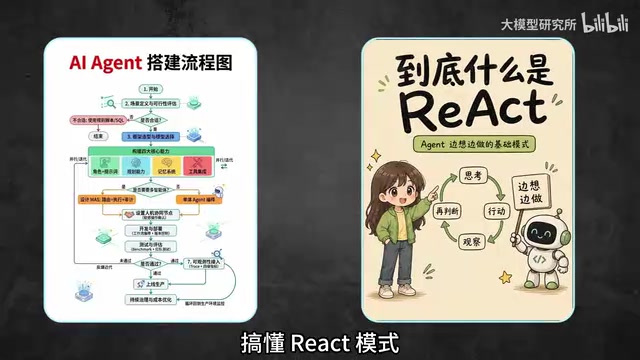
In Coze 3.0, this capability is greatly simplified through visual workflow orchestration. Developers can connect RAG retrieval, conditional logic, tool invocation, and other components into a complete automated pipeline by dragging nodes and configuring plugins, implementing complex business logic without writing extensive code.
Multi-Agent Collaboration: An Advanced Architecture for Complex Tasks
A further advanced direction is Multi-Agent collaboration. Simply put, it involves multiple specialized agents—such as a "planner" responsible for task decomposition, an "executor" handling specific operations, and a "reviewer" ensuring quality control—working together to accomplish a large task. This architecture can handle complex scenarios that a single Agent cannot manage alone, representing the frontier of current AI application development.
Multi-Agent collaboration currently has several mainstream architecture patterns: first, the "centralized dispatch" model, where a master Agent assigns tasks to specialized sub-Agents; second, the "debate" model, where multiple Agents analyze the same problem from different angles before synthesizing conclusions; third, the "pipeline" model, where tasks flow sequentially between Agents, each completing a specific processing step. Notable open-source frameworks include AutoGen (Microsoft), CrewAI, and MetaGPT. The core problems these frameworks solve are inter-Agent communication protocols, task decomposition strategies, and conflict arbitration mechanisms. In enterprise scenarios, a "customer service multi-Agent system" might involve the coordinated work of an intent recognition Agent, a knowledge retrieval Agent, an emotional support Agent, and a ticket creation Agent.
After completing these three steps, whether you're developing a fully functional conversational bot or delivering an AI automation solution for an enterprise, you'll have built a solid capability foundation.
Conclusion: The Path Is Clear — The Key Is Hands-On Practice
From prompt engineering to RAG knowledge bases to multi-Agent collaboration, the logic of this AI Agent learning path is crystal clear: first learn to use it, then make it capable, and finally enable autonomous decision-making. The core value of low-code platforms like Coze is precisely in allowing developers to skip tedious underlying implementations and focus their energy on business logic and application innovation.
One important reminder: actual learning outcomes depend on consistent hands-on practice. Bookmarking tutorials doesn't equal mastering skills—only by actually completing several end-to-end projects can you develop the AI engineering capabilities that enterprises need. For readers looking to enter the AI application development field, this path is worth considering as your starting point.
Related articles

Automate Job Search with AI Agents and Residential Proxies for Precise Matching
Build an AI Agent with MCP and residential proxies to bypass recruitment site anti-scraping and geo-restrictions, scrape thousands of DevOps jobs, then have Claude score and rank each against your resume. Includes proxy comparison experiments, project structure, and cost analysis—filtering only, no auto-submission.

The AI Task Assistant That Knows When to Back Off: A Cure for Activation Struggles
One Small Step is an AI assistant for task initiation struggles, using agentic decisions for guilt-free reminders, timely retreat, and cross-platform task management. The developer shares real test results on 13 tasks and architectural trade-offs.

FastAPI: A High-Performance Python Framework and a Production-Ready API Development Powerhouse
FastAPI is a high-performance web framework based on Python type hints, supporting async and automatic OpenAPI docs. With over 100k GitHub stars, this article analyzes its core strengths, production readiness, and selection advice.