Coze Deep Dive: Multi-Agent Collaboration Platform Architecture and Usage Guide

A comprehensive guide to Coze, ByteDance's multi-agent collaboration platform for building AI workflows without coding.
Coze is ByteDance's multi-agent collaboration platform that lets anyone — coder or not — build functional AI agent workflows. This guide covers its three core capabilities (multi-person multi-AI collaboration, customizable agents, cross-platform project management), breaks down its credits system with practical tips, compares it to Dify, and outlines a step-by-step learning path for new users.
What Is Coze?
Coze is a multi-agent collaboration platform developed by ByteDance. Unlike general-purpose chat tools such as Doubao, Coze is positioned as a platform for "multi-person, multi-AI collaborative work on a single complete project." Its target audience is broad — whether you're a professional developer or a complete non-coder, you can build fully functional agents through a simple, intuitive interface.
From a product logic standpoint, Coze requires no programming skills. It helps you solve problems, writes code on your behalf, breaks tasks into subtasks and executes them in sequence. When errors occur during execution, it automatically triggers a "self-check" process, reviews the issue, and re-executes until the task is complete.
This self-checking and self-correcting loop is precisely what distinguishes an Agent from a traditional tool. An agent is an AI system capable of perceiving its environment, planning autonomously, and taking action. Traditional chat tools operate as single-turn or multi-turn dialogue models, waiting for human input after each response. Agent systems, by contrast, incorporate the ReAct (Reasoning + Acting) framework, enabling the model to iteratively reason, invoke tools, and verify results during execution. Coze's "self-check correction" mechanism is a productized implementation of this framework — when code throws an error or task output doesn't meet expectations, the system automatically feeds that error back to the LLM, triggering a new round of reasoning and correction until the task loop closes successfully.

How Coze Differs from Dify
If you're familiar with the agent development space, it's natural to compare Coze with Dify. Both offer low-code/no-code agent building capabilities, but they target notably different audiences:
- Dify: More oriented toward internal enterprise development, widely adopted in technical and enterprise settings;
- Coze: While it also supports internal enterprise development, its flagship offering is an online team collaboration tool emphasizing multiple people and multiple agents working together on the same project.
This distinction reflects the broader low-code/no-code agent platform competitive landscape. Dify (open-source, supports private deployment) focuses on enterprise-grade RAG and workflows, with strong traction among technical teams. Flowise and n8n lean toward self-hosted developer scenarios. Domestic Chinese platforms — Coze, Tencent Yuanqi, and Alibaba's Bailian — follow a platform-as-a-service model, leveraging their own ecosystems to deliver managed services. Coze's differentiation lies in its deep integration with ByteDance's content ecosystem (including the Doubao model and Jimeng image generation) and its SaaS product form that emphasizes real-time multi-user collaboration — positioning it closer to "AI-powered Feishu" than a standalone developer tool.
In other words, Coze aims to be more than just an "agent builder" — it's a comprehensive platform combining project management, collaborative work, and AI capability orchestration.
Coze's Three Core Capabilities
Capability 1: Multi-Person, Multi-AI Collaborative Work
Coze's most distinctive capability is supporting multiple people and multiple agents collaborating on a single project. When creating a project, you can select different agents to join. With a VIP subscription, you can even invite multiple human team members to collaborate together, enabling one-click team formation and task delegation.
The underlying architecture powering this is the Multi-Agent System (MAS) model. Multi-agent systems originated in distributed AI research, with the core idea of decomposing complex tasks and assigning them to multiple specialized agents working in parallel or in sequence — similar to division of labor in an organization. Since 2023, with the rise of open-source frameworks like AutoGen (Microsoft), CrewAI, and LangGraph, multi-agent collaboration has rapidly evolved from an academic concept into practical engineering. Different agents can be assigned distinct roles (e.g., "requirements analyst," "software engineer," "QA tester"), communicating via message passing to significantly improve the quality of complex task completion. Coze productizes this architecture, enabling non-technical users to visually orchestrate multi-agent workflows.
Note that the free personal tier has certain limitations: by default it supports single-user operation only, with a maximum of two agents per project. Advanced features such as team projects and additional member access require a paid subscription. Each project has its own dedicated chat window, and all project data and history are automatically saved server-side, allowing you to switch between projects and resume development at any time.

Capability 2: Freely Customizable AI Agents
Coze includes built-in agent templates covering a wide range of industries, making it easy even for users entering unfamiliar domains to get started quickly. For example, a developer who wants to create an AI comic series — but knows nothing about video production — can rapidly build a complete workflow using Coze's industry-specific templates.
Equally noteworthy is its local programming tool integration. Coze can connect to programming environments on your local machine, such as Claude Code or CodeX — you operate within the Coze platform, and it can generate and run code directly on your local machine. This relies on MCP (Model Context Protocol) or a similar tool-calling protocol. MCP was officially open-sourced by Anthropic in late 2024, designed to establish a standardized communication interface between AI models and external tools or local file systems — essentially the "USB standard" of the AI world. Through this mechanism, a cloud-based AI platform can securely send code generation instructions to a local environment and execute them within a sandbox — an isolated virtual runtime environment that safely runs untrusted code without affecting the host system. This means users don't need to manually configure complex local development environments; Coze handles code generation, execution, and debugging end-to-end. This feature is currently available free of charge for a limited time and is one of the most compelling features to try right now.
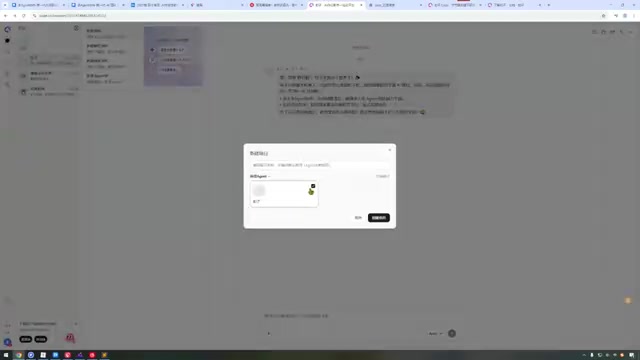
Capability 3: Comprehensive Project Management with Cross-Platform Sync
Coze's project capabilities can be summed up with a few key phrases:
- Remote AI programming: You operate on the platform; it develops in your local environment, and can even deploy directly in a sandbox;
- Multi-person collaborative development: Multiple team members work together on the same project, building as they discuss;
- End-to-end project delivery: The entire workflow from requirements to delivery happens within the platform.
Coze also achieves full sync across web, desktop client, and mobile app. Leveraging ByteDance's ecosystem, you can start a project on your computer and continue it on your phone with real-time data sync — truly enabling seamless work from anywhere.
Credits System: Worth Managing Carefully
In practice, credit consumption is unavoidable. Based on real usage data:
- New accounts receive 3,000 credits upon first registration;
- Daily login grants approximately 1,500 free credits.
This allocation is sufficient for light daily tasks, but falls short for heavy "end-to-end" workloads. A telling example: asking Coze to produce an AI comic series from scratch prompted a system warning that it would consume over 10,000 credits — casually selecting a few steps could easily drain an entire account's balance.
Understanding this requires some insight into the underlying economics of the credits system: Coze's "credits" are essentially an abstraction over LLM API call costs. Multi-agent tasks consume far more credits than single-turn conversations because each subtask triggers an independent LLM call, on top of fees for multimodal models handling image generation, video synthesis, and so on. For an "AI comic series," the system needs to invoke models for text generation, character design, storyboard image generation, voice synthesis, and more — each step consuming compute resources, so credit usage scales multiplicatively.

By contrast, coding tasks consume far fewer credits. A practical strategy, therefore, is to avoid pursuing end-to-end completion in one go and instead advance step by step. If a task requires six steps, use your free credits on day one to complete step one, then continue with step two the next day — leveraging your daily free allocation to gradually complete the entire project. This approach makes full use of daily free credits, avoids triggering large consecutive charges from a single session, and is actually more efficient overall.
Coze also includes a rich set of built-in model options (generally sufficient for most use cases, consuming official credits rather than tokens), while also supporting custom model integrations — though the latter typically requires a VIP subscription. The practical advice here is: there's no need to pay separately for every individual agent tool. The free tier credits are more than enough to cover most learning and exploratory needs.
Underlying Collaboration Logic and Learning Path
Architecturally, Coze's multi-agent collaboration runs on a closed-loop mechanism of automatic task decomposition → sequential execution → self-check and correction. When you submit a complex request (such as producing an AI comic series), the system automatically interprets the requirements, plans the character design, storyboard structure, and other components, then progressively generates outputs — no need to issue manual step-by-step instructions.
This is precisely the core value of a multi-agent system over a single large model dialogue: a single LLM tackling complex tasks is prone to "context window overflow" or "insufficient reasoning depth," whereas a multi-agent architecture assigns each agent a focused, bounded subtask — effectively bypassing the capability bottleneck of any single model — while cross-agent verification improves overall output quality.
For users looking to get up to speed quickly, the simplest and most effective starting point is: read the official documentation first. Coze's official docs can be found under the "Resources" section of the platform website. The writing is formal and not especially conversational, but it gives you a solid high-level understanding of the product's positioning and capability boundaries.
Recommended Hands-On Learning Path
- Understand what Coze is and clarify its core positioning around multi-person, multi-agent collaboration;
- Compare it horizontally with platforms like Dify to understand its differentiated advantages;
- Quickly get hands-on with the platform and explore various agent templates (some are free for a limited time);
- Create a project and try using Coze to complete a specific, concrete task;
- Explore the Skills Store and agent capabilities to build your own agent workflows;
- Develop a deeper understanding of how multi-agent collaboration works under the hood.
Conclusion
Coze combines three key strengths — intuitive no-code operation, cross-platform sync, and local tool integration — to dramatically lower the barrier to agent development. It serves both non-technical users and professional developers who want seamless integration with their local environments. Its underlying Multi-Agent architecture, MCP tool protocol, and ReAct reasoning framework represent one of the most cutting-edge technology combinations in AI engineering today — and Coze's value lies in presenting these technologies in a productized form that anyone can use without needing to understand the underlying mechanics. While it may not directly compete with specialized tools like Claude Code on raw programming depth, it excels in smooth collaborative workflows and an accessible user experience. For anyone looking to get started with multi-agent collaboration, Coze is a domestic AI development platform well worth serious exploration — just pace your credit usage carefully and advance step by step.
Related articles
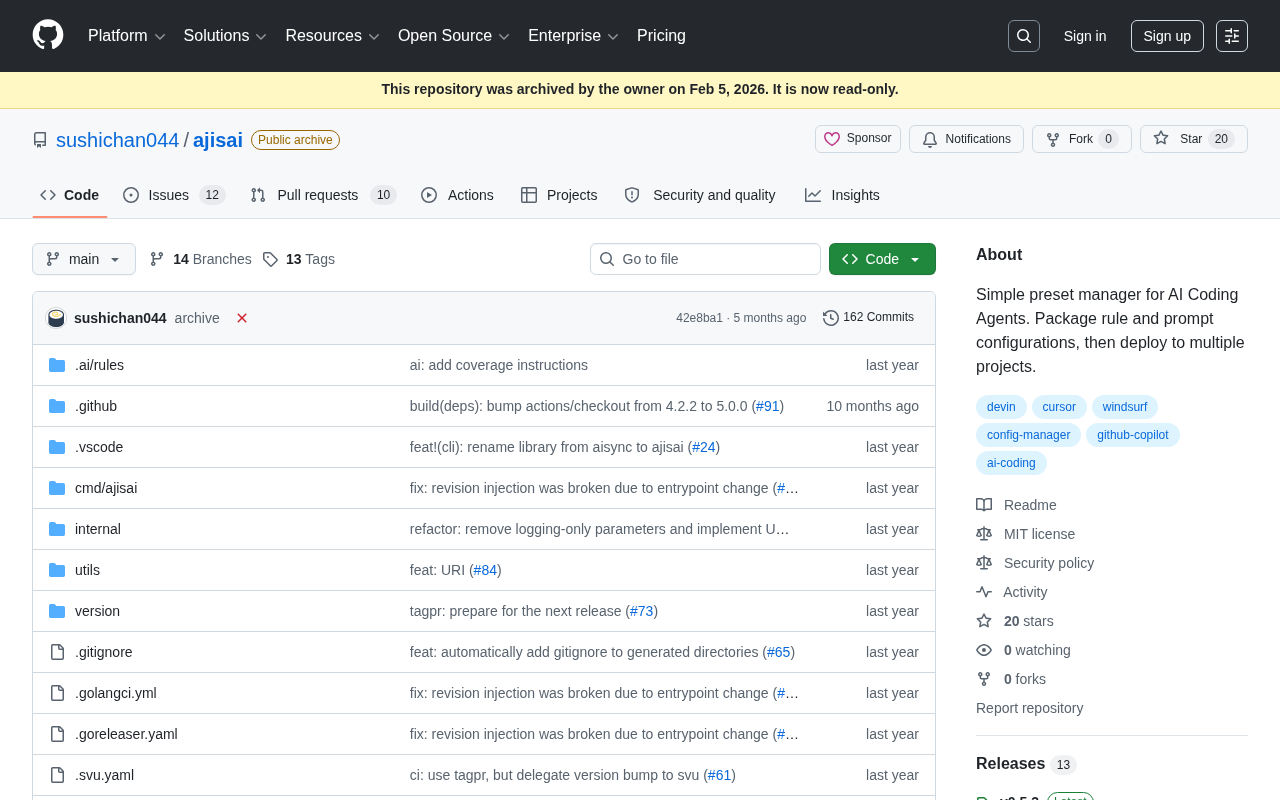
ajisai: A Preset Management Tool for Unifying Rules and Prompts Across AI Coding Assistants
ajisai is a Go-based preset manager for AI coding assistants like Cursor and Claude Code. Package rules and prompts once, deploy everywhere. Early-stage but promising.
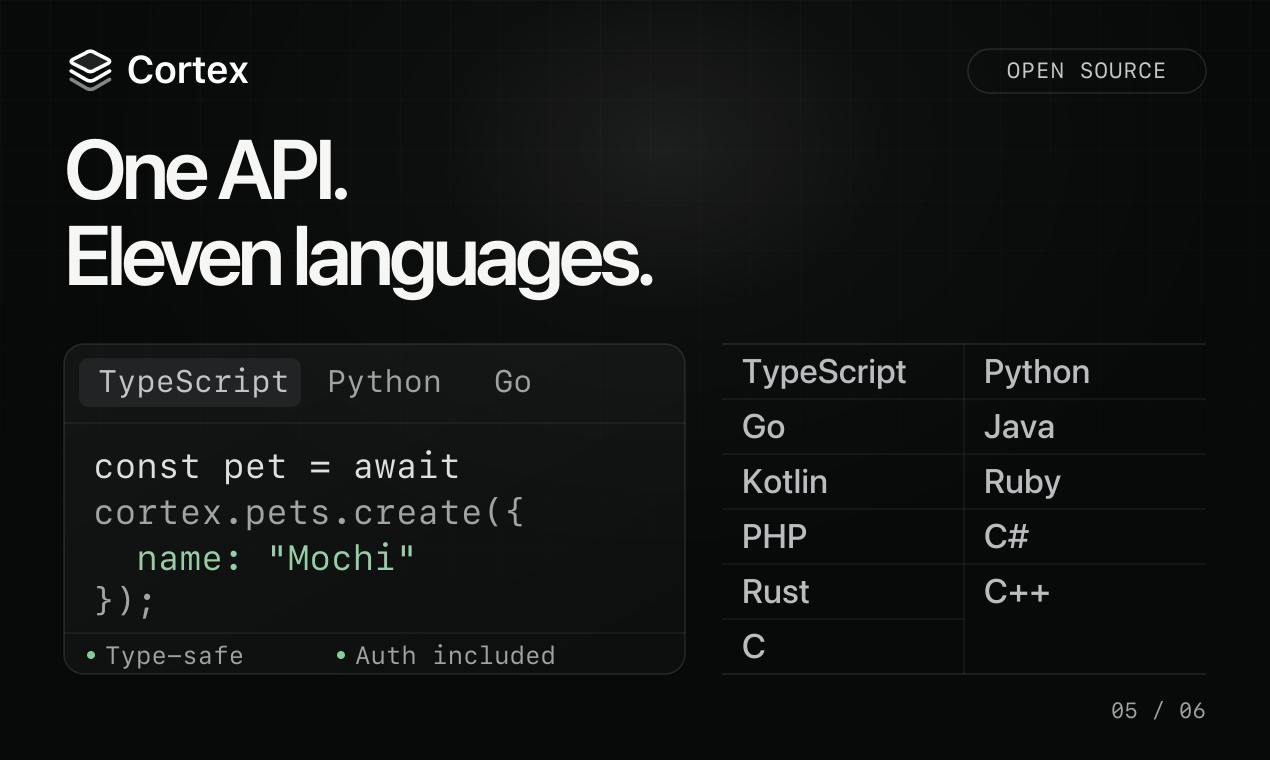
Cortex: Convert API Specs into Docs, SDKs, and MCP Servers in One Click
Cortex is an open-source tool that converts OpenAPI, GraphQL, gRPC and more into interactive docs, typed SDKs in 11 languages, and MCP servers for AI agents.
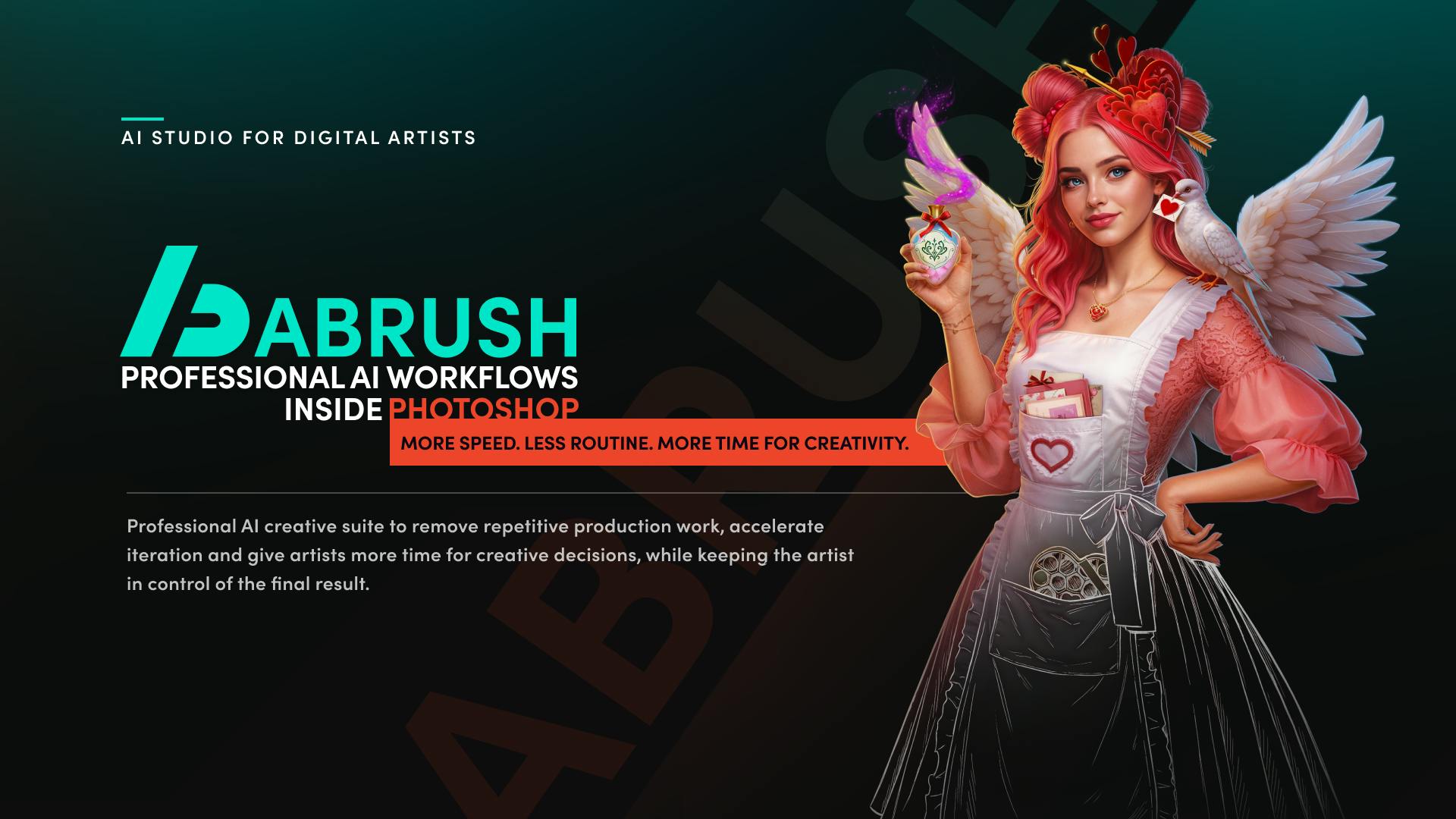
ABrush: An AI Studio Built for Digital Artists
ABrush is an AI studio for digital artists, ranked #4 on Product Hunt. It embeds leading AI models into existing workflows to remove repetitive tasks, speed up iteration, and keep artists in control.