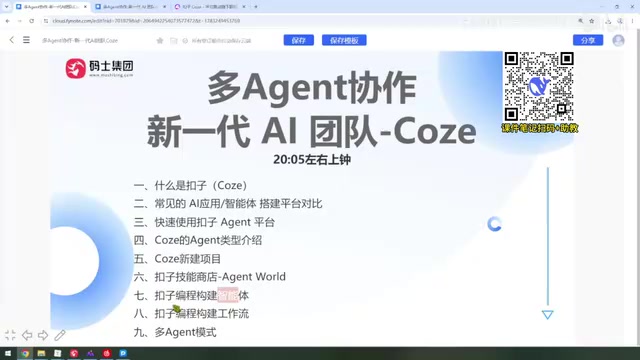
Coze in Practice: A Complete Guide to Building Multi-Agent Collaboration Teams

A complete guide to Coze: from Skills to workflows to building multi-Agent collaboration teams.
This article systematically explains ByteDance's Coze platform—its positioning, core capabilities, and how to build multi-Agent collaboration teams. It covers Agent tool categories, Skill (Function Calling) modules, workflow orchestration, and multi-Agent architectures, helping you turn AI into real productivity with a low barrier.
Coze in Practice: Building a Multi-Agent Collaboration Team from Scratch
As large language models grow ever more capable, the Agent (intelligent agent) has become the core form factor for AI applications in real-world deployment. The concept of an Agent originated in the field of artificial intelligence research, referring to a computational entity capable of perceiving its environment, making autonomous decisions, and executing actions. With the emergence of large language models like GPT-4 and Claude, modern AI Agents have gained powerful language understanding and reasoning capabilities. Their core competencies include Tool Use, Memory management, Planning, and Reflection.
These capabilities typically operate based on the ReAct (Reasoning + Acting) paradigm—proposed by a Google research team in 2022. Its core innovation lies in alternating between "chain-of-thought reasoning" and "action execution," forming a closed-loop iteration of "think → act → observe." Chain-of-Thought (CoT) itself was proposed by Jason Wei and others at Google Brain; by inserting intermediate reasoning steps into prompts, it significantly improved model performance on complex tasks such as mathematical reasoning and logical inference. ReAct combines CoT with tool invocation, fundamentally solving the limitations of pure reasoning models that cannot access real-time information or manipulate external systems—each iteration contains three interpretable token sequences: Thought (the model's internal reasoning), Action (an instruction to invoke a tool), and Observation (the tool's returned result), making the Agent's decision chain debuggable. Compared with pure reasoning models, a ReAct Agent can dynamically leverage external tools (such as search engines, code interpreters, and database APIs) to compensate for the model's knowledge cutoff limitation. In terms of memory management, modern Agents typically distinguish between short-term memory (conversation history within the context window) and long-term memory (persistent knowledge stored in vector databases). The two work together to keep the Agent coherent across cross-session tasks. How to build deployable Agents with a low barrier and high efficiency is a question that concerns many creators and developers alike. ByteDance's Coze stands out as a representative domestic Agent-building platform that is rapidly rising in this space.
Based on frontline hands-on tutorials, this article systematically reviews Coze's positioning, its capability boundaries, and how to use it to build a multi-Agent collaboration team, helping you truly turn AI into productivity.
Three Categories of AI Tools: Building a Cognitive Framework First
Before diving into Coze, it's worth clarifying the current classification of AI ecosystem tools. Only by understanding their essential differences can you grasp exactly where Coze stands.
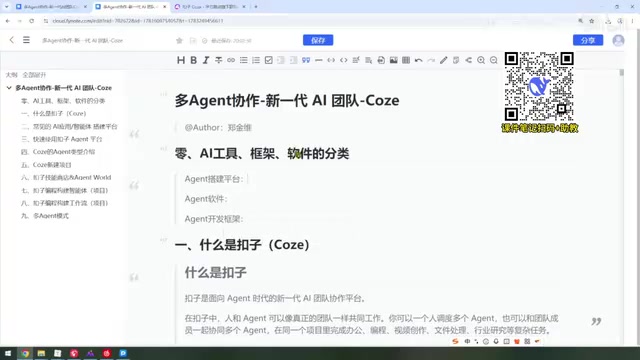
1. Agent-Building Platforms
This is Coze's core positioning, with similar products including Dify, n8n, and others. Their shared goal is to help users quickly build deployable Agents that can be invoked by projects, usually through visual workflows.
It's worth noting that these three products have subtle but important differences in technical positioning: Dify is an open-source LLM application development platform that supports private deployment, with a Python-based tech stack aimed at teams with some technical background; n8n originated in the RPA (Robotic Process Automation) space and gradually integrated AI capabilities later on, making it more mature in general-purpose automation scenarios. Coze's biggest difference from these two is that it is deeply tied to ByteDance's large model ecosystem, offering a lower barrier to entry and richer out-of-the-box templates, but falling short of Dify in private deployment and underlying flexibility.
The greatest value of these platforms lies in lowering the barrier to entry: even without programming skills, you can assemble intelligent agents that solve real problems by dragging and dropping. The key word is "building."
2. Agent Software
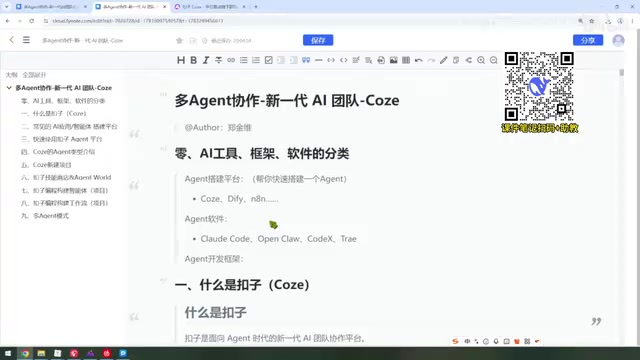
The second category is "ready-to-use" Agent software, such as the programming-savvy Claude Code, the once-viral Open Interpreter, Codex, and others.
Their defining characteristic is that someone else has already built them and you just use them directly—users don't need to worry about the internal implementation, and the core demand is "utility" rather than "construction." Such software is usually deeply optimized for specific vertical scenarios—for example, Claude Code focuses on understanding the contextual structure of an entire code repository and can track dependencies across files; Open Interpreter grants code execution privileges directly to the local environment, enabling the model to manipulate the file system, browser, and even operating-system-level resources. For non-technical users, Agent software is the AI empowerment path with the lowest barrier to entry.
3. Agent Development Frameworks
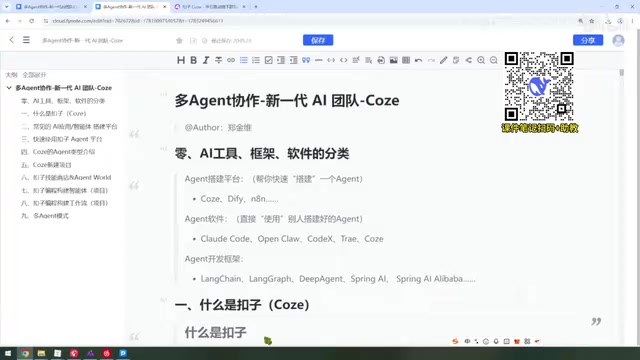
The third category targets developers and consists of code-level building tools. The Python ecosystem offers LangChain, LangGraph, DeepAgent, while the Java ecosystem offers Spring AI, Spring AI Alibaba, and others.
LangChain's core design philosophy is to connect large language models with external tools and data sources through "chained invocation"; its advanced version, LangGraph, introduces a directed graph (DAG) structure, making it more suitable for building complex multi-step, multi-Agent collaborative applications, with support for conditional branches and loop logic. Spring AI is the corresponding solution for the Java ecosystem, maintained by the official Spring team and dedicated to providing standardized AI integration interfaces for enterprise-grade Java applications. Notably, LangChain has also launched the LangSmith observability platform in recent years, used to trace an Agent's reasoning chain and tool invocation logs—crucial for diagnosing hallucinations and optimizing performance in production environments. The essence of these frameworks is a code-level abstraction layer; developers need programming skills to wield them, but in return they gain extremely high flexibility and control.
What Is Coze? Positioning and Core Capabilities Explained
With an understanding of these three tool categories, Coze's positioning becomes clear. Its original core direction was as an Agent-building platform, aiming to help you quickly construct intelligent agents.
But through continuous iteration, Coze is undergoing an "evolution"—it's beginning to look more and more like Agent software, internally integrating a large number of ready-made Skills that users can invoke directly to accomplish specific functions. This means:
- Users with development skills: can deeply customize Agents through programming interfaces and workflows;
- Non-technical users: can directly use the official Skill templates, out of the box.
Coze is merging the two capabilities of "building" and "using," forming a unique dual form factor. From a product evolution perspective, this "platform → ecosystem" path is quite similar to Salesforce's AppExchange and Shopify's app marketplace—first establishing underlying infrastructure, then exponentially amplifying platform value through ecosystem aggregation.
Coze Product Form Factors: Cross-Platform Interoperability Covering All Scenarios
Coze is quite user-friendly in how it can be used, covering all mainstream terminals:
- Web version: no installation required, open and go;
- App version: operate on the go from mobile;
- Desktop version: locally installed for a smoother experience.
More importantly, data is fully interoperable across all three form factors, so projects can be seamlessly continued, greatly reducing users' migration costs. At the data synchronization level, Coze adopts a cloud-based state management architecture—a classic embodiment of the "Cloud-First" design philosophy of modern SaaS products. Unlike Local-First tools (such as Obsidian and Logseq), Cloud-First places the authoritative copy of data on the server side, with the client acting only as a rendering layer: an Agent's configuration, conversation history, and Skill settings are all stored in the cloud, while the client is only responsible for rendering and interaction. This allows context to be fully preserved when switching across devices. For an Agent platform, this architecture carries additional value: persistent cloud storage can be further extended into advanced features like multi-user shared Agents and collaborative team editing, serving as important infrastructure that supports Coze's expansion toward enterprise users. This design philosophy is consistent with the "Cloud-First" approach of modern SaaS products like Notion and Figma.
In terms of Agent types, Coze offers multiple options including official Agents, local Agents, and cloud Agents, meeting diverse needs ranging from individual exploration to enterprise deployment.
Two Core Modules: Skill and Agent World
Skill
Skill is the core of Coze's capability expansion. By invoking various Skills, users can quickly give Agents specific functionality without developing from scratch. A large number of capabilities are packaged into out-of-the-box modules—a direct manifestation of Coze "looking more and more like Agent software."
From a technical architecture standpoint, a Skill is essentially a packaged Function Calling interface—a mechanism officially introduced by OpenAI into GPT-3.5 and GPT-4 in June 2023, and a core piece of infrastructure for modern AI Agent capability expansion. Its working principle: developers declare available functions to the model in JSON Schema format, specifying names, parameter types, and usage descriptions; during reasoning, the model decides whether it needs to invoke an external tool, and if so, outputs structured function-call instructions (including function name and parameter values), which the application layer executes before returning the result to the model to continue reasoning. This mechanism decouples the model's "intent understanding" from "actual execution," allowing any external API, database query, or local program to be packaged as an invokable tool. Anthropic's Claude calls it Tool Use, while Google Gemini calls it Function Declarations—implementation details differ slightly, but the core paradigm is consistent. Coze abstracts this underlying mechanism into visual Skill components, letting non-developers enjoy the capability expansion brought by tool invocation—a classic example of "functionality democratization."
Agent World
Coze has also planned a module called Agent World, viewed as an important layout for the multi-Agent ecosystem direction. This feature is currently under maintenance, and its exact release date remains unclear—worth continued attention.
Dual Tracks of Visual and Programmatic: Workflow-Building in Practice
For users with development skills, Coze supports quickly building two core object types through programming:
- Agents: units with autonomous decision-making and task-execution capabilities;
- Workflows: chaining multiple steps and nodes together to implement complex automated processes.
It's worth specifically pointing out that Coze's workflows are similar in form to traditional RPA (Robotic Process Automation) but fundamentally different. Leading traditional RPA vendors (UiPath, Automation Anywhere, etc.) technically rely on rules and scripts to simulate humans operating GUI interfaces, suitable for highly repetitive, strongly structured scenarios like data entry and report generation. But their core limitation is "fragility"—once interface elements change, the scripts fail, and they are nearly powerless against unstructured input (natural language, images). AI-driven workflows, by contrast, place the large language model at the core node, capable of handling unstructured tasks like semantic understanding, content generation, and logical judgment, and dynamically adjusting the execution path within the process. Gartner predicts that by 2026, over 80% of enterprises will deploy generative AI combined with automated workflows, and "Agentic Process Automation" (APA) is gradually replacing traditional RPA as the mainstream form of enterprise automation. The emergence of this "AI-native Workflow" marks a paradigm shift in automation technology from "rule-driven" to "intelligence-driven."
At the engineering implementation level, Coze's workflow node types typically include: LLM nodes (invoking large models for reasoning), code nodes (executing custom Python/JavaScript logic), conditional nodes (implementing if-else branches), loop nodes (handling batch data), and plugin nodes (integrating external APIs). This modular design makes implementing complex business logic as intuitive as building with blocks, while also making the process far more readable and maintainable than a pure-code implementation.
The "visual + programmatic" dual-track model allows Coze to serve both zero-experience users and satisfy the deep customization needs of professional developers, giving it quite broad coverage.
The Highlight: A Detailed Look at Multi-Agent Collaboration
Multi-Agent collaboration is the core direction of current Agent technology evolution, and it's the most noteworthy content in this article.
From a technical principle standpoint, multi-Agent collaboration systems typically fall into two architectural patterns: one is the "Orchestrator-Worker" pattern, in which a master Agent handles task decomposition and scheduling while multiple specialized Agents each perform their duties; the other is the "parallel" pattern, in which multiple Agents collaborate as peers, sharing intermediate results through message-passing mechanisms. Both architectures have classic validation cases: Stanford University's 2023 "Generative Agents" paper (commonly known as the "virtual town" experiment) built a simulated society of 25 AI characters interacting in parallel, demonstrating the feasibility of multi-Agent systems in simulating complex social behavior; Microsoft's AutoGen framework focuses on engineering implementation, enabling flexible orchestration of multiple Agents by defining "conversable Agents" and a "group chat manager." Research shows that multi-Agent systems significantly outperform single Agents on complex tasks, in part because they effectively circumvent an individual model's "attention bottleneck"—Stanford's "Lost in the Middle" study found that when the context window is too long, the model's attention to information located in the middle degrades significantly, whereas dividing work among multiple Agents breaks the problem into smaller subtasks, keeping each Agent running efficiently.
However, multi-Agent systems also face several core challenges in achieving efficient collaboration, which are worth preemptively avoiding in practice: first is the quality of task decomposition—the master Agent must precisely break down a vague goal into executable subtasks, which requires strong planning and semantic understanding capabilities; second is the state synchronization problem—Agents need to reliably share intermediate results to prevent the formation of information silos; third is the risk of hallucination propagation—if erroneous information generated by one Agent goes unverified, it may be amplified as fact by downstream Agents. To address these, the industry has explored countermeasures such as checkpoint mechanisms, Human-in-the-Loop nodes, and dedicated verification Agents—and the conditional judgment nodes and review nodes in Coze's visual workflows are precisely low-barrier implementation paths for these mechanisms.
In simple terms, the core idea of multi-Agent collaboration is: no longer relying on a single agent to solve all problems, but instead having multiple Agents with distinct specialties form a "team" that completes complex tasks through division of labor and collaboration.
Taking a content production project as an example, the work can be divided as follows:
- One Agent handles material gathering;
- One Agent handles content writing;
- One Agent handles proofreading and formatting.
The three pass information to one another and advance the work collaboratively. Compared with a single monolithic Agent, this offers clear advantages when handling complex, multi-stage tasks, and can truly achieve the goal of "liberating productivity."
Coze's native support for the multi-Agent model is precisely the key competitive advantage that sets it apart from ordinary workflow tools.
Summary: Coze's Three Core Values
As a domestic Agent platform produced by ByteDance, Coze is at a critical stage of evolving from a "building platform" toward an "integrated building + using" model. Its core value can be summarized in three points:
- Low barrier: visual operation lets even non-programmers get started quickly;
- High ceiling: supports programmatic customization, workflow orchestration, and multi-Agent collaboration;
- Cross-platform interoperability: full coverage across web, app, and desktop, with consistent data and seamless switching.
For individuals and teams hoping to boost productivity with AI, Coze is a platform well worth studying and practicing in depth. And multi-Agent collaboration is precisely the key to unlocking its true potential. From a more macro perspective, the rise of one-stop Agent platforms represented by Coze is accelerating the leap of AI capabilities from "engineer-exclusive tools" toward "universal productivity infrastructure"—and the far-reaching impact of this trend may only just be beginning to emerge.
Related articles
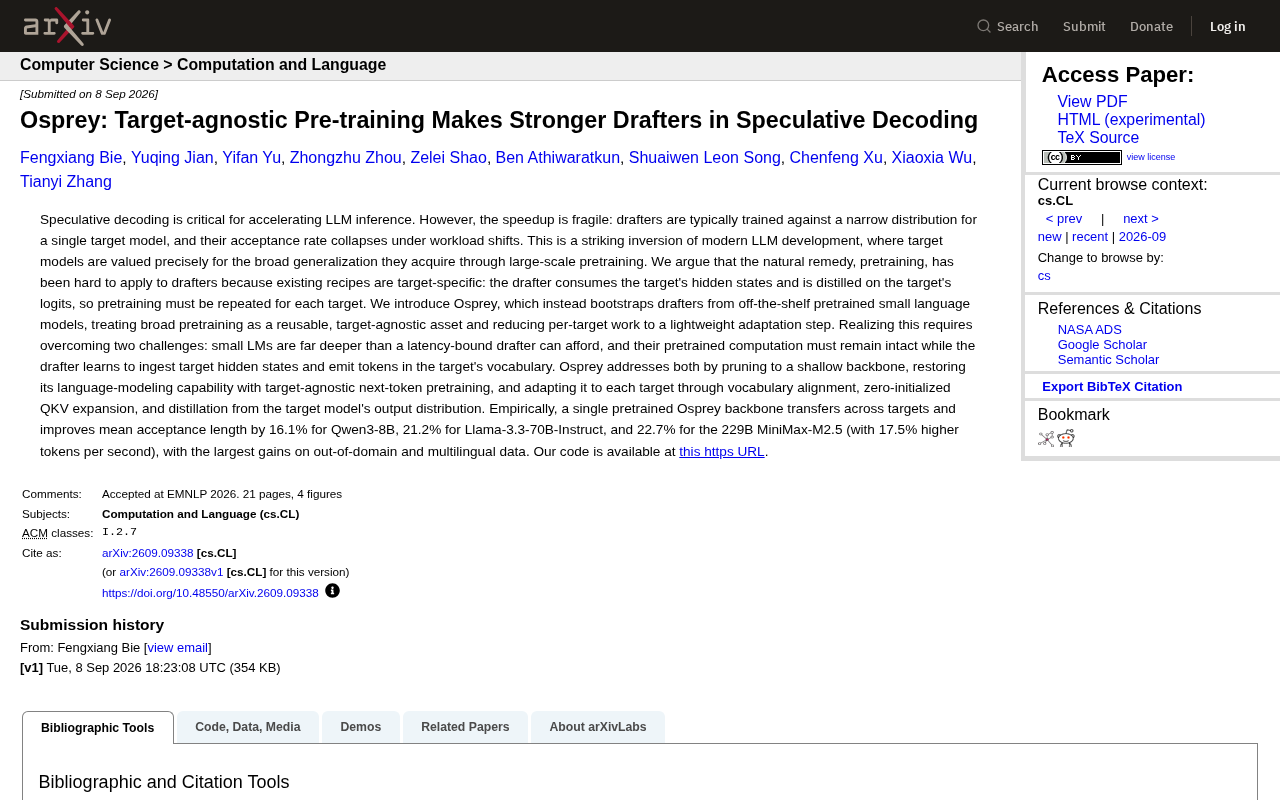
Osprey: General-Purpose Pretraining Makes Speculative Decoding Draft Models More Efficient
Osprey treats pretraining as a reusable, target-agnostic asset. Through pruning and lightweight adaptation, a single draft model transfers across multiple LLMs, boosting mean acceptance length by 16%-22%.
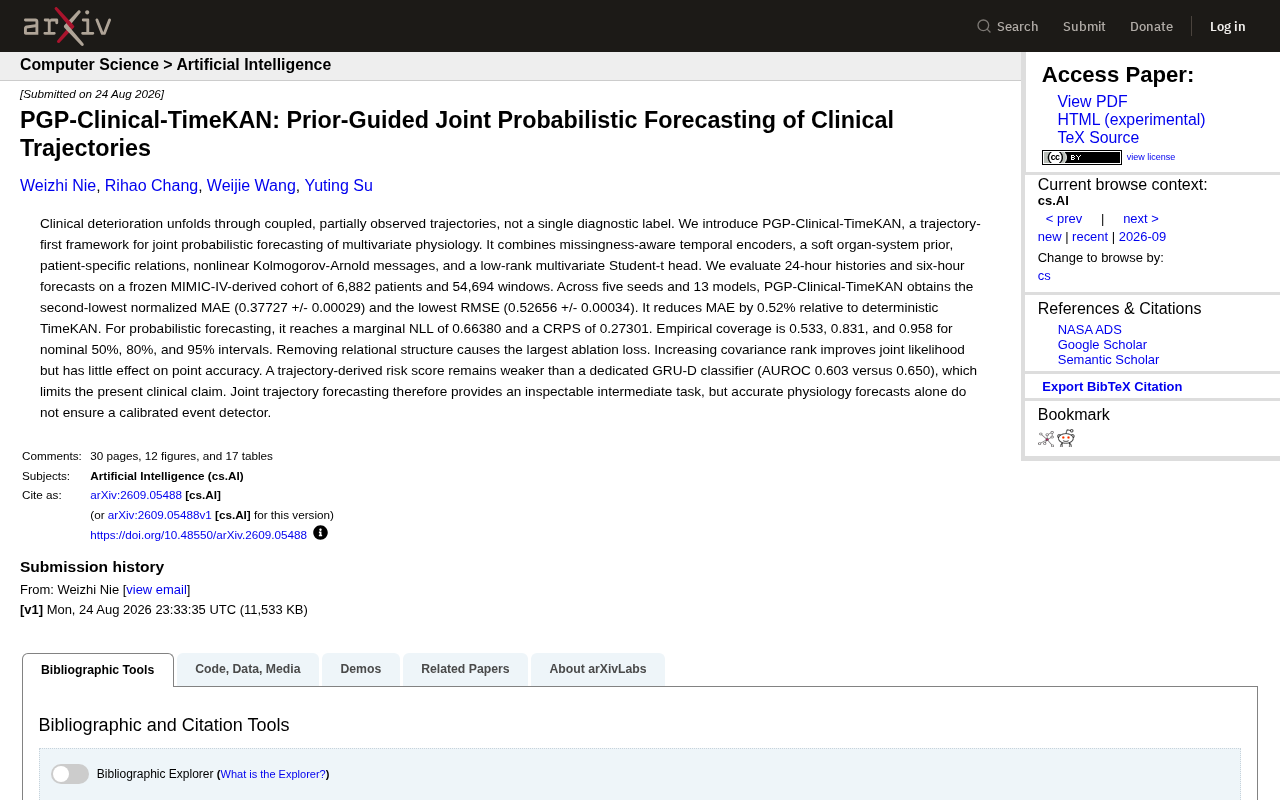
PGP-Clinical-TimeKAN: A Detailed Guide to the Multivariate Physiological Indicator Joint Prediction Framework
An in-depth analysis of the PGP-Clinical-TimeKAN framework for joint probabilistic prediction of multivariate physiological indicators, covering trajectory-first paradigm, KAN message passing, MIMIC-IV validation, and ablation studies.
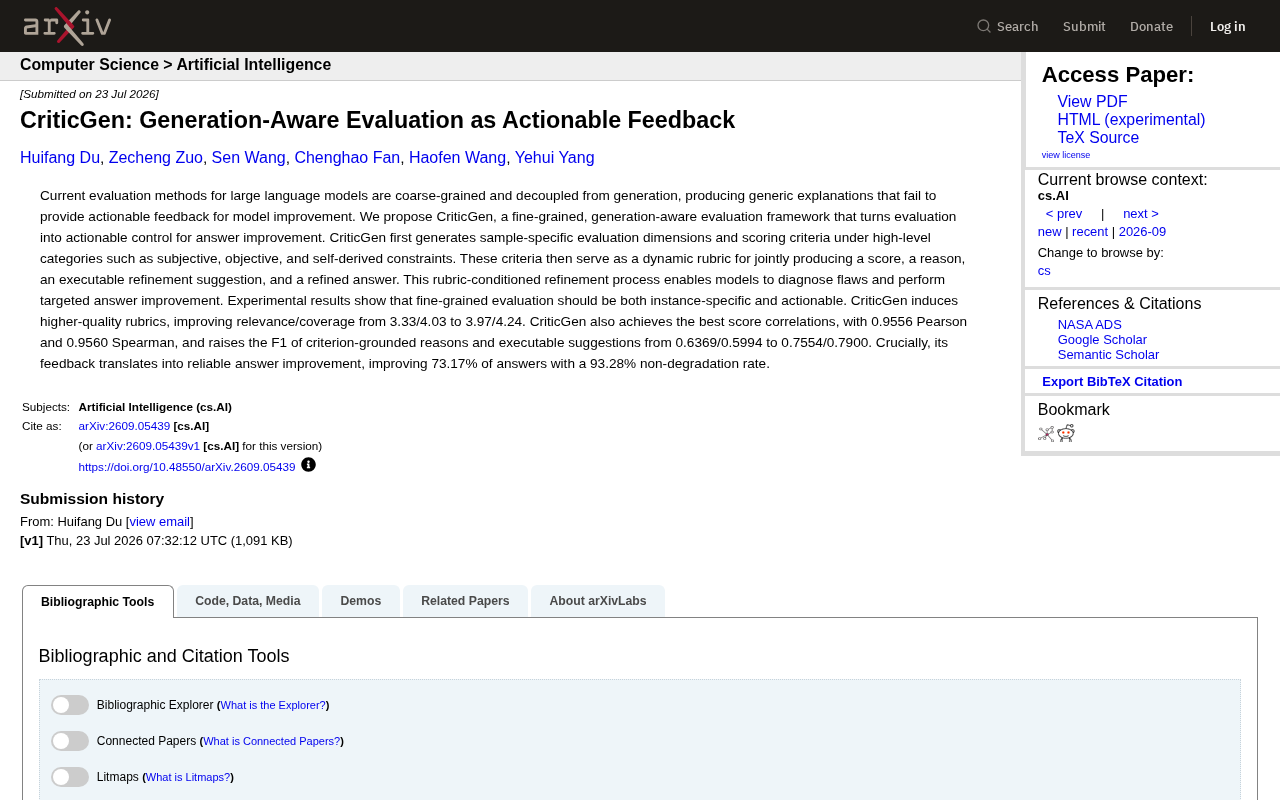
CriticGen: A New Framework That Transforms AI Evaluation into Actionable Improvement Feedback
CriticGen proposes a generation-aware evaluation framework that transforms AI assessment from passive scoring to an active optimization loop, achieving 73.17% answer improvement and 93.28% non-degradation rate.