Cracking U.S. Driver's License Barcode Signing Keys: A Deep Dive into Digital Identity Security

Researcher recovers U.S. driver's license barcode signing keys, exposing systemic weaknesses in digital identity trust.
Security researcher Ryan's blog post *Keys Not Included* documents an attempt to recover digital signing keys from U.S. driver's license PDF417 barcodes, earning 236 upvotes and 101 comments on Hacker News. The post reveals that when ECDSA signing keys can be derived through reverse engineering or weak random number generation, the entire anti-counterfeiting system collapses. It argues that security cannot rest on the assumption that keys will never leak — systems need defense-in-depth, cryptographically secure randomness, proven algorithms, and key rotation mechanisms. Community discussion extended to inconsistent state-level key management, the ethics of responsible disclosure, and the inherent tension between convenience and security in digital identity.
An Experiment in Digital Identity Trust
The unassuming PDF417 barcode on the back of a U.S. driver's license might seem like nothing more than a convenient way to encode name, date of birth, and address for quick scanning. But when these barcodes are equipped with digital signatures to verify their authenticity, things get a lot more interesting. Security researcher Ryan documented a technical exploration attempting to recover U.S. driver's license barcode signing keys in a blog post titled Keys Not Included. The post earned 236 upvotes and hundreds of comments on Hacker News, reflecting the community's ongoing concern about the security of digital identity infrastructure.
The digital signature mechanism on driver's license barcodes is designed to let verifiers confirm that barcode contents haven't been tampered with. In theory, as long as the signing private key is properly secured, no one should be able to forge a barcode that passes verification. The core question this article raises is about the weak links in that trust model.
Why Signing Keys Matter
The security of a digital signature rests entirely on the secrecy of the private key. The issuing authority uses its private key to sign the barcode data; verifiers use the corresponding public key to check the signature. When key management is done right, this asymmetric cryptography design provides reliable anti-counterfeiting protection.
The problem is that if an external researcher can recover or derive the signing key, the entire anti-fraud logic collapses. An attacker with the key can generate valid signatures for any fabricated identity data, rendering the verification system unable to distinguish real from fake. The title Keys Not Included carries a sardonic edge — keys that should be strictly secret and isolated from public systems have become recoverable targets.
For contexts that rely on driver's license barcodes for age verification or identity checks — retail, bars, financial account opening, and so on — the potential impact of such a vulnerability is hard to overstate.
Background: How PDF417 Signatures Work
PDF417 is a 2D stacked barcode standard mandated by the American Association of Motor Vehicle Administrators (AAMVA) to standardize machine-readable information across state driver's licenses. Its digital signature mechanism is typically implemented using the Elliptic Curve Digital Signature Algorithm (ECDSA): AAMVA or the individual state DMV holds a private key, signs a hash of the barcode data, and encodes that signature into the barcode itself. Scanning devices or verification software then use the corresponding public key to validate the signature at read time.
The security assumption underlying this system is that the private key exists only within a strictly controlled signing environment and never leaves it. In practice, however, keys may be distributed across IT systems in fifty different states, equipment manufacturers or software developers in the supply chain may have access to key material, and management practices vary widely — all of which leaves realistic room for key leakage or reverse engineering.
The Technical Path from Barcode to Key
Recovering a signing key typically involves reverse-engineering the signature algorithm, the key generation method, and the implementation details. When the signature scheme uses poorly chosen parameters, has flawed random number generation, or the key itself was generated in some derivable way, researchers may be able to collect multiple signature samples and work backward through mathematical analysis.
The value of this kind of research lies not only in exposing problems in a single system, but in reminding identity infrastructure designers that security cannot rely on the optimistic assumption that "the key will never leak." Instead, systems must be designed assuming that adversaries possess strong analytical capabilities. A principle repeated throughout cryptographic practice is that algorithmic transparency actually improves security — the only thing that truly needs protection is the key itself. But that only holds if key generation and management are sufficiently rigorous.
A Closer Look: ECDSA's Achilles' Heel
ECDSA is reasonably strong when implemented correctly, but it is extremely sensitive to the quality of its random numbers. Every signing operation requires a high-quality random value k; if k is reused or its generation is predictable, an attacker can recover the private key from just a handful of signatures using lattice attacks or direct algebraic methods.
The most famous historical example is the leak of Sony's PlayStation 3 firmware signing key — Sony engineers used a fixed k value, and researchers needed only two signatures to recover the private key. Furthermore, if driver's license systems across multiple states were all issued using the same vendor's software — with the same underlying key generation logic — then findings from analyzing one state's system could apply far more broadly. This is precisely why research of this kind carries systemic implications for the entire driver's license trust ecosystem.
The Hacker News Community's Perspective
The 101 comments the post generated on Hacker News reflect the technical community's multifaceted interest in issues like this. Discussion typically centers on a few themes: whether key management practices across state DMV systems are consistent or systemically flawed; whether publicly disclosing this kind of research creates misuse risks — i.e., where the line falls for responsible disclosure; and the inherent tension between convenience and security in digital identity verification.
It's worth noting that security research of this kind often occupies a gray zone. Researchers explore these problems with good intentions — to surface issues and drive improvements — but the same technical methods can be misused maliciously. The high level of community interest is itself evidence that digital identity security remains a wide-open, unresolved problem.
Explainer: Responsible Disclosure
Responsible disclosure is the core ethical framework in security research: before publicly revealing a vulnerability, researchers should notify the affected organization privately and give them a reasonable window to fix it — typically 90 days — before deciding whether and how to release technical details publicly. The goal is to balance "public awareness and pressure to fix" against "preventing the vulnerability from being exploited before a patch is available."
For large-scale identity infrastructure involving multiple government agencies, however, coordinated disclosure faces unique challenges. A fix might require re-issuing tens of millions of driver's licenses, and key rotation could take years to deploy. This puts security researchers in a genuine dilemma: disclosing too early may enable forgery, but sitting on the information indefinitely leaves the problem unresolved. The community debate around this boundary reflects a longstanding, unresolved structural tension between security research and public policy.
Implications for Digital Identity Infrastructure
As more and more identity verification moves from paper credentials to digital, barcoded, and mobile formats, the security of signing keys directly determines the reliability of the entire chain of trust. This key recovery experiment offers several practical lessons:
Key generation must use cryptographically secure random sources, with no predictability whatsoever. Signature schemes should use mature, well-audited algorithms with properly configured parameters. System design should follow defense-in-depth principles rather than betting all trust on the secrecy of a single key. For large-scale identity systems already deployed in the field, key rotation and revocation mechanisms are equally critical.
For everyday users, research like this is a reminder that any identity verification system claiming to be "absolutely secure" deserves healthy skepticism. Behind the convenience of digital identity lies an entire body of cryptographic engineering that requires continuous maintenance and hardening. And for system designers, while public security research creates short-term pressure, it is ultimately a vital force for raising the overall security baseline over the long run.
Conclusion
Keys Not Included uses a concrete key recovery experiment to bring the security issues lurking behind an everyday object — the U.S. driver's license barcode — into the open. It is both a technical analysis and a challenge to the trust model underlying digital identity. In an era of rapidly expanding digital identity verification, the significance of this research extends far beyond any single system. It pushes us to ask: what exactly are we trusting, and does that trust hold up under scrutiny?
Related articles

AI Plays Pokémon Red: Jev Clears Two Gyms for Under $2
A Reddit user had AI model Jev play Pokémon Red in real time while Opus 5 built the harness on the fly — clearing two gyms for under $2, showcasing low-cost AI agents.

How Should a 20–30 Person Team Choose the Right Multi-Agent AI Platform?
How should a 20–30 person startup choose a multi-agent AI platform? Based on real Reddit discussions, this article analyzes the selection challenges for small teams and offers practical advice.
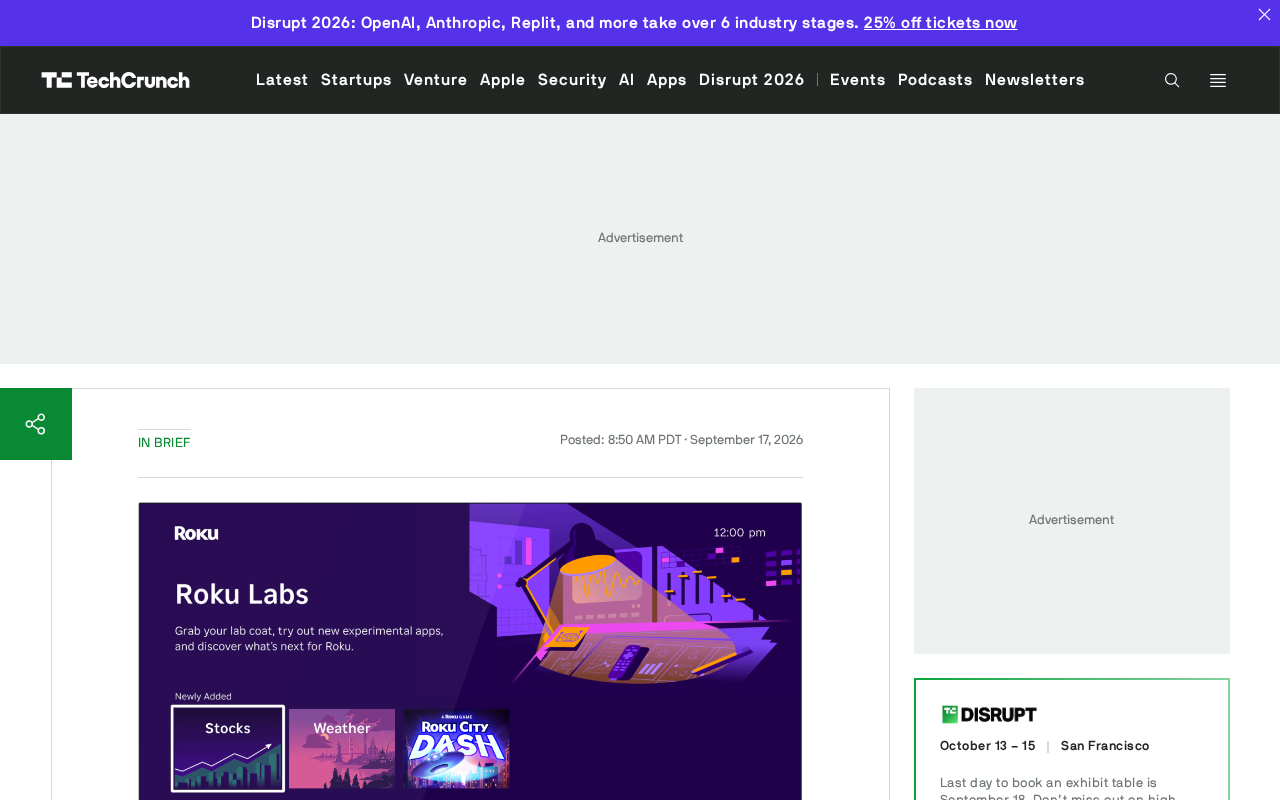
Roku Labs Goes Live: Experimental Apps Come to the Big Screen
Roku's latest OS update launches Roku Labs for experimental apps, expands personalized home screens, and introduces streaming subscription bundles to strengthen its smart TV ecosystem.