CREEM 2.0: The All-in-One Monetization Platform for AI Founders
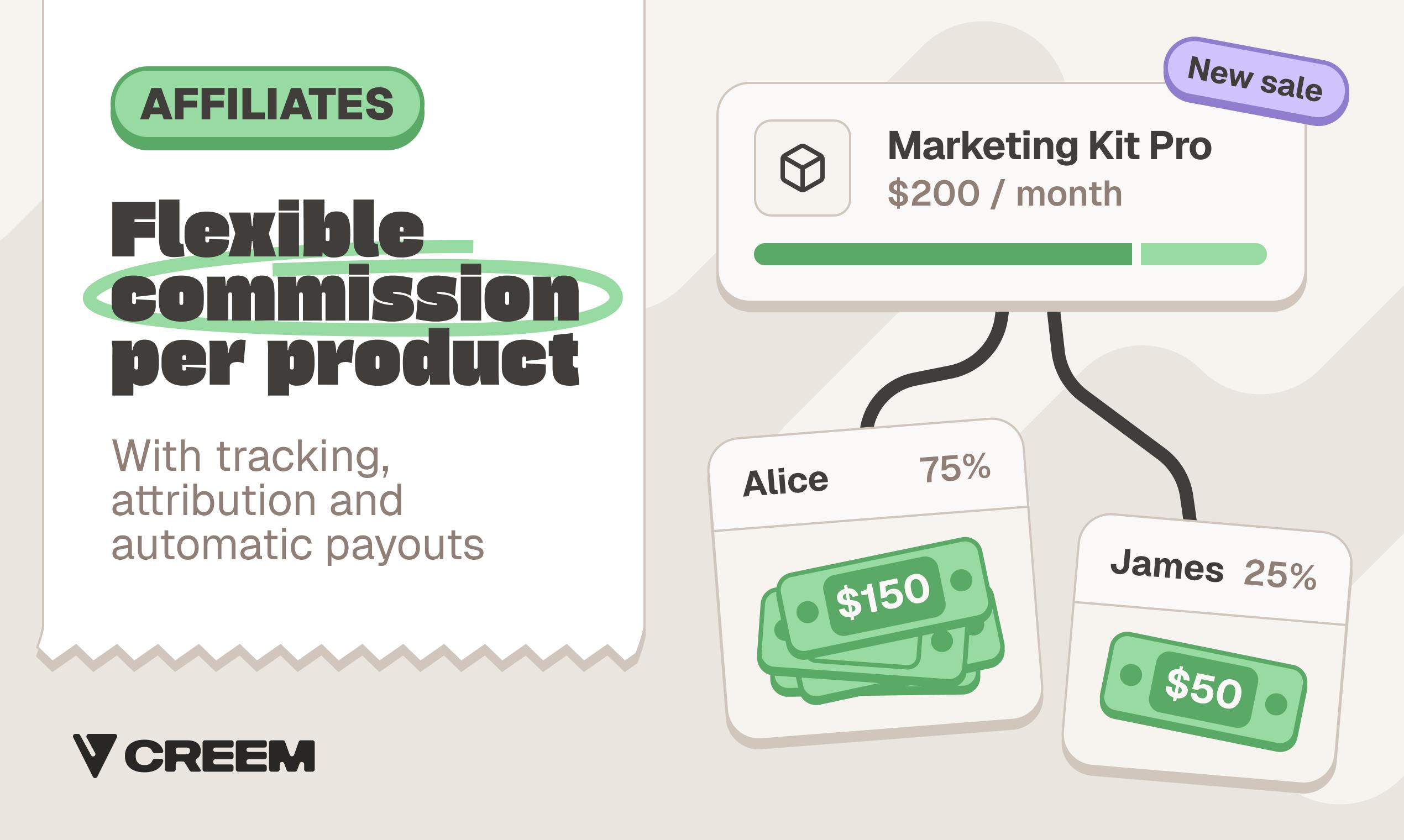
CREEM 2.0 is an all-in-one monetization platform built for AI-era indie developers and founders.
CREEM 2.0 tackles the gap between how fast AI lets you build and how slow monetization still is. The platform bundles global payment processing, cross-border tax compliance (including EU VAT), flexible billing (including usage-based models), affiliate management, and payouts into a single solution for indie developers and small teams. It launched to #1 on Product Hunt with 317 upvotes and 103 comments. Key caveats: fee transparency, supported regions, and payout timelines aren't fully disclosed yet, and consolidating your entire revenue stack on one platform carries inherent dependency risk worth evaluating.
In the age of AI-assisted development, building a software product has gone from taking months to taking a weekend. But turning that product into an actual business — collecting payments, filing taxes, handling payouts, managing affiliate programs — remains a serious bottleneck for indie developers. CREEM 2.0 is built to close exactly that gap.
CREEM 2.0 recently launched on Product Hunt and claimed the #1 Product of the Day, earning 317 upvotes and 103 comments — making it one of the most talked-about new releases in Fintech, Payments, and Marketing.
A "Get Paid" Platform Built for the AI Era
CREEM 2.0 positions itself as "the money platform for the AI building era." Its core promise is straightforward: let developers sell software and digital products globally, while the platform handles all the tedious parts — payments, taxes, revenue splits, affiliate marketing, and usage-based billing.
The team's one-liner says it all: "Building a product went from months to a weekend. Getting paid for it did not." CREEM wants to make getting paid as fast as shipping.
For the wave of indie developers and small teams using AI to rapidly spin up SaaS tools, plugins, and API services, this positioning hits a genuine pain point.
Full-Stack Monetization Infrastructure
CREEM 2.0 aims to be the all-in-one commercial backbone for AI developers, covering:
Global Payments & Tax Compliance
The platform handles worldwide payment processing and takes on tax compliance on your behalf. For developers selling digital products to a global audience, cross-border taxation — EU VAT, regional sales taxes, and so on — has long been one of the most painful operational hurdles. Offloading it to a platform dramatically lowers the barrier to going global.
A closer look at EU VAT compliance: EU VAT is one of the most complex regulatory requirements for digital product creators selling internationally. Since 2015, the EU has required any business selling digital services to EU consumers — regardless of where the business is registered — to collect and remit VAT at the buyer's local rate, which ranges from 17% to 27% depending on the country. The 2021 OSS (One Stop Shop) scheme simplified the filing process somewhat, but registration, reporting, and remittance still demand significant time and expertise. Beyond the EU, markets like Australia, Canada, the UK, and Singapore each have their own digital services tax regimes. For indie developers, these obligations often translate to several hours of administrative work each quarter — or hundreds of dollars in accounting fees. CREEM operates as a Merchant of Record, meaning the platform appears as the legal seller in every transaction, taking on the full burden of global tax reporting on the developer's behalf. This is the fundamental difference between a Merchant of Record platform and a standard payment gateway.
Billing & Payouts
CREEM supports multiple billing models, including usage-based billing — a critical feature as AI products increasingly adopt consumption-based pricing (per API call, per token, etc.). The platform also handles payouts, closing the loop on getting money back into developers' hands.
A closer look at usage-based billing: Usage-based billing sits alongside subscriptions and one-time purchases as one of the three dominant SaaS pricing models — and it's especially prevalent in AI products. OpenAI, Anthropic, and others all charge by token consumption. The technical challenge is real: you need to aggregate usage events in real time (or near real time), generate accurate invoices at the end of a billing period, and handle complex rules like overages, caps, and tiered pricing. Building this from scratch typically requires a data pipeline, a metering service, and a billing engine — weeks of engineering work. Tools like Stripe's Meter API and Lago exist precisely to address this need. CREEM bakes this capability in natively, letting developers report usage events via API without building their own metering infrastructure.
Affiliate Marketing
CREEM includes built-in affiliate management, allowing developers to launch a referral and commission program without wiring up a separate system. Tap into external promoters — bloggers, influencers, other tool builders — and grow sales without building affiliate infrastructure from scratch.
A closer look at affiliate marketing: In the SaaS world, affiliate marketing means generating unique tracking links for external promoters and automatically paying out a preset commission when those referrals convert to paying customers. Building this yourself means solving for link tracking, attribution windows, fraud prevention, commission settlement, and tax reporting (e.g., 1099 forms in the US). Standalone tools like Rewardful and PartnerStack typically run $49–$299/month. CREEM offers this as a built-in module — saving indie developers both the subscription cost and the integration overhead, especially valuable for those looking to drive growth through word-of-mouth from day one.
Bundling payments, taxes, billing, affiliates, and payouts into a single platform is CREEM's key differentiator versus the traditional approach of stitching together separate tools for each function.
Who It's For and What Problem It Solves
CREEM 2.0's target user is clear: developers and small teams who've used AI to build fast but lack the commercial infrastructure to monetize effectively. These users are typically strong technically but have no interest in burning time on payment compliance, cross-border tax obligations, or affiliate plumbing.
The Product Hunt reception — #1 for the day, 100+ comments — suggests the community agrees. The product is built by a team of roughly ten people including Gabriel Ferraz, Märt, and Taha Erel. The "2.0" in the name signals a significant evolution aimed squarely at the AI-building wave.
A Few Things Worth Watching
With any "all-in-one monetization platform," the real-world experience hinges on a few critical details: fee structures and pricing transparency, supported countries and currencies, payout cycles and settlement speed, and the exact geographic scope of tax compliance coverage. These specifics aren't fully disclosed in the current launch materials — developers interested in using the platform should verify rates and terms directly on the official website.
It's also worth noting that consolidating payments, taxes, and distribution into a single platform introduces platform dependency risk. For teams with meaningful revenue, it's worth thinking carefully about the trade-off between convenience and the ability to negotiate terms or migrate data down the line.
Overall, CREEM 2.0 has identified a real structural problem in the AI era — the mismatch between how fast you can build and how slow it is to get paid — and turned the commercial infrastructure layer into a ready-to-use service. For AI founders who want to turn a product into a business without getting bogged down in back-office complexity, it's worth a serious look.
Related articles
WAN 2.1 Physics Motion LoRA Benchmark: Rankings and Methodology for 11 Models Tested
A Reddit user benchmarked 11 physics-motion LoRAs on WAN 2.1 using optical flow analysis. Only 3 worked meaningfully; 4 scored below the no-LoRA baseline. Full rankings and methodology inside.

Lucid Partners with Bolt to Target European Robotaxi Market
Lucid Motors has signed a letter of intent with European mobility platform Bolt to explore Robotaxi services in Europe, though no vehicle orders have been placed yet.
AI Assistants Enter the "Phone Call" Era: Instinct and Meta Muse Add Voice Task Execution
AI assistants Instinct and Meta Muse now make phone calls on your behalf — booking restaurants, canceling subscriptions — marking a leap from chat tools to real-world agents.