Cursor Budget Accounts: The Real Risks Behind Shared Accounts and Cracked Clients

Low-cost Cursor accounts hide three risky schemes: account rotation, model spoofing, and cracked clients that can permanently lock your device.
This article breaks down three common low-cost Cursor Pro schemes: bulk account rotation (wasted time-limited quotas), API relay with front-end spoofing (neutered models disguised as full ones), and cracked clients (highest risk). Technically, shared accounts trigger anti-fraud bans and frequent disconnections, while cracked tools can permanently lock your device fingerprint. The article also objectively notes that pay-as-you-go resellers solve the quota-waste problem better than time-limited plans, but emphasizes that no third-party service is officially sanctioned — account compliance and long-term stability can never be guaranteed by an intermediary.
Introduction: Cursor Is Now a Productivity Staple — But the Price Tag Is Pushing People Away
Cursor has emerged as one of the most popular AI code editors of the past two years, deeply embedded in the daily workflows of developers, office workers, and students alike. Writing code, fixing bugs, completing logic, drafting copy, organizing ideas — it handles all of it with impressive efficiency. But the official Pro subscription isn't cheap, and for individual users, the recurring cost adds up fast.
That demand has fueled an entire gray market of "budget plugin configs," shared accounts, and cracked clients. This article breaks down a piece of promotional content from a third-party reseller to expose how these low-cost options actually work — and what risks they carry. A quick disclaimer: the source material is marketing content from a third-party reselling service. The analysis below aims to be as technically objective as possible, so you can make your own informed judgment.
Three Common Schemes Behind Low-Cost Cursor Accounts
Those "Cursor Pro experiences" selling for a few dollars online may look like bargains, but the underlying mechanics are almost always the same.
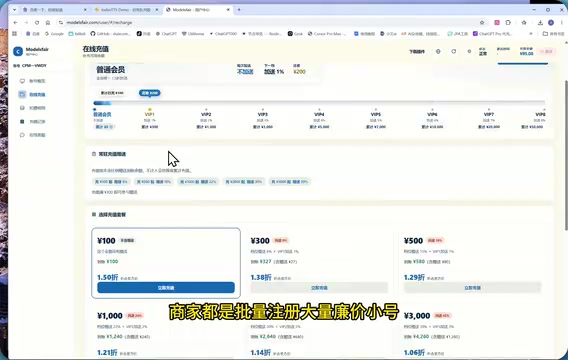
Scheme #1: Bulk-registered throwaway accounts + account-rotation logic. Sellers register large numbers of cheap accounts and sell them as monthly, quarterly, or time-limited packages via a simple switching mechanism. The biggest flaw here is the time limit: when the package expires, your quota resets to zero — regardless of how much you actually used. Low-frequency users typically waste the majority of their monthly allowance. The per-unit price looks attractive, but the long-term cost-effectiveness is often poor.
Scheme #2: API relay + front-end spoofing. These services appear to call Pro-tier models, but quietly compress parameters and degrade output quality in the background. The result: generated code riddled with bugs, muddled logic, and thin, generic copy. For users relying on AI for critical work, this "quality downgrade" is particularly deceptive — you think you're getting the full model, but you're actually getting a neutered version.
Scheme #3: Cracked or modified clients that unlock permissions by tampering with the software's underlying data. This carries the highest risk of all.
The "API relay" in Scheme #2 deserves a deeper explanation. Cursor calls the API endpoints of major models like Claude, GPT-4o, and Gemini under the hood. Official Pro users get full, uncompressed context windows (typically 128K or even 200K tokens) and optimal inference parameters. A common relay provider trick is to substitute a "lite" or older version of the same-named model — for example, passing off claude-3-haiku as claude-3.5-sonnet — or to trim max_tokens and inflate the temperature parameter when forwarding requests, making outputs more random and reducing reasoning depth. The model name displayed in the UI is completely decoupled from what's actually being called. This information asymmetry makes quality degradation nearly invisible to ordinary users; it only becomes obvious when handling complex logic or long-context tasks.
Core Risks of Cracked and Shared Solutions
From a technical standpoint, the risks of budget solutions fall into a few key categories.
Poor stability. Shared accounts routinely suffer from frequent disconnections, expired permissions, and throttled API calls. Inevitably, the account dies at the worst possible moment — when you're racing to finish a project or fix an urgent document. Whatever you saved on the subscription is nothing compared to the time you lose.

Account bans and device-level risks. Shared accounts frequently trigger Cursor's anti-fraud systems, and repeatedly cycling through accounts invites flagging. Cracked clients are even more dangerous — tampering with underlying code not only causes crashes and freezes, but can also get your account banned and your device fingerprint locked or leaked. Once a device is flagged, that machine may be permanently unable to run Cursor normally. The damage far exceeds what you ever saved on a subscription.
Questionable permission authenticity. The source material repeatedly emphasized the distinction between "native Pro permissions" and cracked alternatives — whether a service modifies Cursor's native UI and underlying code is the key indicator of safety. Only solutions that preserve official native functionality and leave the underlying data untouched can guarantee compatibility and security, including the ability to update alongside official releases.

At a deeper technical level, Cursor uses a device fingerprint-based anti-fraud system. When you first log in, the server records hardware characteristics like CPU serial number, network card MAC address, and hard drive ID, layered with software signals like OS version and browser UA, to generate a near-unique device identifier. When multiple accounts switch rapidly on the same device, or when the same account logs in from a large number of different devices, the server's anomaly detection kicks in. Cracked clients typically need to modify local registry keys or config files to fake authorization states — and these modifications leave detectable anomalies that can be validated server-side. When Cursor updates its ban policies, all previously flagged device fingerprints can be mass-blacklisted at once, potentially making the device unable to run Cursor even after switching back to a legitimate account.
How to Read the Reseller's "Selling Points"
The service promoted in the source material leads with a few differentiators: pay-as-you-go billing, balances that never expire, individual official Pro accounts, pricing at roughly 25% of the official rate, and transparent usage records.
Objectively speaking, "never-expiring balance, only pay for what you use" genuinely does address a real pain point for low-frequency users — wasted quota on time-limited plans. The "smart account rotation + transaction record" approach via a minimal plugin is also meaningfully safer than running a cracked client.

But stay clear-eyed: any third-party reselling, account-sharing, or proxy service is, at its core, not an officially sanctioned way to use Cursor. Even if a provider claims "native official accounts" and "no tampering with underlying code," the compliance of their account sourcing, their long-term operational stability, and the risk of mass account bans affecting you as collateral — none of these can be unilaterally guaranteed by an intermediary. Behind every "far better value than official pricing" pitch is the reality that you're handing your account security and data privacy to a middleman you can't fully trust.
Conclusion: Cheap Has a Cost — The Question Is Whether You Can Afford the Gamble
The core tension of budget Cursor solutions is simple: saving money vs. stability and security. Time-limited plans waste quota. Shared accounts drop offline and get banned. Cracked tools put your device and data directly at risk.
For users who genuinely rely on Cursor as a productivity tool, stability usually matters more than saving a few hundred yuan. If your work is heavily dependent on it, the official subscription is expensive — but it's worry-free, compliant, and comes with no hidden costs. If you're serious about cutting costs, evaluate third-party services carefully and don't let "75% off" or "balance never expires" cloud your judgment.
There's no such thing as a free lunch. Whatever corners a budget account cuts will find a way to cost you in the end.
Related articles

Amphibious Transforming Drone: Beyond 100x Power Savings, What Are the Real Needs?
Is the amphibious transforming drone just a gimmick? Starting from the 100x power difference of the M4 Morphobot, explore real application scenarios and thesis topic ideas, analyzing boundary conditions where pure drones and pure ground robots both fail.

Warhound Raises $200 Million: Genetically Engineered "War Dogs" Paired with Anduril Gear
Warhound raises $200M, backed by Ben Lamm and Palmer Luckey, to genetically engineer dogs for military and law enforcement use and equip them with Anduril gear. This article analyzes its technology direction, funding logic, and ethical controversy.

Claude API Comes to Google Cloud: IAM Integration and SDK Access Guide
Anthropic hosts the full Claude API on Google Cloud with IAM-controlled permissions and unified billing. This guide covers the Vertex AI and Anthropic-hosted entry points, IAM role configuration, and SDK access.