Cursor Cloud Agent Now Supports Self-Hosting: Connect to Internal Services and Dedicated Hardware
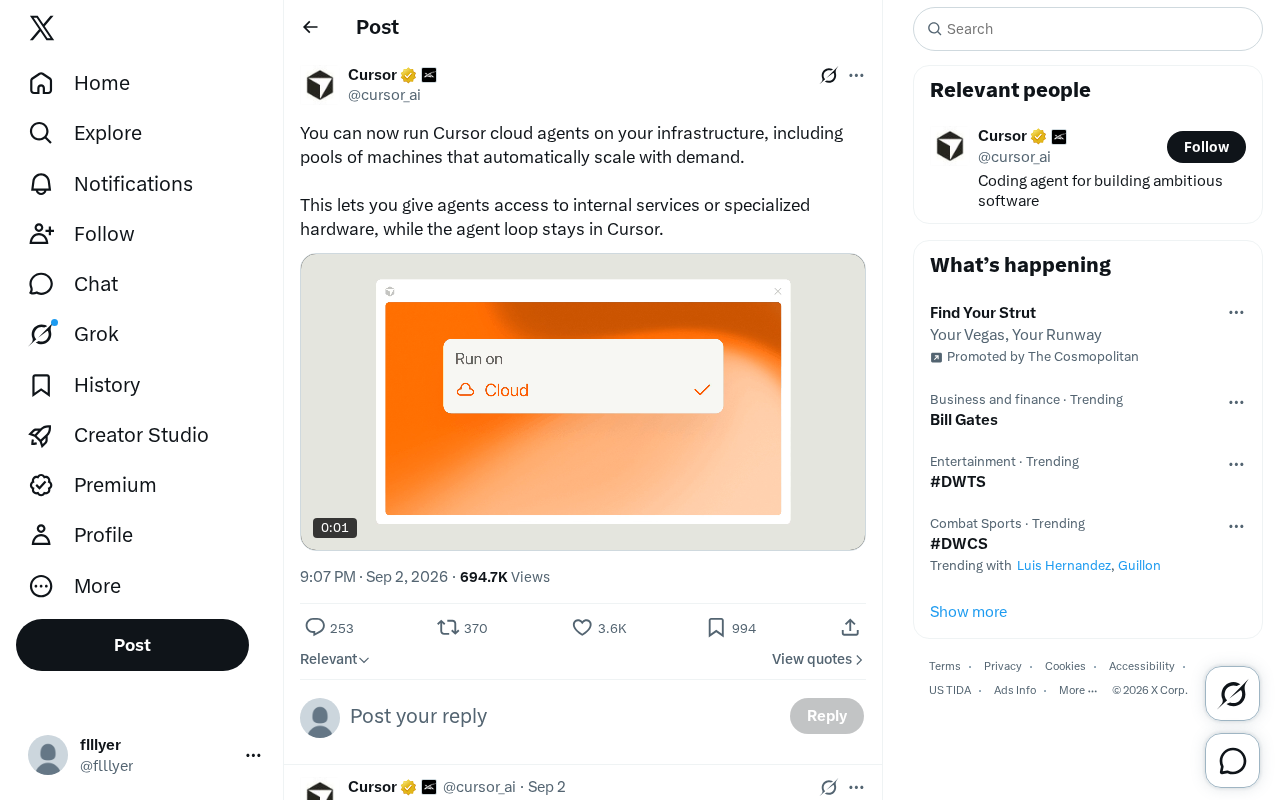
Cursor enables enterprise self-hosting of cloud Agents with elastic machine pools and internal system access.
Cursor has announced that enterprise users can now run its cloud-based Agent on their own infrastructure, with support for auto-scaling machine pools. The hybrid architecture keeps Agent reasoning in Cursor's cloud while executing code, builds, and tests on the user's own servers — enabling access to internal services, private databases, and dedicated hardware without handing sensitive data to a third party. This significantly lowers the barrier for compliance-sensitive industries like finance, healthcare, and government, and marks a clear step in Cursor's evolution from a personal developer tool to enterprise-grade AI infrastructure.
Cursor Brings Cloud Agents to Your Own Servers
Cursor has announced a major update for enterprise users: you can now run Cursor's cloud-based Agent on your own infrastructure, including machine pools that automatically scale with demand. This means development teams can enjoy Cursor-managed Agent workflows while keeping the actual execution environment on servers they control.
The core value here is decoupling — the agent loop continues to run within the Cursor platform, while the actual work of code execution, building, and testing happens on the user's own machines. For teams with strict data compliance requirements or dependencies on specific internal systems, this is an essential feature.
Why a Self-Hosted Execution Environment Matters
For AI Agents to be truly useful in software development, they often need access to real project environments. Pure cloud sandboxes have inherent limitations: they can't reach private services, databases, or authentication systems on a corporate intranet, nor can they leverage dedicated hardware that teams have specifically configured — such as GPU clusters or build machines with particular architectures.
This update from Cursor targets exactly that pain point. The official announcement notes that self-hosted mode allows Agents to "access internal services or dedicated hardware." In other words, the Agent is no longer an isolated black box — it can plug into your existing tech stack like a team member, calling internal APIs, connecting to private repositories, and using restricted resources.
For industries like finance, healthcare, and government — where data residency is a hard regulatory requirement — keeping code and runtime environments within your own infrastructure is non-negotiable. This feature meaningfully lowers the barrier to adopting AI coding Agents in those sectors.
Auto-Scaling Machine Pools
Another noteworthy detail is the "auto-scaling machine pools." This indicates that Cursor's self-hosting solution doesn't just bind an Agent to a single fixed machine — it provides elastic resource scheduling.
When multiple Agent tasks run concurrently, or a task requires more compute, the machine pool can automatically scale out. When load drops, it scales back in, avoiding idle resource waste. This design is especially friendly to large teams — in scenarios with multiple collaborators and parallel tasks, fixed capacity quickly becomes a bottleneck, and elastic scaling strikes a balance between cost and performance.
This also reflects Cursor's evolution from a personal developer tool toward an enterprise platform: not just easy to use, but capable of running at real team scale under real compliance constraints.
Auto-scaling in a Machine Pool typically relies on mechanisms similar to Kubernetes HPA (Horizontal Pod Autoscaler) or cloud provider Auto Scaling Groups: the system continuously monitors metrics like task queue depth and CPU/memory utilization, automatically spinning up new execution nodes when load exceeds a threshold, then gradually scaling back down as load decreases. In AI Agent scenarios, the scaling trigger isn't just compute resource utilization — it may also include the number of concurrent Agent tasks. Notably, elastic scaling is more complex in self-hosted environments than in pure cloud setups: users must prepare their own virtualization or container platform (such as VMware, Kubernetes, or bare-metal clusters) and ensure new nodes can quickly initialize, join the internal network, and pass security authentication. Otherwise, scale-out latency will negate the performance benefits of elasticity.
The Significance of a Hybrid Architecture
From a technical architecture perspective, this is a classic "control plane and data plane separation" design. The "brain" — Agent orchestration, decision-making, and context management — stays in Cursor's cloud, while the "hands" — actual code execution and resource consumption — run on the user's side.
The benefits of this hybrid model are clear: users retain full control over sensitive environments without having to maintain a complex Agent reasoning system themselves. Cursor handles upgrades and improvements to Agent capabilities; users simply provide the execution environment. For teams that want to embrace AI-assisted coding without handing their core assets to a third-party host, this is a pragmatic middle ground.
"Control plane and data plane separation" is a classic design paradigm in cloud-native architecture, first widely adopted in Software-Defined Networking (SDN). The control plane handles decisions and orchestration; the data plane handles actual traffic forwarding or task execution. Decoupling the two allows each to scale and be upgraded independently. Kubernetes follows the same philosophy: API Server, Scheduler, and other control components are separated from the nodes that actually run Pods. By bringing this pattern into the AI Agent space, Cursor means enterprises don't need to worry about maintaining and upgrading Agent reasoning logic, while still being able to confine sensitive operations — code execution, data reads and writes — entirely within their own network boundaries. The challenge with this architecture lies in the security and latency of communication between the control and data planes. If the network link is unstable, both Agent responsiveness and reliability will suffer — a critical factor for enterprises to evaluate during deployment.
Final Thoughts
Since the publicly available information is primarily based on a brief official announcement, specifics around deployment methods, supported machine types, pricing models, and security isolation mechanisms remain unclear. Enterprises evaluating adoption will still need to carefully assess permission boundaries, network isolation, and audit capabilities in practice.
That said, the direction is clear: this update sends a strong signal that AI coding Agents are moving from "cloud-based toys" to "production-ready enterprise infrastructure." Keeping Agents intelligent while grounding their execution in a controlled, self-owned environment may well become the standard for enterprise-grade AI development tools going forward.
Related articles

Building an AI-Powered E-Commerce Business from Scratch: A Real-World Account of Multi-Agent Architecture for Print-on-Demand
A blogger builds a print-on-demand e-commerce company from scratch using AI agents — documenting specialized Agent profiles, GPT-5.6 vs Claude Fable multi-model orchestration, and reusable skill accumulation.

AI Agent Earns $10K in One Week: 3 Key Upgrades Explained
A blogger shares how he earned $10K in a week with an AI Agent — not by adding more skills, but through verification, approval gates, and subagents to raise trust and enable true automation.
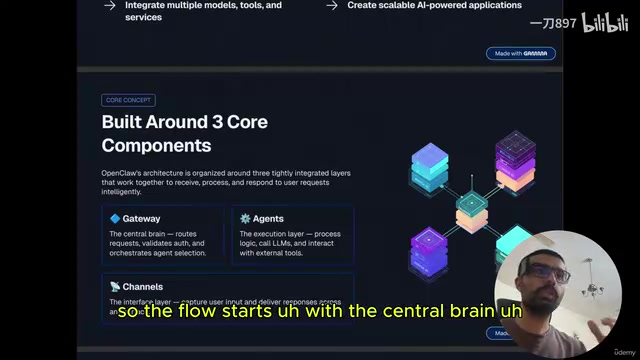
Getting Started with OpenClaw: Multi-Channel AI Agent Gateway and Automated Workflow Guide
OpenClaw is an open-source multi-channel AI agent gateway. This guide covers its three core components — gateway, agents, and channels — plus tool integration and memory mechanisms.