Cyanogen Co-founder Takes on Windows with Kora, an OS Built for the AI Era
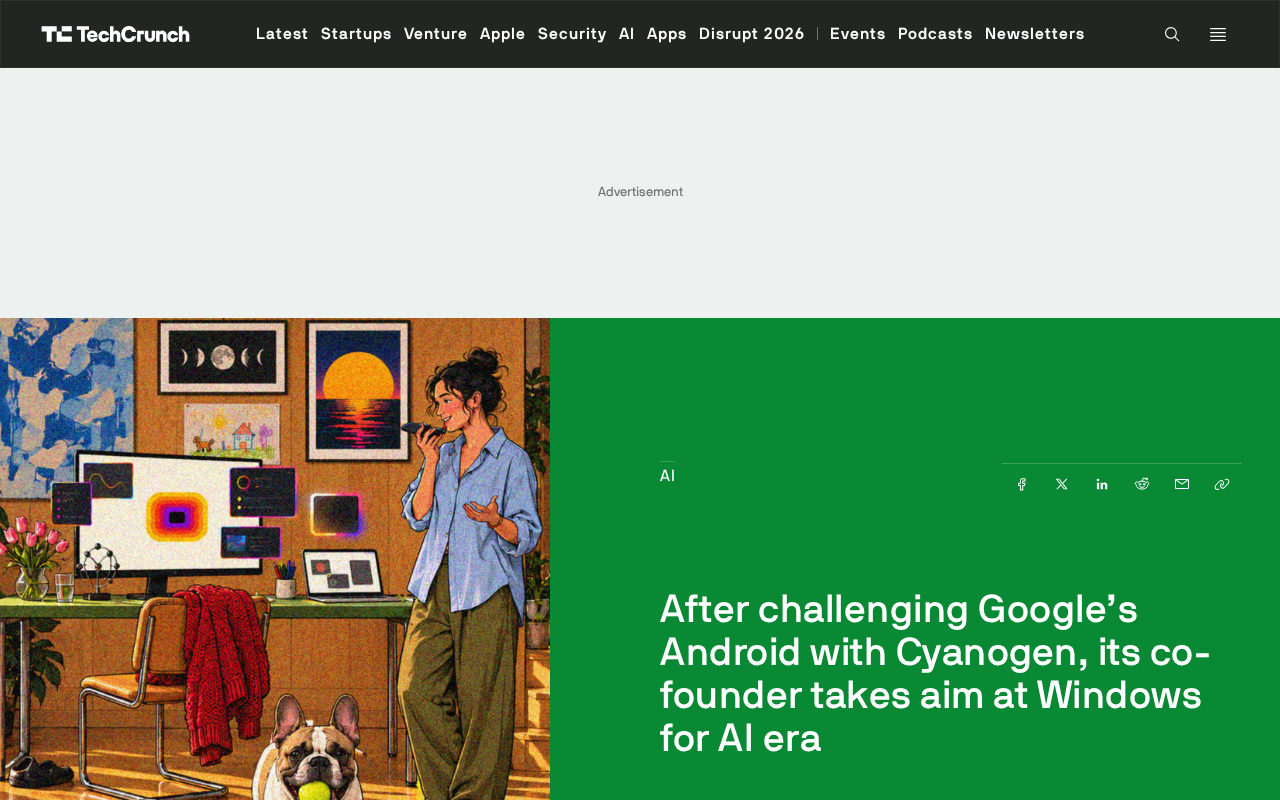
Cyanogen co-founder builds Kora, a free AI operating system, to challenge Windows' dominance.
The Cyanogen co-founder is starting a new venture with Kora, a free operating system aimed squarely at Microsoft Windows' dominance in the AI era. Positioned as "born for AI," Kora targets users who rely heavily on AI models and agents, seeking to push AI capabilities from the application layer down to the system layer and optimize resource scheduling and interaction. The article reviews the founder's earlier challenge to Android and notes that challenging Windows is far harder than mobile, with ecosystem barriers being the biggest obstacle. A free strategy can attract early users but cannot directly build a moat. Public information on Kora is currently limited, and its technical depth and feasibility remain to be verified; whether it can turn "born for AI" into verifiable system capabilities is the key to judging its value.
The Cyanogen co-founder is once again setting out to challenge a tech giant—this time targeting Microsoft Windows' dominance in the AI era. He is building a new operating system called Kora, which he plans to bring to market for free, aimed at users who rely heavily on AI models and agents.
From Android to Windows: The Path of a Serial Challenger
The founder's track record itself forms a clear narrative arc. Cyanogen was known for its open-source Android custom ROM, mounting a substantive challenge to Google's Android ecosystem in the mobile OS space. Now he is shifting the battlefield from mobile to desktop, with Windows as the target. The common logic behind both challenges is this: when an underlying platform is firmly controlled by a single company, the choices available to users and developers get squeezed—and that is precisely where the value of an alternative emerges.
Cyanogen's experience shows that challenging a platform-level product requires not only technical capability but also a precise read on an ecological niche. Back then, Cyanogen seized on Android fragmentation and users' appetite for customization; Kora seizes on the mismatch between AI workloads and traditional desktop operating systems.
Cyanogen's core product, CyanogenMod, was a third-party firmware built on the Android Open Source Project (AOSP). It was widely popular for its extensive customization features and performance optimizations, and at its peak claimed tens of millions of users. In 2013, the company Cyanogen Inc. was founded and attempted commercialization, at one point partnering with multiple phone manufacturers for preinstallation. However, due to Google's control over the Android ecosystem (especially the licensing restrictions on Google Mobile Services, GMS) and manufacturers' own interests, the partnerships failed to expand. At the end of 2016, Cyanogen announced it would stop updating the firmware project; the company pivoted and was eventually acquired. This history is often cited as a classic case of an open-source project challenging a platform giant, and its success and failure factors—technical community vitality, commercial sustainability, and ecosystem control—offer a reference point for understanding the challenges Kora faces.
Kora's Positioning: An OS Born for AI
According to the original information, Kora will launch as a free alternative to Windows, with a core user profile of people who "rely heavily on AI models and agents." This positioning deserves unpacking.
Traditional desktop operating systems are designed on the assumption that users primarily interact with local applications through a graphical interface, and that AI capabilities are optional add-ons. But for users who work deeply with AI models, the workflow has already changed—they frequently call models, orchestrate agents, and switch between multiple AI services. If the operating system layer does not optimize for these workloads, users have to repeatedly build scaffolding at the application layer. Kora's entry point is precisely to push this capability down to the system level.
The "free to use" strategy also continues the challenger's usual playbook: eliminating the price barrier in exchange for early user scale, then building a moat through ecosystem effects.
An AI agent is a software entity capable of perceiving its environment, making autonomous decisions, and executing tasks to achieve specific goals. Unlike traditional applications, agents typically need to run continuously, call external tools or APIs, manage multi-step workflows, and may collaborate with other agents. On existing desktop operating systems, agents often depend on additional runtime environments or frameworks (such as LangChain, AutoGPT, etc.), lacking system-level resource isolation, scheduling, and communication mechanisms. What Kora emphasizes as "optimized for agents" may involve providing foundational capabilities at the OS level such as agent lifecycle management, messaging, and tool-calling interfaces, thereby reducing developers' repeated setup work and improving the efficiency and reliability of multi-agent collaboration.
What OS-Level AI Integration Means
Treating AI models and agents as first-class citizens of the system could bring changes at several levels.
In resource scheduling, AI workloads differ markedly from those of conventional applications—model inference has different demands on compute, memory, and power than browsers or office software. System-level support means scheduling policies can be optimized for these workloads, rather than having AI applications compete with other programs under a general-purpose scheduler.
At the interaction layer, if agents can run at the system level, users can orchestrate tasks across applications without being confined to the boundaries of a single piece of software. This is especially critical for workflows that rely on multi-step automation.
At the development layer, system-level AI interfaces can reduce repetitive work for developers, so they do not have to implement model calling and agent management logic separately for each application.
Whether these changes can be delivered depends on Kora's actual architecture design, and currently public information is limited—not yet enough to judge its technical depth.
Model inference is the core stage of AI workloads, and its resource consumption patterns differ significantly from those of conventional applications. For example, large language model inference is sensitive to memory bandwidth and VRAM capacity, and may continuously occupy GPU resources; traditional office software mainly consumes CPU and memory. General-purpose OS schedulers are typically optimized for interactive applications and may not effectively distinguish inference tasks from workloads such as graphics rendering, leading to resource contention or low utilization. System-level AI integration means the OS can recognize AI workload characteristics and implement differentiated scheduling policies—such as reserving compute for inference tasks, prioritizing low-latency response, and dynamically adjusting power consumption. In addition, operations like model loading, cache management, and multi-model switching can also be optimized at the system layer, improving end-to-end efficiency. These capabilities require deep modifications to the OS kernel and runtime environment, and it is not yet clear whether Kora has implemented the relevant mechanisms.
The Real Difficulty of Challenging Windows
It must be acknowledged that challenging Windows is not on the same order of difficulty as challenging Android. Windows has decades of accumulated application ecosystem, enterprise deployment inertia, and hardware compatibility barriers. Users can install a new system on a device, but it is very hard for them to change their way of working for a platform that lacks key professional software.
Cyanogen's mobile challenge ultimately failed to shake Android's foundations, and that history itself is a reminder for Kora. A free strategy can buy attention, but it cannot buy an ecosystem. If Kora is to succeed, it may need to first establish irreplaceability among a specific group—such as AI developers, researchers, and heavy agent users—before considering expansion outward. Using a vertical scenario as a fulcrum to pry open a general-purpose platform is the more realistic path.
Signals Worth Watching
Kora is currently in a pre-launch stage, and public information only sketches the outline of its positioning: free, aimed at heavy AI users, benchmarked against Windows. For readers interested in the operating system landscape and the shape of AI-native software, this project is worth following closely. Whether it can turn "born for AI" from marketing language into verifiable system capabilities will be the key to judging its value.
The Cyanogen founder's attempt is essentially answering a question: as the computing paradigm shifts from application-centric to agent-centric, does the operating system also need to be rewritten? The answer is not yet revealed, but the question itself is important enough.
Related articles
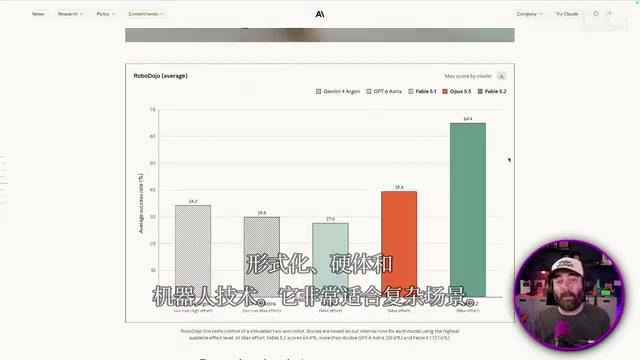
Claude Fable 5.2 Hands-On: Top Intelligence but Absurdly Expensive
Anthropic releases Claude Fable 5.2 and Mythos 5.2, topping the Artificial Analysis intelligence leaderboard with big gains in scientific reasoning, strong game and hardware design, but max mode costs ~$26.54 per task. Hands-on game, circuit board design, and pricing advice.

1,000 AI Agents Formalize Fermat's Last Theorem in 30 Hours, Anthropic Releases New Claude Models
Anthropic releases Claude Fable 5.2 and Mythos 5.2: 1,000 agents formalize Fermat's Last Theorem in 30 hours, coding costs halved, plus hardware design and physics.

Claude Fable 5.2 Released: A Thousand AI Agents Build a Bootable OS in 8 Days
Anthropic releases Claude Fable 5.2 and Mythos 5.2—same model, two safety tiers. Demo shows 1,000 AI agents build a bootable OS in 8 days, formalize Fermat proof in 30 hours, score 64.6 beating Gemini 4 Carbon, price cut 20%.