Cyberattack Disrupts Denmark-Germany Tunnel Project, Construction Forced to Halt
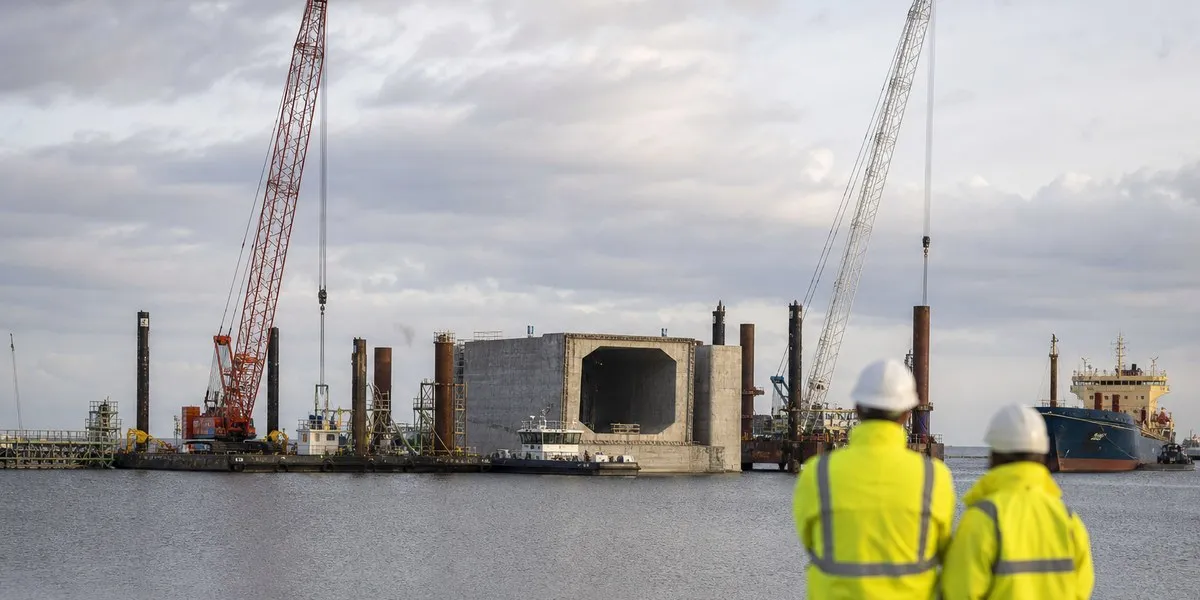
The Fehmarnbelt Tunnel between Denmark and Germany was halted by a cyberattack, exposing digital security vulnerabilities in major infrastructure.
The Fehmarnbelt Tunnel was forced to suspend construction due to a cyberattack, raising concerns about critical infrastructure cybersecurity. The attack likely targeted not the tunnel itself but the IT systems and operational networks surrounding the project. Cross-border transportation infrastructure is becoming a high-value target, as cyberattacks are low-cost, stealthy, and hard to trace. The shutdown brings cascading effects including schedule delays, cost increases, and supply chain trust crises, and may push industry security standards from advisory to mandatory. The incident reveals the security paradox of engineering digitization: the more interconnected the systems, the more severe the consequences of a single breach, and cybersecurity must be integrated into core engineering management processes.
According to breaking news from an RSS aggregation source, a major cross-border infrastructure project connecting Denmark and Germany—the Fehmarnbelt Tunnel—has been forced to suspend construction due to a cyberattack. The incident quickly spread through tech communities like Hacker News, sparking a new round of discussion about critical infrastructure cybersecurity.
It's Not Just a Tunnel Under Attack
The Fehmarnbelt Tunnel is one of Europe's most prominent infrastructure projects in recent years. It plans to establish an immersed tube subsea tunnel between Lolland in Denmark and Fehmarn in Germany, dramatically reducing travel time between the two locations from the current hours-long detour to around ten minutes. The project is massive in scale, involving numerous contractors, supply chain systems, and digital construction management platforms.
For this reason, the cyberattack likely targeted not the tunnel itself, but rather the IT systems and operational networks surrounding the project. The more digitized a large infrastructure project becomes, the greater its attack surface: construction scheduling, material tracking, equipment control, document workflows—a breach in any single link could trigger cascading shutdowns.
An immersed tube subsea tunnel is a tunneling method in which prefabricated tube segments are sunk into a trench on the seabed, connected one by one, and backfilled for fixation. Unlike shield tunneling, the immersed tube method requires first casting massive concrete segments in a dry dock, then floating them to the designated sea area for precise placement, demanding extremely high standards for hydrological conditions, trench bed flatness, and connection precision. The Fehmarnbelt Tunnel spans approximately 18 kilometers and is designed as a dual rail and road corridor. Once completed, it will be one of the world's longest immersed tube tunnels. This construction method involves numerous offshore work vessels, floating crane equipment, and real-time positioning systems, with construction scheduling highly dependent on digital collaboration platforms—which explains why a cyberattack could directly impact project progress.
Why Critical Infrastructure Is a High-Value Target
Cross-border transportation and energy infrastructure have long been high-value targets for cyberattacks. Compared to traditional physical destruction, cyberattacks are characterized by low cost, strong stealth, and difficulty of attribution. A single successful intrusion can simultaneously cause economic losses, schedule delays, and erode public confidence—all without the attacker ever appearing in physical space.
In recent years, ports, railways, and energy networks across multiple European countries have experienced similar incidents. The shutdown of this tunnel project aligns closely with this trend: attackers may not have had a clear intent to sabotage the project—mere ransomware or supply chain infiltration was enough to press pause on the construction of a transnational corridor.
Ransomware is the most common attack form targeting critical infrastructure in recent years. Attackers infiltrate target networks through phishing emails, vulnerability exploitation, or supply chain penetration, encrypt core data and systems, and then demand ransom. For infrastructure projects, ransomware doesn't necessarily aim to destroy the project—but as long as it encrypts construction management systems or document servers, it will directly cause a shutdown. Supply chain penetration is even more covert: attackers first compromise a third-party service provider with weaker security defenses, then use its legitimate access credentials to enter the general contractor's network. Such attacks are difficult to trace because the entry point was often planted months earlier, making it hard to determine responsibility after the fact.
The Chain Reactions Behind the Shutdown
The impact of construction suspension extends far beyond project progress itself.
Schedule and Cost Pressure: Cross-border infrastructure projects typically have strict financing milestones and delivery timelines. A shutdown means contractors need to re-coordinate manpower, equipment, and materials, and delay costs may ultimately be passed on to public finances.
Supply Chain Trust Crisis: If the attack originated from a third-party service provider in the supply chain, the trust relationship between the general contractor and subcontractors will face scrutiny, and security audits and responsibility allocation will become focal points going forward.
Security Standard Upgrades: Such incidents often become catalysts for revising industry security standards. Cybersecurity requirements for critical infrastructure may shift from previous "compliance recommendations" to stricter mandatory standards.
The Security Paradox of Engineering Digitization
Large infrastructure projects increasingly rely on digital tools to improve efficiency—this itself is progress. But there is an inherent tension between efficiency and security: the more interconnected the systems, the more severe the consequences of a single point of breach.
This incident reminds project owners that cybersecurity should not be treated as an auxiliary task of the IT department, but should be integrated into the core processes of engineering management. From contractor admission and equipment networking standards to emergency response plans, all need to be designed early in the project.
Attack surface refers to the sum of all entry points through which a system or organization can be accessed and exploited by external attackers. After large infrastructure projects introduce digital tools, the attack surface expands dramatically: IoT sensors, remote monitoring terminals, contractor-owned devices, and cloud collaboration platforms all become potential entry points. Every additional connection point means one more attack path, and the more project participants there are, the harder it becomes to unify security policies. This is precisely the core of the engineering digitization security paradox—efficiency gains depend on interconnection, yet interconnection itself continuously creates new vulnerabilities.
Implications for the Industry
The Fehmarnbelt Tunnel shutdown provides a concrete case study for all asset-heavy industries currently pursuing digital transformation: cyberattacks can cross the boundary between virtual and physical, directly freezing real-world project progress.
For practitioners focused on cybersecurity, critical infrastructure protection, and engineering management, the value of this incident lies not in the technical details of the attack itself, but in the systemic vulnerabilities it exposes—as the coupling between the physical world and digital systems grows tighter, security boundaries need to be redefined.
Currently, public information about the specific nature of the attack, responsible parties, and recovery timeline remains limited. The incident is still developing, and subsequent official statements and security post-mortems deserve continued attention.
One-line Summary
Related articles

CSS Anchor Positioning: A New UI Positioning Approach Without JavaScript
A deep dive into CSS Anchor Positioning: from anchor-name and position-anchor to the anchor() function, position-area shorthand, position-try-fallbacks, anchor-size, and upcoming anchor queries.

New AI Chart Interaction: Continuous Follow-up Questions and Visualization in Conversation
Explore a new AI interaction method for continuously generating charts in conversation. Use the /visualize command to ask follow-up questions and visualize answers in the same chat window, improving data analysis efficiency.

Cursor Merges Into X Subscription: Paid Plans Share Unified Usage Pool, Grok Model Coding Usage Doubled
Cursor joins The X Subscription with a unified usage pool and doubled Grok coding quota. Third-party models shift to API pricing. Existing users can keep or migrate plans.