DACA-GRPO: Denoising-Aware Credit Assignment for Reinforcement Learning in Diffusion Language Models
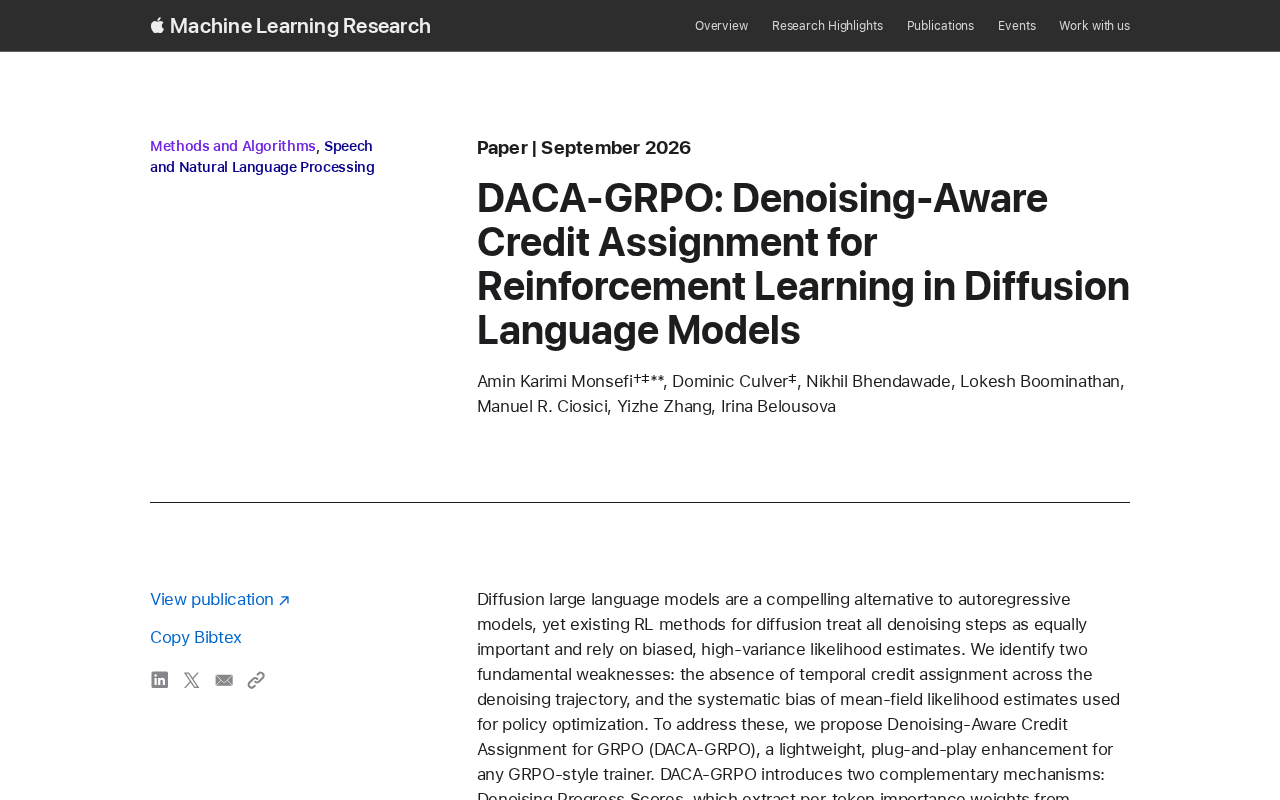
DACA-GRPO fixes temporal credit assignment and likelihood bias in RL training for diffusion language models.
Diffusion language models replace token-by-token generation with multi-step denoising, but applying RL methods like GRPO to them exposes two fundamental flaws: treating all denoising steps equally ignores their vastly different contributions to the final output, and relying on biased mean-field likelihood estimation distorts the optimization direction. DACA-GRPO addresses both by introducing a denoising-aware credit assignment mechanism that assigns differentiated weights to each denoising step, enabling reward signals to propagate more precisely to the steps that truly matter. Designed as a lightweight, plug-and-play module, it integrates seamlessly into existing GRPO pipelines with minimal engineering overhead.
Diffusion large language models (Diffusion LLMs) have emerged as a compelling alternative to autoregressive models. Rather than generating text token by token, they reconstruct entire sequences in parallel through iterative denoising. However, when researchers attempt to use reinforcement learning (RL) to further align and optimize these models, existing methods reveal significant shortcomings. A paper titled DACA-GRPO: Denoising-Aware Credit Assignment for Reinforcement Learning in Diffusion Language Models targets the root causes of these issues and proposes a lightweight, plug-and-play solution.
Two Fundamental Flaws in Existing RL Methods for Diffusion Models
When adapting RL methods like GRPO (Group Relative Policy Optimization) to diffusion language models, the common practice is to treat every step along the denoising trajectory as equally important. The research team argues this assumption is fundamentally flawed, identifying two core weaknesses.
The first problem is the lack of temporal credit assignment. A diffusion model's generation process is a trajectory that progressively refines pure noise into coherent text. Different denoising steps contribute very differently to the final output — early and late steps differ enormously in terms of semantic certainty. Treating all steps equally erases this temporal structure, preventing the model from learning which steps truly determined the quality of the result.
The second problem is systematic bias in likelihood estimation. Policy optimization in existing methods relies on mean-field likelihood estimation, which is both biased and high-variance. Bias means the optimization direction can be systematically misled, while high variance means the training signal is unstable, making convergence difficult and results inconsistent.
The Core Idea Behind DACA-GRPO
To address these two flaws, the researchers propose Denoising-Aware Credit Assignment for GRPO (DACA-GRPO). As the name suggests, the core idea is to introduce a denoising-aware credit assignment mechanism within the GRPO framework — allowing different denoising steps to receive differentiated weights and gradient signals based on their actual contribution, rather than being treated uniformly.
The value of this design lies in reintroducing the temporal structure of the diffusion process into the optimization. When the model can identify the critical steps within a denoising trajectory, the RL reward signal can be more precisely propagated back to the steps that genuinely affect output quality, thereby improving training efficiency and final performance.
Plug-and-Play Engineering Design
Notably, DACA-GRPO is designed as a lightweight, plug-and-play enhancement module that can be embedded into any GRPO-style trainer. This means it does not require researchers to rewrite an entire training pipeline — it functions as an add-on component layered on top of existing workflows. For teams already using GRPO-based methods, the migration cost is low, which is a key prerequisite for rapid adoption.
Why This Work Deserves Attention
The combination of diffusion language models and reinforcement learning is a relatively cutting-edge but still maturing direction in generative AI research. The RLHF (Reinforcement Learning from Human Feedback) pipeline for autoregressive models is already well-established, but because diffusion models generate text through a fundamentally different mechanism, directly transplanting autoregressive RL methods tends to underperform. The issues DACA-GRPO identifies — missing temporal credit assignment and biased likelihood estimation — are deep problems rooted precisely in this mechanistic difference.
From a methodological standpoint, treating the denoising trajectory as a sequential decision-making process that requires fine-grained credit assignment — rather than as a monolithic black box — is an approach far more aligned with the intrinsic nature of diffusion models. This provides an extensible framework for follow-up research: how to better design reward propagation mechanisms for multi-step generation processes.
Temporal Credit Assignment is a classic challenge in reinforcement learning, first systematically studied in the context of sequential decision-making. The core question is: when an agent receives a reward only after executing a series of actions, how do we determine which intermediate steps truly "made the difference" and which were inconsequential? In the context of diffusion models, early denoising steps (high-noise phase) primarily determine the global semantic structure of the text, while later steps (low-noise phase) handle fine-grained lexical selection and surface form. Research indicates that the two types of steps influence final output quality through entirely different mechanisms, and should therefore receive gradient updates of different magnitudes. Ignoring this distinction is equivalent to treating high-value and low-value decisions identically during training — reducing sample efficiency and blurring the model's optimization direction. DACA-GRPO's contribution lies precisely in providing a diffusion-model-specific solution to this problem, explicitly encoding domain knowledge (the temporal structure of the denoising trajectory) into the optimization algorithm.
Summary
DACA-GRPO attempts to solve two long-overlooked foundational problems in reinforcement learning for diffusion language models by introducing denoising-aware credit assignment. Its lightweight, plug-and-play design lowers the barrier to practical adoption and makes it easier to integrate into existing GRPO training systems. For researchers and engineers following the evolution of Diffusion LLM training methods, this is a technical direction worth tracking.
(Note: This article is based on the paper's abstract. For full methodological details and experimental results, please refer to the original paper.)
Background
Diffusion language models (Diffusion LLMs) generate text through a process fundamentally different from autoregressive models. Autoregressive models generate one token at a time with a clear causal structure; diffusion models start from a sequence filled with random noise and progressively restore coherent text over T denoising steps (typically tens to hundreds of steps). Each denoising step is guided by a neural network that predicts "how to reduce noise," a process analogous to climbing a gradient in high-dimensional space. Because the generation process is unrolled into a multi-step trajectory, how to reasonably attribute the final quality score (reward) back to each individual step becomes the central challenge of RL alignment. In autoregressive models, this problem is naturally resolved by the token-level causal structure; in diffusion models, the dependencies between steps are far more complex, and naively splitting rewards equally leads to severely distorted optimization signals.
GRPO (Group Relative Policy Optimization) is a reinforcement learning algorithm widely used in recent large language model alignment work, originally proposed by the DeepSeek team. Its core idea is to sample a group of outputs for the same input and use the group's relative ranking as the reward baseline — rather than relying on a separate reward model — thereby reducing variance and improving training stability. GRPO has achieved notable results on tasks like mathematical reasoning and code generation with autoregressive LLMs, but its design assumptions are in inherent tension with the multi-step generation structure of diffusion models, and direct transplantation amplifies both of the aforementioned flaws.
Related articles
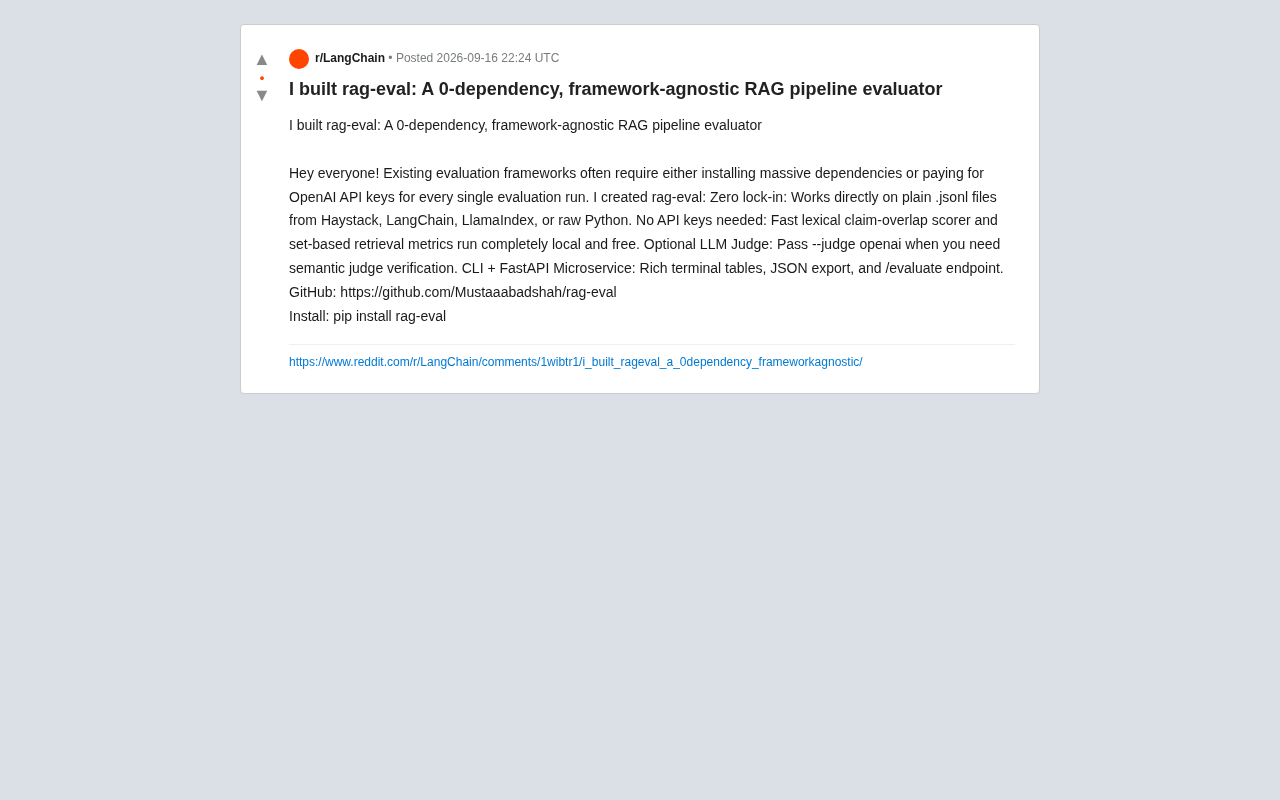
rag-eval: A Zero-Dependency, No-API-Key RAG Evaluation Tool
rag-eval is a zero-dependency, framework-agnostic open-source RAG pipeline evaluation tool. It supports free local lexical and retrieval metrics with no API keys required, and offers optional LLM Judge for semantic validation. Compatible with Haystack, LangChain, and LlamaIndex.
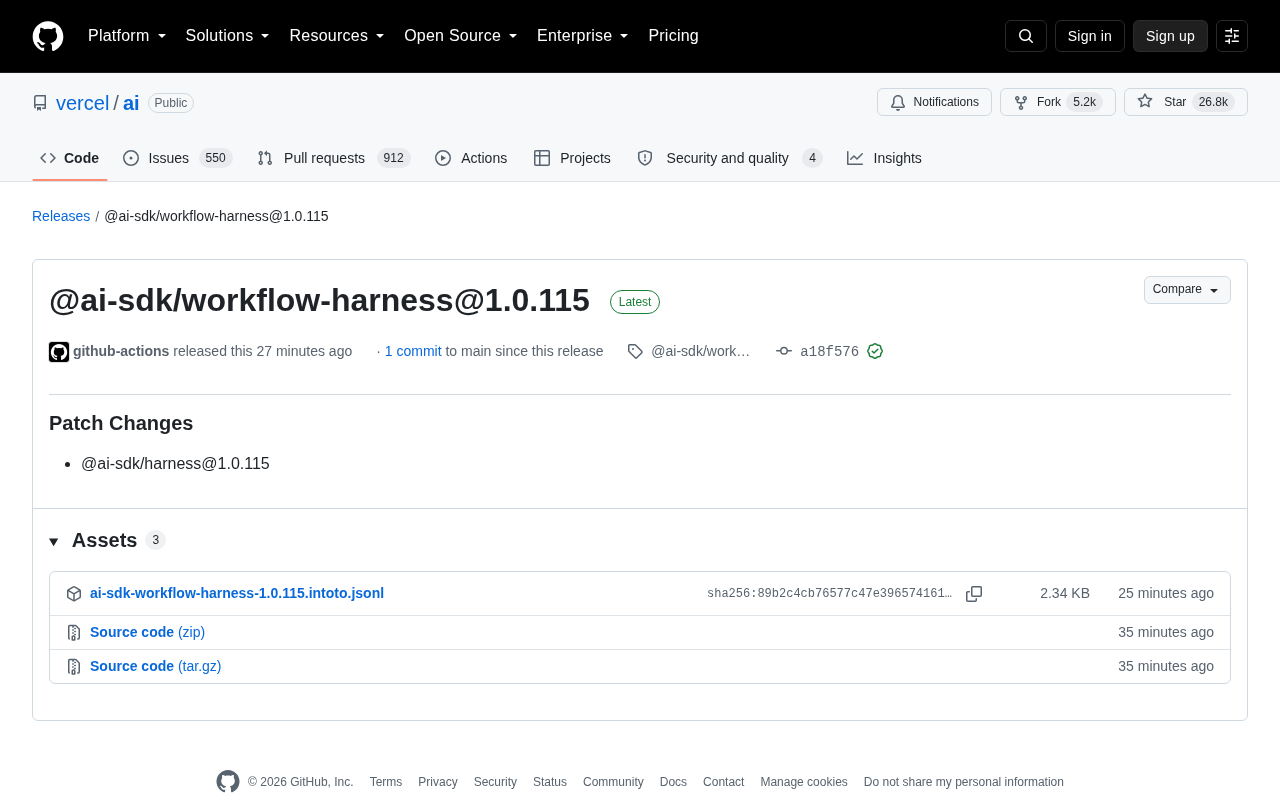
Vercel AI SDK Releases workflow-harness 1.0.115 Patch Update
Vercel AI SDK releases @ai-sdk/workflow-harness 1.0.115 patch update, syncing the @ai-sdk/harness dependency. Learn about the update, release mechanism, and what it means for developers.

GLM 5.3 Now Available on Serverless Training API — No Sales Process Required
GLM 5.3 is now available on Serverless Training API alongside Kimi K3 and Qwen 3.8 27b. No sales process needed — start fine-tuning directly via docs or pre-made recipes.