Data Centers Are Now a Midterm Issue, Even in Brooklyn

AI data centers unexpectedly became a core political issue in Brooklyn's midterm elections, reflecting the community-level politicization of AI infrastructure.
Using a Brooklyn midterm election gathering as a starting point, the article describes how AI and data centers repeatedly became topics at an event meant to focus on local affairs. It analyzes how data centers create direct tension with communities over land use and energy demand, with voters focused on cost allocation and energy cost transparency. This phenomenon reveals that AI issues are moving from national policy debate down to the local election level, forcing candidates to shift from "how do you view AI regulation" to "how will you handle this community's data center project." The article concludes that AI companies need transparent energy disclosure and community participation mechanisms to address siting disputes, and that local political friction is building momentum for national AI regulation.
From Local Gatherings to a National Issue: The Unexpected Politicization of AI Data Centers
At a midterm election gathering in a Brooklyn district, just five days before voting day, an event that should have focused on local affairs saw a recurring theme—AI and data centers. According to on-site observations, from a city council member's fireside chat to debates about the direction of the Democratic Party, nearly every conversation circled back to the keyword "data centers" (source: original report).
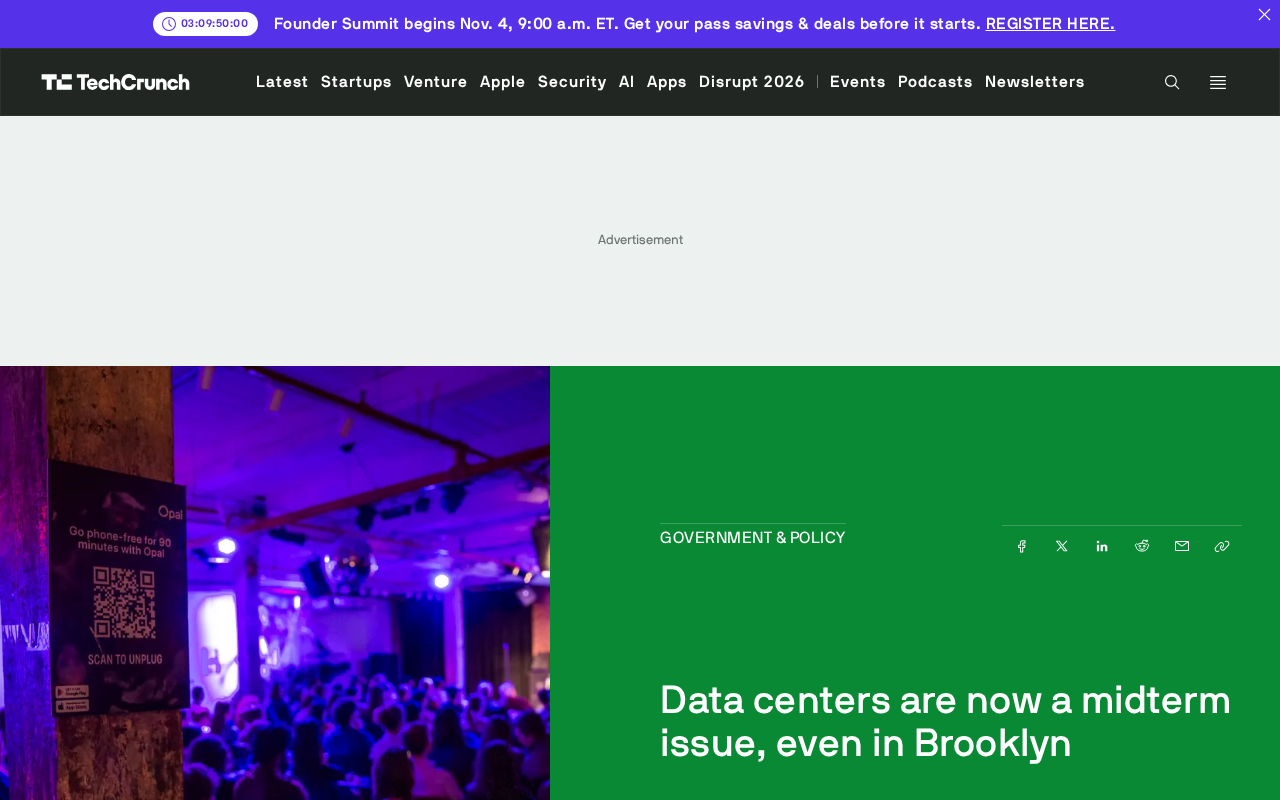
This phenomenon is worth examining. Brooklyn is not a traditional tech industry stronghold, and the fact that data centers have become a political topic here shows that the siting, energy consumption, and community impact of AI infrastructure have begun to permeate the everyday awareness of ordinary voters. When candidates find they cannot avoid the topic, it is no longer an internal discussion within the tech circle—it has become a genuine public policy issue.
Why Data Centers Strike a Nerve with Brooklyn Voters
The Tension Between Siting and Community Interests
Data centers require large amounts of land and a stable power supply, and these two needs often put them in competition with residential and commercial areas in dense urban zones. Brooklyn voters care not only about "whether to build" but also about "where to build and who bears the cost." In the context of midterm elections, these concerns are quickly converted into political pressure, and candidates are forced to take a stance.
Data centers are the core physical facilities supporting AI training and inference, typically composed of tens of thousands of servers that require continuous power and forced cooling. Their siting logic differs from traditional commercial real estate: they prioritize areas with low electricity prices, sufficient grid capacity, low land costs, and controllable network latency. In dense urban areas, large data centers often require supporting substations and backup power generation facilities, which can change the nature of surrounding land use and trigger NIMBY effects such as noise and visual pollution. The question Brooklyn voters ask—"where to build and who bears the cost"—is essentially a question about how the externality costs of such facilities are distributed: the benefits of land appreciation go to developers, while the costs of grid upgrades and community environmental changes may be shared by residents.
Energy Costs and Transparency
The electricity scale of data centers usually far exceeds that of ordinary commercial facilities, which directly affects regional grid load and electricity price transmission. Although the original report did not disclose specific energy consumption data, the repeated appearance of this topic at the gathering suggests that voters have clear anxiety about the energy bills and decision-making transparency of AI infrastructure.
Data center power loads are continuous and concentrated; a single large facility can consume as much electricity as tens of thousands of households, so connecting to the grid often requires upgrading transmission lines and distribution equipment. These upgrade costs are usually spread across all users through electricity pricing mechanisms rather than borne solely by data center operators, creating a controversy of "socialized costs, privatized benefits." In addition, data centers often require backup capacity to ensure supply reliability, further pushing up overall system costs. Voters' anxiety about "energy bills and decision-making transparency" stems precisely from the opacity of this cost transmission mechanism—residents find it difficult to determine from public information the specific impact of new load on local electricity prices, and they also find it difficult to participate in the approval process for grid expansion.
The Trend of AI Politicization in Midterm Elections
The Brooklyn phenomenon is not an isolated case. It reveals a broader trend: AI is no longer just a policy debate between Silicon Valley and Washington—it has trickled down to the level of local elections. The questions candidates need to answer have shifted from "How do you view AI regulation?" to "How do you plan to handle the data center project in this community?"
The deeper reason for this shift is that the physical infrastructure of the AI industry (data centers, substations, cooling facilities) has a strong territorial character—it directly affects local land use, environmental quality, and tax structure. When these effects become visible, voters' political feedback follows.
Implications for the AI Industry
For AI companies and data center operators, the Brooklyn midterm election gathering is a signal: the importance of community communication and siting strategy is rising. Relying solely on arguments about economic contribution is no longer enough to calm local disputes; transparent energy use disclosure, community participation mechanisms, and reasonable siting plans will become necessary conditions for moving projects forward.
The core insight of the original report is that a technology issue can become politicized in a specific community far faster than the industry expects. The Brooklyn gathering five days before voting day perfectly demonstrates how this politicization ferments at the grassroots level. For readers following AI policy trends, discussions at the local election level are worth tracking—because national AI regulatory frameworks often accumulate momentum from these local political frictions.
Background
Midterm elections are the midpoint of U.S. congressional elections, held in the second year of a presidential term and traditionally seen as a public opinion test of the incumbent administration. Local issues usually enter voters' field of vision more easily at this stage because turnout is lower and candidates rely more on grassroots mobilization. Issues like data centers, which combine technological and local dimensions, happen to have the conditions to be amplified in midterm elections: they have a visible physical presence (construction sites, substations) and can be linked to voters' vital interests such as employment, electricity prices, and the environment. When the national AI regulatory debate reaches a stalemate in Washington, local elections instead become an early channel for the public to express demands for technology governance.
Related articles

AI Coding Tools Emerge as a New Attack Surface: Fake Claude Extension Steals Developer Information
A fake Claude code extension appeared in the Cursor marketplace, affecting up to 5,000 developers in 11 hours, stealing host information and implanting SSH backdoors. Learn the attack methods, self-check steps, and security defense strategies for AI coding tools.

ChatGPT Switches to Token Billing in December: Chat and Codex Share Quota — Who's Most Affected?
ChatGPT switches to Token billing in December, with chat and Codex sharing quota. Simple questions can use Instant for free; heavy Codex users are most affected.

ChatGPT and Codex Merge Usage Allowances: Who Runs Out First?
OpenAI merges ChatGPT and Codex paid allowances into one shared token pool in December. We break down the details, token metering ambiguity, OpenAI's financial motives, and how users should respond.