Databricks Real-Time Energy Trading Analytics: What's Needed Beyond Speed

The bottleneck in real-time energy trading isn't latency—it's data, feature, and model governance on a unified platform.
Using Databricks' real-time energy trading analytics solution as an entry point, the article argues that the real pain point for trading desks isn't compressing latency from minutes to seconds, but rather the difficulty of ingesting, cleaning, computing features, and running model inference on heterogeneous data sources—exchange quotes, weather, unit output, transmission congestion—within a single platform. The solution connects the chain from data to decision through streaming ingestion, Delta Lake storage and version management, and unified feature/model governance, enabling backtesting and live trading to share the same logic. The article further identifies three key capabilities beyond speed: decision traceability, elasticity and cost balance, and a closed loop from analytics to trading. It concludes that the biggest benefit of a unified platform is the change in how teams collaborate; real-time infrastructure is only the foundation, and strategy returns still depend on market understanding and risk control discipline.
Databricks Real-Time Energy Trading Analytics: What's Needed Beyond Speed
Energy trading is undergoing a data infrastructure upgrade. Trading desks face minute-level or even second-level price fluctuations, weather changes, and grid dispatch signals—traditional batch processing models can no longer keep up. Databricks' real-time energy trading and analytics solution attempts to answer one question: does real-time trading really only need faster data pipelines?
The Real Bottleneck in Real-Time Energy Trading Isn't "Speed"
Many people equate real-time trading with low-latency data streams, but the actual pain points for trading desks are more complex. Energy market data sources are highly heterogeneous—exchange quotes, weather forecasts, unit output, transmission congestion information—with varying formats and update frequencies. The real challenge is ingesting, cleaning, computing features, and running model inference on all this data within a single platform, rather than simply compressing latency from minutes to seconds.
Databricks' approach emphasizes a unified data and AI platform: streaming ingestion handles real-time market data, Delta Lake handles storage and version management, and feature engineering and model training are completed in the same environment. This "data stays put, compute comes to it" philosophy reduces the overhead of moving data between multiple systems at the trading desk, and makes it possible to use the same logic for both backtesting and live trading.
How the Chain from Data to Decision Is Connected
Streaming Ingestion and Incremental Computation
The first link in real-time energy trading is continuous ingestion of market data. Structured Streaming allows trading desks to perform incremental aggregation on price and load signals, avoiding the latency of full recomputation. For intraday trading, minute-level statistics within rolling windows are often more valuable for decision-making than raw tick data.
Structured Streaming is the built-in stream computing engine in Apache Spark. It treats streaming data as a continuously appended table, allowing developers to express streaming logic using batch-oriented SQL or DataFrame APIs. Its core mechanism is incremental queries: processing only newly arrived data each time rather than recomputing the full history—this is precisely the technical foundation for "avoiding full recomputation" mentioned above. For intraday trading, common usage patterns include event-time-based rolling window aggregation, watermark handling of late-arriving data, and continuously writing aggregation results to Delta tables for downstream consumption. Understanding this mechanism helps assess: what's called "real-time" is more of a micro-batch level of continuous updates, with latency magnitude depending on trigger intervals and data arrival cadence, rather than hard real-time per-record processing.
Unified Governance of Features and Models
Trading strategy effectiveness depends heavily on feature consistency and reproducibility. Placing feature computation, model training, and online inference on the same platform reduces the bias of "one set for training, another for live trading." This is especially critical for energy trading because electricity prices are affected by weather and supply-demand dynamics, feature distributions drift frequently, and models need rapid iteration.
Feature distribution drift (feature drift / data drift) refers to the statistical distribution of input features during online inference deviating from the training distribution, causing model performance degradation. This phenomenon is particularly prominent in energy trading: electricity prices and load are highly dependent on weather, unit maintenance, and seasonal supply-demand, and historical patterns may quickly become invalid. Addressing drift typically requires continuous monitoring of feature distributions (such as changes in means, quantiles, and missing rates), setting alert thresholds, regular or trigger-based retraining, and retaining version snapshots of training data and feature definitions for attribution. This is exactly where the value of placing feature computation and model training on the same platform lies—training and inference share the same feature definitions, which is necessary to ensure consistent monitoring standards and reliable drift diagnosis, avoiding misjudging model degradation due to differences between two implementations.
Three Capabilities Beyond Speed
Real-time is just the entry ticket. Based on the positioning of the Databricks solution, what energy trading desks truly need to strengthen comes down to three capabilities:
- Traceability: The data versions, features, and models behind every decision must be traceable to meet compliance and post-mortem review requirements.
- Elasticity and Cost Balance: Energy trading workloads have obvious peak-valley characteristics; the platform needs to scale on demand rather than maintaining resources for peak loads at all times.
- Closed Loop from Analytics to Trading: Analysts' research conclusions must be quickly translatable into deployable strategies, shortening the path from insight to execution.
Model and data traceability (lineage and version management) has compliance significance in regulated energy trading scenarios. Data lineage records every layer of transformation from raw data sources to final reports or decisions, while version management ensures that data tables, feature definitions, and model artifacts can be traced back to specific points in time. Delta Lake provides underlying support for these capabilities through its transaction log and time travel queries of historical snapshots. For trading desks, this means being able to answer after the fact: "which version of features and models was a given trade based on at the time, and was the input data complete?"—serving both regulatory audits and strategy reviews and fault attribution. Without this mechanism, the faster the real-time system, the harder it becomes to explain the source of decisions.
Practical Significance for Trading Desks
The biggest benefit of building real-time analytics on a unified platform is not the reduction of point latency, but the change in how teams collaborate. Data engineers, quantitative researchers, and traders work on the same data assets, reducing the communication overhead of aligning definitions. For energy trading teams migrating from batch processing to real-time, the reference value of such solutions lies in providing an end-to-end implementation path, rather than mere stream processing performance numbers.
What needs to be viewed rationally is that platform capabilities are only the foundation. Strategy returns ultimately depend on understanding of market structure and risk control discipline; the role of real-time infrastructure is to enable these judgments to be executed faster and more reliably.
FAQ
How low does latency need to be for real-time energy trading?
It depends on the trading instrument and strategy frequency. Intraday and real-time markets are sensitive to minute-level data, but blindly pursuing millisecond-level latency may not yield improved returns—data quality and feature consistency often have greater impact.
What type of trading teams is the Databricks solution suitable for?
It's better suited for medium-to-large trading desks that already have some data foundation and wish to unify analytics, features, and models onto a single platform. Smaller teams need to weigh platform complexity against operational costs.
Related articles

Transitioning from Traditional Development to LLM Application Development: Avoiding the Three Hurdles 90% of Courses Don't Teach
Traditional backend developers transitioning to LLM application development face three real hurdles—model capability boundaries, requirement judgment, and effect evaluation—not math. This article breaks down the core engineering skills 90% of courses don't teach and offers a practical transition path.
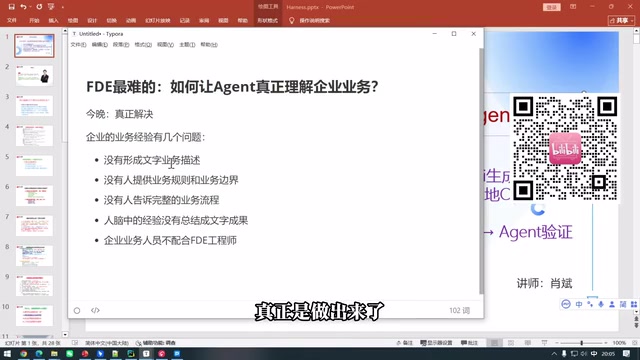
LLM WIKI in Practice: Making Agents Truly Understand Enterprise Business — Building a Troubleshooting Agent from Scratch
Inaccurate agent responses stem from a lack of business understanding. Based on a real order customer service troubleshooting agent case, this article explains how LLM WIKI builds a business knowledge base from codebases, uses incremental updates, and connects to agents via MCP server to achieve business understanding and troubleshooting with zero documentation.

A Computer Science PhD's Take: AI Career Planning for New Graduates — Algorithm vs. Application Development
A CS PhD advises new graduates on AI careers: try algorithm roles first but don't fixate; application development has more openings. Focus on LLM fine-tuning/deployment and agent frameworks (MetaGPT, LangChain), and watch AI + industry implementation to broaden job paths.